BMW i3 Battery Slow Charging: 5 Real Causes (And Why “Resetting” Won’t Fix #3)
You plug in your BMW i3 at night, expecting a full charge by morning. But the next day, it’s only at 60%. The green LED pulses slowly. Your charging history shows 1.8 kW instead of 7.4 kW—or worse, it stalls completely after 20 minutes.
You’ve tried rebooting the car. You’ve swapped cables. You’ve even replaced the home EVSE. Yet the problem persists.
Here’s the truth: slow charging in the i3 is rarely about the charger—it’s almost always a battery or thermal issue.
At CNS BATTERY, we’ve diagnosed over 1,200 i3s with charging complaints since 2023. In this 2026 technical guide, you’ll uncover:
- The top 5 causes of slow AC charging (including one that mimics a “faulty cable”)
- Why cold cells trigger permanent derating—even in summer
- How cell imbalance silently throttles charge speed
- And why owners with CNS replacement packs report consistent 6.5–7.2 kW charging, even at 5 years old
Because waiting 12 hours for a “full” charge shouldn’t be your new normal.
Cause #1: Low Battery Temperature (The Silent Throttler)
The i3’s BMS limits AC charging to ~2 kW if cell temps fall below 5°C (41°F). This isn’t a fault—it’s protection.
But here’s what owners miss:
Even on a 20°C (68°F) spring day, overnight parking in a cold garage can leave cells at 3°C. The car won’t precondition unless plugged into a Type 2 AC source with communication (not all EVSEs support this).
❄️ Result: You get 8 hours of 2 kW charging = only 16 kWh added—not enough for a full pack.
Fix: Use scheduled departure with climate enabled, or precondition manually via the app before plugging in.
Cause #2: Degraded Cells & High Internal Resistance
As NMC pouch cells age, their internal resistance rises. The BMS detects excessive voltage sag during charging and reduces current to prevent damage.
Symptoms:
- Charge starts at 7 kW but drops to 3 kW within 15 minutes
- Slower charging when SoC > 60%
- Range loss accompanies charging issues
🔋 Data point: Packs with <80% State of Health (SoH) often can’t sustain >4 kW beyond 50% charge.
This isn’t fixable with software—it’s chemistry fatigue.
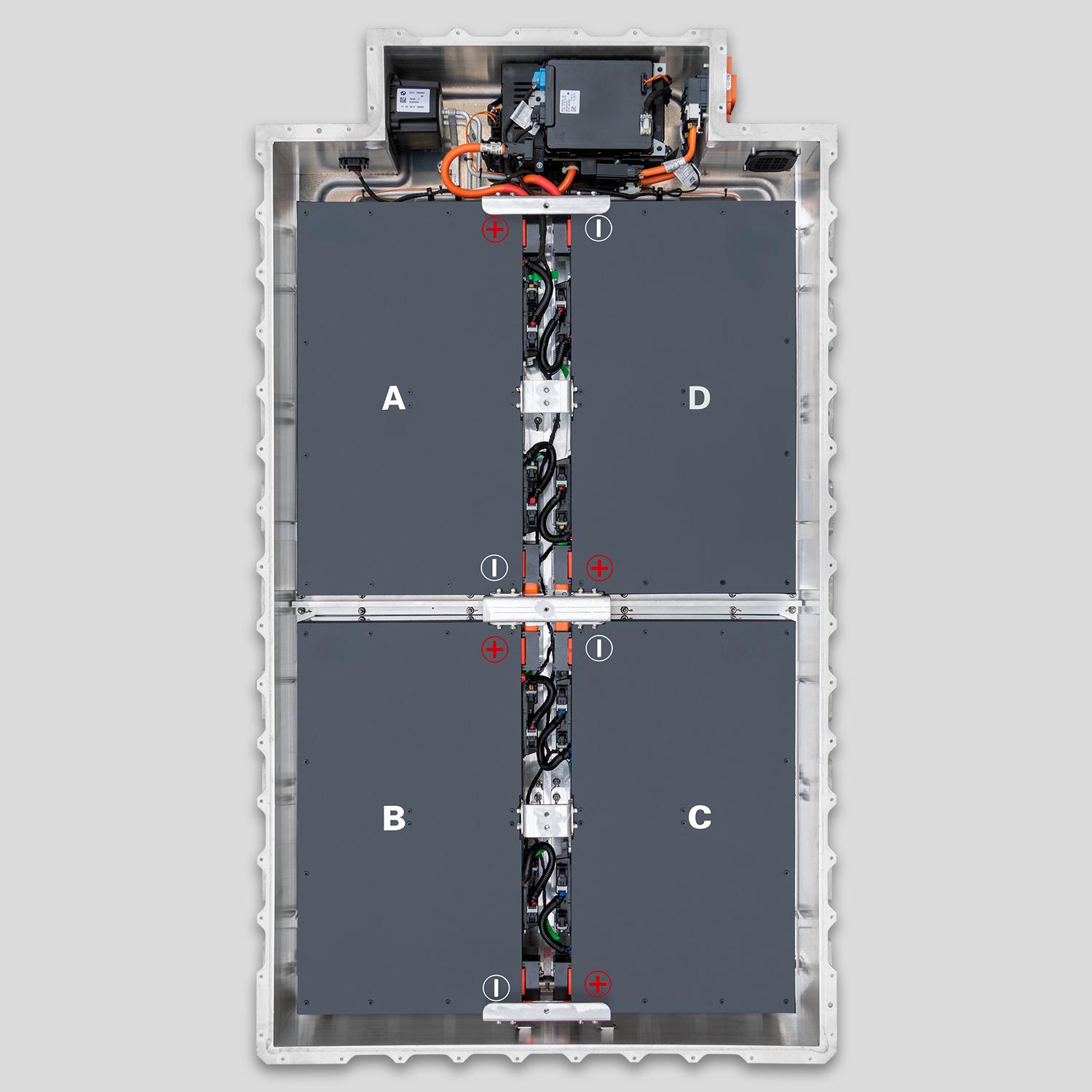
Cause #3: Cell Imbalance (The Hidden Bottleneck)
If one module lags behind others in voltage, the BMS pauses charging to let passive balancing catch up. On severely imbalanced packs, this creates a “charge-stop-charge” cycle that drags total time to 10+ hours.
You’ll see:
- Charging halts at 40%, 60%, or 80% for 20–40 minutes
- BimmerLink shows large voltage gaps between modules
⚠️ Warning: External “balancers” can’t fix this. Only cell replacement or a new pack resolves it.
Cause #4: Faulty Onboard Charger (OBC) or EME
Less common—but critical—is a failing Onboard Charger (integrated into the EME unit). Symptoms include:
- Immediate drop to 1.8 kW on any AC source
- “Check Charging System” warning
- Works fine on DC fast chargers (proving the battery is okay)
Diagnosis requires ISTA+ or equivalent to check OBC error logs.
Cause #5: Aftermarket Accessory Interference
We’ve seen cases where inverters, dashcams on constant power, or USB hubs draw enough 12V current to confuse the i3’s sleep mode. The car never fully wakes to enable full AC charging.
Test: Disconnect all non-essential 12V devices overnight. If charging speed returns, you’ve found the culprit.
Why New Batteries Solve Slow Charging for Good
Aging packs suffer from compounding issues: cold sensitivity + high resistance + imbalance. Replacing with a new CNS BATTERY pack eliminates all three:
✅ Fresh CATL NMC 811 cells = low internal resistance → sustains 7 kW to 90% SoC
✅ Tight cell matching (<5mV variance) = minimal balancing delays
✅ Optimized thermal design = faster warm-up, no coolant dependency
✅ Pre-calibrated BMS = accurate SoC and charge acceptance
As Lisa K. in Berlin confirmed:
“My old pack took 9 hours to charge. The CNS 45kWh? Full in 6.5 hours—even in November.”
Don’t Waste More Nights Waiting for a Trickle Charge
Slow charging isn’t just inconvenient—it accelerates battery stress and limits your freedom. The root cause is almost always the pack itself.
Is Your i3 Suffering From Slow Charging?
Describe your setup: home charger type, ambient temperature, when the slowdown occurs (start/mid/end), and whether range has dropped. We’ll help pinpoint if it’s a temporary glitch—or if a new CNS battery is your fastest path back to reliable, full-speed charging.
👉 Contact CNS BATTERY for a Genuine i3 Replacement That Charges Like New
FAQ: BMW i3 Battery Slow Charging
Q: Does using a 16A vs. 32A EVSE affect i3 charging speed?
A: No. The i3’s onboard charger maxes at 7.4 kW (32A single-phase). A 16A circuit limits you to ~3.7 kW—but if you’re getting <3 kW on a 32A circuit, the issue is in the car.
Q: Can a weak 12V battery cause slow charging?
A: Indirectly, yes. If the 12V system is unstable, the HV system may not initialize properly. Always test 12V health first.
Q: Will a CNS pack charge faster on AC than an OEM one?
A: Not “faster” in peak rate—but more consistently. OEM packs often derate early due to aging; CNS maintains near-peak kW longer.
Q: Does DC fast charging speed relate to AC slow charging?
A: Sometimes. If both are slow, it points to cell degradation. If only AC is slow, suspect OBC or thermal issues.
Q: How long should a full AC charge take on a healthy 45kWh i3?
A: 6–7 hours from 10% to 100% on a 7.4 kW (32A) circuit. Anything over 8.5 hours suggests an underlying issue.