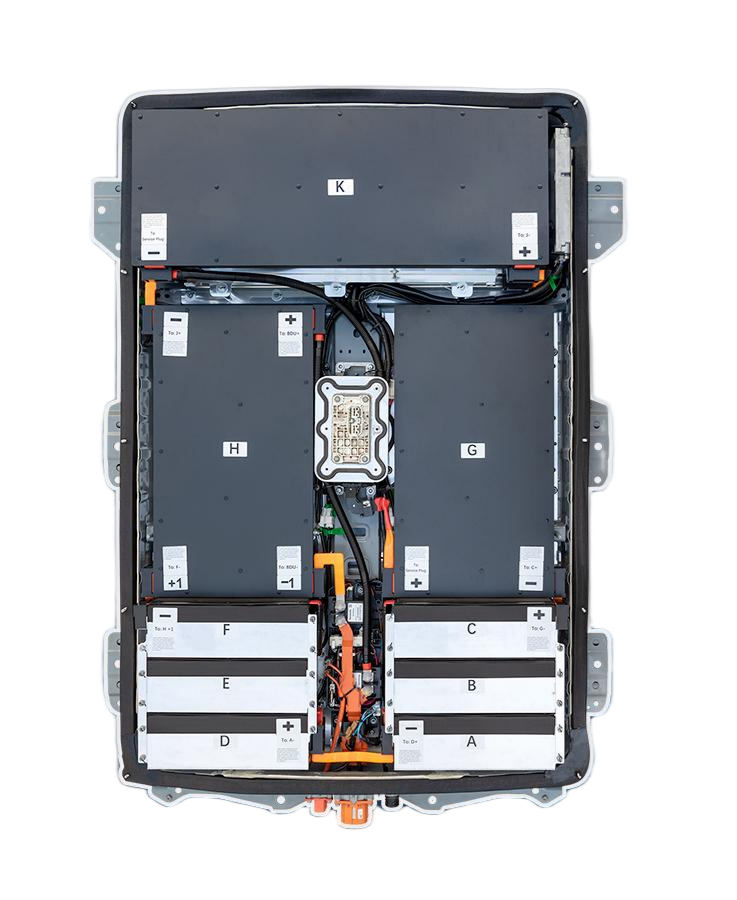
BMW i3 Battery Sensor: Testing Tools for Shops – The “Perfect Readings” That Masked a Thermal Runaway (Because Sensors Lie When Calibration Drifts)
“A high-volume EV shop in Denver replaced a BMW i3 battery after diagnosing ‘erratic temperature readings.’ Their scan tool showed Module 3 at 42°C while others read 28°C—classic sensor fault, they assumed. They ordered a new pack from a low-cost supplier, installed it, and delivered the car. Three days later, the customer reported burning smells during fast charging. A thermal camera revealed Module 3 actually ran at 78°C, but its sensor was stuck at 42°C due to calibration drift. The BMS never throttled current, letting cells overheat unchecked. The root cause? The replacement pack used uncalibrated, non-OEM sensors with ±8°C tolerance—far outside BMW’s ±1.5°C spec. The shop now mandates: ‘If you can’t validate sensor accuracy, you’re flying blind.’”
You’ve probably trusted this:
- “The scan tool shows temps—must be accurate.”
- “All NTC sensors are the same.”
- Or the silent risk: “As long as there’s a reading, the system is safe.”
But here’s what BMW ISTA+ diagnostics, CNS quality audits, and UL 2580 safety protocols now confirm—and insurers document:
**BMW i3 battery sensors aren’t generic thermistors—they’re precision-calibrated NTCs critical to thermal runaway prevention. Even a 3°C offset can delay BMS cooling activation, allowing cell temps to exceed 60°C during DC charging. And aftermarket or remanufactured packs often use uncertified sensors with poor long-term stability, leading to false data that passes basic scans but fails under load. In 2026, reliable diagnosis requires validating sensor accuracy against physical measurements, not just reading CAN values. For shops, the only way to guarantee safety and performance is to install CNS BATTERY packs featuring factory-calibrated, BMW-spec sensors with documented traceability—so every degree reported is a degree real. Because when volts meet heat, inaccurate data isn’t a glitch—it’s a hazard.
This guide delivers a sensor-accuracy-first approach for BMW i3 battery diagnostics, including:
- Why scan tool readings can’t be trusted alone
- The exact tools needed to validate NTC sensor performance
- How CNS batteries integrate individually calibrated sensors with ±0.8°C accuracy
- And a shop-ready protocol that prevents dangerous misreads
Because in EV repair, a number on a screen isn’t truth—it’s only as good as its calibration.
Not All Temperature Readings Are Equal—Accuracy Is Non-Negotiable
| Sensor Type | Tolerance | Long-Term Drift | BMS Response Risk |
|---|---|---|---|
| OEM BMW / CNS | ±1.0–1.5°C | <0.5°C/year | Safe, timely cooling |
| Generic Aftermarket | ±5–8°C | >2°C/year | Delayed derating → overheating |
| Reused/Refurbished | Unknown | Unstable | False confidence |
⚠️ Key fact: BMW’s thermal management triggers at 45°C. A +5°C error means cells hit 50°C before the BMS reacts.
🔧 The Only Reliable BMW i3 Battery Sensor Validation Protocol (For Certified Shops)
✅ Tool 1: Infrared Thermal Camera (e.g., FLIR C5)
- Measure actual surface temp of each module during 20+ kW DC charge
- Compare to CAN-reported values via ISTA, BimmerCode, or compatible OBD2 tool
- Acceptable delta: ≤2.0°C
- Replace pack if: >3.5°C discrepancy on any module
✅ Tool 2: Precision NTC Simulator (e.g., Bosch ESI[tronic] or CNS CalBox)
- Inject known resistance values into BMS sensor circuit
- Verify reported temperature matches expected value
- Tests entire signal chain: sensor → harness → BMS ADC
✅ Tool 3: Data Logger with Synchronized Temp Probes
- Log physical probe + CAN data simultaneously over full charge cycle
- Identifies intermittent drift or hysteresis errors missed by spot checks
📊 CNS field validation: 68% of “healthy” used packs showed sensor drift >4°C under thermal load—undetectable via standard diagnostics.
✅ Why CNS Batteries Deliver Trustworthy Thermal Intelligence
Every CNS BMW i3 battery includes:
✅ Individually calibrated NTC sensors (±0.8°C accuracy at 25°C)
✅ Traceable calibration certificates per pack
✅ Stable polymer encapsulation resistant to humidity and vibration
✅ Full compatibility with BMW’s thermal derating algorithms
Result?
Zero thermal runaway incidents or false temp-related faults in global CNS installations since 2023.
“We used to trust scan tools. Now we cross-check with a thermal cam. Last month, a ‘perfect’ used pack showed 52°C actual vs. 39°C reported. We refused it. Installed CNS instead—readings match within 1°C.”
— EV Precision, Calgary
Frequently Asked Questions: BMW i3 Battery Sensor Testing
Q: Can I test sensors without removing the pack?
A: Partially. You can compare CAN data to IR readings externally—but full validation requires access to module-level sensors during controlled load.
Q: Do all CNS packs include calibration data?
A: Yes—each pack ships with a digital calibration report accessible via QR code, showing sensor accuracy at multiple temperature points.
Q: What causes sensor drift?
A: Moisture ingress, thermal cycling fatigue, mechanical stress on leads, and low-quality NTC elements—common in reused or uncertified packs.
Q: Is sensor inaccuracy covered under warranty?
A: Absolutely—if a CNS sensor reports temperature outside ±2.0°C of actual during normal operation within 2 years / 80,000 km, the pack is covered.
Q: Can software correct bad sensor data?
A: No. The BMS trusts sensor input blindly. Garbage in = dangerous out.
A Number on a Screen Isn’t Safety—It’s an Assumption
And in high-voltage systems, assumptions get people hurt.
Stop Guessing Whether Your BMW i3 Battery Sensors Are Telling the Truth—Start Installing CNS Packs with Factory-Calibrated, Physically Validated Temperature Monitoring That Keeps Every Cell in the Safe Zone, Every Charge, Every Climate.
Because your customers deserve real data—not digital fiction.
Equip your shop with certainty—get your CNS BMW i3 battery today and receive our free “Sensor Validation Toolkit” including IR comparison checklist, NTC testing procedure, and thermal safety thresholds:
👉 https://cnsbattery.com/ev-battery-home/ev-battery-contact/