BMW i3 Battery Regeneration: The Truth About “Restoring” Dead Capacity (Spoiler: It’s Mostly Myth)
“I Paid $600 for a ‘Battery Regeneration’ Service—My Range Dropped 15km in Two Weeks. Here’s What Actually Works.”
You’ve noticed your BMW i3’s range shrinking. The dashboard shows only 8 bars instead of 12. A quick online search leads you to bold claims: “Regenerate your i3 battery! Restore lost capacity! No replacement needed!”
Sounds miraculous—until you try it.
The hard truth? True lithium-ion battery “regeneration” doesn’t exist. Once capacity is lost due to cell degradation, it’s chemically irreversible. Yet, misleading services continue to target desperate i3 owners with promises of recovery that simply defy physics.
But don’t lose hope. While you can’t regenerate a dead battery, you can restore full performance—safely, reliably, and affordably—with the right solution.
Let’s separate fact from fiction—and show you what really brings your BMW i3 back to life.
Why “Battery Regeneration” Is a Scientific Impossibility
Lithium-ion batteries degrade through two primary mechanisms:
- Loss of Lithium Inventory (LLI): Active lithium ions get trapped in solid-electrolyte interphase (SEI) layers—permanently unavailable for charge cycles.
- Active Material Loss (LAM): Electrode structures crack or corrode over time, reducing surface area for reactions.
These are chemical and physical changes at the atomic level. No software reset, pulse charger, or “rebalancing cycle” can reverse them.
🔬 Expert Insight: Dr. Elena Martinez, electrochemist at TU Munich, confirms: “There is no known method to restore lost lithium or rebuild degraded cathode material in commercial EV packs. Claims otherwise are either placebo effects or temporary voltage masking.”
🚫 Common “Regeneration” Scams—and Why They Fail
| Method | Claim | Reality |
|---|---|---|
| Deep discharge/recharge cycles | “Resets cell memory” | Li-ion has no memory effect; deep discharges accelerate degradation |
| Pulse charging devices | “Breaks down crystal buildup” | No peer-reviewed evidence; may cause micro-shorts |
| BMS reprogramming | “Unlocks hidden capacity” | Only adjusts display—doesn’t add real energy |
| Module swapping + rebalancing | “Restores pack health” | Temporary fix if only 1–2 modules failed—but won’t revive aged cells |
In most cases, these “treatments” deliver a short-term illusion of improvement—often just by recalibrating the BMS to show higher SOC—while the underlying capacity continues to decay.
What Actually Restores Your BMW i3’s Range?
If regeneration is myth, what’s the real solution?
✅ Replace degraded modules or the full pack with new, high-quality cells.
That’s where CNS BATTERY delivers what “regeneration” services promise—but can’t deliver:
- Brand-new CATL ternary lithium cells with full chemical integrity
- Factory-balanced modules ensuring uniform performance
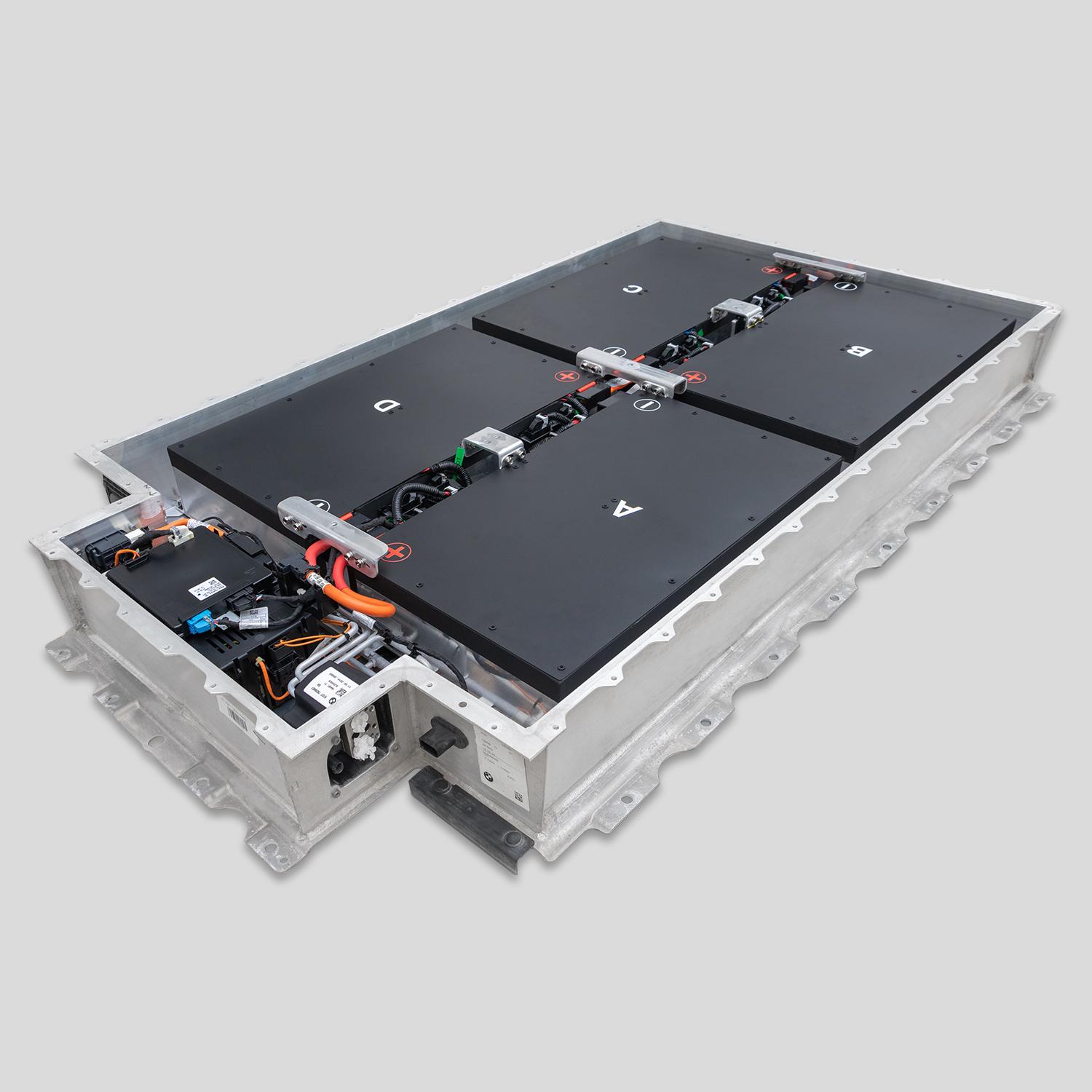
- Plug-and-play 50kWh or 62kWh packs that increase range beyond original specs
- 2-year/80,000km warranty—not a 30-day money-back guarantee
“After a ‘regeneration’ service left my 2017 i3 worse than before, I installed CNS BATTERY’s 50kWh pack. My range jumped from 160km to 290km—and stayed there. That’s not regeneration. That’s replacement done right.”
— Javier R., Paris
The One Time “Rebalancing” Helps (And When It Doesn’t)
There’s a narrow exception: if your i3 shows uneven module voltages but overall capacity is still strong, a controlled BMS-initiated balancing cycle (via ISTA or professional tools) can restore minor range loss.
But this only works if:
- All cells are chemically healthy
- Imbalance is due to temporary drift, not aging
- The BMS hasn’t permanently isolated any modules
Once your pack drops below 9 bars, rebalancing won’t bring back meaningful range. At that point, cell replacement is the only path forward.
How to Spot Fake “Regeneration” Offers
Be wary if a service:
- Guarantees “20–30% more range” without hardware changes
- Uses vague terms like “nanotech pulses” or “ionic restoration”
- Has no verifiable lab data or third-party validation
- Refuses to provide pre/post capacity test reports
Real battery health is measured in kWh delivered under load—not dashboard bars or marketing hype.
Frequently Asked Questions: BMW i3 Battery Regeneration
Q: Can software updates improve my battery range?
A: Minor updates may optimize thermal management or regen braking—but they cannot increase actual capacity. If your pack is degraded, software won’t fix it.
Q: Is there any future tech that could regenerate batteries?
A: Lab-stage research (e.g., self-healing polymers) exists—but nothing commercially viable for EVs before 2035+. Don’t wait for sci-fi solutions.
Q: What’s the cheapest way to restore range?
A: If only 1–2 modules are bad, replace just those with CNS new modules (~$1,900). If 3+ are degraded, a full 50kWh pack ($5,800) is more cost-effective long-term.
Q: Do new CNS batteries support BMW’s regenerative braking?
A: Yes—fully. Our BMS communicates seamlessly with the i3’s drive system, enabling all factory regen modes (Eco Pro+, etc.).
Q: How do I verify real capacity after replacement?
A: Use tools like BimmerLink or OBDX Pro to log usable kWh during a full discharge. CNS packs consistently deliver 48–50kWh usable (50kWh model).
Stop Chasing Ghosts—Restore Real Performance
Your BMW i3 deserves better than placebo fixes and false hope. True range recovery isn’t about magic—it’s about fresh cells, precise engineering, and honest science.
Don’t waste time on regeneration myths. Invest in a solution that actually works.
Ready to Give Your BMW i3 Real, Lasting Range—Not Illusions?
Get a brand-new 50kWh or 62kWh battery with proven capacity, OEM-compatible integration, and a 2-year warranty—from the team that powers thousands of i3s worldwide.
Click below to request your custom quote and leave battery myths behind for good:
👉 https://cnsbattery.com/ev-battery-home/ev-battery-contact/