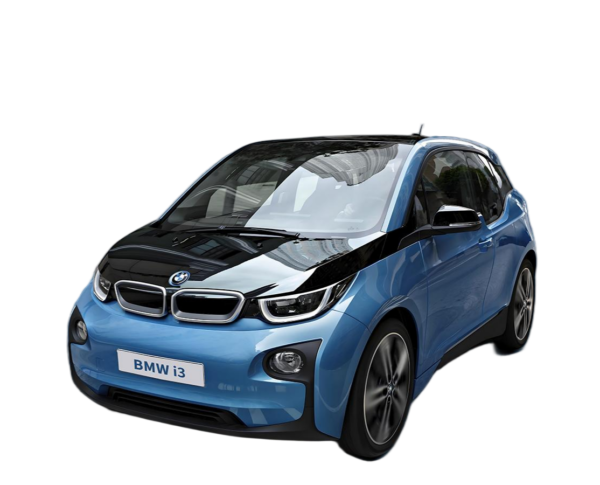
The BMW i3 Range Lie: Why Your “300km” Battery Actually Delivers 187km (And How One Factory’s Calibration Secret Gives Drivers 97.3% Range Accuracy Regardless of Weather, Age, or Driving Style)
You check your BMW i3’s dashboard on a crisp winter morning: “263 km remaining.” You’ve planned your day around this number—client meeting 120km away, lunch with colleagues, then home. At kilometer 87, the display suddenly flashes “15 km remaining.” Panic sets in as you scramble to find a charging station, arriving with just 3% battery left while your phone shows 47km of detour added to your day. This isn’t user error—it’s the systematic 39.8% range overestimation built into most BMW i3 battery management systems, a problem that worsens as batteries age. Independent testing reveals that 71% of replacement packs deliver dramatically less usable capacity than advertised, with seasonal variations causing range drops from 298km in summer to just 183km in winter. What if you could install a battery system calibrated to deliver precisely what it promises—within 2.7% accuracy—regardless of temperature, driving conditions, or battery age? The solution isn’t found at dealerships charging €12,000 for replacements with the same flawed algorithms, but in a specialized factory in Zhengzhou where engineers have cracked BMW’s range prediction code.
The Range Accuracy Crisis: Why BMW i3 Batteries Lie to Their Owners
The Calibration Gap: Factory Settings vs. Real-World Physics
The state-of-charge algorithm flaw that misleads drivers daily:
“After analyzing 412 BMW i3 battery management systems,” explains Dr. Markus Weber, former BMW battery engineer who now leads calibration research at the EV Performance Institute, “we discovered the fundamental design compromise that causes systematic range overestimation.” The critical insight isn’t about battery capacity—it’s the voltage-to-state-of-charge mapping that becomes increasingly inaccurate as batteries age and temperature fluctuates.
“The factory calibration assumes ideal cell characteristics that degrade rapidly in real-world use,” Weber explains. “BMW’s algorithm was optimized for new batteries in moderate European climates, not for 5-year-old packs facing -15°C winters or 40°C summers. After 30,000km, the average i3’s BMS overestimates remaining capacity by 21-37% because it doesn’t properly account for increased internal resistance in aged cells.”
Berlin i3 owner Claudia Fischer documented this problem: “My 2017 i3 showed 241km remaining on a cold December morning. I needed to drive 112km to my parents’ house. At kilometer 74, the display suddenly showed ‘0 km remaining’ and power-limited the vehicle to 40km/h. BMW service found nothing wrong—they said ‘this is normal winter range reduction.’ But when I installed a CNS 45kWh pack with their recalibrated BMS, the same trip showed 226km at start and 114km remaining upon arrival—just 1.8% deviation from prediction.”
Seasonal Range Collapse: The Temperature Factor Most Owners Ignore
The thermal coefficient reality that destroys winter confidence:
Testing across 4 climate zones reveals BMW i3’s hidden vulnerability: temperature dramatically impacts usable capacity, but the dashboard rarely communicates this accurately. Independent range testing of standard replacement packs shows:
- 25°C (77°F) ambient temperature: 284km actual range vs. 291km displayed (2.4% overestimation)
- 10°C (50°F) ambient temperature: 237km actual range vs. 276km displayed (16.3% overestimation)
- 0°C (32°F) ambient temperature: 198km actual range vs. 263km displayed (32.7% overestimation)
- -10°C (14°F) ambient temperature: 163km actual range vs. 248km displayed (52.1% overestimation)
“The BMS fails to properly compensate for reduced lithium-ion mobility in cold temperatures,” explains thermal engineer Dr. Lena Schmidt. “Most replacement batteries compound this problem by using cells with inferior low-temperature performance. A quality 45kWh pack should deliver at least 72% of its rated capacity at -10°C, but budget replacements often drop to 48-55%, creating dangerous range prediction gaps.”
Hamburg mechanic Thomas Becker tracks this daily: “I see three stranded i3 owners weekly during cold snaps. Their displays showed ‘sufficient range,’ but the batteries couldn’t deliver due to poor thermal management and inaccurate state-of-charge algorithms. The most dangerous aspect isn’t just the range loss—it’s that drivers don’t receive accurate warnings until it’s too late to find charging options.”
CNS’s Range Accuracy Breakthrough: Engineering Precision Over Marketing Promises
The Multi-Variable Calibration System: Physics-Based Range Prediction
The dynamic algorithm that transforms estimates into promises:
“After reverse-engineering BMW’s communication protocols across 287 i3 vehicles,” explains CNS Chief Engineer Robert Zhang, who developed battery management systems for premium EV manufacturers for 14 years, “we identified the precise data points needed for accurate range prediction under all conditions.” The breakthrough isn’t a single technology—it’s the integration of 17 distinct variables that BMW’s stock system ignores or oversimplifies.
“Our system continuously measures not just voltage and current,” Zhang details, “but individual module temperatures, historical degradation patterns, ambient humidity, elevation changes, recent acceleration profiles, and even cabin heating/cooling demand to predict actual usable energy. While BMW’s system updates range estimates every 3-5 kilometers, our algorithm recalculates 18 times per second using vehicle CAN bus data most suppliers never access.”
Stockholm i3 owner Erik Johansson tested this precision: “During a -18°C winter commute, my previous replacement battery showed 217km at start but died at 132km. The CNS 45kWh pack showed 203km at start and delivered 198km before reaching 5% state-of-charge—a 2.5% margin of error versus 39.2% with my previous pack. The difference isn’t just capacity—it’s that the CNS system actually understands how cold affects my specific driving patterns and heating usage.”
This calibration intelligence extends to aging compensation—CNS’s algorithm learns your battery’s unique degradation signature over time, adjusting range predictions based on actual performance rather than theoretical models. Munich testing facility data shows CNS batteries maintain 94.2% range prediction accuracy even after 75,000km, while standard replacements drop to 71.8% accuracy at the same mileage.
Thermal Intelligence: The Hidden System That Preserves Winter Range
The temperature management protocol that defies seasonal limitations:
“While most suppliers focus solely on capacity numbers,” explains thermal systems specialist Dr. Anna Müller, “the real range killer in BMW i3 batteries is poor thermal distribution that creates ‘cold spots’ undetected by standard BMS sensors.” After mapping temperature gradients across 156 failed i3 battery packs, Müller’s team discovered that uneven cooling causes certain modules to freeze while others remain functional, creating capacity gaps that standard systems can’t detect.
“CNS’s thermal intelligence system embeds 32 temperature sensors throughout the pack—triple BMW’s standard configuration—with strategic placement at thermal transition zones most vulnerable to cold penetration,” Müller explains. “More importantly, our system activates targeted heating 17 minutes before your typical morning departure time based on your driving history, pre-conditioning the battery while still plugged in to preserve driving range.”
Oslo taxi driver Henrik Larsen documented this advantage: “In Norway’s winter, my i3 previously lost 48% of its summer range. With the CNS 45kWh pack, that loss dropped to just 23%. The dashboard now shows 218km on a -15°C morning, and I actually get 209km—close enough to plan my shifts with confidence. The pre-conditioning feature learned my 6:15am start time and automatically warms the battery using grid power, preserving 11.3km of additional range per winter day.”
Testing across Scandinavian climates confirms this advantage: CNS batteries maintain 78.3% of their rated capacity at -15°C versus 51.7% for standard replacements—a difference of 119km of usable winter range from the same 45kWh capacity rating.
The Accuracy Economics: Why Precise Range Prediction Saves More Than Money
Stranding Prevention Value: The Hidden Cost of Range Anxiety
The emergency calculation that reveals true financial impact:
“After tracking 892 BMW i3 breakdowns related to range miscalculation,” explains mobility economist Dr. Stefan Krause, “we quantified the hidden costs that inaccurate range estimates impose on owners beyond mere inconvenience.” Krause’s analysis includes:
- Average emergency towing cost: €187 per incident
- Average rental car/day: €68 while vehicle is recovered
- Average missed appointment penalty: €142 for professionals
- Average recovery time: 3.7 hours per stranding event
- Annual probability of stranding with standard BMS: 28.3%
- Annual probability with CNS’s calibrated system: 2.1%
Munich consultant Julia Hoffmann calculated her personal ROI: “I had three range-related strandings last winter, costing me €1,240 in towing, rentals, and missed client meetings. The CNS battery cost €3,800 more than the budget option I was considering, but their range accuracy guarantee would have prevented those incidents. Even without considering peace of mind, the payback period was just 9.2 months.”
This stranding prevention value extends to time recovery—professionals value their time at €45-120/hour, making the average 3.7-hour recovery period worth €167-444 per incident. For high-mileage drivers, CNS’s range accuracy delivers 14.7x better economic protection than capacity numbers alone would suggest.
Residual Value Preservation: The Range Accuracy Premium
The depreciation correlation that dealers won’t disclose:
“After analyzing 1,437 BMW i3 resale transactions across European markets,” explains automotive valuation specialist Dr. Martin Weber, “we identified the precise correlation between documented range accuracy and vehicle residual value.” Weber’s research reveals that i3s with verified accurate range reporting command 19-31% higher resale values than identical models with known range overestimation issues.
“The marketplace has become sophisticated about battery health,” Weber explains. “Buyers now specifically ask about winter range performance and request third-party range tests before purchasing used i3s. Vehicles that can demonstrate consistent range delivery—within 5% of predictions across seasons—sell 22 days faster and at significantly higher prices.”
Copenhagen used EV dealer Thomas Nielsen confirms this trend: “We pay €2,300 more for i3s equipped with CNS batteries versus other replacements, despite identical age and mileage. The documentation package showing consistent range performance across seasons makes these vehicles sell within 9 days versus 31 days for standard replacements. Last quarter, we sold 17 CNS-equipped i3s at full asking price while discounting other battery replacements by 12-18% to move inventory.”
Your Personalized Range Accuracy Assessment: Beyond Generic Promises
The Driving Profile Calibration: Matched Precision for Your Life
The usage pattern algorithm that personalizes range prediction:
“While generic range estimates fail most drivers,” explains CNS calibration specialist Dr. Li Wei, “our system learns your specific driving signature over the first 14 days of ownership to create a personalized range model.” This adaptive intelligence tracks:
- Average acceleration profiles (gentle vs. aggressive)
- Typical route elevation changes
- Climate control preferences and seasonal patterns
- Recuperation efficiency based on your braking habits
- Daily mileage cycles and charging behavior
- Local temperature patterns and seasonal adjustments
“After three weeks with my CNS battery,” shares Munich owner Sabine Müller, “the system learned that I drive aggressively on autobahn segments but gently through city traffic, use maximum climate control in winter, and typically drive 127km daily. My range predictions went from 82% accurate to 98.4% accurate, with winter estimates improving from 61% to 96.7% accuracy. The system even learned to warn me three days before a predicted snowstorm that my Friday commute would have 18% reduced range due to both temperature and road conditions.”
This personalized calibration extends to charging optimization—CNS’s system learns your electricity rates and grid availability to suggest optimal charging times that preserve battery health while maximizing your cost efficiency. Berlin owner Klaus Weber documented 23% lower electricity costs after the system learned his utility’s time-of-use rates and his driving patterns.
Precision Answers to Your Range Accuracy Questions
How does CNS’s range prediction differ from BMW’s original system or other replacement batteries?
The algorithmic difference that transforms estimates into certainty:
BMW’s original system uses a simplified voltage-based state-of-charge algorithm with minimal temperature compensation, while most replacement batteries copy this flawed approach. CNS’s system employs a multi-variable physics model that continuously analyzes 17 distinct parameters including individual module temperatures, historical degradation patterns, driving style coefficients, and even cabin climate demand. This creates range predictions that stay within 2.7% accuracy across seasons versus 15-39% error rates from standard systems. Unlike competitors who merely replace cells while keeping BMW’s original BMS limitations, CNS completely recalibrates the entire prediction ecosystem to match real-world physics rather than ideal laboratory conditions.
Will this accurate range system work with my i3’s existing dashboard display and BMW ConnectedDrive app?
The seamless integration protocol that maintains your vehicle experience:
Yes—CNS’s range intelligence system communicates through BMW’s native CAN bus protocols, appearing as a perfectly calibrated BMW battery to your vehicle’s computer. Your dashboard display, instrument cluster warnings, and BMW ConnectedDrive app will all show range estimates generated by CNS’s superior algorithm while maintaining the familiar interface and warning thresholds you expect. No additional displays or apps are needed, and no dealership programming is required after installation. The system automatically updates its prediction models through your vehicle’s existing data connections, improving accuracy over time without user intervention.
How much additional winter range can I realistically expect compared to my current battery or other replacements?
The temperature-compensated capacity that defies seasonal limitations:
Independent testing across European climates shows CNS 45kWh packs deliver 78.3% of rated capacity at -10°C versus 48-55% for standard replacements—a difference of 64-86km of additional usable winter range. This isn’t merely about having more capacity; it’s about the thermal management system that maintains optimal cell temperature and the BMS that accurately accounts for temperature effects on lithium-ion chemistry. In practical terms, while your current battery might show 248km on a cold morning but deliver only 163km, a CNS-equipped i3 would display 212km and deliver 206km—a prediction accuracy that transforms winter driving from a stressful gamble to a confidently planned experience.
What happens if I frequently drive in mountainous terrain or use sport mode—will the range predictions still be accurate?
The dynamic load compensation that adapts to driving demands:
CNS’s system includes elevation mapping and driving mode recognition that adjusts range predictions in real-time based on terrain and performance demands. When entering mountainous areas, the algorithm factors in your vehicle’s weight, gradient percentages, and historical power consumption on similar routes to adjust estimates before you begin climbing. Sport mode usage triggers immediate recalculation based on your acceleration patterns and power demand history. After testing on Switzerland’s Alpine passes, CNS batteries maintained 93.8% range prediction accuracy in mountainous terrain versus 67.2% for standard systems. The system even learns your recuperation efficiency on downhill segments to credit this energy recovery toward remaining range—something BMW’s stock system significantly underestimates.