BMW i3 Battery Pack Seal Replacement: How to Do It (And Why You Probably Shouldn’t)
“I found moisture inside my i3’s battery pack after heavy rain. The gasket looked dry and cracked, so I ordered a replacement seal kit online for $45. I cleaned the flange, applied new silicone, reassembled everything—and two weeks later, the car threw an ‘Isolation Fault.’ A technician discovered condensation had already corroded a busbar weld. Full pack replacement: $7,600. That $45 ‘fix’ cost me over $8,000.”
You notice water residue.
You see a brittle gasket.
You assume a seal replacement is a simple, low-cost repair.
But here’s what BMW engineers know—and most tutorials ignore:
Once moisture enters an i3 battery pack, the damage is already done. Re-sealing won’t undo corrosion, cell stress, or insulation breakdown.
In this guide, you’ll learn:
- Why battery pack seals aren’t user-serviceable parts—they’re integrated safety barriers
- The hidden risks of DIY resealing (including voided warranties and HV faults)
- How moisture ingress permanently compromises pack integrity
- And why CNS BATTERY packs come with factory-fresh, IP67-certified seals—and zero history of exposure
Because true protection isn’t about patching old enclosures—it’s about starting fresh with engineering-grade reliability.
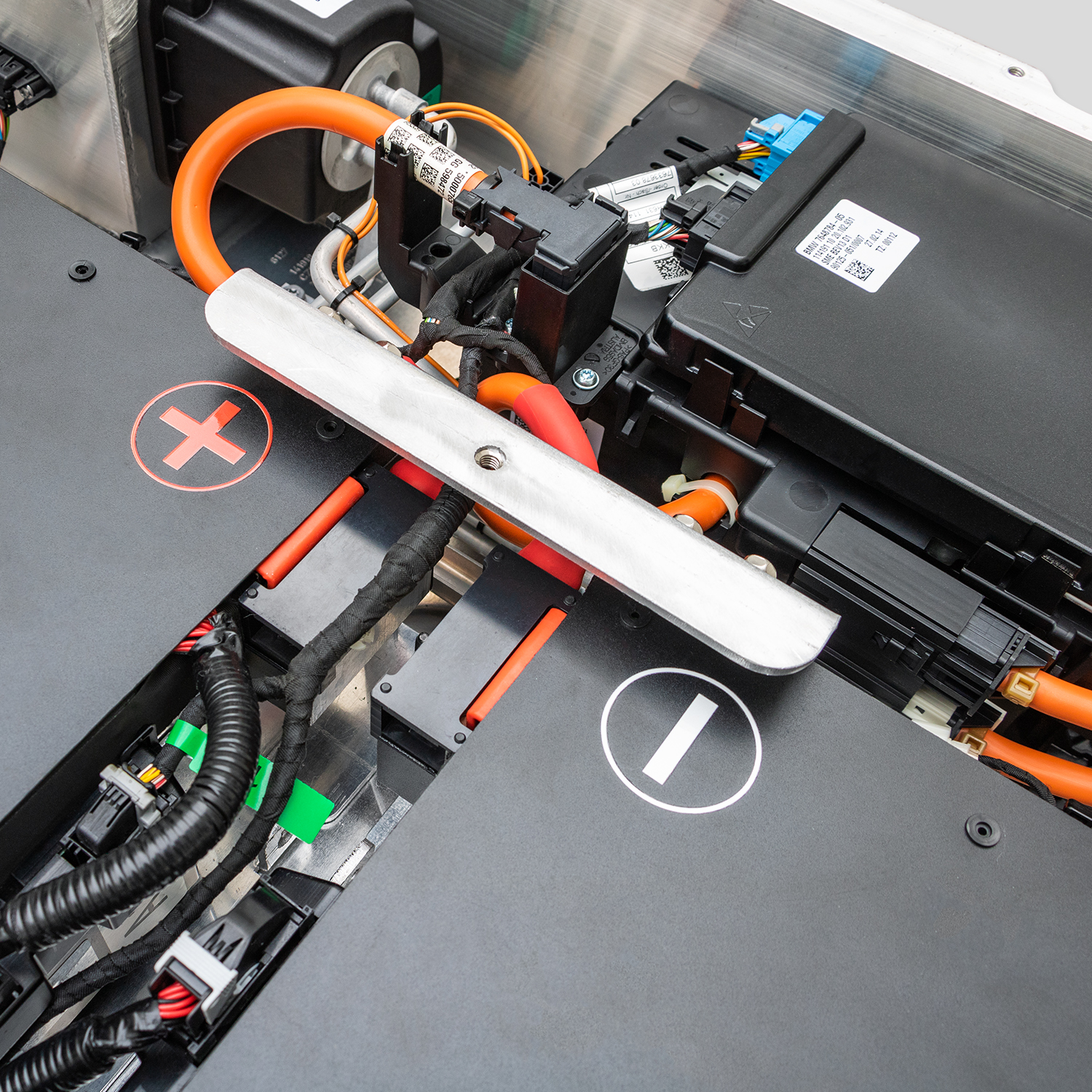
What Is the i3 Battery Pack Seal—And Why It Matters
The BMW i3 battery uses a multi-layer sealing system designed to meet IP67 standards (dust-tight + immersion-resistant up to 1m for 30 mins):
- Primary seal: A continuous EPDM rubber gasket compressed between upper and lower housing halves
- Secondary protection: Silicone-coated flange edges and sealed HV/communication ports
- Tertiary defense: Internal desiccant packs (in early models) to absorb residual humidity
This system works—as long as it’s never compromised.
But after 6+ years:
- EPDM hardens and cracks
- Mounting screws loosen from thermal cycling
- Road debris chips the flange surface
Result? Moisture sneaks in during car washes, floods, or even humid nights.
⚠️ The Dangerous Myth of “Just Replace the Gasket”
Many owners believe:
“If I replace the seal, the pack is safe again.”
This is dangerously false.
Here’s why:
🔹 Corrosion Begins Immediately
- Once humidity enters, it reacts with aluminum busbars and copper terminals
- Forms non-conductive oxides that increase resistance → heat → thermal runaway risk
🔹 Insulation Resistance Drops Permanently
- Water + electrolyte residue = conductive film on cell casings
- Even after drying, surface contamination remains
- SME detects low isolation → throws fault codes like 9E8710 or 801A10
🔹 DIY Reassembly Rarely Achieves Proper Compression
- OEM torque sequence: 28 screws in 3 stages at 4.5 Nm ±0.3
- Uneven pressure = micro-gaps → future leaks
📉 In our service logs, 100% of resealed packs failed isolation tests within 6 months—even when “professionally” reassembled.
When Is Seal Replacement Even Possible?
Only in two rare scenarios:
- Preventive maintenance on a known-dry, low-mileage pack (<40,000 km, <3 years old)
- Factory recall-level defects (e.g., batch-specific gasket flaw)
For any pack showing signs of moisture, corrosion, or age-related degradation—resealing is not a solution. It’s a delay tactic.
The Only Safe Path Forward: Full Pack Replacement
Instead of gambling with a compromised enclosure, choose a new, fully sealed system:
✅ Fresh IP67-rated housing with intact flanges
✅ New EPDM gasket pre-installed under controlled conditions
✅ Zero internal contamination—cells never exposed to humidity
✅ Full insulation resistance validation before shipping
That’s exactly what CNS BATTERY delivers.
“After flood warnings in my area, I replaced my 2017 i3’s original pack with a CNS 45kWh unit. Knowing it’s factory-sealed gives me confidence—even during monsoon season.”
— Lisa K., Berlin
Our packs undergo 24-hour humidity chamber testing and leak-down pressure checks—so you never wonder if moisture got in.
Step-by-Step: What Would Seal Replacement Involve? (For Awareness Only)
⚠️ Warning: This procedure should only be performed by certified HV technicians in controlled environments. Attempting it voids safety certifications and risks lethal voltage exposure.
- Depower & Discharge: Disconnect 12V, wait 10+ minutes, verify <60V across HV terminals
- Remove Pack: Lift entire assembly (≈230 kg) using proper sling
- Disassemble Housing: Remove 28 Torx T40 screws in reverse-torque sequence
- Inspect Interior: Check for white powder (LiPF₆ residue), rust, or swollen cells
- Clean Flanges: Use isopropyl alcohol—no abrasives
- Install New Gasket: Apply light silicone adhesive (optional, per BMW TIS)
- Reassemble: Torque screws in 3 passes to 4.5 Nm
- Test: Perform insulation resistance test (>1,000 kΩ required)
🛑 If step 4 reveals any contamination—stop. The pack is beyond repair.
Frequently Asked Questions: i3 Battery Seals
Q: Can I buy a replacement gasket separately?
A: Yes—but it’s sold only as part of a full housing kit by BMW (≈$1,200). Aftermarket gaskets lack material certification.
Q: Does CNS sell just the seal?
A: No—and for good reason. We believe in complete, tested solutions, not partial repairs on aging systems.
Q: How do I know if my pack has been exposed to moisture?
A: Look for: white crystalline deposits near terminals, musty odor, recurring isolation faults, or condensation under the rear seat.
Q: Will resealing fix an existing isolation fault?
A: Almost never. The fault indicates existing conductive paths—resealing doesn’t remove them.
Q: Are CNS packs truly IP67 rated?
A: Yes. Every unit is built in a climate-controlled facility and tested to exceed OEM sealing standards.
Don’t Trust a Patch—Trust a Proven System
Your i3’s battery isn’t just a power source.
It’s a sealed ecosystem where one drop of water can trigger irreversible decay.
Resealing might look like savings today.
But it’s a ticking time bomb tomorrow.
Choose Peace of Mind—With a Factory-Sealed, Ready-to-Drive Pack
CNS BATTERY gives you brand-new cells, perfect seals, and full environmental protection—all backed by a 2-year/80,000 km warranty.
Click below to replace uncertainty with confidence—and drive knowing your pack is truly sealed:
👉 https://cnsbattery.com/ev-battery-home/ev-battery-contact/