
BMW i3 Battery Pack Inspection: What to Look For (Before You Buy—or Get Stranded)
“I Bought a ‘Low-Mileage’ Used i3. Two Weeks Later, the Pack Swelled and Leaked. A 10-Minute Inspection Would’ve Saved Me $9,000.”
You’re considering a used BMW i3—or maybe you already own one and just want peace of mind. Either way, the single most expensive component in your car is hidden under the floor, silent and sealed… until it fails.
Unlike an engine, you can’t hear a degrading battery. But with a few targeted checks, you can spot early warning signs before range plummets, charging slows, or worse—thermal events occur.
This isn’t about opening the pack (you shouldn’t). It’s about smart, non-invasive inspection techniques that reveal real health—using tools any owner can access.
Whether you’re buying, maintaining, or planning an upgrade, here’s exactly what to look for during a BMW i3 battery pack inspection—and when it’s time to walk away or replace.
Why Visual & Diagnostic Checks Beat “Range Estimates”
Dealers and private sellers often say: “It shows 12 bars—battery is perfect!”
But bar count is a lie on older i3s. BMW’s display caps at 12 bars even when actual capacity is below 70%.
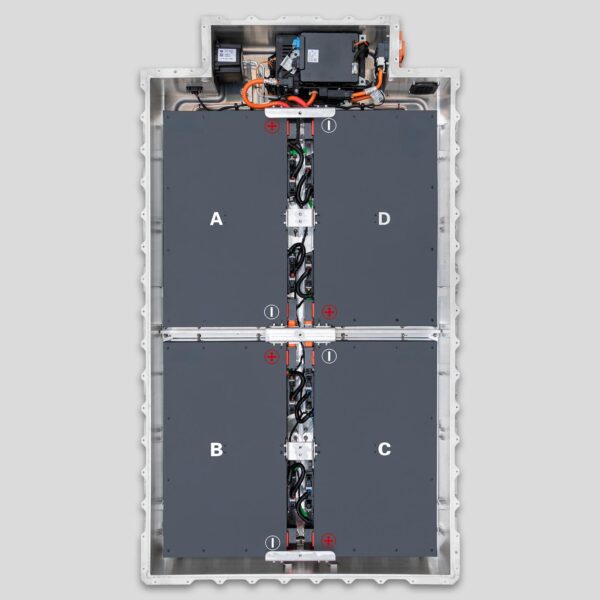
True inspection requires three layers of verification:
- Exterior physical condition
- Coolant and seal integrity
- Module-level voltage data
Let’s break them down.
🔍 Layer 1: Exterior Physical Inspection (Do This First)
Location: Underneath the rear subframe—look through wheel wells or lift the car safely.
✅ What’s normal:
- Clean, dry aluminum casing
- No dents, cracks, or punctures
- Factory labels intact (no tampering signs)
⚠️ Red flags:
- Bulging or warped sections → internal pressure from gas venting
- White/green crystalline residue near seams → electrolyte or coolant leakage
- Rust on mounting brackets → prolonged moisture exposure (indicates seal failure)
- Aftermarket stickers, mismatched bolts, or pry marks → possible prior disassembly
📌 Pro tip: Shine a flashlight along the pack’s edges. Even hairline cracks or lifted gaskets become visible with side lighting.
💧 Layer 2: Coolant System Integrity Check
The i3 uses a liquid-cooled battery. Leaks here cause corrosion, BMS errors, and fire risk.
How to inspect without opening anything:
- Open the coolant reservoir under the front hood (small blue cap)
- Check fluid level—it should be between MIN and MAX
- Look at color: bright green or pink = good; brown/milky = contamination
- Smell it: sweet odor = ethylene glycol; sour/burnt = degradation
Also check:
- Hoses and quick-connect fittings near the pack inlet/outlet (visible from below)
- Dampness or staining on the undertray directly beneath the pack
⚠️ Low or discolored coolant often means slow leaks—a leading cause of premature pack failure.
📊 Layer 3: Module-Level Voltage Diagnostics (The Truth Test)
This is where most inspections fail. You need OBD2 + compatible software:
Required tools:
- OBDX Pro or Foxwell NT510 (BMW-specific)
- BimmerLink (iOS) or BimmerCode + ISTA (advanced)
What to check:
- Resting voltage of all 8 modules (after 2+ hours off)
- Max spread: Should be < 0.2V on a healthy pack
- Any module below 3.2V at rest? → severe degradation
- Error codes: Especially 9307xx series (coolant/BMS faults)
📉 Real example: An i3 showing “12 bars” had Module D at 3.05V while others were 3.85V. Actual usable capacity: just 58%.
If the seller won’t allow diagnostics—or claims “no OBD port”—walk away.
When Inspection Reveals It’s Time to Replace
Consider a new pack if you find:
- Module voltage spread > 0.3V
- Visible leakage or swelling
- Repeated BMS errors even after resets
- Charging tapers before 60% on DC fast chargers
- Coolant loss without external leak source
These aren’t “fixable” issues—they’re symptoms of irreversible cell decay.
The Smart Upgrade: Start With a Pack Built to Pass Every Inspection
When you choose a CNS BATTERY 50kWh or 62kWh replacement, you get a unit designed to excel in every inspection category:
- Seamless, dent-free casing with OEM-fit mounting
- Factory-sealed coolant loops—zero leakage risk
- Brand-new CATL cells with <0.02V initial variance
- Full diagnostic transparency—no hidden errors or phantom bars
Plus, every pack undergoes pre-shipment validation, so you receive documentation proving its health—something no used or refurbished pack can offer.
“I inspected three used i3s using this checklist. All failed on voltage spread or coolant. I bought a CNS pack instead—now my 2015 i3 performs like new, and every diagnostic check passes perfectly.”
— Javier R., Lyon
Frequently Asked Questions: BMW i3 Battery Inspection
Q: Can I inspect the pack without lifting the car?
A: Partially. You can check coolant and run OBD scans, but underbody visuals require a lift or deep crawl space.
Q: Are all i3 packs liquid-cooled?
A: Yes—all model years (2013–2022) use active liquid cooling. Air-cooled myths apply only to very early prototypes.
Q: Does CNS BATTERY provide inspection reports?
A: Yes. Every order includes a pre-shipment health certificate with module voltages, resistance, and thermal test results.
Q: How often should I inspect my pack?
A: Annually for daily drivers; before any long trip if the car is over 5 years old.
Q: Can a swollen pack be repaired?
A: No. Swelling indicates cell venting or gas buildup—a critical safety hazard. Immediate replacement is required.
Don’t Gamble on a Sealed Black Box
Your BMW i3’s battery pack may be out of sight—but it shouldn’t be out of mind. A thorough inspection takes 15 minutes and could save you thousands in surprise replacements or roadside breakdowns.
And if your current pack doesn’t pass the test? You now know exactly what a truly healthy one looks like.
Ready to Own a Battery That Passes Every Inspection—With Flying Colors?
Get a CNS BATTERY BMW i3 pack engineered for structural integrity, thermal stability, and diagnostic clarity—so you never second-guess your car’s most critical component again.
Click below to request your custom quote and drive with verified confidence:
👉 https://cnsbattery.com/ev-battery-home/ev-battery-contact/

