BMW i3 Battery Overheating: The Myth of “Charging While Driving”
You are cruising down the highway in your BMW i3, enjoying the regenerative braking as you descend a long hill. Suddenly, the dashboard flashes a warning: “Charge Power Reduced” or “High Voltage Battery Overheated.”
A strange thought crosses your mind, fueled by internet rumors and misunderstood tech: “Is my battery overheating because it’s trying to charge while I’m driving?” “Can an EV charge and drive at the same time?” “Is the system working too hard?”
Let’s set the record straight immediately: No, your BMW i3 cannot plug-in charge while driving. There is no magical wireless charging happening on the highway. However, the phenomenon you are experiencing—regenerative braking generating heat during active driving—is very real, and for aging i3 batteries, it can be a critical trigger for overheating warnings.
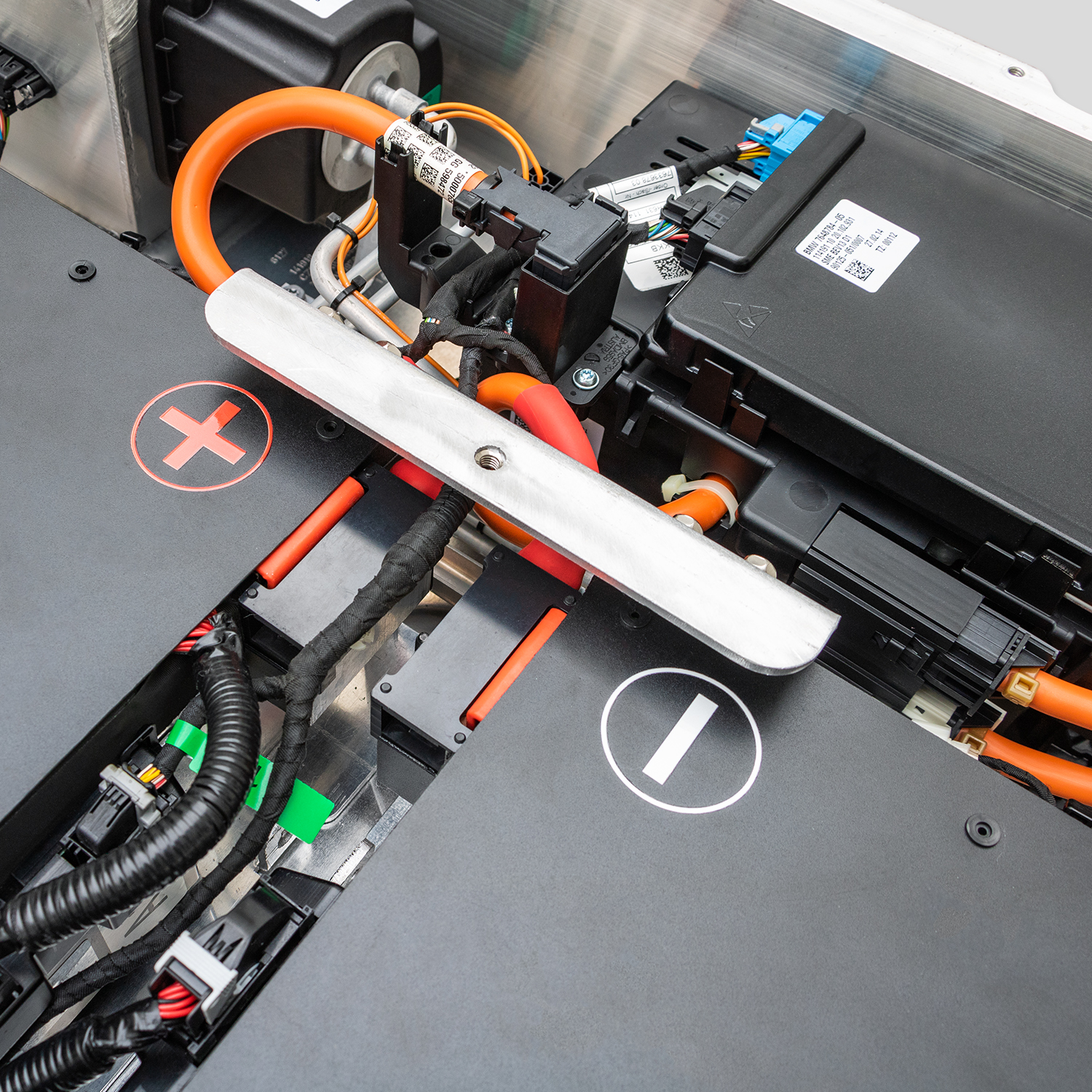
The confusion lies in how the Battery Management System (BMS) handles energy flow. When you lift off the accelerator, the motor becomes a generator, pushing electricity back into the battery. If your battery is old, degraded, or already hot, it cannot accept this incoming energy safely. The resistance creates intense heat, forcing the car to shut down regeneration to prevent damage.
Why does my battery overheat just from going downhill?
Is my cooling system failing?
And if my battery can’t handle the heat of regeneration, is it time for an upgrade?
At CNS BATTERY, we have diagnosed thousands of i3s where “overheating while driving” was the primary complaint. We know that this isn’t a software glitch; it’s a chemical limitation of aging cells. This guide debunks the “charging while driving” myth, explains the thermal dangers of regenerative braking on old packs, and reveals why upgrading to a modern battery is the only way to restore safe, efficient energy recapture.
The Truth: Regenerative Braking vs. Plug-In Charging
First, let’s clarify the terminology.
- Plug-In Charging: Requires a physical connection to an external power source (AC or DC). This cannot happen while the car is moving.
- Regenerative Braking: This is the process where the electric motor reverses polarity during deceleration, acting as a generator to convert kinetic energy back into electrical energy. This energy flows back into the battery pack.
The Confusion: To the driver, regen feels like “charging while driving” because the range indicator often increases or the charge bar ticks up slightly when going downhill.
The Reality: You are indeed putting energy into the battery while driving, but only through regeneration. And this is where the heat problem begins.
The Heat Trap: Why Old Batteries Overheat During Regen
In a brand-new battery, accepting regenerative energy is effortless. The cells have low internal resistance, allowing current to flow in smoothly with minimal heat generation.
But in a 7-10 year old BMW i3 battery, the chemistry has changed:
- Increased Internal Resistance: As cells degrade, their internal resistance spikes. According to Joule’s Law ($Heat = Current^2 \times Resistance$), pushing current into a high-resistance battery generates exponential heat.
- Thermal Saturation: If you are driving on a hot day, the battery is already warm. Adding the heat from regeneration pushes the temperature past the safety threshold (typically around 45°C – 50°C for older packs).
- The Shutdown: The BMS detects this rapid temperature rise and immediately cuts off regenerative braking. You will feel this as a sudden loss of “one-pedal driving” effect; the car will coast freely instead of slowing down aggressively.
The Danger: If the BMS didn’t cut off regen, the heat could cause cell swelling, electrolyte breakdown, or in extreme cases, thermal runaway. The warning light is your car saving itself from destruction.
Signs Your Battery Can’t Handle the Load
If your i3 is struggling with “charging while driving” (regeneration), you will notice these specific symptoms:
- Sudden Loss of Regen: You are going downhill, and suddenly the car stops slowing down when you lift off the gas.
- “Charge Power Reduced” Warning: This appears even when you aren’t plugged in, indicating the battery cannot accept any incoming current (from regen or a charger).
- Fans Screaming: The rear cooling fans run at 100% speed immediately after a downhill stretch, trying to dissipate the heat generated by the failed regen attempt.
- Range Fluctuation: The estimated range drops erratically because the BMS is confused by the thermal instability of the cells.
The Hard Truth: Cooling Fixes Won’t Solve Chemistry
Many owners try to fix this by flushing the coolant or replacing the cooling fans. While a healthy cooling system is vital, it cannot overcome the laws of physics.
- The Limit: No amount of liquid cooling can stop a degraded cell from generating excessive heat due to high internal resistance.
- The Symptom: If your battery overheats during moderate regen (like a gentle highway exit), the cells themselves are the problem. They are too old and chemically unstable to accept energy efficiently.
Continuing to drive with a battery that frequently overheats accelerates degradation. Every time the car hits a thermal limit, the cells suffer microscopic damage, reducing your total capacity further.
The CNS BATTERY Solution: Upgrade for Thermal Stability
If your BMW i3 is overheating during regenerative braking, your battery has reached the end of its thermal efficiency. The only permanent solution is to replace the high-resistance, heat-prone cells with modern technology.
At CNS BATTERY, our 120 Ah upgrades are engineered to handle the demands of modern driving, including aggressive regenerative braking, without breaking a sweat.
Why Upgrading Eliminates Overheating
- Low Internal Resistance: Our Grade-A cells have significantly lower resistance than your original 10-year-old cells. They accept regenerative current smoothly, generating minimal heat even during steep descents.
- Superior Thermal Tolerance: Modern cell chemistry can operate safely at higher temperatures, giving your cooling system a much wider margin before triggering warnings.
- Consistent Performance: With a new pack, you regain full “one-pedal driving” capability. The car will regenerate power consistently from the top of the hill to the bottom, without cutting out.
- Double the Range: While solving your overheating issues, you upgrade from a failing 60 Ah or 94 Ah pack to a 120 Ah equivalent, giving you 130+ miles of range.
- Cost Efficiency: A dealership OEM replacement costs $18,000–$22,000 USD just to restore original, heat-sensitive performance. Our complete upgrade solutions typically range from $8,000 to $12,000 USD, providing a cooler, more efficient battery with double the range for half the price.
Real Story: From “Coasting Danger” to “Regen Confidence”
Meet Sarah, a 2015 i3 owner who lived in the mountains. Last summer, her car stopped regenerating on a long descent, causing her brakes to fade and the battery to throw an overheat warning. She was terrified. The dealer said her battery was “thermally compromised” and quoted $19,000 for a replacement.
Sarah contacted CNS BATTERY. We installed a 120 Ah upgrade. “The difference is incredible,” Sarah says. “I drove down the same mountain last week. The car regenerated power the entire way, the battery stayed cool, and the fans barely turned on. I have full control again, and I now have 135 miles of range. The upgrade didn’t just fix the heat; it made my car safe again.”
Stop Driving with a Thermal Time Bomb
The idea of “charging while driving” via regeneration is a brilliant feature of EVs, but it requires a healthy battery to work safely. If your i3 is overheating during this process, your battery is telling you it can no longer handle the load.
Don’t ignore these warnings. Don’t risk brake fade or permanent cell damage. Upgrade to a system designed for the rigors of real-world driving.
Is your BMW i3 losing regen or showing overheat warnings?
Stop coasting into danger. Contact CNS BATTERY today for a professional thermal and regenerative performance diagnostic. Discover how our BMW i3 Series Battery upgrades can restore safe, efficient energy recapture and give you the confidence to drive anywhere.
👉 Get Your Thermal & Regen Assessment
Frequently Asked Questions (FAQ)
1. Can my BMW i3 charge from a plug while driving?
No. It is physically impossible to charge an EV from an external source while moving. The “charging” you see on the dashboard while driving is regenerative braking, where the motor converts motion back into electricity.
2. Why does my battery overheat when going downhill?
Going downhill triggers strong regenerative braking, which pushes high current into the battery. If your battery is old and has high internal resistance, this current generates excessive heat, triggering the BMS to shut down regeneration to prevent damage.
3. Is it dangerous if my car stops regenerating?
Yes. If regeneration cuts out unexpectedly, you lose the engine-braking effect, placing extra stress on your mechanical brake pads. On long descents, this can lead to brake fade. Additionally, frequent overheating damages the battery cells permanently.
4. Will flushing the coolant fix my overheating during regen?
Unlikely. If the overheating is caused by cell degradation (high internal resistance), better cooling cannot stop the heat generation at the source. The cells themselves need to be replaced.
5. Do CNS BATTERY upgrades handle regen better?
Absolutely. Our modern Grade-A cells have low internal resistance, allowing them to accept high regenerative currents without generating excessive heat. You will experience consistent, reliable one-pedal driving even in hot weather or on steep hills.
6. How much does it cost to fix regen-related overheating?
If the root cause is cell degradation, a dealership replacement costs $18,000–$22,000 USD. A CNS BATTERY upgrade typically ranges from $8,000 to $12,000 USD, providing a new, thermally stable battery with double the range.
7. Can I still drive my car if it shows “Charge Power Reduced”?
You can drive, but with caution. The car will not regenerate energy, meaning your brakes will do all the work. Avoid long downhill stretches and heavy traffic where regen is crucial. Have the battery inspected immediately, as continued driving risks permanent damage.