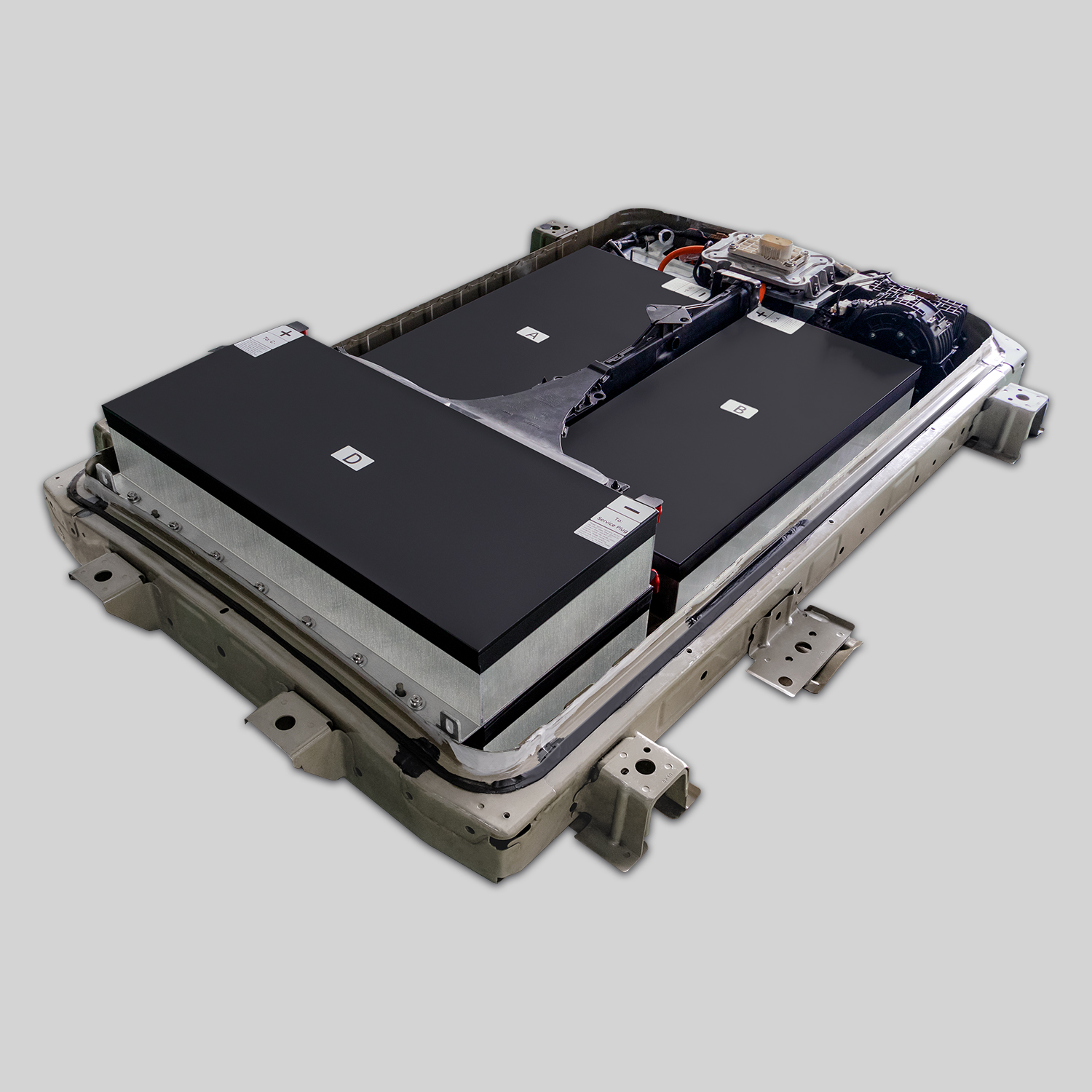
BMW i3 Battery Overcharging: Is Your Faulty Charger Killing Your Pack?
You plug in your BMW i3 tonight, expecting a full charge by morning. But when you wake up, the dashboard flashes a terrifying warning: “Charging Process Interrupted” or “High Voltage Battery Malfunction.” Or worse, you notice the battery feels unusually hot to the touch, and the cooling fans are screaming like jet engines long after the car should have stopped charging.
Your mind immediately jumps to the worst-case scenario: Is my battery overcharging? Is the charger faulty? Could this cause a fire?
The fear of BMW i3 battery overcharging is real, but the reality is often more nuanced. While modern EVs have sophisticated safety nets, a faulty charger, a damaged onboard component, or a degraded battery management system can indeed lead to dangerous conditions that stress your cells, reduce your range, or trigger a total shutdown.
At CNS BATTERY, we have diagnosed countless “charging faults” that owners blamed on their wall boxes, only to find the issue lay within the car’s aging battery cells or internal sensors. This guide separates fact from fiction, explains how to identify a truly faulty charger versus a failing battery, and reveals why solving these charging anomalies often requires more than just a new cable—it requires a complete powertrain upgrade.
The Safety Net: Can an i3 Actually Overcharge?
First, let’s address the elephant in the room. Technically, a BMW i3 cannot be “overcharged” in the traditional sense if all systems are functioning correctly.
The car’s Battery Management System (BMS) acts as a strict gatekeeper. It communicates with the charger (whether a home Wallbox or a public DC fast charger) and tells it exactly when to stop. Once the cells reach their maximum voltage (approx. 4.2V per cell), the BMS cuts the power.
However, this safety net relies on three components working perfectly:
- The External Charger: Must follow the car’s “stop” command.
- The Onboard Charger (OBC): Must regulate AC power correctly.
- The Battery & BMS: Must report accurate voltage and temperature data.
If any of these links fail, the result can mimic overcharging: excessive heat, premature shutdowns, or cell damage that looks like overcharge degradation.
Suspect #1: The Faulty External Charger
Is your home charging station (EVSE) the culprit? It’s possible, though less common than car-side issues.
Signs of a Faulty Charger:
- Inconsistent Charging: The car starts and stops repeatedly without reaching full capacity.
- Error Codes Specific to Infrastructure: Dashboard messages like “Check Charging Infrastructure” often point to the external unit.
- Physical Damage: Frayed cables, burnt smells from the plug, or loose connections at the wall box.
- Lack of Communication: If the charger fails to receive the “stop” signal due to a communication error (PLC signal failure), it might continue pushing power, causing the car’s internal breakers to trip aggressively.
The Test: Try charging at a different location (a public station or a friend’s home). If the problem disappears, your home charger is likely faulty. Replace it immediately with a UL-certified unit.
Suspect #2: The Real Villain – Degraded Battery Cells
Here is the hard truth that most owners miss: What looks like an overcharging fault is often actually a symptom of severe battery degradation.
As your i3 ages (especially models with 60 Ah or early 94 Ah packs), the internal resistance of the cells increases.
- Voltage Spikes: When a degraded cell reaches its max voltage much faster than healthy cells, the BMS sees a spike and abruptly cuts charging to prevent damage. To the owner, it looks like the charger is malfunctioning or “overcharging” that one cell.
- Thermal Runaway Risk: Old cells generate significantly more heat during the final stages of charging. If the cooling system can’t keep up, the temperature sensors trigger a fault, stopping the charge.
- Cell Imbalance: If one module is weak, it hits 100% while others are at 80%. The BMS stops the whole pack to protect the weak link. You never get a full charge, and the system flags a “Maximum Charge Level Reduced” error.
In these cases, buying a new charger won’t fix anything. The “fault” is the physical inability of your old battery to accept a full charge safely.
The Danger Zone: Why Ignoring These Faults Is Risky
Whether the issue is a rogue charger or a dying battery, ignoring these symptoms is dangerous.
- Fire Hazard: Continuous attempts to force charge a compromised battery can lead to thermal events.
- Permanent Capacity Loss: Repeated voltage spikes and overheating permanently destroy the chemical structure of the cells, shrinking your range further.
- Stranding: Eventually, the BMS will lock the battery completely to prevent catastrophe, leaving you with a car that refuses to charge or drive.
The CNS BATTERY Solution: Eliminate the Root Cause
If you’ve tested your charger and it’s fine, or if replacing the charger didn’t solve the issue, the problem lies within your high-voltage system. At CNS BATTERY, we don’t just patch the symptoms; we replace the failing heart of your vehicle.
Why Upgrading Solves “Overcharging” Faults
- Perfect Cell Matching: Our BMW i3 Series Battery upgrades are built with Grade-A cells matched to within millivolts of each other. There are no “weak links” to cause premature shutdowns or voltage spikes.
- Lower Internal Resistance: Our modern cells generate far less heat during charging than your original 10-year-old cells. This eliminates the thermal throttling that mimics overcharging faults.
- Accurate BMS Communication: Our packs integrate seamlessly with your i3’s computer, providing precise voltage and temperature data. The car knows exactly when to stop, eliminating false alarms.
- Double the Range: While solving your charging faults, you simultaneously upgrade from a failing 60 Ah or 94 Ah pack to a 120 Ah equivalent, giving you 130+ miles of reliable range.
- Cost Efficiency: A dealership might charge $500+ just to diagnose the issue, followed by $18,000–$22,000 USD for an OEM replacement. Our complete upgrade solutions typically range from $8,000 to $12,000 USD, offering superior reliability and double the performance for half the price.
Real Story: From “Charging Panic” to “Full Confidence”
Meet David, a 2015 i3 owner. His car would consistently stop charging at 78%, displaying a “Charging Fault” warning. He spent $400 replacing his home Wallbox, thinking it was faulty. The problem persisted. He was terrified to leave the car plugged in overnight, fearing a fire.
David contacted CNS BATTERY. Our diagnostic revealed his battery had severe cell imbalance and high internal resistance. The “fault” was his old battery rejecting the charge, not the charger pushing too much. We installed a 120 Ah upgrade. “Now I charge to 100% every night without a single worry,” David says. “The fans are quiet, the battery stays cool, and I have 135 miles of range. I wasted money on a new charger when I needed a new battery.”
Stop Guessing, Start Charging Safely
BMW i3 battery overcharging fears are often misdiagnosed. While a faulty charger is possible, the root cause is frequently an aging battery pack that can no longer handle the demands of a full charge cycle.
Don’t risk your safety or your vehicle’s longevity on guesswork. Identify the true source of the fault and eliminate it permanently with a solution designed for the future.
Is your BMW i3 showing charging faults or stopping prematurely?
Stop risking a thermal event. Contact CNS BATTERY today for a professional charging system diagnostic. We’ll pinpoint whether it’s your charger or your battery, and show you how our BMW i3 Series Battery upgrades can restore safe, reliable, full-capacity charging forever.
👉 Get Your Charging Diagnostic & Fix
Frequently Asked Questions (FAQ)
1. Can a faulty charger really overcharge my BMW i3?
It is highly unlikely due to the car’s multiple safety layers. The BMS controls the flow of energy. However, a faulty charger can cause communication errors or voltage irregularities that trigger the car to stop charging abruptly, mimicking an overcharge fault.
2. Why does my i3 stop charging before reaching 100%?
This is usually caused by cell imbalance or degraded cells within the battery pack. One weak module hits its voltage limit early, forcing the BMS to stop the entire process to prevent damage. It is rarely the charger’s fault.
3. Is it safe to leave my i3 plugged in if I have charging faults?
No. If your car is displaying charging errors, overheating, or stopping unexpectedly, unplug it immediately and have it inspected. Continuing to force charging cycles can lead to permanent battery damage or safety hazards.
4. How do I know if the problem is my charger or my battery?
Try charging at a different location (e.g., a public station). If the issue persists, the problem is likely your battery or onboard charger. If it only happens at home, your external EVSE might be faulty. A professional diagnostic is the only way to be sure.
5. Will replacing my battery fix charging interruptions?
Yes. If the interruptions are caused by degraded cells, high resistance, or imbalance (which is common in older i3s), a new CNS BATTERY upgrade will eliminate these issues. Our packs charge smoothly to 100% without triggering faults.
6. How much does it cost to fix charging faults?
Diagnosing the issue typically costs $100–$200. If the charger is bad, replacement is $300–$600. If the battery is the cause (the most common scenario), a dealership OEM replacement is $18,000+, while a CNS BATTERY upgrade is typically $8,000–$12,000 USD and includes double the range.
7. Can I prevent overcharging faults?
Regular maintenance helps, but calendar aging is inevitable. The best prevention is to monitor your battery health. Once degradation sets in, upgrading to a modern pack with lower internal resistance is the only way to guarantee fault-free charging.