BMW i3 Battery Mount Corrosion Repair: Shop Guide – The $600 Fix That Could Cost You Everything
A 2015 BMW i3 is lifted in your bay for a routine inspection. The customer complains of a “clunking” noise from the rear floor when going over bumps. You look up and see it: severe corrosion on the battery mounting brackets, with one mount completely sheared off, leaving the 400-pound high-voltage battery pack hanging precariously by a single bolt and the HV cables.
The instinctive reaction is to order a replacement bracket, unbolt the old rusted steel, weld or bolt on a new one, and bill the customer $600. It seems like a straightforward structural repair. But in the high-stakes world of EV safety in 2026, a failed mount is rarely just a “rust issue.” It is often the violent symptom of excessive vibration caused by internal cell swelling, thermal expansion issues, or a pack that has become so degraded it is physically destabilizing itself.
Why do BMW i3 battery mounts fail so catastrophically?
How do you diagnose if the mount broke due to road salt or internal battery pressure?
And if the battery itself is the root cause of the structural failure, how do you pivot from a risky $600 weld job to a high-profit, life-saving upgrade?
At CNS BATTERY, we know that the structural integrity of the battery pack is just as critical as its electrical health. We have seen the aftermath of ignored mount failures: severed cooling lines, torn HV connectors, and packs shifting during collisions. This guide provides the professional shop protocol for replacing BMW i3 battery mounts, explains the hidden risks of “just fixing the bracket,” and reveals why this repair often uncovers the need for a complete system overhaul.
The Anatomy of Failure: Why Mounts Break
Before attempting a replacement, you must understand why the failure occurred. In a healthy vehicle, steel mounts should last decades. Failure indicates a severe abnormality.
1. Galvanic Corrosion (The Silent Killer)
The i3 uses an aluminum chassis and carbon fiber reinforced plastic (CFRP) drive module, but the battery mounts are often steel. In salt-belt regions, the dissimilar metals create a galvanic cell. Road salt accelerates the corrosion, turning strong brackets into brittle flakes that snap under load.
2. Internal Cell Swelling (The Hidden Force)
As lithium-ion cells degrade, they can generate gas (swelling). In severely aged i3 packs, this swelling exerts immense outward pressure on the casing.
- The Result: The expanding pack pushes against the mounts, creating constant stress fractures. If you replace the mount without addressing the swollen pack, the new mount will break again within months.
3. Vibration Fatigue
If the original rubber isolators have disintegrated, the metal-on-metal vibration between the heavy pack and the chassis creates rapid fatigue cracks. A loose pack acts like a hammer, destroying its own supports.
Professional Replacement Protocol: Step-by-Step
Do not just swap the part. Follow this rigorous workflow to ensure the repair is safe and permanent.
Step 1: Safety & Support
- PPE Up: Standard mechanical PPE plus HV awareness (orange cables are nearby).
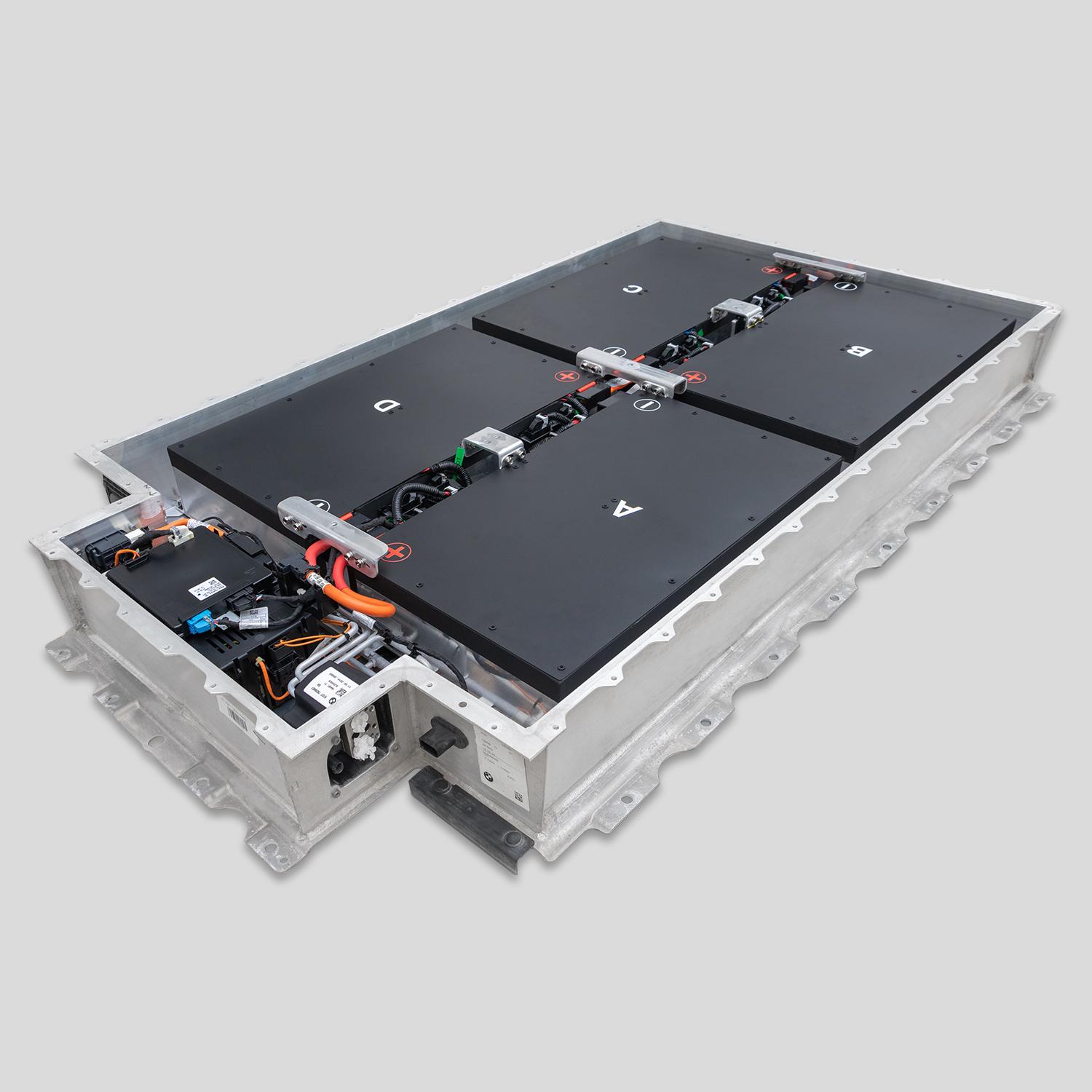
- Support the Pack: Before removing any bolts, use a transmission jack with a wide wooden cradle to support the entire weight of the battery pack.
- Critical: Do not rely on the remaining broken mount. The pack is unstable.
- Disconnect 12V: Prevent accidental contactor engagement while working underneath.
Step 2: Removal & Inspection
- Remove Broken Mounts: Cut or unbolt the corroded brackets.
- Inspect the Casing: This is the most critical step. Look at the battery casing where the mount was attached.
- Signs of Swelling: Is the aluminum casing bowed? Are there stress cracks near the mounting points?
- Signs of Leakage: Is there crusty residue or wetness indicating the stress cracked a seal?
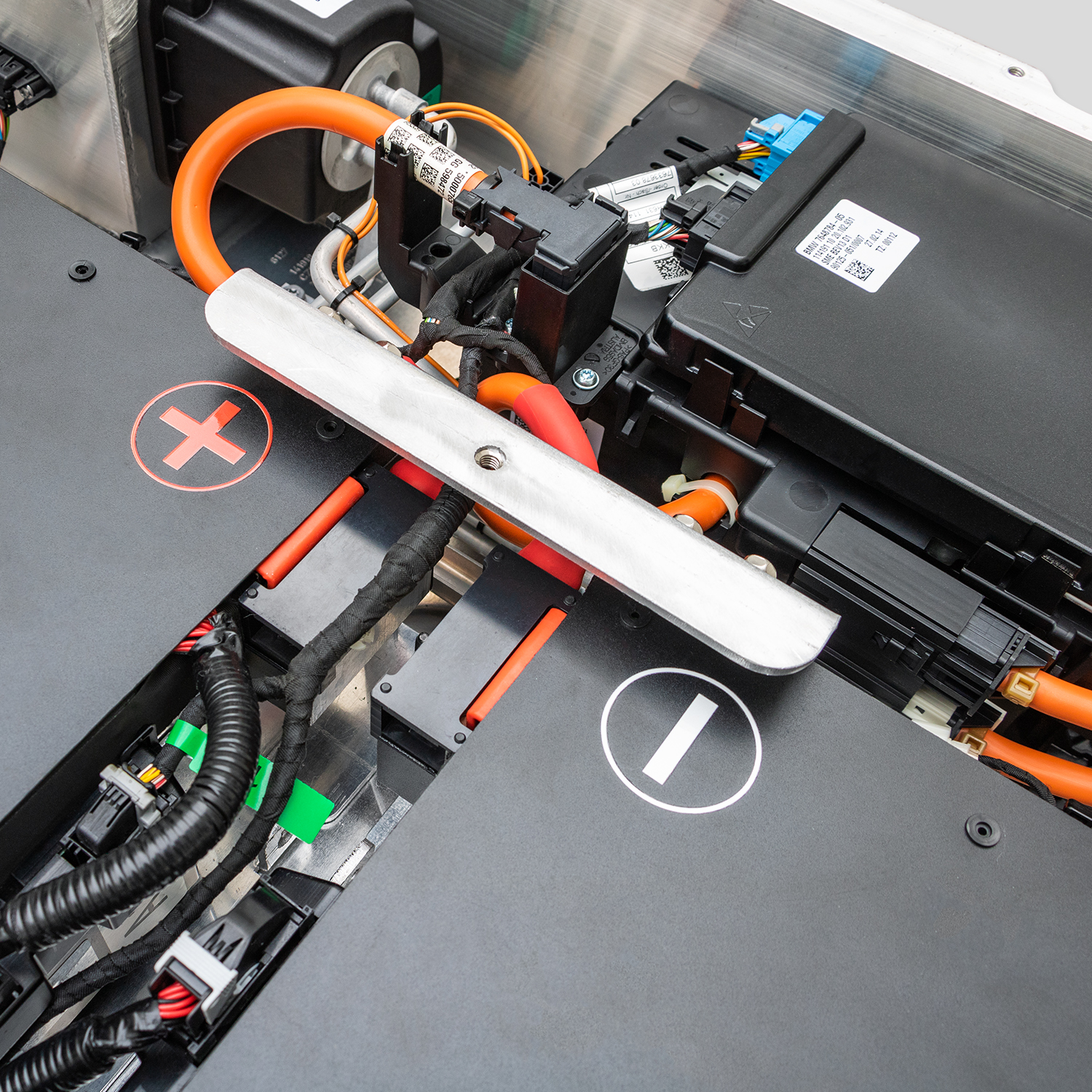
- Cable Stress: Check the orange HV cables and cooling lines. Are they stretched, chafed, or pulled tight due to the pack shifting?
Step 3: Surface Preparation
- Clean Aggressively: Remove all rust from the chassis mounting points. Use a wire wheel and apply a galvanic corrosion inhibitor (zinc-rich primer) to prevent future dissimilar metal corrosion.
- New Isolators: Never reuse old rubber bushings. Install brand-new OEM isolators to dampen vibration.
Step 4: Installation & Torque
- Mount New Brackets: Install genuine BMW replacement mounts or certified aftermarket equivalents designed for EV loads.
- Torque to Spec: Use a calibrated torque wrench. Over-tightening can strip the CFRP threads; under-tightening allows movement. Follow ISTA specifications precisely.
- Verify Clearance: Ensure the pack is centered and no cables or lines are pinched or under tension.
Step 5: The Critical Decision Point
Once the mount is replaced, you must decide: Is the pack safe?
- Scenario A (External Corrosion Only): The mount broke due to salt, but the pack casing is flat, dry, and undamaged.
- Verdict: Repair successful. Monitor closely.
- Scenario B (Internal Swelling/Damage): The casing is bowed, seals are compromised, or cables are damaged from the shift.
- Verdict: The pack is condemned. A new mount cannot fix a swollen, structurally compromised battery. It is a ticking time bomb.
The Hard Truth: When a Mount Repair Isn’t Enough
Many shops fix the mount and send the car home, only to have it return weeks later with a dead battery or a broken new bracket. Why?
- The Swelling Continues: If the cells are gassing, they will push against the new mount until it fails too.
- Hidden Damage: The shifting pack may have internally fractured busbars or cracked cooling plates, leading to imminent failure.
- Liability: If you re-mount a swollen pack and it catches fire or detaches in a crash, your shop is liable for approving a compromised vehicle.
The Pivot: If you find swelling, casing damage, or cable stress, do not sell a patch. Sell the solution.
The CNS BATTERY Solution: Eliminate the Root Cause
When diagnostics reveal that the mount failure was caused by a degrading, swollen battery, offer the CNS BATTERY High-Capacity Upgrade. This turns a structural repair into a complete vehicle renewal.
Why Upgrading Is the Smart Move
- Perfect Structural Integrity: Our upgrades come in brand-new, rigid casings with factory-perfect mounting points. No swelling, no bowing, no stress fractures.
- Included Hardware: We provide new, corrosion-resistant mounting recommendations and ensure the pack fits perfectly with new isolators.
- Zero Vibration History: Our packs are fresh. No years of expansion/contraction cycles that weaken mounts.
- Double the Range: While solving the mount issue, you upgrade the customer from a failing 60 Ah or 94 Ah pack to a 120 Ah to 180 Ah system, giving them 130–200+ miles of range.
- Cost Efficiency:
- Mount Repair + Risk: $600–$1,000 (high chance of recurrence if pack is swollen).
- Dealer Pack + Mounts: $20,000+.
- CNS BATTERY Upgrade: $8,000 – $14,000 USD. You get a brand-new battery, perfect mounts, and double the range for half the dealer price.
Real Story: From “Sheared Bracket” to “Bulletproof Build”
“Elite EV Services” in Ohio had a 2015 i3 with a sheared left-rear mount. They replaced the bracket, but during the test drive, they noticed the pack seemed “tight” against the new mount, suggesting internal swelling. Upon closer inspection, the casing was bowed by 4mm.
“We realized the mount didn’t fail from rust; it failed because the battery was pushing itself apart,” says the shop owner. “We refused to just bolt it down. We installed a CNS BATTERY 150 Ah upgrade. The new pack sat perfectly flat, aligned effortlessly with new mounts, and had zero stress on the cables. The customer paid $11,500, got 170 miles of range, and drives with total confidence. We avoided a comeback and gave them a better-than-new car.”
Stop Patching, Start Securing
Replacing BMW i3 battery mounts requires more than just welding steel. It demands a thorough inspection of the battery’s physical health. Don’t risk your shop’s reputation on a superficial fix that hides deeper degradation.
Offer the solution that guarantees safety, reliability, and performance.
Found a broken or corroded battery mount?
Don’t gamble on a partial repair. Contact CNS BATTERY today for a professional assessment. We’ll help you determine if a simple mount swap is safe or if it’s time for a 120 Ah+ upgrade that provides a brand-new, perfectly aligned battery and double the range.
👉 Get Your Mount & Battery Assessment Quote
Frequently Asked Questions (FAQ) for Shops
1. Can I just weld a new mount onto the i3 chassis?
No. The i3 chassis involves Carbon Fiber Reinforced Plastic (CFRP) and aluminum. Welding can compromise the structural integrity of these materials. Always use bolt-on OEM replacement brackets with proper corrosion protection.
2. What causes BMW i3 battery mounts to break?
The primary causes are galvanic corrosion (steel vs. aluminum/carbon), internal cell swelling exerting pressure on the casing, and vibration fatigue from worn isolators.
3. Is it safe to drive with a broken battery mount?
Absolutely NOT. A detached or loosely hanging high-voltage battery can sever cooling lines, tear HV cables, or shift dangerously in a collision. The vehicle must be towed immediately.
4. How do I know if the battery is swollen?
Inspect the casing for bowing, stress cracks near mounting points, or difficulty aligning the new mount. If the pack does not sit flat or requires force to bolt down, it is likely swollen and compromised.
5. How much does it cost to replace a mount vs. upgrading?
A mount replacement costs $600–$1,000. However, if the battery is swollen, the mount will fail again. A CNS BATTERY upgrade costs $8,000–$14,000 but includes a brand-new battery with perfect structural integrity and double the range, offering far better long-term value.
6. Does CNS BATTERY include new mounting hardware?
Yes. Our upgrades are designed for precise fitment. We recommend (and often include) new corrosion-resistant mounting hardware and isolators to ensure the new battery is secured perfectly from day one.
7. What if the HV cables are damaged from the shifting pack?
If the orange HV cables are stretched, chafed, or pinched, the entire cable harness must be replaced along with the battery. Do not attempt to tape or repair damaged HV cables.