BMW i3 Battery Mount Bracket: Replace It Before It Fails Your Pack
You are driving your BMW i3 over a familiar speed bump or taking a sharp turn, and suddenly you hear it: a loud, metallic clunk or a grinding vibration coming from underneath the rear seat. It sounds like something heavy has come loose.
Your mind immediately goes to the worst-case scenario. Is my battery pack falling out? Did I hit something? Is this going to cost me $20,000?
Before you panic, take a breath. The culprit is likely not the battery cells themselves, but the unsung hero holding them in place: the BMW i3 battery mount bracket.
Over time, these steel supports bear the brunt of road vibrations, salt corrosion, and the sheer weight of a 500-pound high-voltage pack. When they rust, crack, or loosen, they compromise the structural integrity of your entire EV. Ignoring a failing bracket isn’t just a noise issue; it’s a safety hazard that can lead to damaged cooling lines, severed high-voltage cables, and catastrophic battery failure.
How do you know if your mounts are failing?
Can you replace just the bracket, or is the damage already done?
And if your brackets are corroded, is it the perfect time to upgrade to a modern, lighter, and more robust battery system?
At CNS BATTERY, we have inspected thousands of i3 undercarriages. We know that while replacing a mount bracket is a critical repair, it often reveals the true condition of an aging battery pack. This guide explains the vital role of these mounts, the signs of failure, and why combining a bracket replacement with a high-capacity battery upgrade is the smartest investment you can make for your i3’s future.
The Silent Guardian: Why Mount Brackets Matter
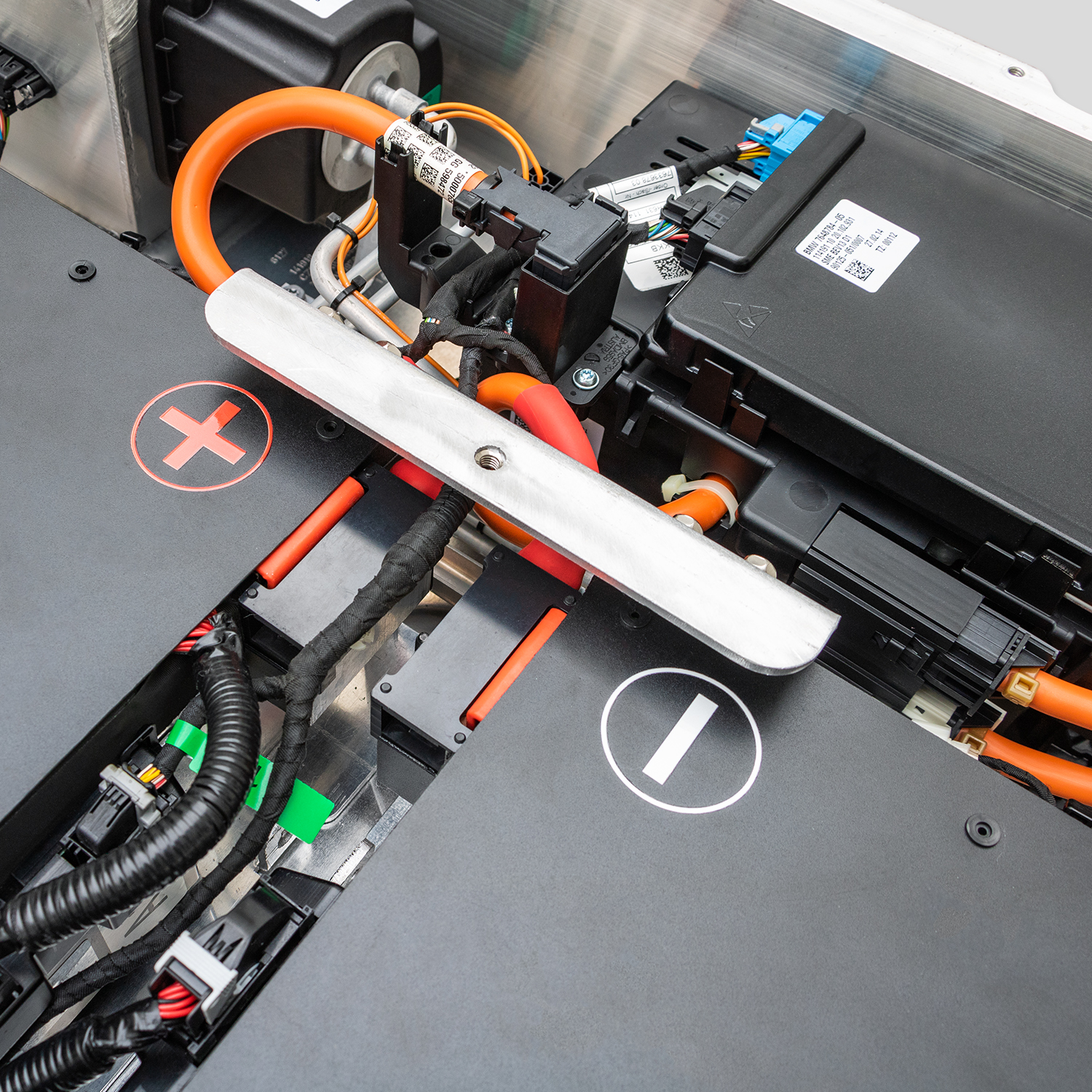
The BMW i3 battery pack is not just sitting on the floor; it is a structural component of the car, bolted securely to the chassis via heavy-duty mount brackets and reinforced crossmembers.
Their Critical Functions
- Structural Integrity: They hold the 500+ lb battery pack firmly in place during acceleration, braking, and cornering.
- Vibration Damping: They isolate the sensitive battery cells from road shocks. Excessive vibration can loosen internal cell connections, leading to resistance and failure.
- Protection of HV Components: A loose battery can shift, putting tension on the orange high-voltage cables and liquid cooling lines. A shifted pack can snap a coolant hose, leading to immediate overheating and isolation faults.
- Crash Safety: In the event of a collision, these mounts ensure the battery stays secured and doesn’t intrude into the passenger cabin or rupture.
Signs Your Battery Mount Bracket Is Failing
Don’t wait for the battery to drop. Watch for these early warning signs:
- Loud Clunking Noises: A distinct metallic bang when going over bumps, potholes, or railroad tracks.
- Excessive Vibration: Feeling a hum or shake in the floorboard or rear seats, especially at highway speeds.
- Visible Corrosion: If you lift the car, look at the steel brackets. Are they flaking with orange rust? Has the metal thinned or cracked? Road salt is the enemy here.
- Misaligned Underbody Panels: If the plastic shields underneath are rubbing, dragging, or have new scrape marks, the battery pack may have shifted due to loose mounts.
- Coolant Leaks: A shifting pack can stress the cooling hoses connected to the battery, causing leaks that mimic a bracket failure but are actually a symptom of it.
The Replacement Process: More Than Just Bolts
Replacing a BMW i3 battery mount bracket is not a simple DIY job. It involves working directly beneath the high-voltage battery.
The Professional Protocol
- Safety First: The high-voltage system must be disabled, and the service plug removed.
- Supporting the Pack: Specialized hydraulic lifts are required to support the battery’s weight while the old, compromised brackets are unbolted. Never rely on the remaining bolts to hold the pack during repair.
- Inspection: Once the bracket is off, technicians must inspect the battery casing for cracks, the cooling lines for stress fractures, and the HV connectors for tension damage.
- Installation: New OEM-spec or reinforced aftermarket brackets are installed with precise torque specifications to ensure even load distribution.
- Alignment Check: The entire pack position is verified to ensure no components are under stress.
⚠️ WARNING: Attempting this without proper lifting equipment risks dropping the battery pack, which can cause fatal injuries, fire, or total loss of the vehicle.
The Hard Truth: When a New Bracket Isn’t Enough
Here is the scenario many owners face: They pay $800–$1,500 to replace the rusted brackets. But once the pack is lowered, the technician sees the real problem.
- Corroded Casing: The same salt that ate the bracket has started eating the battery aluminum casing.
- Damaged Cooling Lines: The shifting caused by the old broken bracket has already cracked the coolant hoses.
- Internal Damage: Years of unchecked vibration from loose mounts have loosened internal busbars, causing cell imbalance and capacity loss.
The Reality: If your brackets failed due to age and corrosion, your battery pack has likely been suffering from excessive vibration and exposure for months or years. Simply bolting on a new bracket might secure the pack, but it won’t fix the internal damage already done. You might be securing a dying battery.
The CNS BATTERY Solution: Upgrade for Ultimate Security
If your battery mount brackets are failing, it is a clear signal that your i3’s undercarriage has endured years of harsh conditions. Instead of just patching the support system for an old, potentially damaged battery, why not upgrade the entire powertrain?
At CNS BATTERY, our BMW i3 Series Battery upgrades offer a complete solution that addresses both support and performance.
Why Upgrading Is Smarter Than Just Replacing Brackets
- Brand-New Integration: Our upgrade process includes the installation of new, corrosion-resistant mounting hardware. We ensure your new pack is secured with the strongest possible foundation.
- Comprehensive Inspection: During the swap, we thoroughly inspect the chassis, cooling lines, and HV connectors. Any worn components are replaced proactively, ensuring your new battery starts life in a perfect environment.
- Modern Durability: Our packs are engineered with robust casings that resist vibration and environmental stress better than the original 10-year-old designs.
- Double the Range: While fixing your mounting issues, you upgrade from a failing 60 Ah or 94 Ah pack to a 120 Ah equivalent, giving you 130+ miles of range.
- Cost Efficiency:
- Bracket Repair + Potential Collateral Damage Fix: $1,500–$3,000 (and you still have an old battery).
- Dealership OEM Replacement: $20,000+.
- CNS BATTERY Upgrade: $8,000 – $12,000 USD. You get a brand-new battery, new mounting hardware, a fully serviced cooling system, and double the range for half the dealer price.
Real Story: From “Rattling Risk” to “Rock Solid Range”
Meet Sarah, a 2015 i3 owner. She heard clunking noises for months but ignored them. Finally, a shop inspection revealed her rear mount brackets were nearly rusted through. They quoted her $1,200 to replace them. But when they lowered the pack, they found the vibration had cracked a coolant line and caused minor case corrosion. The repair bill jumped to $3,500, and they warned her the battery cells might already be damaged from the shaking.
Sarah contacted CNS BATTERY. We recommended a full 120 Ah upgrade. “They replaced the battery, installed brand-new heavy-duty mounts, fixed all the cooling lines, and sealed everything up,” Sarah says. “Now my car is silent. No rattles, no vibrations. And I have 135 miles of range instead of the 45 I had before. Upgrading was the only way to truly fix the problem and stop worrying about what else was broken.”
Don’t Let a Loose Bracket Ground Your Car
A failing BMW i3 battery mount bracket is a serious safety issue. It threatens the structural security of your most valuable component. While replacing the bracket is essential, do not ignore the potential collateral damage to an aging battery pack.
Use this opportunity to secure your vehicle’s future with a modern, high-capacity solution that guarantees safety, stability, and incredible range.
Hearing clunks or seeing rust on your i3’s undercarriage?
Stop risking a battery drop. Contact CNS BATTERY today for a professional structural and battery health inspection. We’ll tell you if a simple bracket swap will work or if it’s time for a 120 Ah upgrade that secures your car and doubles your range.
👉 Get Your Mount & Battery Assessment
Frequently Asked Questions (FAQ)
1. What are the symptoms of a bad BMW i3 battery mount bracket?
Common symptoms include loud clunking noises over bumps, excessive vibration in the cabin, visible rust or cracking on the steel supports, and misaligned underbody panels. In severe cases, you may experience coolant leaks due to pack shifting.
2. Can I drive my i3 if I suspect a broken mount bracket?
No. A compromised mount puts the entire battery pack at risk of shifting or falling. This can sever high-voltage cables, rupture cooling lines, or cause a crash safety failure. Have the vehicle towed to a specialist immediately.
3. How much does it cost to replace the battery mount brackets?
Professional replacement typically costs between $800 and $1,500 USD, depending on labor rates and the extent of corrosion. However, if the loose bracket has caused secondary damage (coolant leaks, casing cracks), costs can rise significantly.
4. Will replacing the brackets fix my battery issues?
Replacing the brackets secures the pack physically, but it does not fix internal battery damage caused by previous vibration or exposure. If your battery is already degraded or imbalanced due to long-term looseness, a bracket swap alone won’t restore range or performance.
5. Does CNS BATTERY install new mounts with their upgrades?
Yes. As part of our BMW i3 Series Battery upgrade, we inspect all mounting points and typically install new, corrosion-resistant hardware to ensure your new battery is secured perfectly. We also check and repair any cooling or HV line damage caused by previous movement.
6. Why do these brackets fail?
The primary causes are road salt corrosion (especially in winter climates), fatigue from years of vibration, and occasional impact damage from road debris. The i3’s low ground clearance makes these components vulnerable.
7. Is it worth upgrading the battery if I need new mounts?
Absolutely. If you are already paying to lower the pack and address mounting issues, upgrading to a CNS BATTERY 120 Ah system makes the most financial sense. You solve the structural problem, eliminate the risk of old battery failure, and gain double the range for a fraction of the cost of a dealership replacement.