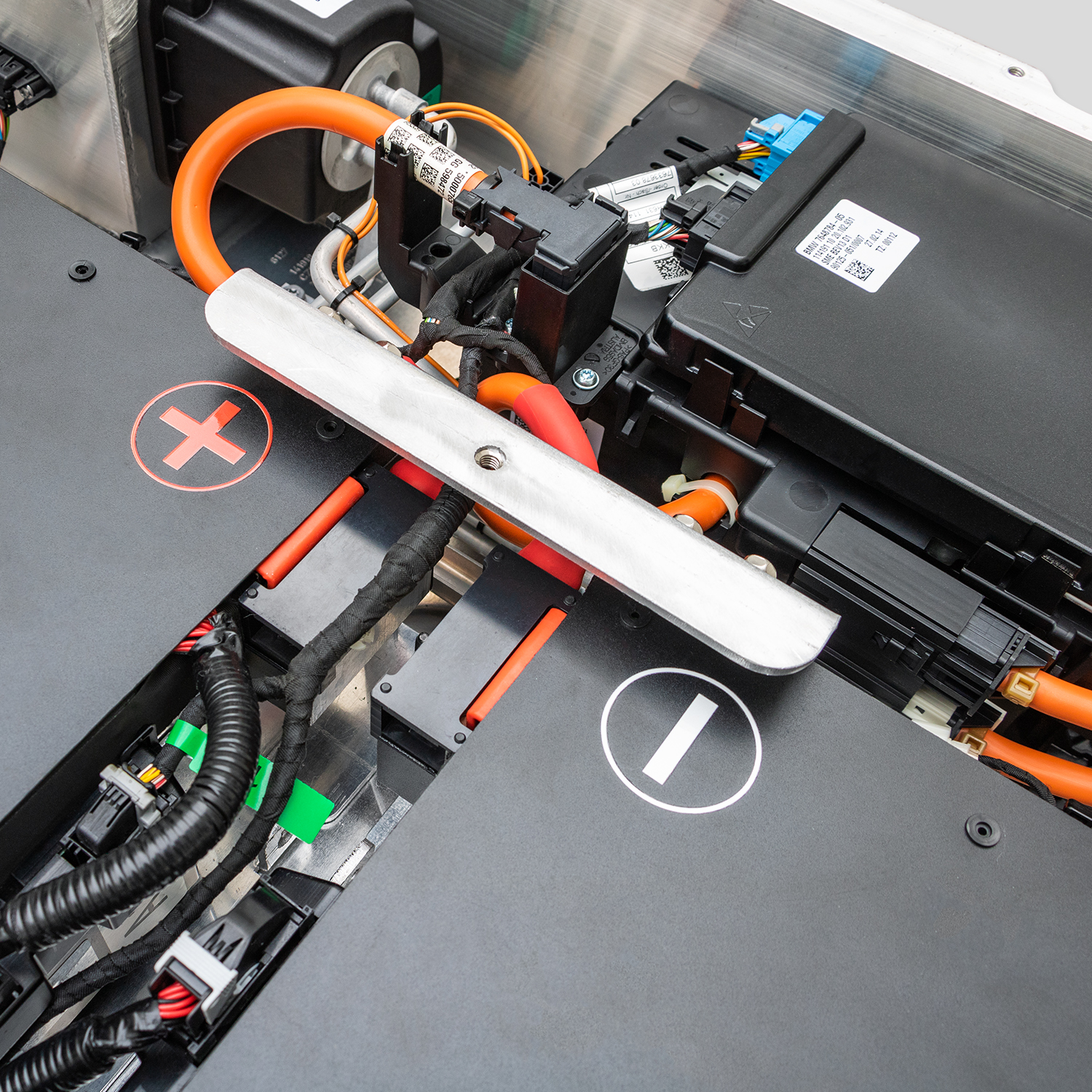
BMW i3 Battery Mount Bolt: Tighten to Spec – The 5-Minute Check That Prevents a $20,000 Disaster
You are driving your BMW i3 over a speed bump or taking a sharp turn when you hear it: a dull, heavy clunk from beneath the rear seat. It’s not the usual solid thud of the suspension; it sounds like something massive is shifting inside the car.
Your heart skips a beat. That “something” is your 500-pound high-voltage battery pack.
The culprit might be as simple as a loose battery mount bolt. In the world of internal combustion engines, a loose bracket is a nuisance. In the BMW i3, a loose battery mount is a catastrophic safety hazard. If that 500-pound pack shifts even an inch, it can sever high-voltage orange cables, rupture cooling lines, or compromise the structural integrity of your vehicle.
How do you know if your mounts are loose?
What is the exact torque specification you need to save your car?
And if your bolts are loose because the metal around them is corroded or stripped, is tightening enough, or do you need a complete structural renewal?
At CNS BATTERY, we have inspected thousands of i3 undercarriages. We know that while a simple torque check can solve minor issues, loose bolts are often the first symptom of a deeper problem: aging infrastructure and corrosion. This guide provides the critical torque specs you need, explains the dangers of ignoring them, and reveals why upgrading to a modern battery system is the only way to guarantee your pack stays secure forever.
The Silent Threat: Why Mount Bolts Loosen
The BMW i3 battery pack is suspended from the rear subframe using specialized steel brackets and high-strength bolts. Over time, several factors conspire to loosen these critical fasteners:
1. Vibration and Thermal Cycling
Every time you drive, the battery vibrates. Every time you charge, it heats up and expands; every time you park, it cools and contracts. This constant cycle of thermal expansion and contraction combined with road vibration can cause bolts to gradually back out if they weren’t perfectly torqued during a previous service.
2. Corrosion and Seizing
In “rust belt” regions or coastal areas, road salt attacks the steel bolts and aluminum subframe threads. This creates galvanic corrosion. Paradoxically, corrosion can make a bolt feel “tight” due to rust seizing, while actually stripping the threads underneath. When the rust eventually breaks free, the bolt becomes dangerously loose.
3. Previous Improper Service
If your battery was ever removed for a recall, software update, or repair, and the technician failed to use a calibrated torque wrench or skipped the thread-locking compound, the bolts are prime candidates for loosening.
The Danger Zone: What Happens When Bolts Fail?
Ignoring a loose battery mount bolt is not an option. The consequences escalate rapidly:
- Stage 1: Noise and Vibration: You hear clunks and feel unusual vibrations. The battery pack begins to shift microscopically.
- Stage 2: Cable Stress: The shifting pack puts tension on the rigid high-voltage connectors and flexible orange cables. This can lead to cracked housings, exposed conductors, and isolation faults.
- Stage 3: Cooling Line Rupture: The liquid cooling hoses connected to the pack are not designed to handle lateral movement. A shifting battery can snap these lines, causing coolant to leak onto high-voltage components, leading to short circuits.
- Stage 4: Structural Detachment: In the worst-case scenario, a completely failed mount can allow the battery to drop or swing violently during a collision or hard maneuver, compromising vehicle control and safety systems.
The Reality: A $0.50 bolt holding a $20,000 asset is the most critical connection in your car.
The Fix: How to Tighten to Spec (DIY vs. Pro)
If you suspect a loose mount, immediate action is required. However, this is not a job for a guesswork approach.
The Critical Torque Specification
While BMW ISTA software provides the exact spec for your specific VIN, the general torque specification for BMW i3 battery mount bolts typically falls in the range of:
- M10 Bolts: 45–50 Nm (33–37 ft-lbs)
- M12 Bolts: 65–70 Nm (48–52 ft-lbs)
(Note: Always verify with official service documentation for your specific model year before proceeding. Using the wrong torque can strip threads or fail to secure the pack.)
The Professional Protocol
- HV Disconnection: Before touching any mount near the battery, the high-voltage system must be safely disabled and verified at 0 Volts.
- Inspection: Remove the bolts entirely. Inspect the threads on both the bolt and the subframe for corrosion, stripping, or damage.
- Cleaning: Clean all threads with a wire brush and apply fresh thread-locking compound (Loctite) if specified by BMW.
- Torquing: Use a calibrated digital torque wrench to tighten the bolts in the correct sequence to the exact specification.
- Verification: Re-scan the vehicle for any fault codes related to isolation or mounting.
The DIY Risk
Attempting this yourself without proper HV training is lethal. The mounts are inches away from live 400V busbars. One slip of a wrench can cause an arc flash or electrocution. Furthermore, if the threads are stripped due to corrosion, simply tightening the bolt will not fix the problem; the mount will loosen again immediately.
The Hard Truth: Tightening Isn’t Always Enough
Here is the difficult reality for 2014-2018 i3 owners: If your bolts are loose, the surrounding hardware is likely compromised.
- Stripped Threads: If corrosion has eaten away the aluminum threads in the subframe, a new bolt won’t hold. You may need helicoils or even subframe replacement.
- Warped Brackets: Steel mount brackets can warp or crack from years of stress. A tightened bolt on a bent bracket still allows movement.
- The Root Cause: Often, bolts loosen because the battery pack itself has shifted due to worn rubber isolators or degraded mounting points on the battery casing. Tightening the bolt treats the symptom, not the disease.
The Verdict: If you find significant play, corrosion, or damaged threads, tightening is a temporary band-aid. The entire mounting system needs renewal.
The CNS BATTERY Solution: Secure Your Pack with a Fresh Start
If your battery mounts are loose, corroded, or damaged, don’t gamble with a patch job. Upgrade to a system that comes with brand-new, perfectly secured mounting hardware.
At CNS BATTERY, our BMW i3 Series Battery upgrades include a complete structural renewal of the battery installation.
Why Upgrading Guarantees Security
- Brand-New Hardware: We replace all old, corroded, or stretched bolts and brackets with fresh, high-strength OEM-spec hardware. No rust, no stripped threads.
- Perfect Torque: Our certified technicians use calibrated tools to install your new pack to exact factory specifications, ensuring zero movement.
- Structural Inspection: We thoroughly inspect your subframe for corrosion. If damage is found, we repair or reinforce it before installing the new battery, ensuring a solid foundation.
- Lower Center of Gravity: Our modern cells are often more compact and better balanced, reducing vibration stress on the mounts compared to your old, degraded pack.
- Double the Range: While securing your car, you upgrade from a failing 60 Ah or 94 Ah pack to a 120 Ah equivalent, giving you 130+ miles of range.
- Cost Efficiency:
- Bolt Tightening/Bracket Repair: $300–$800 (plus risk of underlying damage).
- Subframe Replacement + Labor: $2,000+.
- CNS BATTERY Upgrade: $8,000 – $12,000 USD. You get a brand-new battery, new mounting hardware, a repaired subframe, and double the range for half the dealer price.
Real Story: From “Clunking Chaos” to “Solid as a Rock”
Meet Sarah, a 2015 i3 owner. She started hearing loud clunks over bumps. A local mechanic tightened the battery bolts, but the noise returned two weeks later. Upon further inspection, they found the aluminum threads in the subframe were stripped from corrosion, and the steel brackets were cracked. They quoted her $2,500 just to repair the mounts and subframe, warning that the battery casing might also be damaged from the movement.
Sarah contacted CNS BATTERY. We installed a 120 Ah upgrade. “They didn’t just swap the battery,” Sarah says. “They repaired the subframe threads, installed brand-new heavy-duty brackets and bolts, and torqued everything perfectly. Now my car is silent. The battery is rock solid. I have 135 miles of range, and I never worry about something falling off again. The upgrade fixed the noise and gave me a new car.”
Don’t Let a Loose Bolt Ground Your Car
A loose BMW i3 battery mount bolt is a critical safety issue. While tightening to spec is essential, it is often not enough to solve the underlying corrosion or wear plaguing older vehicles.
Don’t risk a structural failure. Choose a solution that guarantees your battery is mounted on a pristine, secure foundation.
Hearing clunks from your rear seat?
Stop risking a catastrophic detachment. Contact CNS BATTERY today for a professional undercarriage and battery mount inspection. We’ll assess the security of your pack and show you how our BMW i3 Series Battery upgrades can provide a rock-solid, safe, and high-range solution.
👉 Get Your Mount Safety Assessment
Frequently Asked Questions (FAQ)
1. What is the torque spec for BMW i3 battery mount bolts?
While it varies slightly by model year and bolt size (M10 vs M12), the typical range is 45–50 Nm (33–37 ft-lbs) for M10 and 65–70 Nm (48–52 ft-lbs) for M12. Always consult official BMW service data for your specific VIN before attempting any work.
2. Can I tighten the battery bolts myself?
No. Working near the high-voltage battery pack requires specialized training and equipment to ensure the system is de-energized. One mistake can lead to fatal electrocution or severe arc flash. Additionally, improper torquing can strip threads or fail to secure the pack. Leave this to certified professionals.
3. What causes battery mount bolts to loosen?
Common causes include vibration, thermal cycling (expansion/contraction), corrosion seizing and then releasing threads, and improper installation during previous services.
4. What happens if I ignore a loose battery mount?
A loose mount allows the 500-pound battery pack to shift. This can sever high-voltage cables, rupture cooling lines, cause electrical shorts, and in extreme cases, lead to the battery detaching from the vehicle, causing a loss of control or fire.
5. Will tightening the bolts fix the problem permanently?
Only if the threads and brackets are in perfect condition. If there is corrosion, stripped threads, or cracked brackets, tightening will not hold. The damaged components must be replaced to ensure safety.
6. Does CNS BATTERY replace mount hardware during an upgrade?
Yes. As part of our BMW i3 Series Battery upgrade, we inspect all mounting points. We replace any corroded or damaged bolts and brackets with brand-new hardware and torque them to exact specifications, ensuring your new battery is perfectly secure.
7. How much does it cost to repair loose mounts vs. upgrading?
Simple tightening costs $100–$300, but if brackets or subframes need repair, costs can rise to $2,000+. A CNS BATTERY upgrade costs $8,000–$12,000 USD but includes a brand-new battery, new mounting hardware, subframe repairs if needed, and double the range, offering superior long-term value and safety.