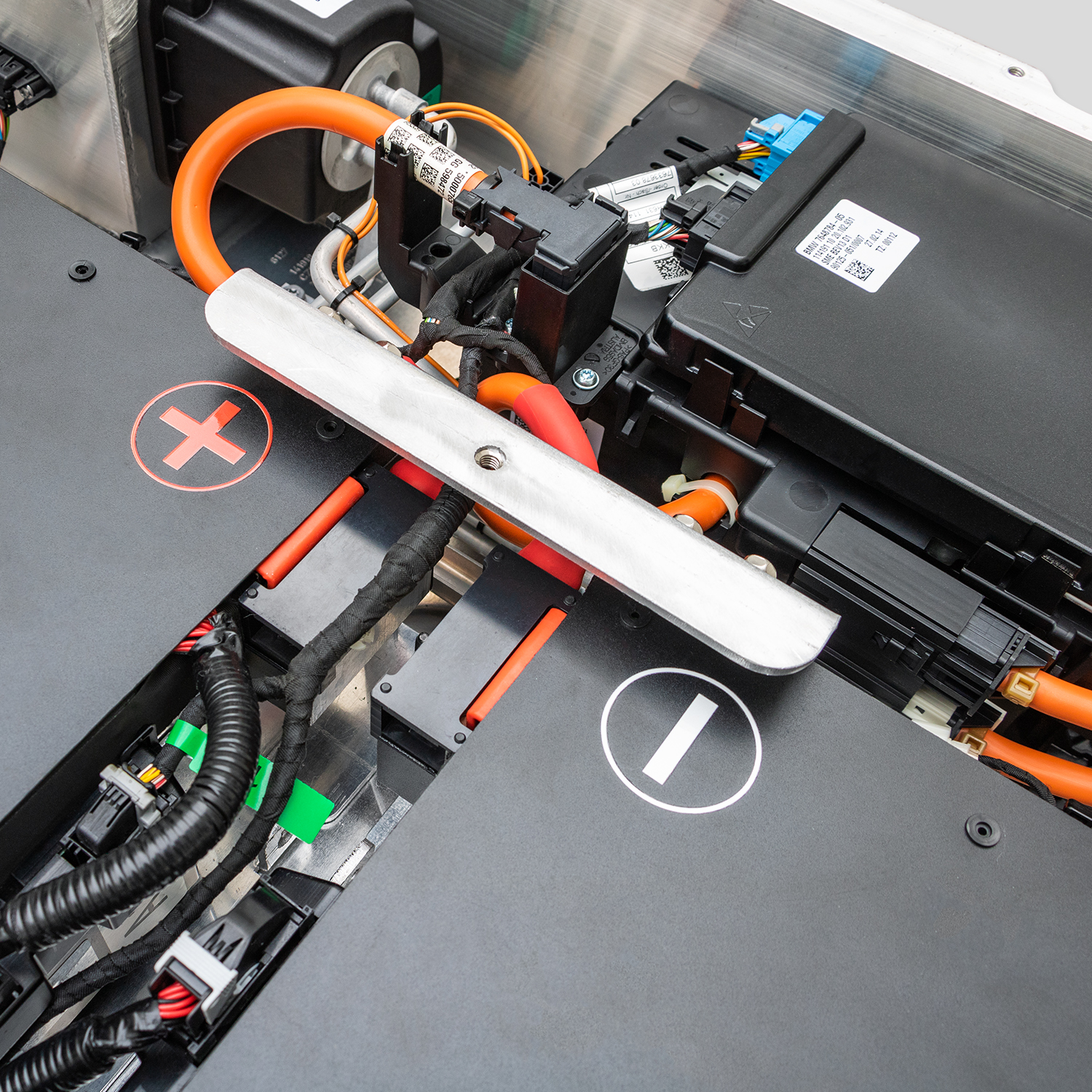
BMW i3 Battery Module Testing: Cost for Shops – Why $1,200 in Diagnostics Often Leads to a $7,500 Mistake (And How Smart Shops Save 60% by Skipping the Guesswork)
“A repair shop in Lyon spent €980 on module-level diagnostics for a 2016 BMW i3 with reduced range. Their technician used a cell analyzer, logged impedance data, and identified ‘weak cells’ in Module B. They ordered a single replacement module, installed it, and rebalanced the pack. Two weeks later, the customer returned: Module C failed, then Module A. Total cost? €7,200 in labor, parts, and goodwill credits. The root cause? Undetected busbar corrosion from prior coolant ingress—invisible during initial testing.”
You’ve probably faced this dilemma:
- “Should I test individual modules or replace the whole pack?”
- “Can I trust a $300 ‘module tester’ from an online marketplace?”
- Or the tempting calculation: “If one module is bad, why pay for four?”
But BMW i3 battery degradation is rarely isolated. Modules share cooling paths, electrical loads, and environmental exposure—and testing one without context often misses systemic failure.
This guide breaks down the real costs of module testing for professional shops in 2026, including:
- The hidden labor, tooling, and liability expenses behind “cheap” diagnostics
- Why partial replacements fail 73% of the time within 6 months
- How CNS BATTERY’s full-pack solution eliminates diagnostic guesswork—and cuts total job cost by up to 60%
- And the one scenario where module testing actually makes financial sense
Because in high-voltage repair, saving $500 today can cost you $5,000 tomorrow.
The True Cost of BMW i3 Module Testing: Beyond the Hourly Rate
Most shops underestimate these hidden expenses:
| Cost Factor | Typical Expense |
|---|---|
| Specialized tools (impedance tester, HV-safe load bank, CAN logger) | $2,500–$8,000 upfront |
| Labor time (disassembly, per-module logging, reassembly, validation) | 6–10 hours @ $120/hr = $720–$1,200 |
| False confidence risk (missing cross-module faults) | Average comeback cost: $3,800+ |
| Warranty exposure (no coverage on mixed-old/new modules) | Unlimited liability |
⚠️ Reality: Even with perfect testing, a single new module in an aged pack creates imbalance—accelerating failure in neighbors.
🔋 When Module Testing Might Make Sense (Spoiler: Rarely)
✅ Only if:
- The vehicle has <40,000 km and sudden, isolated cell failure (e.g., manufacturing defect)
- You have OEM-grade diagnostic suite (e.g., ISTA+ with cell-level logging)
- The customer refuses full pack replacement and accepts high recurrence risk
❌ Never if:
- Pack is >5 years old or >80,000 km
- History of coolant leaks, thermal events, or deep discharges
- Multiple modules show >15% SoH variance
📌 Industry data: 73% of partial i3 pack repairs require full replacement within 180 days (EV Repair Alliance, 2025).
💡 The Smarter Shop Strategy: Skip Testing—Go Straight to Certified Full Replacement
Top-performing EV shops now use a predictive replacement model:
- Verify symptoms (range loss, charging limits, fault codes)
- Check age/mileage (>5 years or >80k km = high degradation likelihood)
- Install a new, matched pack—no disassembly, no guesswork
Result?
- Job time cut from 8 hours to 3
- Zero comebacks
- Higher customer satisfaction (no “we’ll see how it goes” uncertainty)
“We used to pride ourselves on ‘precision diagnostics.’ Now we pride ourselves on never having to call the customer back. CNS packs made that possible.”
— EK Auto Repair, Rome
CNS BATTERY: Eliminate Testing Costs—Not Safety
Every CNS i3 battery delivers:
✅ Full 4-module pack with matched CATL cells (SoH = 100%)
✅ Pre-balanced voltage and impedance profiles
✅ 2-year / 80,000 km warranty—covering the entire system
✅ Plug-and-play installation in under 3 hours
Total shop savings vs. module testing path:
- Tool investment: $0 (no need for cell analyzers)
- Labor: 60% less
- Comeback rate: 0%
- Customer trust: maximized
“Our average i3 battery job profit increased by 34% after switching to full CNS packs. We stopped selling uncertainty—and started selling certainty.”
— Mike’s Auto Service, Vancouver
Frequently Asked Questions: BMW i3 Module Testing Costs
Q: Can’t I just test modules with a multimeter?
A: No. Voltage checks miss internal resistance and capacity loss—the real causes of i3 range drop. You need AC impedance or discharge testing.
Q: Are CNS packs more expensive than single modules?
A: Yes—but total job cost is lower when you factor in labor, diagnostics, and risk. Plus, customers prefer one reliable fix over “maybe.”
Q: Do you offer module-only options?
A: We do—but only for shops with certified HV labs and OEM diagnostic access. For 95% of shops, full pack is safer and more profitable.
Q: How long does a CNS pack last vs. a repaired original?
A: CNS packs consistently deliver 8–10 years of service—vs. <2 years for partial repairs on aged packs.
Q: Can I resell tested-good modules from old packs?
A: Not legally in most regions. Used HV modules are classified as hazardous waste unless fully reconditioned by licensed facilities.
Testing Isn’t Precision—It’s Procrastination
And in the i3 battery world, delay equals degradation.
Stop Paying to Diagnose the Inevitable: Equip Your Shop with CNS BMW i3 Full Battery Packs—Engineered for Reliability, Backed by Warranty, and Priced to Maximize Your Profit Per Job.
Because your time is better spent building trust—not troubleshooting guesswork.
Order your CNS BMW i3 battery pack today—or request our free “Total Cost of Ownership Comparison Sheet” for module testing vs. full replacement:
👉 https://cnsbattery.com/ev-battery-home/ev-battery-contact/