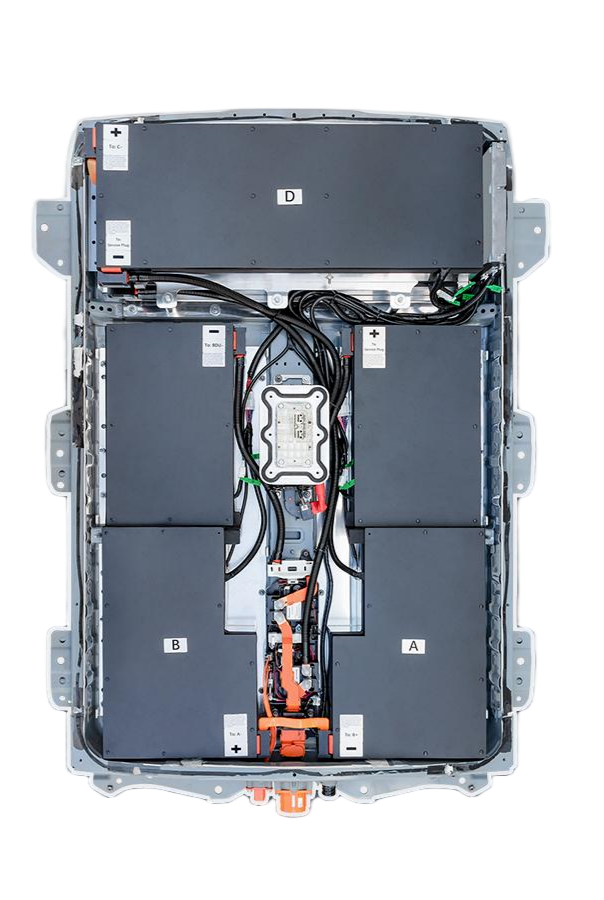
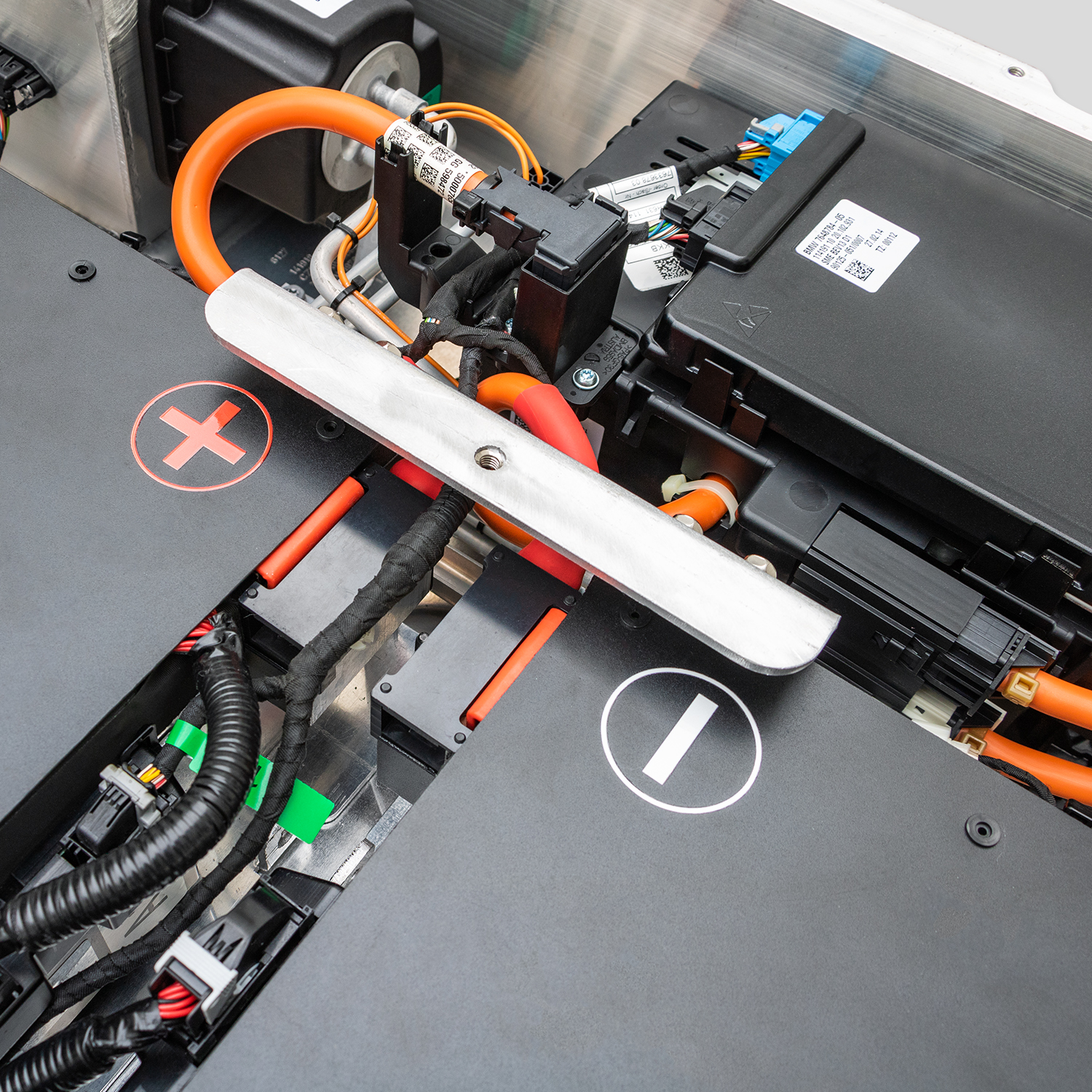
BMW i3 Battery Module Testing: Cost for Repair Shops 2026 – The $1,200 Diagnostic Trap
A 2015 BMW i3 is towed into your shop with a “Cell Imbalance” warning. The customer, hoping to avoid a massive replacement bill, asks: “Can’t you just test the individual modules and replace the bad ones? How much would that cost? Maybe $500?”
As a professional EV shop owner in 2026, you know the hidden math behind that hopeful question. Testing individual BMW i3 battery modules is not a quick scan; it is a labor-intensive, equipment-heavy forensic investigation. While the customer sees a “$500 diagnostic,” you see 8+ hours of high-voltage labor, expensive specialized gear, and a high probability that the results will simply confirm the entire pack is dead anyway.
The reality of BMW i3 battery module testing in 2026 is stark: It is often a financial trap for shops and a false hope for customers. When one module fails in a 10-year-old pack, the others are rarely far behind. Testing them individually often yields a bill nearly as high as a partial repair, with no guarantee of long-term reliability.
What is the true cost breakdown of professional module testing in 2026?
Why does testing often lead to a “replace the whole pack” conclusion anyway?
And how do you pivot this conversation from a low-margin, high-risk diagnostic service to a profitable, warranty-backed battery upgrade that actually solves the problem?
At CNS BATTERY, we believe in transparency and profitability. We know that while module testing has its place for specific warranty claims or minor deviations, it is rarely the solution for critical failures in aging i3s. This guide breaks down the real costs and risks of module testing for repair shops, exposes the limitations of the procedure, and reveals why replacing the entire system is often the smarter business move.
The Hidden Costs: Breaking Down the Price Tag
When a customer asks, “How much to test the modules?”, they imagine plugging in a scanner for 15 minutes. The reality involves disassembly, high-voltage safety protocols, and deep electrochemical analysis.
1. Equipment Investment (The Entry Fee)
You cannot accurately test i3 modules with a standard multimeter. You need tools that measure capacity and internal resistance under load.
- Hardware Cost: Professional active balancers/capacity testers (e.g., Revolectrix, Chroma) cost between $3,000 and $8,000.
- Safety Gear: Class 00 gloves, arc-flash shields, and insulated tools add another $500–$1,000.
- Depreciation: These tools pay for themselves slowly if testing is your only service.
2. Labor Hours (The Profit Killer)
Testing modules requires accessing the sense wires inside the sealed pack or using complex breakout procedures.
- Preparation: Depowering, removing rear seats, accessing the battery, and setting up safety perimeter: 1.5 hours.
- Disassembly/Access: Removing the service cover and connecting to individual module sense points (often requiring partial disassembly): 2–3 hours.
- The Test: Running a full capacity discharge/charge cycle on suspect modules can take 4–8 hours per module, or longer if testing the whole string sequentially. Even a quick IR check on all 96 modules takes significant time to log and analyze.
- Reassembly: Putting everything back together safely: 1.5 hours.
- Total Labor: 8 – 14 hours. At a shop rate of $150/hour, the labor alone is $1,200 – $2,100.
3. The “Bad News” Risk (The Reputation Tax)
This is the hidden cost that destroys margins.
- Scenario: You charge the customer $1,500 for testing. After 10 hours of work, you report: “Modules 12, 45, and 88 are dead. The rest are weak. You need a new battery.”
- Result: The customer is furious. They feel they paid $1,500 just to be told they need to spend $12,000 anyway. They may refuse to pay the diagnostic fee, leaving you with 10 hours of unpaid labor and an angry client.
The Professional Verdict: When Testing Is Worth It
To protect your shop’s bottom line, you must strictly triage before agreeing to test.
Scenario A: Minor Deviation (<0.05V)
- Action: No invasive testing needed. Live data analysis is sufficient.
- Viability: Profitable. Quick diagnosis, recommend monitoring or simple balancing. Charge $200–$300.
Scenario B: Single Module Failure in a Younger Pack (<5 years)
- Action: If the car is relatively new and under warranty (or just out), testing the specific outlier might justify a single module swap.
- Viability: Moderate Risk. Only if the rest of the pack tests healthy. Charge $1,000+ for the diagnostic depth.
Scenario C: Severe Imbalance in an Aging Pack (>8 years)
- Action: Do not test individual modules. The likelihood of multiple failing cells is near 100%. Testing is a waste of time.
- Viability: Loss Leader. It consumes bay space and tech time for a foregone conclusion. Recommend full replacement immediately.
The Hard Truth: Why Testing Is Often a False Economy
If your initial live data shows >0.15V deviation or high internal resistance across multiple modules, explain the harsh reality:
- The Domino Effect: In a series circuit, one weak module stresses the others. If one is dead, the neighbors are likely compromised even if they haven’t failed yet.
- Mismatched Chemistry: Even if you find one bad module and replace it, the new module (even if used) will have different aging characteristics than the 95 old ones. The imbalance will return within weeks.
- Cost vs. Value: Spending $1,500 on testing + $2,000 on a few used modules = $3,500 for a temporary fix. This is money down the drain compared to a permanent upgrade.
The CNS BATTERY Solution: The Profitable Pivot
When testing is deemed unnecessary or too risky, pivot immediately to the CNS BATTERY High-Capacity Upgrade. This transforms a potential headache into your shop’s most profitable job.
Why Upgrading Beats Testing for Your Bottom Line
- Zero Diagnostic Risk: No need to spend 10 hours proving the obvious. Our upgrades are brand-new, matched systems.
- Faster Turnaround: Swap the pack in 4-6 hours. No disassembly of the old pack, no module-level testing. Higher bay turnover.
- Higher Ticket, Higher Margin: Instead of a $1,500 testing job with low margin, you secure an $8,000 – $14,000 USD sale with robust wholesale margins.
- Customer Satisfaction: The customer doesn’t get a “diagnosed” old car; they get a better-than-new vehicle with 130–200+ miles of range.
- Warranty Protection: We back our upgrades with a 3–5 Year Warranty. You sleep easy; the customer drives with confidence.
The Sales Script for Shops
“Mr. Customer, based on the live data, your battery has severe deviation across multiple modules. To test each one individually would take 10 hours and cost you $1,500, and the result will almost certainly be that the whole pack needs replacement. That would be money wasted.
Instead, I recommend we skip the invasive testing and go straight to the solution. For $11,500, we replace the entire failing system with a brand-new CNS BATTERY high-capacity unit. You get 170 miles of range, a 4-year warranty, and zero risk of the warning coming back. It saves you time, money, and guarantees the fix.”
Real Story: From “Testing Money Pit” to “Upgrade Goldmine”
“Metro EV Solutions” used to offer comprehensive module testing. Last year, they spent 12 hours testing a 2014 i3, charged the customer $1,800, and concluded the pack was dead. The customer refused to pay the full diagnostic fee, arguing they “already knew it was bad.” The shop ate $1,200 in labor.
“We changed our strategy,” says the owner. “Now, if deviation is >0.10V on an older i3, we skip the testing pitch and go straight to the CNS BATTERY upgrade proposal. Last month, we converted four ‘testing’ inquiries into upgrades. Total revenue: $46,000. Total comebacks: Zero. Total stress: None. It was the best business decision we ever made.”
Stop Gambling on Testing, Start Selling Solutions
BMW i3 battery module testing in 2026 is a niche service for edge cases, not a standard repair path. For severe failures common in aging i3s, it is a financial trap that wastes bay time and erodes customer trust.
Be the shop that knows the difference. Be the shop that offers the permanent, profitable solution.
Facing a severe imbalance request?
Don’t waste hours on a doomed diagnostic. Contact CNS BATTERY today to become a certified partner. Get access to our wholesale pricing, sales training, and technical support. Turn every “how much to test?” inquiry into a high-margin upgrade sale.
👉 Get Your Upgrade Pricing & Partner Kit
Frequently Asked Questions (FAQ) for Shops
1. How much should I charge for BMW i3 module testing?
For a full invasive capacity test of individual modules, you must charge $1,200–$1,800 to cover 8-12 hours of labor and equipment risk. However, be transparent that this fee may not be refundable if the customer declines further repairs.
2. Is buying a module tester worth it for my shop?
Only if you plan to do frequent warranty work or refurbish packs for resale. For standard repair shop workflows in 2026, the ROI is poor due to the high failure rate of old packs. Partnering with CNS BATTERY for upgrades often yields a faster and higher return on investment.
3. Why do customers hate paying for module testing?
Because the result is usually “replace the whole battery.” Customers feel they paid a large fee just to confirm bad news. It creates friction and distrust unless managed very carefully with upfront expectations.
4. When should I refuse a testing job?
Refuse if:
- Voltage deviation is >0.15V.
- The vehicle is >8 years old.
- The customer has limited budget and is hoping for a cheap fix.
In these cases, recommend a full battery upgrade immediately.
5. How long does a professional module test take?
A proper capacity test on even a few suspect modules can take 6-10 hours. Testing the entire pack sequentially can take 24+ hours, making it impractical for a retail service lane.
6. Does CNS BATTERY offer better margins than testing?
Absolutely. A testing job nets a few hundred dollars (if the customer pays) with high risk of dispute. A CNS BATTERY upgrade nets thousands in profit per job with zero risk of comeback and a satisfied customer. The volume and value are incomparable.
7. What if the customer insists on testing despite the costs?
Have them sign a detailed waiver acknowledging the high cost ($1,500+), the time required (1-2 days), and the high probability that the result will still require a full pack replacement. Ethically, you should strongly advise against it and push for the upgrade.