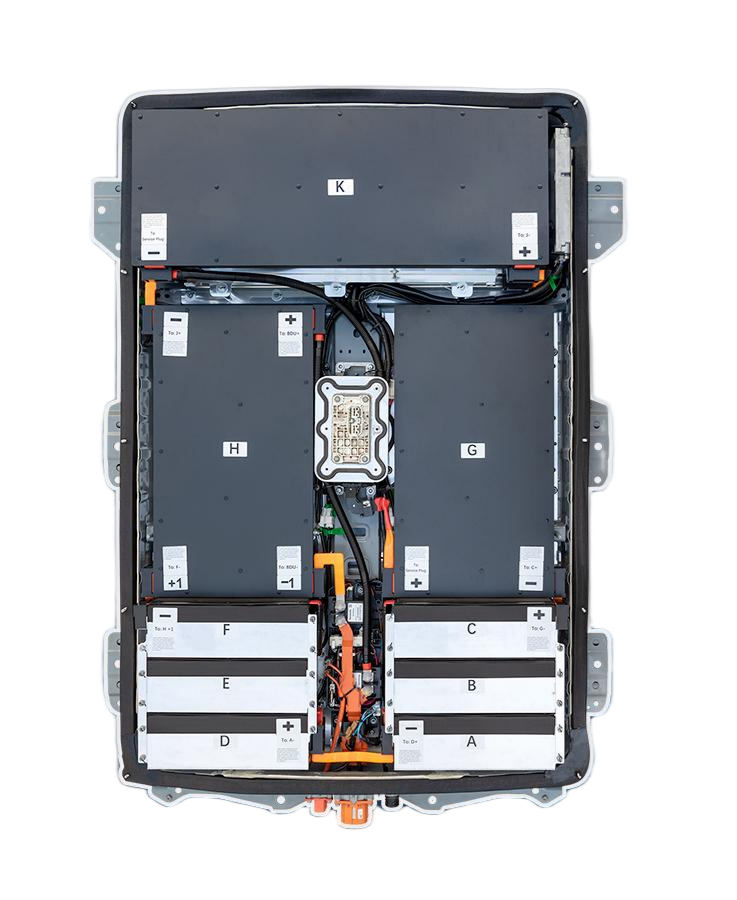
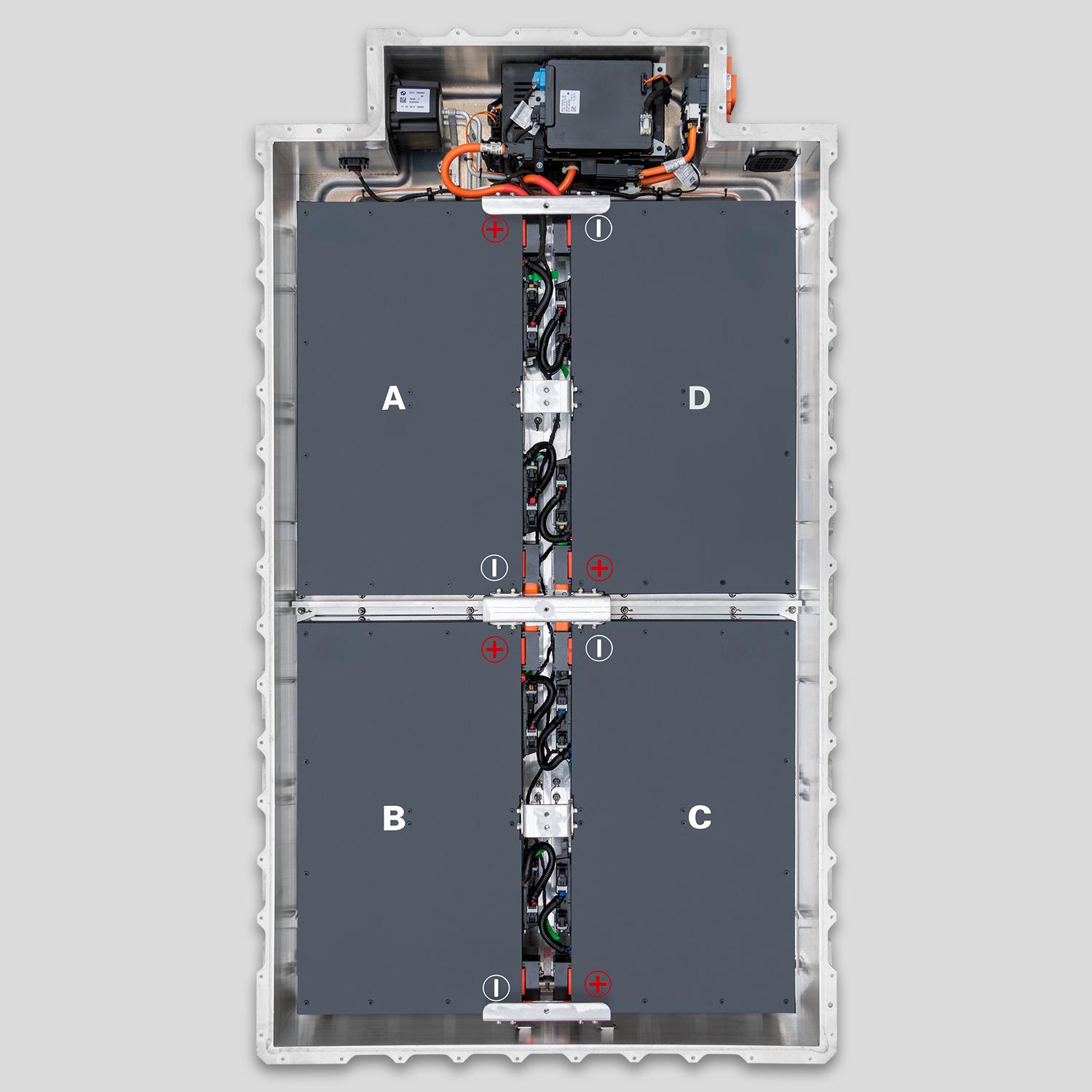
BMW i3 Battery Module Replacement: Compatibility Check – The $500 Gamble vs. The $12,000 Solution
A 2015 BMW i3 rolls into your bay with a “Cell Imbalance” warning. The range has dropped to a pathetic 35 miles. The customer, desperate to avoid the dealer’s $22,000 replacement quote, leans in with a hopeful suggestion: “I found a used module online for $400 that matches my part number. Can’t you just swap it in? It should be compatible, right?”
As a professional EV technician in 2026, you know the dangerous reality hidden behind that optimistic question. In the world of lithium-ion batteries, part number compatibility is only 1% of the equation. The other 99% involves internal resistance, cycle history, chemical aging, and voltage curves that no parts catalog can reveal.
Attempting to mix a “compatible” used module into an aged pack is like transplanting a heart from a marathon runner into a sedentary senior; the mismatch creates immediate stress, failure, and potentially catastrophic results.
Why does a matching part number guarantee nothing about performance?
What invisible metrics (Internal Resistance, SOH) make used modules incompatible?
And how do you pivot this conversation from a risky, low-margin repair to a high-profit, warranty-backed upgrade that actually solves the customer’s problem?
At CNS BATTERY, we have analyzed thousands of failed module swaps. We know that true compatibility isn’t about fitting a piece of plastic; it’s about electrochemical harmony. This guide exposes the myth of used module compatibility, details the rigorous testing required to even attempt a swap, and reveals why replacing the entire system is the only ethical and profitable choice for your shop.
The Myth of “Plug-and-Play” Compatibility
Customers (and some inexperienced shops) believe that if the connector fits and the part number matches, the job is done. This is a fatal misconception.
1. The Internal Resistance (IR) Mismatch
Every time a battery charges and discharges, its internal resistance increases. An 8-year-old pack has high IR. A “used” module from a salvage yard might have slightly lower IR (if it came from a low-mileage wreck) or much higher IR (if it was abused).
- The Result: When current flows, the module with different IR will heat up at a different rate than its neighbors. The BMS detects this thermal and voltage anomaly, triggers an imbalance code, and limits power. The “compatible” module causes the very fault you tried to fix.
2. The State of Health (SOH) Gap
You cannot visually see capacity loss. A module might read 3.7V (matching the pack) but only hold 50% of its original energy.
- The Result: During acceleration, the weak module hits its minimum voltage limit instantly, while the rest of the pack still has energy. The car shuts down. During charging, it hits the max limit instantly, stopping the charge. The pack is only as strong as its weakest link.
3. The Cycle History Unknown
That “$400 compatible module” could have 3,000 deep cycles on it, while your customer’s pack has 1,500. Or vice versa. Mixing different cycle histories guarantees uneven degradation moving forward.
The Professional Compatibility Checklist: Is a Swap Even Viable?
If a customer insists on exploring module replacement, you must perform this rigorous due diligence. Do not skip a single step.
Step 1: Physical & Part Number Verification
- Check Form Factor: Ensure the physical dimensions, connector type, and mounting points match exactly. (e.g., Don’t try to fit a 94Ah cell format into a 60Ah pack configuration without major modifications).
- Check Production Date: Ideally, the replacement module should be from the same production year as the existing pack. A 2018 module in a 2014 pack is a chemistry mismatch waiting to happen.
Step 2: The Critical Data Tests (The Deal Breakers)
Before buying or installing anything, test the candidate module against the existing pack.
- Internal Resistance (IR) Test: Measure the AC impedance of the candidate module. Compare it to the average IR of the existing 96 modules.
- Pass Criteria: Must be within ±2 milliohms (mΩ) of the pack average. If the difference is larger, reject the module.
- Capacity Test: Discharge the candidate module fully to measure its actual Ah capacity.
- Pass Criteria: Must match the current estimated capacity of the existing pack within ±1%.
- Voltage Curve Analysis: Charge and discharge the module while logging voltage. The curve shape must mirror the existing pack. Different chemistries (even from the same manufacturer) can have slightly different curves over time.
Step 3: The Pre-Charge Match
- Before installation, the candidate module must be preconditioned to the exact same State of Charge (SOC) and voltage as the pack. Connecting a module with even a 0.1V difference can cause a massive current spike, damaging the new module and the pack busbars.
The Hard Truth: Why 99% of Swaps Fail
Even if you find a “perfect” match today, the physics of aging works against you.
- The Moving Target: Your existing pack continues to degrade every day. The “new” used module degrades at a different rate. Within 3-6 months, they will be mismatched again.
- The Domino Effect: Replacing one module doesn’t stop the other 95 from failing. Next month, a different module will become the weak link. The customer pays you twice for a car that still has terrible range.
- Liability: If a mismatched module overheats and causes a thermal event, your shop is liable for installing non-certified, mismatched components.
The Verdict: Module replacement is a false economy. It is expensive, risky, temporary, and offers no warranty.
The CNS BATTERY Solution: True Compatibility Guaranteed
Stop gambling with used parts. Offer the CNS BATTERY High-Capacity Upgrade—the only solution that guarantees 100% compatibility because every single component is brand new and perfectly matched.
Why Upgrading Beats Module Swapping
- Factory-Matched Cells: Our 120 Ah to 180 Ah upgrades use Grade-A cells matched to within 0.01V and 1 mΩ. No imbalance, no guessing, no mismatches.
- Zero History: No unknown cycle counts, no hidden degradation. Every cell starts at 100% State of Health.
- Perfect Integration: Our packs are engineered to be plug-and-play compatible with all 2014-2021 BMW i3 models. No coding nightmares, no fitment issues.
- Double the Range: Instead of restoring a dying 35-mile range, you give the customer 130–200+ miles of real-world driving.
- Warranty Protection: We back our upgrades with a 3–5 Year Warranty. Try getting that on a $400 used module!
- Cost Efficiency:
- Module Swap Attempt: $1,500–$2,500 (labor + testing + part) + High Risk of Failure + No Warranty.
- Dealership Replacement: $20,000+.
- CNS BATTERY Upgrade: $8,000 – $14,000 USD. You get a brand-new, perfectly compatible battery with double the range for half the dealer price.
Real Story: From “Compatibility Nightmare” to “Perfect Fit”
“Elite EV Solutions” once agreed to swap two “compatible” used modules for a customer. They spent 12 hours testing, pre-charging, and installing them. Two weeks later, the car returned with worse imbalance codes because the used modules had different internal resistance than the aging pack. The customer was furious and demanded a refund.
“We learned our lesson,” says the owner. “Now, we exclusively recommend CNS BATTERY. Last week, we installed a 150 Ah upgrade. It took 5 hours. The BMS saw a perfect pack immediately. Zero codes, 170 miles of range, and a happy customer with a 4-year warranty. We made more profit, zero comebacks, and no stress. We never touch used modules again.”
Stop Gambling, Start Solving
BMW i3 battery module replacement is a compatibility minefield. Part numbers lie; only data tells the truth. And even with perfect data, aging chemistry ensures failure.
Don’t sell your customers a temporary fix that leaves them stranded next month. Be the shop that offers the definitive solution: a brand-new, perfectly matched system that restores confidence and range.
Asked to swap a used module?
Don’t take the risk. Contact CNS BATTERY today to become a certified partner. Get access to our compatibility guides, wholesale pricing, and training. Start turning dangerous repair requests into profitable, warranty-backed upgrades.
👉 Become a Certified Upgrade Partner Today
Frequently Asked Questions (FAQ) for Shops
1. Can I just match the part number when replacing an i3 module?
No. Part number is only the physical fit. You must match Internal Resistance (IR), Capacity (Ah), and State of Health (SOH). A matching part number with mismatched chemistry will cause immediate balance faults.
2. How close does the Internal Resistance need to be?
For a successful swap, the replacement module’s IR must be within ±2 milliohms (mΩ) of the existing pack’s average. Anything wider creates heat imbalances and BMS errors.
3. Where can I find “compatible” used modules?
Salvage yards and online marketplaces sell them, but they come with no guarantees. You cannot verify their cycle history or true capacity without expensive testing equipment. Most are incompatible upon deeper inspection.
4. Is it worth testing used modules for compatibility?
Rarely. The cost of labor to test, pre-charge, and install a used module often approaches $1,500+, with a high probability of failure within months. It is not a profitable or reliable service model.
5. What happens if I install a mismatched module?
The BMS will detect voltage or temperature deviations during the first few drive cycles. It will trigger Cell Imbalance codes, reduce power, limit charging, and eventually leave the customer stranded.
6. Does CNS BATTERY guarantee compatibility?
Absolutely. Our upgrades are built with brand-new, factory-matched cells specifically engineered for the BMW i3. They are guaranteed to be 100% compatible electrically, physically, and chemically.
7. Why is a full upgrade better than a module swap?
A module swap is a temporary patch on a dying system. A CNS BATTERY upgrade is a complete renewal. You get double the range, a fresh warranty, zero compatibility risks, and a customer who trusts your shop for life. The value proposition is undeniable.