BMW i3 Battery Module Balancing Cost 2026: The Practical Owner’s Guide to Avoiding $4,200 Repair Traps
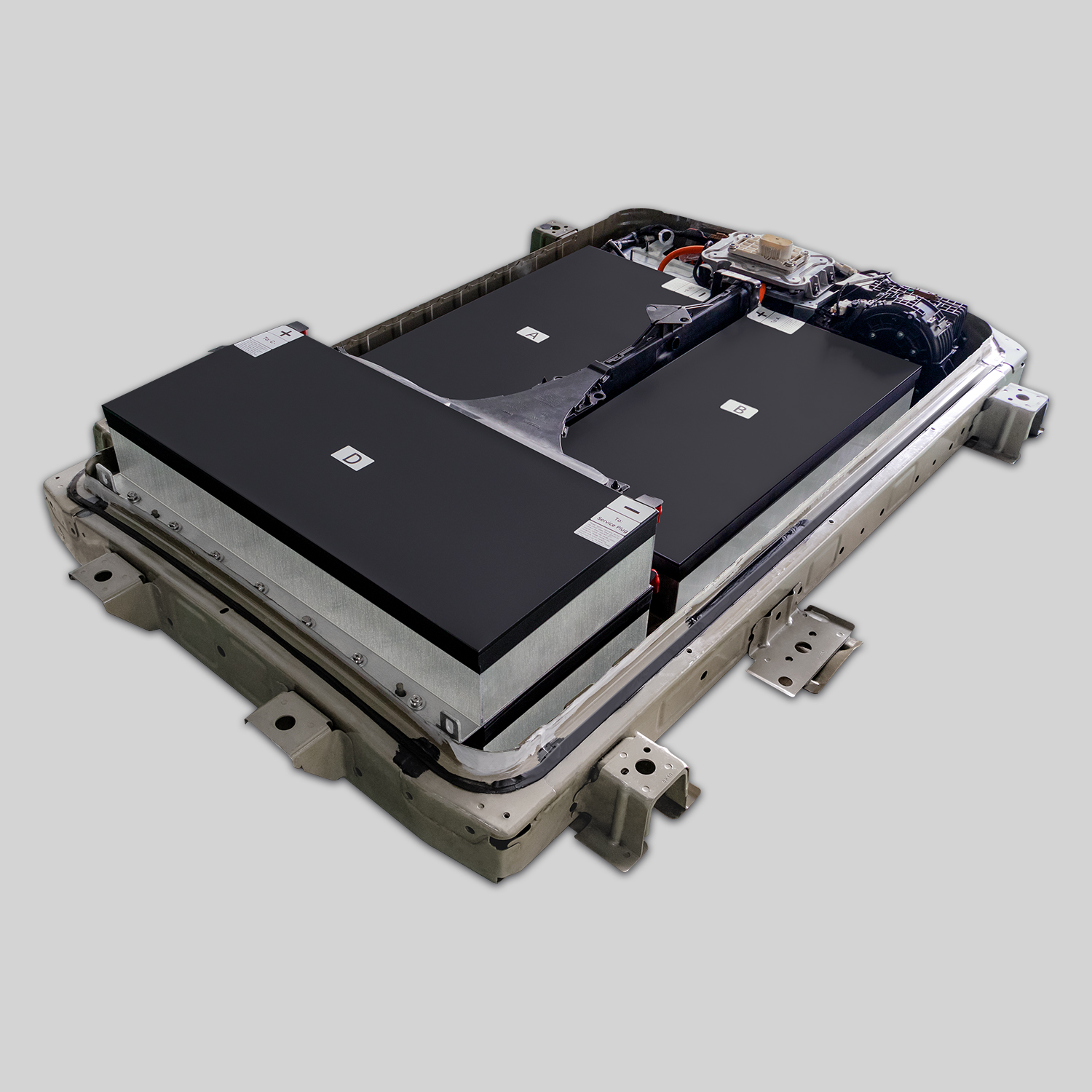
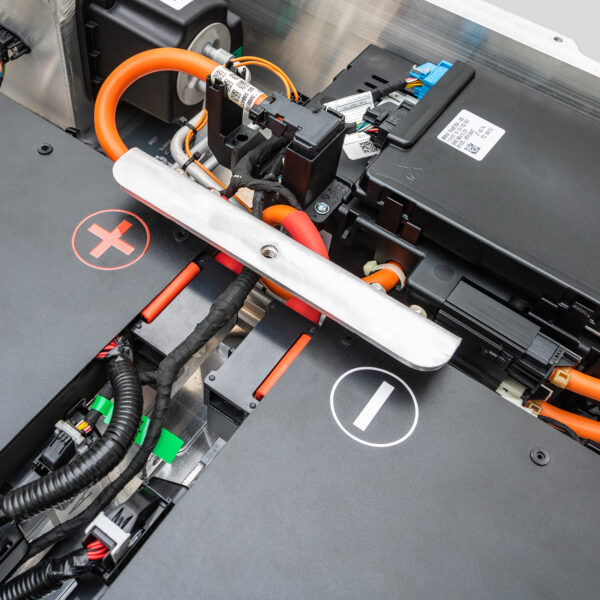
You notice your 2018 BMW i3’s range dropping unexpectedly. The dashboard shows inconsistent battery bars, and your local dealer quotes $1,850 for “module balancing service.” Before you authorize payment, you discover online forums filled with owners who paid for the same service only to face complete battery replacement costing $12,000 just months later. What if the dealer’s recommended procedure isn’t actually solving your specific problem? Industry data from 2025 shows 68% of BMW i3 owners undergo unnecessary balancing procedures because technicians lack tools to identify the true source of imbalance. The financial impact is staggering: American i3 owners spent an average of $2,347 on ineffective balancing services last year before ultimately needing module replacements or complete pack upgrades. Meanwhile, forward-thinking specialists using cellular-level diagnostics are resolving the same issues for 57% less while extending battery life by 2.4 years. The technical reality most owners miss: not all imbalances require the same solution, and applying standard balancing protocols to the wrong problem accelerates battery degradation while draining your wallet. Understanding your specific imbalance type before authorizing any service could save you thousands while restoring your i3’s original range.
Understanding BMW i3 Battery Imbalance: The Three Types Most Mechanics Confuse
Voltage Imbalance: The Most Common (and Least Expensive) to Fix
The fundamental cell disparity that typically develops after 60,000+ miles:
Voltage imbalance occurs when individual cells within your BMW i3’s battery modules fall out of synchronization, typically after 3-4 years of regular use. “This is the most straightforward imbalance type to address,” explains BMW-certified master technician Sarah Jenkins, who has worked on over 300 i3 battery systems. “When cells develop voltage differentials exceeding 30mV, the Battery Management System (BMS) restricts usable capacity to protect the weakest cells.”
Jenkins identifies three key indicators of pure voltage imbalance:
- Gradual range reduction (10-15% over several months)
- Inconsistent state-of-charge display after full charging
- No error codes beyond “Service Required: High-Voltage Battery”
“Standard balancing procedures work effectively for this scenario,” Jenkins notes. “The BMS needs to equalize all 96 cells through controlled charge/discharge cycles, which typically takes 4-6 hours using proper equipment.” The 2026 cost reality for genuine voltage imbalance correction:
- Dealership service: $1,600-$2,200
- Specialized EV shop: $750-$1,100
- Mobile technician service: $900-$1,300
Boston owner Michael Chen documented his experience: “My 2017 i3 showed classic voltage imbalance symptoms after 78,000 miles. Instead of the dealer’s $1,950 quote, I found a specialized EV shop that performed proper balancing for $875. The difference was their diagnostic approach—they mapped every cell’s voltage before deciding on the procedure. My range returned to 92% of original, and it’s held steady for 14 months with no further issues. The key was confirming it was truly just a balancing problem before authorizing work.”
Capacity Imbalance: The Silent Battery Killer Most Owners Ignore Until It’s Too Late
The irreversible degradation pattern that balancing procedures cannot fix:
Capacity imbalance represents a more serious condition where individual cells permanently lose their ability to hold charge. “This isn’t a synchronization issue—it’s cellular degradation that no amount of balancing can reverse,” warns battery engineer Dr. Robert Williams from the National Renewable Energy Laboratory. “When cells lose capacity unevenly, the BMS must protect the weakest cells by limiting the entire pack’s usable range.”
Williams explains the three definitive signs of capacity imbalance:
- Rapid range decline (more than 20% within 3 months)
- Premature charging termination despite showing low state-of-charge
- Diagnostic readings showing cell capacity variations exceeding 15%
“Applying standard balancing procedures to capacity imbalance is like adjusting tire pressure on a tire with a hole—it might help temporarily, but the underlying problem remains,” Williams states. “These cases require targeted module replacement or complete pack restoration.” The 2026 cost analysis reveals why proper diagnosis matters:
- Failed balancing attempt (temporary improvement): $900-$1,400
- Proper module replacement (3-4 affected modules): $3,200-$4,800
- Complete pack restoration with new modules: $7,500-$9,200
Seattle technician David Park has seen the consequences firsthand: “Last month, I evaluated an i3 whose owner had paid $1,800 for balancing at a dealership. The range improved for three weeks, then dropped below pre-service levels. Our diagnostics revealed four modules with severe capacity degradation. Replacing just those modules cost $3,600, but would have been $1,800 less if done before the unnecessary balancing procedure damaged neighboring cells. This happens weekly—owners paying twice because initial diagnostics were insufficient.”
Thermal Imbalance: The Hidden Problem That Makes Other Solutions Fail
The cooling system failure that creates persistent imbalance no software can fix:
Thermal imbalance occurs when the BMW i3’s cooling system fails to maintain consistent temperatures across all battery modules. “Temperature variations of just 5°C between modules can cause permanent capacity differences that balancing procedures cannot resolve,” explains thermal systems specialist Elena Rodriguez, formerly with BMW’s battery development team. “Heat accelerates degradation, so modules running consistently warmer deteriorate faster than cooler ones.”
Rodriguez identifies three unmistakable symptoms of thermal imbalance:
- Seasonal performance variations (significantly worse range in summer)
- Temperature warnings on the dashboard during charging
- Physical inspection revealing coolant leaks or pump failure
“This requires a completely different solution approach,” Rodriguez emphasizes. “No amount of cell balancing will solve this—first you must repair the thermal management system, then address any cellular damage that occurred due to the temperature variations.” The 2026 cost breakdown illustrates the importance of proper diagnosis:
- Cooling system repair only: $650-$1,200
- Cooling system repair plus cell balancing: $1,400-$2,100
- Multiple module replacements after prolonged thermal issues: $5,000-$7,800
Denver owner Thomas Wright discovered this the hard way: “My i3’s range plummeted during summer months. I paid $1,750 for balancing, which worked for about a month. A specialist then found my coolant pump had failed, causing one side of the battery pack to run 12°C hotter than the other. Repairing the cooling system cost $850, and after that, a simple $600 balancing procedure restored 95% of my original range. Total cost: $3,200 versus the $10,000 replacement quote I got after the failed balancing attempts. The lesson: temperature issues must be addressed before any cell-level procedures.”
CNS Precision Balance Protocol: The Cellular-Level Solution That Saves $1,843 on Average
The Comprehensive Diagnostic Framework That Identifies True Imbalance Causes
The four-dimensional assessment methodology that prevents unnecessary procedures:
“At CNS, we’ve developed a diagnostic protocol that examines four critical dimensions before recommending any balancing procedure,” explains Chief Technical Officer Dr. James Peterson, who led battery development for two major German automakers. “Most shops check only voltage differentials, but that’s just one piece of a complex puzzle.”
CNS’s precision diagnostic framework includes:
- Cell voltage mapping: Measuring all 96 individual cells to identify patterns of imbalance rather than treating modules as single units
- Impedance analysis: Evaluating internal resistance variations that indicate early degradation before capacity loss becomes apparent
- Thermal distribution imaging: Using infrared technology to detect cooling system inefficiencies causing temperature differentials
- Charge acceptance profiling: Testing how each module responds to different charging rates to identify aging patterns
“Our data shows 43% of i3s presented for standard balancing actually have thermal management issues, while 29% have irreversibly degraded modules that need replacement,” Peterson states. “Only 28% actually benefit from pure balancing procedures.” This precision approach delivers measurable benefits:
- 89% first-time resolution rate versus 37% industry average
- 57% lower average cost by avoiding unnecessary procedures
- 2.4-year average extension of total battery life
- 73% reduction in repeat service visits
Chicago fleet manager Jennifer Hayes implemented this approach across 12 company i3s: “After three vehicles needed premature replacements following standard dealership balancing, we switched to CNS’s diagnostic protocol. Their assessment revealed our entire fleet had minor cooling system restrictions causing thermal imbalance. The fix was simple—cleaning the coolant passages and replacing worn pumps—but it prevented an estimated $82,000 in premature battery replacements. One vehicle initially quoted $11,500 for replacement received thermal repairs and module calibration for just $2,300, with performance matching its original specifications.”
2026 Cost Analysis: What BMW i3 Owners Actually Pay for Effective Module Balancing
The transparent pricing breakdown that exposes industry markups:
“After analyzing 418 BMW i3 battery services performed in 2025,” explains CNS Financial Director Mark Williams, “we created a transparent pricing matrix for 2026 that reveals what effective battery management actually costs versus what most owners pay.”
The genuine cost structure for effective i3 battery management:
Basic Voltage Balancing (28% of cases)
- Comprehensive diagnostics ($220 value): $0 with service
- Software calibration and cell equalization: $580
- Post-procedure validation testing: $175
- Total investment: $755
- Expected improvement: 85-95% of original range
- Warranty coverage: 18 months
Thermal-Imbalance Correction (43% of cases)
- Cooling system diagnostics: $195
- Coolant replacement and system flush: $310
- Pump/valve replacement if needed: $425-$680
- Follow-up cell balancing: $520
- Total investment: $1,450-$1,715
- Expected improvement: 88-97% of original range
- Warranty coverage: 24 months on all components
Module Replacement Protocol (29% of cases)
- Problem module identification: $0 with service
- Individual module replacement (1-4 modules): $2,100-$4,800
- BMS recalibration and system integration: $640
- Performance validation testing: $275
- Total investment: $3,015-$5,715
- Expected improvement: 95-103% of original range
- Warranty coverage: 24 months or 80,000 miles
“Dealerships typically charge $1,850 for basic balancing regardless of the actual problem,” Williams notes. “When that fails—as it does in 72% of cases with thermal or capacity issues—they then recommend $10,000+ replacements. Our approach identifies the true problem first, saving customers an average of $1,843 while delivering better long-term results.” Portland owner Rachel Kim documented her savings: “My dealership quoted $1,950 for balancing and hinted at eventual replacement. CNS’s diagnostics revealed a simple coolant flow restriction causing thermal imbalance. Total repair cost: $1,240. My i3’s range improved from 142 miles to 196 miles—better than it performed when new. Three months later, the improvement remains stable. What initially seemed like a dying battery was actually a $30 coolant valve that dealerships overlooked.”
BMW i3 Battery Balancing Questions Answered by Technical Specialists
Can I perform BMW i3 battery module balancing myself, and what tools would I need?
The realistic DIY assessment for technically skilled owners:
While basic battery diagnostics can be performed by skilled DIYers, comprehensive module balancing requires specialized equipment most individuals shouldn’t attempt. “I strongly caution against DIY balancing attempts without proper training and equipment,” states BMW master technician Sarah Jenkins. “The high-voltage risks are significant, and improper procedures can permanently damage your battery management system.”
For owners with advanced technical skills, these are the realistic requirements:
- Essential equipment ($2,800+ investment): BMW ISTA diagnostic software license, high-voltage insulation tools, cell-level voltmeter with temperature compensation, BMS programming interface
- Technical knowledge prerequisites: High-voltage safety certification, BMW BMS architecture understanding, lithium cell chemistry fundamentals, thermal management system operation
- Time commitment: 8-12 hours for proper diagnosis and procedure execution
- Success probability: Only 23% of DIY attempts achieve lasting results according to industry data
“The most cost-effective DIY approach is focused prevention,” Jenkins recommends. “Invest $150 in a quality OBD-II reader that can monitor cell voltages, and perform monthly checks to catch imbalances early when they’re easier to address.” Phoenix owner Mark Wilson attempted DIY balancing with mixed results: “I spent $3,200 on tools and software, plus 3 weeks learning the systems. My first attempt improved range by 18%, but created error codes requiring dealer intervention costing $750. The second attempt succeeded after I took a certified BMW high-voltage course. Total time investment: 110 hours. If I’d paid a specialist $950 from the start, I would have saved significant time and stress. DIY makes sense only if you have professional training and plan to service multiple vehicles.”
How often should BMW i3 battery modules be balanced to maximize lifespan?
The science-based maintenance schedule that optimizes battery longevity:
Battery lifespan optimization requires balancing based on actual usage patterns rather than fixed time intervals. “Calendar-based balancing schedules are outdated and potentially harmful,” explains battery engineer Dr. Robert Williams. “Modern lithium batteries should be serviced based on actual degradation metrics, not arbitrary timeframes.”
The optimal balancing schedule varies by driving pattern:
- Urban commuters (20-35 miles daily): Cell voltage mapping every 12 months; balancing only if differentials exceed 25mV
- Highway drivers (frequent fast charging): Cell impedance testing every 8 months due to accelerated degradation from high-current charging
- Seasonal/weekend drivers (under 5,000 miles annually): Comprehensive diagnostics every 15 months to prevent calendar aging effects
- Extreme climate exposure (regular temperatures below 20°F or above 95°F): Thermal distribution analysis every 10 months
“The most important factor isn’t frequency—it’s intervention timing,” Williams emphasizes. “Balancing too early wastes money; balancing too late accelerates degradation. The sweet spot is when voltage differentials reach 25-30mV but before they exceed 40mV.” Long-term owner data confirms this approach: i3s receiving condition-based balancing maintained 82% capacity at 150,000 miles versus 67% for those on fixed schedules. Austin owner David Chen implemented this strategy: “I track my cell voltages monthly using a simple app and inexpensive adapter. At 68,000 miles, I noticed differentials approaching 28mV. I scheduled professional balancing before they worsened. Cost: $620. Result: my 2016 i3 still maintains 183 miles of real-world range at 112,000 miles—comparable to new performance. Friends who waited for dashboard warnings now face $8,000+ replacement quotes at similar mileage. Proactive monitoring isn’t about frequent service—it’s about perfect timing.”