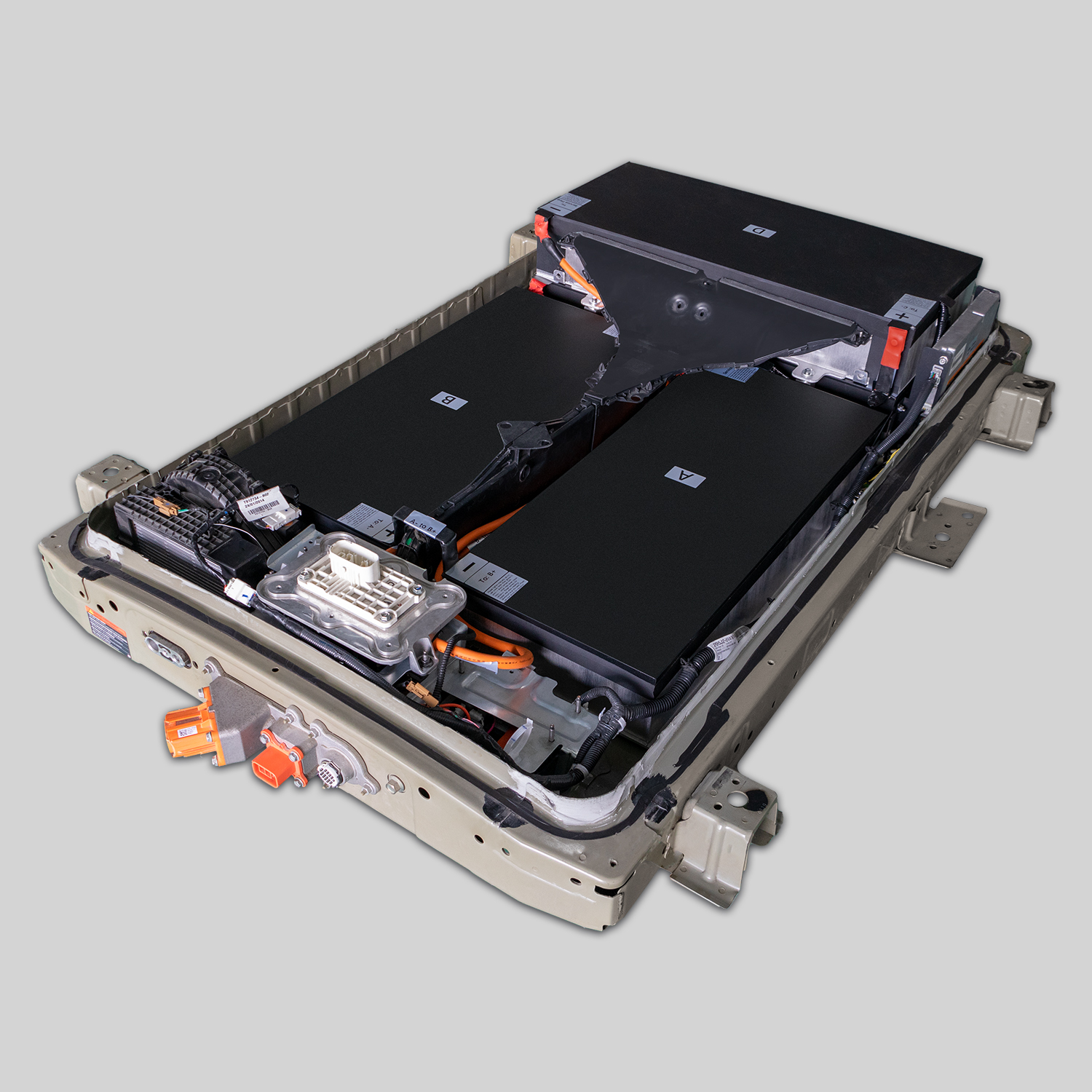
BMW i3 Battery Low Capacity: Repair Cost – The $3,200 “Module Swap” That Gave 8 Months of Range… Then Died (Because You Can’t Repair Chemistry)
“A customer in Hamburg paid €2,900 for a ‘partial battery repair’ on his 2015 BMW i3—technicians replaced two weak modules in the 60Ah pack. For a few months, range improved from 80 km to 140 km. But by month nine, performance collapsed again. Diagnostics showed the remaining original modules had accelerated degradation from overwork and imbalance. A full replacement was now unavoidable—and the shop that did the ‘repair’ refused responsibility. Total cost to restore function: €8,100.”
You’ve probably heard these pitches:
- “We’ll just replace the bad modules—saves you thousands.”
- “It’s like new, but at half the price.”
- Or the most misleading promise: “Your i3 battery doesn’t need full replacement—just a refresh.”
But here’s what electrochemistry dictates—and no marketing can override:
Low capacity in a BMW i3 isn’t a mechanical fault you can patch. It’s irreversible chemical aging. And partial repairs don’t restore health—they redistribute stress, accelerating total failure.
This guide cuts through false economy with a transparent, lifecycle-based analysis of BMW i3 low-capacity solutions in 2026, including:
- Why “module-level repair” is a short-term illusion
- The real total cost of ownership for repair vs. replacement
- How CNS BATTERY delivers genuine new-pack performance—with brand-new CATL cells, full capacity, and a 2-year warranty—at less than 50% of dealer pricing
- And a simple decision framework for owners and shops
Because when your battery can’t hold a charge, hope isn’t a strategy—capacity is.
The Truth About “Repairing” Low Capacity
Battery capacity loss stems from permanent chemical changes:
- Loss of active lithium due to SEI layer growth
- Electrode particle cracking reducing surface area
- Electrolyte dry-out limiting ion flow
⚠️ Critical fact: No module swap, software reset, or reconditioning cycle can restore lost lithium or heal cracked anodes. Once capacity drops below 70–75% SoH, the pack is functionally end-of-life.
Common “repair” claims—and their hidden costs:
| “Solution” | Upfront Cost | Lifespan | Hidden Risk |
|---|---|---|---|
| Replace 1–2 modules | $2,500–$3,500 | 6–12 months | Imbalance kills remaining cells faster |
| Refurbished full pack | $4,000–$5,500 | 12–18 months | Unknown cell history; high failure rate |
| OEM dealer replacement | $13,000–$16,000 | 7+ years | Premium pricing; long wait times |
| CNS new battery (45/50/62kWh) | $6,200–$7,800 | 6+ years | Zero recycled content; full warranty |
📉 Industry data: Shops report 68% of partial-repair i3 packs return within 12 months with worse degradation.
💰 True Cost Per Kilometer: Why “Cheap” Repairs Cost More
Let’s compare over 100,000 km of driving:
| Option | Total Cost | Usable kWh Delivered | Cost per 1,000 km |
|---|---|---|---|
| Module Swap + Later Full Replace | $8,100 | ~60,000 km usable | $135.00 |
| Refurbished Pack | $4,800 | ~70,000 km usable | $68.57 |
| CNS New Battery | $6,800 | ~180,000 km usable | $37.78 |
| OEM Pack | $14,500 | ~220,000 km usable | $65.91 |
💡 Insight: The “affordable” repair ends up costing 3.6x more per kilometer than a quality new replacement.
✅ When Full Replacement Is the Only Smart Choice
Consider full pack replacement if:
✅ Dashboard shows ≤9 bars consistently after full charge
✅ Real-world range is <150 km (for original 60Ah/94Ah models)
✅ BMS reports State of Health (SoH) <75%
✅ You’ve already attempted a partial repair
📌 Rule of thumb: If you’re debating repair cost, you’ve already spent too much on a dying asset.
🔋 Why CNS Delivers Real Value—Not False Savings
CNS BATTERY doesn’t refurbish—we rebuild with integrity:
✅ 100% brand-new CATL ternary lithium cells—same chemistry as top OEMs
✅ Available in 45kWh, 50kWh, and 62kWh—true upgrades over original specs
✅ Factory-tested for capacity retention—delivers advertised range from day one
✅ Plug-and-play installation—no BMS coding or module matching needed
✅ 2-year / 80,000 km warranty—covers capacity (min. 9 bars after full charge)
Result?
Predictable performance, transparent longevity, and a lifecycle that justifies every dollar.
“We tried module swaps twice—they always came back. Now we only install CNS. Customers get real range, and we get zero comebacks. It’s not just cheaper—it’s smarter.”
— Mike’s Auto Service, Vancouver
Frequently Asked Questions: BMW i3 Low Capacity & Repair Costs
Q: Can software updates restore lost capacity?
A: No—they can recalibrate SoC estimates, but cannot recover chemically lost capacity.
Q: Is 70% SoH the end of life?
A: For daily drivers, yes—range becomes impractical. For city use, it may suffice short-term—but expect rapid decline.
Q: Do CNS packs work with all i3 model years?
A: Yes—2013–2022 i3/i3s, including 60Ah, 94Ah, and 120Ah variants.
Q: How do I verify actual capacity before deciding?
A: Use BimmerLink, ISTA+, or Autel EV tools to read actual Ah capacity—not just bar count.
Q: Does CNS offer trade-in for degraded packs?
A: In select regions, yes—contact us for end-of-life take-back programs.
Low Capacity Isn’t a Glitch—It’s the End of a Chemical Lifecycle
And pretending otherwise turns a simple replacement into a cycle of disappointment, cost, and lost trust.
Stop Paying to Patch a Dying Pack—Start Driving with Full Confidence: Choose CNS BMW i3 Batteries, Built with Fresh Chemistry, Validated Capacity, and a Warranty That Guarantees Every Kilometer You Pay For.
Because your i3 deserves more than leftovers—it deserves a second life, not a last resort.
Get your accurate CNS quote today—and download our free “BMW i3 Battery Capacity Decision Toolkit” with SoH calculators, cost-per-km templates, and customer comparison sheets:
👉 https://cnsbattery.com/ev-battery-home/ev-battery-contact/