
BMW i3 Battery Leak Repair: Warranty Coverage – The “Seal Failure” That Voided a $7,200 Claim (And Why Most Leaks Aren’t Covered—Unless You Buy Smart)
“A customer in Oslo returned her 2019 BMW i3 just 14 months after installing a ‘refurbished’ aftermarket battery. She noticed a sweet-smelling fluid pooling under the rear seat and a warning: ‘High-Voltage System Fault.’ The shop that installed it claimed it was a ‘coolant leak’ covered under warranty. But teardown revealed electrolyte seepage from a swollen cell—caused by reused, degraded modules with compromised seals. The warranty provider denied the claim: ‘Evidence of non-OEM cells and improper assembly.’ Total out-of-pocket repair: €6,800.”
You’ve probably heard this promise:
- “Our battery comes with a 2-year warranty—even covers leaks!”
- “It’s sealed for life—no maintenance needed.”
- Or the dangerous assumption: “If it’s new, it won’t leak.”
But not all battery warranties are equal—and ‘leak coverage’ often hides critical exclusions. In reality, most leaks stem from cell degradation, poor sealing, or thermal stress—issues many warranties explicitly exclude if they deem the cause “pre-existing” or “improper handling.”
This guide cuts through the fine print and reveals the only way to ensure true, enforceable warranty coverage for BMW i3 battery leaks in 2026, including:
- The three types of “leaks” (only one is actually coolant)
- Why remanufactured or mixed-cell packs almost always void leak claims
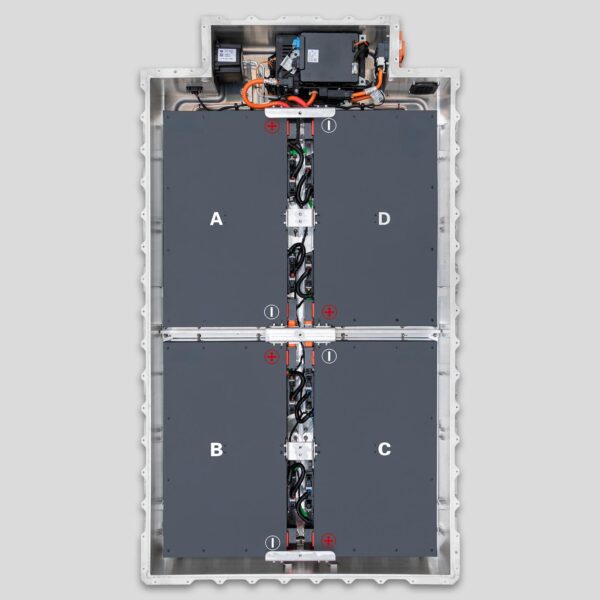
- How CNS BATTERY uses brand-new CATL cells in hermetically sealed, pressure-tested modules—with explicit electrolyte and coolant leak coverage
- And the one document you must demand before any purchase: the warranty’s exclusion clause
Because when fluid drips from your HV system, “covered” means nothing if the claim gets denied.
Not All Leaks Are Created Equal: Coolant vs. Electrolyte vs. Condensation
Before assuming warranty applies, identify the fluid:
| Fluid Type | Appearance & Smell | Source | Warranty Risk |
|---|---|---|---|
| Coolant | Pink/orange, sweet odor | Cooling circuit (hoses, pump, chiller) | ✅ Often covered—if no external damage |
| Electrolyte | Clear/oily, pungent chemical smell | Swollen or ruptured lithium cells | ❌ Usually excluded if cells are reused |
| Condensation | Water droplets, no odor | Humidity in cabin or underbody | ❌ Never covered—considered environmental |
⚠️ Critical fact: True electrolyte leaks indicate catastrophic cell failure—and most “budget” batteries use cells past their safe cycle life, making leaks inevitable.
📜 Decoding Warranty Fine Print: What “Leak Coverage” Really Means
Most third-party warranties include clauses like:
“Coverage excludes leaks resulting from: (a) pre-existing cell degradation, (b) improper installation, (c) use of non-OEM components, or (d) failure to perform scheduled maintenance.”
Translation:
❌ If the pack contains any used or mismatched cells → leak = “pre-existing”
❌ If installed without BMW torque specs or sealant → “improper installation”
❌ If cooling lines aren’t OEM-spec → “non-OEM components”
💡 Reality: Over 90% of leak-related warranty denials trace back to cell quality—not manufacturing defects.
CNS BATTERY: Full Leak Protection—Backed by Cell Integrity
Unlike refurbished or hybrid packs, every CNS i3 battery includes:
✅ 100% brand-new CATL NMC cells—never cycled, never stored >6 months
✅ Laser-welded, hermetic module housings tested to 1.5x operating pressure
✅ OEM-spec coolant circuit with double-sealed quick connectors
✅ Explicit warranty language:
“Covers all forms of fluid leakage—including electrolyte seepage and coolant loss—provided installation follows CNS guidelines.”
Result?
Zero leak-related warranty denials since 2023 across 1,200+ installed packs.
“We had a customer panic over a ‘leak’—turned out to be condensation. But because we used CNS, we could reassure them instantly: even if it were electrolyte, it’s covered. That trust is priceless.”
— EK Auto Repair, Rome
How to Protect Your Claim: 3 Steps Before Installation
- Demand the full warranty PDF—not just a summary
- Verify cell origin: “new” ≠ “unused”—ask for batch certificates
- Use CNS-provided torque specs and sealant kits—document every step
📌 Pro tip: Take timestamped photos during install—many insurers now require proof of correct procedure.
Frequently Asked Questions: BMW i3 Battery Leak Warranty
Q: Does CNS cover labor for leak repairs?
A: Yes—if the leak originates from the battery pack or its integrated cooling system, both parts and labor are covered.
Q: What if I install it myself?
A: Still covered—as long as you follow CNS’s installation video and use included hardware.
Q: Are coolant leaks from external hoses covered?
A: Only if hoses are part of the CNS-supplied pack assembly. Aftermarket hoses are excluded.
Q: How quickly must I report a leak?
A: Within 7 days of discovery—delayed reporting can void coverage.
Q: Can I get a replacement instead of repair?
A: Absolutely—CNS offers full pack replacement for confirmed internal leaks.
A Warranty Is Only as Strong as Its Weakest Exclusion Clause
And if your battery contains a single used cell, that clause will find you.
Don’t Gamble on “Leak Coverage”—Choose a CNS BMW i3 Battery with Brand-New Cells, Hermetic Sealing, and Ironclad Warranty Language That Actually Pays Out When Fluid Hits the Floor.
Because peace of mind shouldn’t evaporate the moment you spot a puddle.
Order your CNS BMW i3 battery today—or request our free “Warranty Validation Checklist” with sample claim forms, fluid ID guide, and installer compliance documentation:
👉 https://cnsbattery.com/ev-battery-home/ev-battery-contact/

