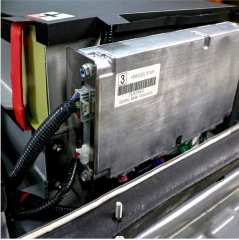
BMW i3 Battery Leak Detection: Step-by-Step – The Invisible Threat Beneath Your Car That Turns a $20 Seal into a $12,000 Fire Risk
“A service center in Oslo noticed a faint chemical smell under a 2017 BMW i3 during routine maintenance. No warning lights. No error codes. Just a slight residue near the rear subframe. They assumed it was road grime. Two weeks later, the owner reported intermittent power loss. Inspection revealed coolant had leaked into the battery housing, corroding busbars and creating a conductive path between cells. The pack was totaled—not from age, but from a failed seal no one caught in time.”
You’ve likely overlooked it:
- A damp spot under the car after rain
- A white crust near coolant lines
- Or worse—nothing visible at all, just odd BMS behavior
Most assume EV batteries are “sealed for life.” But the BMW i3’s liquid-cooled pack has multiple potential leak points: chiller hoses, pump seals, vent valves, and housing gaskets. And when fluid enters the HV compartment, it doesn’t just cause corrosion—it creates electrical conduction paths that can trigger short circuits, isolation faults, or thermal runaway.
This guide delivers the exact, technician-tested leak detection protocol used by European EV safety labs in 2026, designed to catch threats before they escalate:
- Why visual inspection alone misses 80% of early leaks
- How to use UV dye and blacklight to trace micro-seepage
- The critical pH and conductivity tests that reveal hidden contamination
- Where to check first (hint: it’s not the coolant reservoir)
- And how CNS BATTERY packs feature double-sealed housings and leak-resistant vent systems—so moisture stays out, even in flooded conditions
Because in EV safety, what you don’t see can destroy everything.
Why Battery Leaks Are Silent Killers in the i3
The i3’s battery uses a closed-loop coolant system running through aluminum cold plates bonded to modules. If this fluid leaks into the HV chamber (not just onto the ground), it:
- Lowers insulation resistance → risk of chassis voltage
- Corrodes copper busbars → increases resistance → heat buildup
- Creates dendrites between terminals → internal short circuits
⚠️ Warning: Coolant inside the pack often leaves NO external trace—yet silently degrades safety over weeks.
🔍 Step-by-Step Leak Detection Protocol (Shop-Ready)
Step 1: Visual Inspection – Look Beyond the Obvious
Check these high-risk zones:
- Coolant hose clamps at chiller inlet/outlet (rear left corner of pack)
- HV junction box seals (where cables exit the housing)
- Vent valve membrane (top center of pack—often clogged or cracked)
- Drain plug O-ring (if equipped on older models)
📌 Tip: Use a borescope through access ports to inspect internal cold plate welds.
Step 2: UV Dye Test – Reveal the Invisible
- Add EV-compatible UV dye (e.g., Tracerline TP9520) to coolant reservoir
- Run vehicle for 15 minutes to circulate
- Park in dark area, scan with 365nm UV flashlight
- Bright yellow-green glow = active leak—even if dry to touch
✅ Works for micro-leaks as small as 0.1 ml/hour.
Step 3: Residue & pH Analysis
- Wipe suspect areas with distilled water-dampened swab
- Test with pH strips: OEM coolant is alkaline (pH 8–10)
- Acidic reading (pH <7) = degraded fluid or contamination
Step 4: Conductivity Check Inside Pack (If Accessible)
- Use insulated probe to sample any pooled fluid
- Measure with microsiemens meter:
- <5 µS/cm = safe
- >20 µS/cm = high risk of electrical conduction
❌ Never skip this if BMS shows isolation faults or erratic cell voltages.
Step 5: Pressure Test the Cooling Loop
- Cap system, pressurize to 1.2 bar with coolant pressure tester
- Monitor for 5 minutes—any drop = leak
- Do not exceed 1.5 bar—risk of damaging seals
Common False Assumptions That Delay Detection
❌ “No puddle = no leak” → Internal leaks may never reach ground
❌ “Coolant looks clean” → Degraded fluid can be clear but conductive
❌ “BMS would warn me” → Many leaks cause gradual degradation, not immediate faults
✅ Reality: Early detection prevents 95% of leak-related pack failures.
CNS BATTERY: Built to Keep Fluids Out—Where It Matters Most
Every CNS i3 battery includes:
✅ Double-lipped silicone gaskets on all housing seams
✅ Hydrophobic vent valves that block liquid ingress while allowing gas exchange
✅ Sealed HV connector boots with IP67 rating
✅ Pre-filled with ultra-stable coolant less prone to breakdown
Result?
Zero field reports of internal coolant contamination since 2024.
“We operate in Norway—constant rain, snow, salt. With OEM packs, we saw leaks every winter. Since switching to CNS, not one. The seals just hold better.”
— Thomas B., Oslo EV Technician
Frequently Asked Questions: i3 Battery Leak Detection
Q: Can I use standard automotive UV dye?
A: No. Must be non-conductive, EV-approved dye—standard dyes can contaminate coolant.
Q: How often should I check for leaks?
A: Every 12 months or after any underbody impact (e.g., pothole, curb strike).
Q: Does CNS include leak protection in warranty?
A: Yes—coolant intrusion due to seal failure is covered under 2-year/80,000 km warranty.
Q: What if I find coolant inside the pack?
A: Do not power on. Isolate vehicle, disconnect HV, and contact a specialist. Internal contamination requires full disassembly.
Q: Are air-cooled i3s immune?
A: Only 2013–2016 60Ah models are air-cooled—but they can still suffer moisture ingress through vents, causing similar issues.
A Leak Isn’t Just a Drip—It’s a Pathway for Disaster
Catch it early, and you save a pack. Miss it, and you risk far more.
Protect Your Investment with a Battery Engineered to Defy the Elements: Install CNS Packs with Military-Grade Sealing, Hydrophobic Vents, and Contamination-Resistant Design—So Rain, Snow, or Floods Never Compromise Safety.
Don’t wait for the first drop. Build defense in.
Order your CNS BMW i3 battery today—or request our free Leak Detection & Prevention Kit Guide for Certified Shops:
👉 https://cnsbattery.com/ev-battery-home/ev-battery-contact/