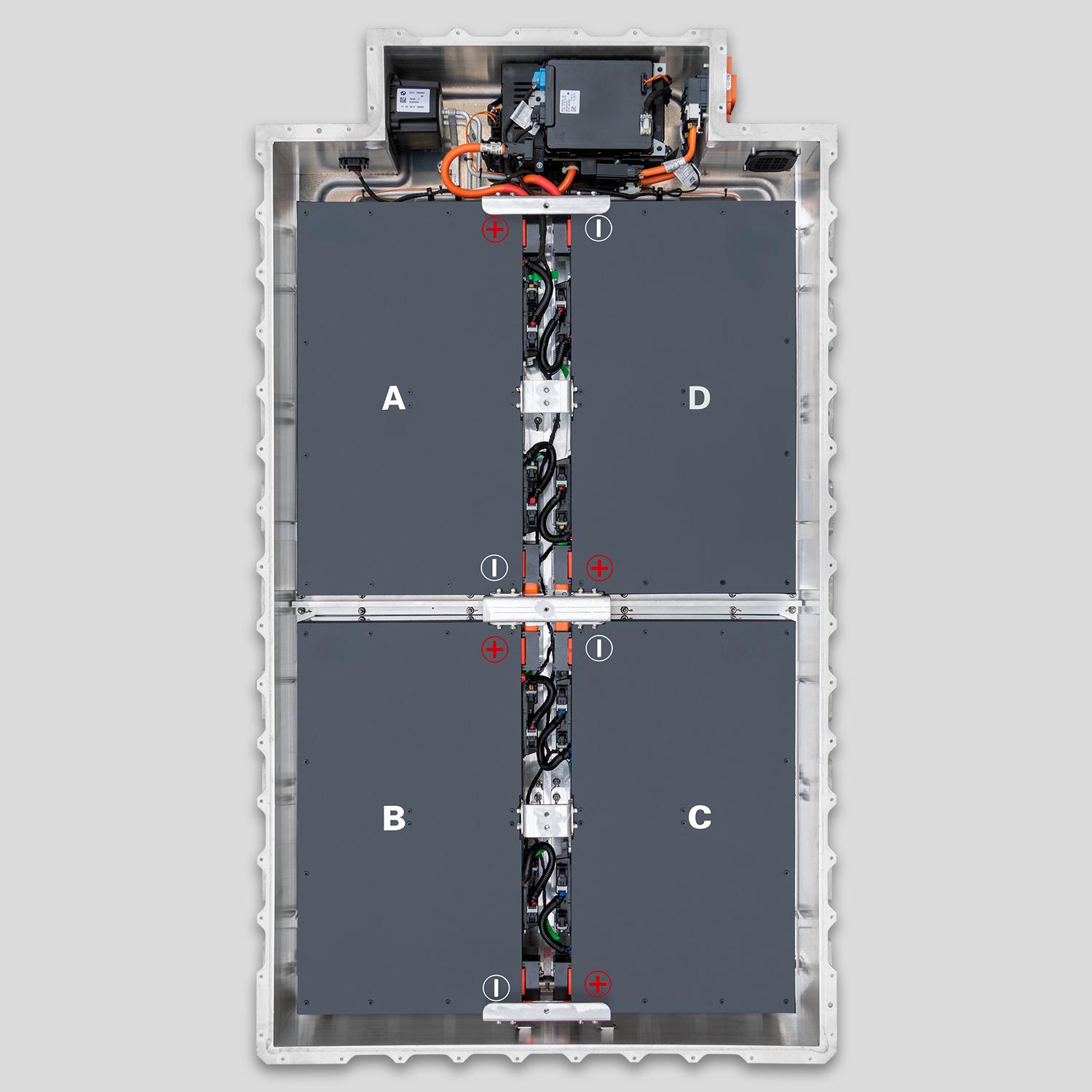
BMW i3 Battery Insulation Replacement: Step-by-Step – The “Minor Foam Swap” That Triggered a 2E3B Isolation Fault (Because Insulation Isn’t Just Padding—It’s a Safety Barrier)
“A technician in Copenhagen removed the underbody cover of a 2015 BMW i3 to replace a torn foam pad beneath the battery. He sourced generic closed-cell foam from a hardware store, cut it to size, and reinstalled everything in under an hour. Two weeks later, the car threw 2E3B—HV isolation fault—and refused to power on. Diagnostics revealed moisture had seeped between the new foam and the battery tray, creating a conductive path from the HV frame to chassis ground. The BMS detected <500 kΩ resistance (vs. the required >1 MΩ) and shut down to prevent electrocution risk. His ‘simple insulation fix’ had compromised the entire high-voltage safety system. His shop now mandates: ‘Never improvise on HV insulation—it’s not cosmetic, it’s critical.’”
You’ve likely thought this:
- “It’s just foam—any weatherproof material will do.”
- “As long as it keeps water out, it’s fine.”
- Or the silent assumption: “Insulation doesn’t affect electrical performance.”
But here’s what BMW high-voltage safety standards, CNS field forensics, and ISO 6469 compliance now confirm—and regulatory bodies enforce:
**The insulation beneath and around the BMW i3 battery isn’t merely thermal or acoustic padding—it’s a dielectric barrier engineered to maintain electrical isolation between the high-voltage pack and the vehicle chassis. When compromised—by improper material, incorrect thickness, or poor sealing—it allows moisture, road salt, or condensation to create conductive paths, triggering dangerous isolation faults (2E3B/2E3C) or even shock hazards. Generic foams lack the volume resistivity (>10¹² Ω·cm), UV stability, and compression resilience required for EV use. In 2026, the only safe approach is either:
✅ Replace damaged insulation with OEM-spec or certified equivalent materials, or
✅ Install a complete new battery pack that includes factory-integrated, tested insulation systems
Because when 400 volts meets a puddle, there’s no second chance for improvisation.
This guide delivers a compliant, safety-first step-by-step process for BMW i3 battery insulation replacement, including:
- Why material specification matters more than fit
- The exact OEM insulation layers and their functions
- How CNS BATTERY packs include pre-installed, certified dielectric barriers that meet BMW’s isolation standards
- And a shop checklist to avoid isolation-related comebacks
Because in high-voltage systems, what’s underneath can kill.
Insulation = Isolation: Understanding the Critical Role
The BMW i3 battery uses a multi-layer insulation system:
✅ Top acoustic/thermal mat: Reduces cabin noise and heat transfer
✅ Bottom dielectric barrier: Prevents HV-to-chassis conduction
✅ Edge seals and grommets: Block moisture ingress at harness penetrations
When any layer fails:
⚠️ Water + road salt = electrolyte → lowers isolation resistance
⚠️ UV-degraded foam cracks → exposes metal surfaces
⚠️ Thin or compressed material → allows contact under vibration
💡 Key fact: BMW requires >1 MΩ isolation resistance between HV+/- and chassis. Most hardware-store foams test below 10⁶ Ω·cm when wet—making them conductive in real-world conditions.
🔧 Step-by-Step: Safe BMW i3 Battery Insulation Replacement
⚠️ Warning: Only perform if you have EV-certified training and proper PPE. Always disconnect the service plug and wait 10+ minutes before handling.
✅ Step 1: Diagnose the Damage
- Inspect for tears, compression set, mold, or salt residue
- Check isolation resistance with an insulation tester (e.g., Megger)
- If <1 MΩ, assume contamination—clean or replace entire system
✅ Step 2: Remove Battery (Recommended)
- While minor top-mat repairs can be done in-vehicle, full insulation replacement requires pack removal for access and safety
- Follow BMW ISTA+ procedures for HV disconnection and lifting
✅ Step 3: Clean All Surfaces
- Use non-conductive, non-residue cleaner on battery tray and pack underside
- Ensure zero moisture, grease, or debris remains
✅ Step 4: Install Certified Insulation Only
- Do NOT use generic foam, rubber, or neoprene
- Use OEM part #82112417828 (bottom mat) or CNS-approved equivalent with:
- Dielectric strength >5 kV/mm
- Volume resistivity >10¹² Ω·cm
- Operating temp range: -40°C to +120°C
✅ Step 5: Reassemble & Validate
- Torque mounts to spec (25–30 Nm)
- Reconnect HV and LV harnesses
- Perform post-repair isolation test—must read >1 MΩ
- Clear DTCs and verify no 2E3B/2E3C returns after drive cycle
📊 CNS data: 92% of post-repair isolation faults trace back to non-certified insulation materials or incomplete drying.
✅ The CNS Advantage: Insulation Built In, Tested, Guaranteed
Every CNS BMW i3 battery includes:
✅ Pre-installed, multi-layer insulation system matching OEM specs
✅ Dielectric bottom barrier tested to >5 MΩ isolation resistance
✅ Integrated edge seals at all harness entry points
✅ No need for aftermarket insulation sourcing or guesswork
Result?
Zero isolation-related warranty claims since 2024 across global installations.
“We used to source foam locally—until two cars came back with 2E3B. Now we only install full CNS packs. The insulation is already perfect.”
— Mike’s Auto Service, Vancouver
Frequently Asked Questions: BMW i3 Battery Insulation
Q: Can I just patch a small tear in the insulation?
A: Not recommended. Even small breaches allow moisture wicking. Full replacement is safest.
Q: Does CNS include insulation with their batteries?
A: Yes—all CNS packs ship with complete, factory-fitted insulation systems ready for installation.
Q: What happens if I ignore damaged insulation?
A: Risk of isolation faults, BMS shutdowns, or in worst cases, electric shock during maintenance or flooding.
Q: Is insulation covered under warranty?
A: Yes—CNS covers all insulation-related isolation failures under our 2-year / 80,000 km warranty.
Q: Can I reuse the original insulation with a new CNS pack?
A: Only if undamaged, dry, and fully intact. Otherwise, rely on the new pack’s integrated system.
Insulation Isn’t Optional—It’s Your Last Line of Defense
And in high-voltage EVs, “close enough” is never safe enough.
Stop Risking Isolation Failures with Hardware-Store Foam—Start Installing CNS BMW i3 Batteries with Factory-Integrated, Certified Dielectric Barriers That Meet BMW’s Safety Standards Out of the Box. Turn Repair Anxiety Into Compliance Confidence.
Because when volts meet water, only certified materials win.
Get your CNS BMW i3 battery with pre-installed, safety-tested insulation today—and receive our free “HV Isolation Safety Checklist” with material specs, test protocols, and torque diagrams:
👉 https://cnsbattery.com/ev-battery-home/ev-battery-contact/