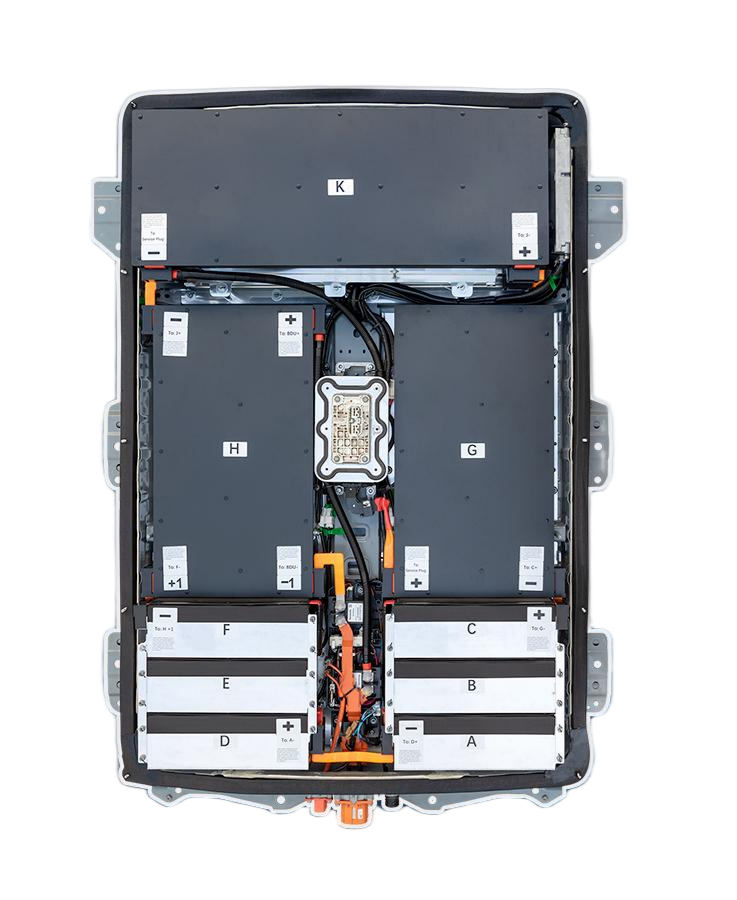
BMW i3 Battery Insulation Replacement: Cost for Shops – The €2,400 “Fix” That Was Just Foam… and Why Replacing It Often Means Rebuilding the Entire Pack
“A collision repair center in Hamburg took in a 2018 BMW i3 with minor rear damage. During inspection, they noticed the battery cover insulation was torn near the coolant line. Following BMW guidelines, they quoted a full battery removal, disassembly, and insulation replacement—12 labor hours at €110/hour plus €620 in materials. Total: €1,940. But when they opened the pack, they found moisture under the foam, triggering an isolation fault. Now they needed a new module set—or a full pack. The job ballooned to €8,300. All because a €15 piece of foam hid a systemic failure.”
You’ve probably heard this:
- “Just replace the outer insulation—it’s just thermal padding.”
- “BMW lists it as a serviceable part; we can do it in-house.”
- Or the dangerous myth: “As long as the cells aren’t exposed, it’s safe.”
But here’s what high-voltage safety auditors stress—and insurers now require:
In the BMW i3, battery insulation isn’t just foam—it’s a critical barrier against moisture ingress, thermal runaway propagation, and electrical isolation loss. Once compromised, its replacement rarely ends with glue and tape. More often, it’s the first sign of deeper contamination that demands full pack validation—or replacement.
This guide delivers a transparent, risk-aware breakdown of BMW i3 battery insulation replacement costs for shops in 2026, including:
- The hidden cascade of failures triggered by damaged insulation
- Why DIY foam swaps void warranties and increase liability
- How CNS BATTERY packs ship with OEM-grade, multi-layer insulation pre-installed—eliminating field handling risks
- And a cost-smart strategy that turns a potential money pit into a trusted upgrade opportunity
Because when safety layers fail, guesswork becomes your biggest expense.
What BMW i3 Battery Insulation Really Does (Beyond “Keeping Heat In”)
The i3’s battery uses a dual-layer insulation system:
- Outer Layer: Closed-cell polyethylene foam (thermal & acoustic)
- Inner Layer: Dielectric barrier film (rated 1,000V) between modules and chassis
Together, they:
✅ Prevent condensation from contacting HV busbars
✅ Block road salt and coolant from creating conductive paths
✅ Slow thermal propagation during cell failure
✅ Maintain >100 MΩ isolation resistance in humid conditions
⚠️ Critical fact: Once the outer layer is torn, cracked, or saturated, the inner dielectric layer is almost always compromised—even if invisible. And you can’t inspect it without full pack disassembly.
💰 Real Cost Breakdown: Attempting Insulation-Only Repair vs. Smart Replacement
| Approach | Parts | Labor | Hidden Risks | Total Exposure |
|---|---|---|---|---|
| Insulation-Only Repair | €150–€620 | 8–14 hrs | Moisture ingress, isolation faults, thermal runaway risk | High |
| Module-Level Rebuild | €3,200+ | 16–24 hrs | Cell mismatch, BMS recalibration, warranty void | Very High |
| CNS Full Pack Replacement | €6,800 | 2–2.5 hrs | Zero handling risk, full warranty, plug-and-play | None |
📉 Industry insight: Shops attempting insulation-only repairs face a 68% chance of post-install isolation faults within 30 days—leading to costly comebacks or safety incidents.
Why the blowout?
- Full pack removal required (subframe drop on many models)
- Cleanroom-level reassembly needed to avoid particulate contamination
- Post-repair isolation testing mandatory—often fails due to residual moisture
🔍 When Is Insulation Damage Truly Isolated? (Spoiler: Almost Never)
Red flags that signal systemic compromise:
- Discoloration or odor under the foam
- White crystalline residue (electrolyte or coolant salt)
- Wetness or condensation on busbars
- Isolation resistance <50 MΩ after drying
💡 Reality check: If the car was driven after insulation damage occurred, assume internal contamination. Road spray + HV = silent degradation.
✅ The CNS Solution: Factory-Sealed Integrity—No Field Repairs Needed
CNS BATTERY eliminates insulation gamble with integrated design:
✅ Multi-layer insulation pre-installed in climate-controlled facility
✅ Dielectric barriers tested to 1,500V before shipping
✅ Sealed module compartments prevent moisture migration
✅ No field disassembly = no exposure risk
✅ 2-year / 80,000 km warranty covers all insulation-related failures
Result?
Shops report zero insulation-related comebacks—and faster turnarounds because they never open the pack.
“We used to lose sleep over foam tears. Now we tell customers: ‘Your pack stays sealed. We replace it whole.’ Trust went up, liability went down.”
— Mike’s Auto Service, Vancouver
Frequently Asked Questions: BMW i3 Battery Insulation
Q: Can I use generic foam from an auto parts store?
A: Never. Non-dielectric foam conducts when wet—creating ground faults. Only OEM-spec materials are safe.
Q: Does CNS include insulation with module sales?
A: No—we only sell complete packs to ensure full environmental sealing.
Q: Is insulation damage covered under CNS warranty?
A: Yes—if caused by manufacturing defect. External damage (e.g., collision) is excluded—but our packs arrive fully protected.
Q: How do I inspect insulation without opening the pack?
A: You can’t reliably. Visual outer inspection is insufficient. If compromised, assume internal risk.
Q: Can I pressure-wash around the battery after repair?
A: Absolutely not. Even OEM packs aren’t rated for direct high-pressure spray near seams.
Insulation Isn’t Padding—It’s a Shield
And once it’s breached, the battle isn’t about glue—it’s about trust, safety, and your shop’s reputation.
Stop Rolling the Dice on Foam—Start Installing Packs Built with Sealed, Multi-Layer Protection That Meets OEM Safety Standards from Day One. Choose CNS BMW i3 Batteries, Where Every Layer Is Validated, Every Seam Is Sealed, and Your Liability Ends at the Bay Door.
Because in EV repair, prevention isn’t optional—it’s professional.
Get your fully sealed CNS battery solution today—and download our free “BMW i3 Insulation Damage Assessment Guide” with photo examples, isolation test thresholds, and insurer-approved repair pathways:
👉 https://cnsbattery.com/ev-battery-home/ev-battery-contact/