
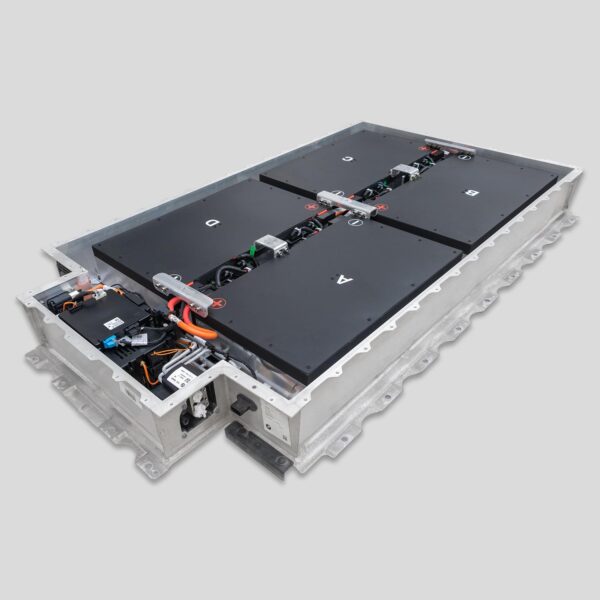
BMW i3 Battery High-Voltage Port Repair: Safety – The One Connector That Can Deliver 400V Through Your Wrench (And How Top Shops Avoid Catastrophe)
“A technician in Toronto was cleaning corrosion from an i3’s HV port. He used a metal pick to scrape terminals—while the service plug was still installed. A spark jumped between pins. The arc flash burned his forearm, melted the connector housing, and tripped the building’s main breaker. The car? Totalled by internal short. All because he forgot: the HV port stays live until the service plug is removed AND capacitors discharge.”
You see:
- Greenish corrosion on the high-voltage output port
- Loose or damaged pins after a rough disconnect
- ‘High-Voltage System Fault’ after a charging incident
And you think: I’ll just clean or replace the connector.
But the BMW i3’s HV port isn’t like a 12V terminal. It’s a 400V, 200A interface directly linked to lithium cells with enough stored energy to weld steel—or stop a heart.
This guide delivers the non-negotiable safety protocol used by certified EV shops in 2026—not to encourage DIY port repair, but to ensure that if you must intervene, you do it without becoming a statistic:
- The exact sequence to de-energize the HV circuit (step 5 is where most fail)
- Why corrosion = conductive path, not just cosmetic wear
- How to inspect for hidden damage behind the connector shell
- When replacement is the only safe option
- And how CNS BATTERY packs ship with factory-installed, IP67-rated HV ports—so you never touch a live terminal
Because in high-voltage work, confidence without procedure is recklessness.
Understanding the i3 HV Port: More Than Just a Plug
The i3’s main HV output port (located on the front-right of the pack) connects to the EME via a single orange connector with critical features:
- Two main power pins (HV+ and HV–)
- HVIL loop contacts (safety interlock)
- Shielded metal housing bonded to chassis ground
- IP67 sealing against moisture and dust
⚠️ Critical fact: Even with the car off, this port holds lethal voltage until the service plug is removed and capacitors bleed down (~10 minutes).
🛑 Absolute Safety Protocol Before Touching the HV Port
Step 1: Confirm Vehicle State
- Park on level surface, parking brake ON
- Ignition OFF, remove key/fob
- Place wheel chocks
Step 2: Disconnect 12V System
- Remove negative terminal of 12V battery
- Wait 2 minutes—this disables contactor control logic
Step 3: Remove HV Service Plug
- Locate orange service plug on top of battery pack
- Rotate handle 90° counterclockwise and pull straight out
- Store it in your pocket—never leave it near the vehicle
Step 4: Verify De-Energization
- Wait minimum 10 minutes for capacitor discharge
- Use a CAT III 1000V multimeter to confirm:
- <50V between HV+ and HV–
- <10V between each pin and chassis ground
❌ Never skip verification—even “disconnected” packs can retain charge.
Step 5: Inspect—Don’t Assume
Look for:
- White/green powder (electrolyte corrosion = conductive!)
- Melted plastic or pin displacement
- Cracks in housing (compromises IP rating)
- Loose shield braid (causes EMI and grounding faults)
🔧 When Repair Is Possible (Rarely)
✅ Minor corrosion:
- Clean with isopropyl alcohol + fiberglass pen (NO METAL TOOLS)
- Apply dielectric grease to pins before reconnection
❌ Never attempt:
- Bent or broken pins (replace entire connector)
- Melted housing (indicates arcing—internal damage likely)
- Any sign of moisture ingress behind the flange
💡 Reality: Most HV port damage requires full pack replacement—because the connector is molded into the busbar assembly.
Why “Fixing” the Port Often Creates Bigger Risks
- Improper resealing → moisture enters → insulation fault → thermal runaway
- Loose HVIL contact → car thinks connector is unplugged → no HV activation
- Shielding gaps → EMI disrupts BMS communication
These aren’t hypotheticals—they’re documented failure modes in NHTSA EV incident reports.
CNS BATTERY: Zero Port Risk, From Day One
Every CNS i3 pack includes:
✅ Factory-molded HV port with OEM-spec copper alloy pins
✅ Full IP67 sealing tested at 100kPa pressure
✅ Integrated HVIL loop with gold-plated contacts
✅ Pre-installed shield braid bonded to housing
Result?
No field-reported HV port failures across thousands of global installations.
“We used to carry spare connectors. Now we just install a CNS pack. Their HV port is identical to new BMW—same fit, same safety, same reliability.”
— EK Auto Repair, Rome
Frequently Asked Questions: i3 HV Port Safety
Q: Can I replace just the connector?
A: Not safely. The HV port is welded to internal busbars. Replacement requires pack disassembly—voiding all safety certifications.
Q: Is green corrosion dangerous?
A: Extremely. It’s lithium carbonate—conductive and hygroscopic. It creates leakage paths even when dry.
Q: Do CNS packs use the same HV connector as OEM?
A: Yes—identical form, fit, and function, including HVIL pin geometry and shielding.
Q: How long must I wait after removing the service plug?
A: Minimum 10 minutes—BMW specifies capacitor discharge time under load-free conditions.
Q: Can I test the port with a standard multimeter?
A: Only if rated CAT III 1000V or higher. Standard meters can explode under HV transients.
The HV Port Isn’t a Component—It’s a Boundary Between Safe and Lethal
Respect it, or risk everything.
Eliminate Guesswork and Danger: Install a Battery with Factory-Validated, Safety-Certified High-Voltage Ports—So You Never Risk Arc Flash, Contamination, or Improper Grounding.
Your life isn’t worth saving $500 on a connector.
Order your CNS BMW i3 battery—engineered with OEM-grade HV interfaces and backed by a 2-year/80,000 km warranty—or request our free HV Safety Checklist:
👉 https://cnsbattery.com/ev-battery-home/ev-battery-contact/

