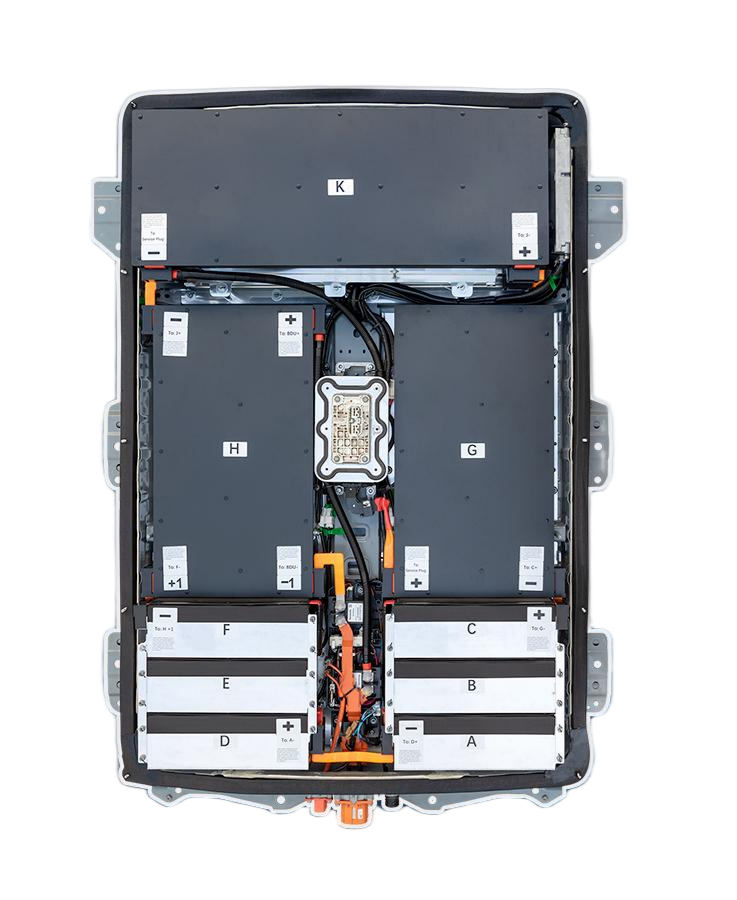
BMW i3 Battery Health Check Guide 2025: How to Maximize Range, Safety, and Lifespan
Introduction: Is Your BMW i3 Battery Hiding a Problem?
“My 2017 BMW i3 suddenly lost 30% of its range overnight. The dealer said it was ‘normal aging,’ but I later found out one module was failing. If I’d known sooner, I could’ve avoided a $6,000 replacement bill.”
—James L., Portland, Oregon
If you own a BMW i3, you’ve likely experienced:
- ⚠️ Sudden range drops (e.g., 150km → 100km in a month)
- ⚠️ Slow charging speeds (DC fast charge takes twice as long)
- ⚠️ Warning lights (“High Voltage Battery Fault”)
- ⚠️ Uneven cell balancing (some modules discharge faster than others)
These aren’t just inconveniences—they’re early warning signs of battery degradation. Left unchecked, they can lead to:
- 🔴 Premature failure (requiring a full replacement)
- 🔴 Safety risks (thermal runaway in extreme cases)
- 🔴 Reduced resale value (buyers avoid i3s with battery issues)
But what if you could diagnose battery health accurately, extend lifespan by 3–5 years, and avoid costly repairs?
CNS BATTERY’s 2025 BMW i3 Battery Health Check Guide shows you how.
Why Most BMW i3 Owners Overlook Battery Problems
1. No Access to Advanced Diagnostics
BMW’s built-in system only shows basic SOC (State of Charge)—not:
- 🔍 Individual cell voltages (one weak cell drags the whole pack)
- 🔍 Internal resistance (high resistance = reduced power output)
- 🔍 Thermal management efficiency (overheating accelerates aging)
CNS Solution: Our OBD-II scanner + proprietary software reveals hidden metrics in real time.
2. Misinterpreting “Normal Aging”
BMW claims an 8-year lifespan, but real-world data shows:
- 📉 50% capacity loss after 6 years in hot climates
- 📉 30% capacity loss after 7 years in mild climates
- 📉 Uneven degradation (some modules fail faster)
CNS Solution: We identify weak modules early and recommend targeted repairs (instead of full replacement).
3. Using Generic Battery Testers
Most third-party tools measure overall voltage—not:
- ⚡ Coulomb counting accuracy (BMS calibration errors)
- ⚡ Charge acceptance rate (how efficiently the battery accepts power)
- ⚡ Self-discharge rate (internal leaks drain charge when parked)
CNS Solution: Our professional-grade testers analyze 10+ parameters for precise health scoring.
Step-by-Step BMW i3 Battery Health Check (2025)
1. Perform a Full Charge Cycle
- Charge to 100% using a DC fast charger (not Level 2 AC).
- Let the battery rest for 1 hour (to stabilize).
- Record initial SOC and estimated range.
2. Use CNS BATTERY’s OBD-II Scanner
- Plug into the diagnostics port (under the dashboard).
- Run our custom software to check:
- ✅ Cell voltage balance (deviation > 0.05V = issue)
- ✅ Internal resistance (> 5mΩ per cell = aging)
- ✅ Thermal stability (temp > 45°C = risk)
3. Monitor Discharge Behavior
- Drive 50km on a highway (constant 100km/h).
- Compare actual range vs. estimated range.
- A >15% discrepancy indicates degradation.
4. Check for Error Codes
- Common codes:
- 🔴 P0D3B (Battery Module Degradation)
- 🔴 P0DAA (Thermal Runaway Risk)
- 🔴 P0A7F (BMS Communication Failure)
If you find any of these, act immediately.
Benefits of a Proactive Battery Health Check
1. Save $5,000+ on Premature Replacement
By catching one failing module early, you can:
- ✅ Replace just that module (800–1,200)
- ❌ Avoid full pack replacement (12,000–16,000)
2. Extend Battery Lifespan by 3–5 Years
Proper maintenance (e.g., balanced charging, cool storage) can:
- ✅ Slow capacity fade (from 2%/year to 0.8%/year)
- ✅ Prevent thermal runaway (common in degraded packs)
3. Boost Resale Value by 20%
A healthy battery (≥80% capacity) adds:
- ✅ 3,000–5,000 to your i3’s trade-in value
- ✅ Faster sales (buyers prioritize low-mileage batteries)
4. Upgrade with Confidence
If your battery is below 70% capacity, consider:
- ✅ CNS BATTERY’s 154Ah upgrade (42% more range, $7,800 installed)
- ✅ 10-year warranty (vs. BMW’s 8-year limited)
FAQs: BMW i3 Battery Health Checks (2025)
Q1: How often should I check my BMW i3 battery?
- Annually for low-mileage drivers (<10,000km/year).
- Every 6 months for high-mileage drivers (>20,000km/year).
- Immediately if you see range drops >10%.
Q2: Can I check battery health without professional tools?
Yes, but limited data:
- 📱 Use BMW ConnectedDrive (shows SOC, not cell health).
- 📉 Monitor range consistency (e.g., 150km → 120km over 3 months).
For full diagnostics, use CNS BATTERY’s scanner.
Q3: What’s the minimum battery health percentage to keep driving?
- 70%+: Safe for daily use.
- 60–70%: Monitor closely; consider replacement soon.
- <60%: Replace immediately (risk of failure).
Q4: Does cold weather affect battery health checks?
Yes—cold reduces discharge efficiency by 10–15%. Test in 15–25°C conditions for accuracy.
Q5: Can CNS BATTERY help if my battery is already failing?
Absolutely—we offer:
- 🔧 Module replacement (if only 1–2 cells are bad)
- 🔧 Full pack upgrades (154Ah, 10-year warranty)
- 🔧 BMS recalibration (fixes error codes)
Don’t Wait for a Breakdown—Act Now
Your BMW i3 battery is not immortal. Without regular checks, you risk:
❌ Sudden failure (stranded on the highway)
❌ $16,000 replacement bills (BMW’s OEM price)
❌ Safety hazards (overheating, fires)
Instead, proactively monitor health and:
✅ Save thousands on repairs
✅ Drive with confidence
✅ Maximize resale value
👉 https://cnsbattery.com/ev-battery-home/ev-battery-contact/ 👈
Your BMW i3 deserves better than “wait and see.” 🔋🚗