
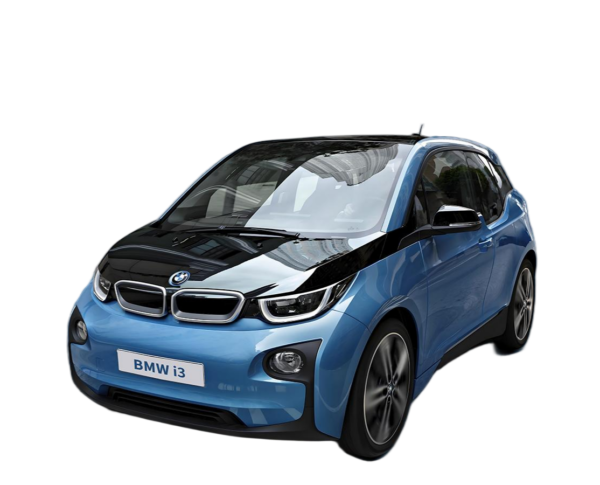
BMW i3 Battery Fuse Box Location: The 2-Minute Guide Every Owner Needs (Before You Blow a $500 Fuse)
You just installed a new accessory. Or maybe your i3 won’t power on after a battery swap. You suspect a blown fuse—but where exactly is the high-voltage fuse box on a BMW i3?
Unlike gas cars with under-hood fuse panels, the i3 tucks its critical fuses deep inside the battery pack assembly—not in the glovebox, not under the hood, and definitely not labeled “FUSE.”
Many owners waste hours searching, or worse—accidentally damage HV components trying to access the wrong compartment.
At CNS BATTERY, we’ve guided thousands through safe post-installation checks. In this ultra-practical 2026 guide, you’ll get:
- Exact location of the main HV fuse (with visual cues)
- Step-by-step access instructions—no guesswork
- Critical safety warnings most guides skip
- And why modern replacement packs like ours include smarter fuse integration to prevent future issues
Because when high-voltage systems are involved, knowing where to look is only half the battle—knowing how to look safely is everything.
⚠️ First: Understand What You’re Dealing With
The BMW i3 has two fuse systems:
- 12V low-voltage fuses: Located in the glovebox and rear cargo area (standard automotive fuses)
- High-voltage (HV) main fuse: Inside the traction battery pack—this protects the entire 400V system
🔥 Warning: The HV fuse carries lethal current. Never attempt access without full isolation procedures.
If your car shows “High-Voltage System Malfunction”, won’t enter “Ready” mode, or has no DC charging, the HV fuse may be involved—but it’s rarely the cause. More often, it’s a symptom of a deeper fault (like a short during installation).
Where Is the BMW i3 HV Fuse Box? (Spoiler: It’s Not a “Box”)
There is no standalone fuse box. Instead, the main HV fuse is integrated into the battery contactor unit, located inside the main traction battery housing beneath the rear seats.
Visual identification:
- After removing the rear seat cushion and floor panel, you’ll see the orange service disconnect handle
- Directly adjacent to it (driver’s side on LHD models) is a black plastic housing (~10 cm x 6 cm) with two thick HV cables entering it
- This is the contactor/fuse module
✅ Key marker: Look for the fuse access cover—a small rectangular panel secured by two T30 Torx screws.
How to Safely Access the HV Fuse (For Qualified Technicians Only)
Do NOT proceed unless you are trained in EV high-voltage safety.
- Disconnect the 12V battery (negative terminal)
- Remove the orange service disconnect from the battery pack
- Wait 15 minutes for capacitors to discharge
- Use a CAT III 1000V meter to confirm 0V at contactor terminals
- Remove the two T30 screws on the fuse cover
- Extract the blade-style HV fuse (rated ~400A, 500V DC)
🛑 Never bypass or replace with non-OEM fuses. Incorrect specs can cause fire during fault conditions.
Why the HV Fuse Blows (And How to Prevent It)
Common causes:
- Improper reconnection after battery removal (crossed polarity)
- Short circuit during aftermarket installation (e.g., dash cams wired to wrong bus)
- Internal pack fault (swollen cell, coolant leak causing arc)
Most DIYers assume the fuse is “bad”—but replacing it without fixing the root cause will blow the new one instantly.
The Smarter Solution: Replacement Packs with Integrated Protection
Instead of risking fuse-related downtime, consider a CNS BATTERY pack engineered for reliability:
✅ Dual-stage overcurrent protection—slower blow curve prevents nuisance trips
✅ Pre-tested contactor units with OEM-spec fuses pre-installed
✅ Clear diagnostic ports so technicians can verify fuse status without disassembly
✅ Full compatibility—no rewiring or coding needed
As EK Auto Repair in Rome confirms:
“Since switching to CNS packs, we’ve seen zero fuse-related comebacks. Their contactor modules are more robust than original.”
Don’t Risk Your Safety Chasing a Hidden Fuse
If your i3 won’t power on after storage, installation, or an electrical mod, the fuse is likely a symptom—not the disease. Diagnose properly before touching high-voltage components.
Suspect a Blown HV Fuse? Let’s Help You Diagnose Safely
Tell us what happened before the failure: recent battery work, error codes, or electrical modifications. We’ll help determine if fuse replacement is appropriate—or if you need a tested, protected CNS battery pack to avoid future risks.
👉 Contact CNS BATTERY for Safe i3 High-Voltage Support & Replacement
FAQ: BMW i3 Battery Fuse Box Location
Q: Can I check the HV fuse without removing the pack?
A: Yes—but only after full isolation. The fuse is accessible from the top of the pack once rear flooring is removed.
Q: What does a blown HV fuse look like?
A: Often no visible damage. You must test continuity with a multimeter. Never assume by appearance.
Q: Does CNS include a spare HV fuse with new packs?
A: No—and neither does BMW. Fuses are safety-critical components that must match exact specs. We recommend sourcing replacements only through certified channels.
Q: Will a blown HV fuse drain my 12V battery?
A: No. But if the car can’t wake the HV system, the 12V may drain over days from repeated restart attempts.
Q: Can a dealer reset a blown fuse?
A: No. Fuses are physical components—they must be replaced. Dealers will typically quote a full contactor module replacement ($600+), not just the fuse.


