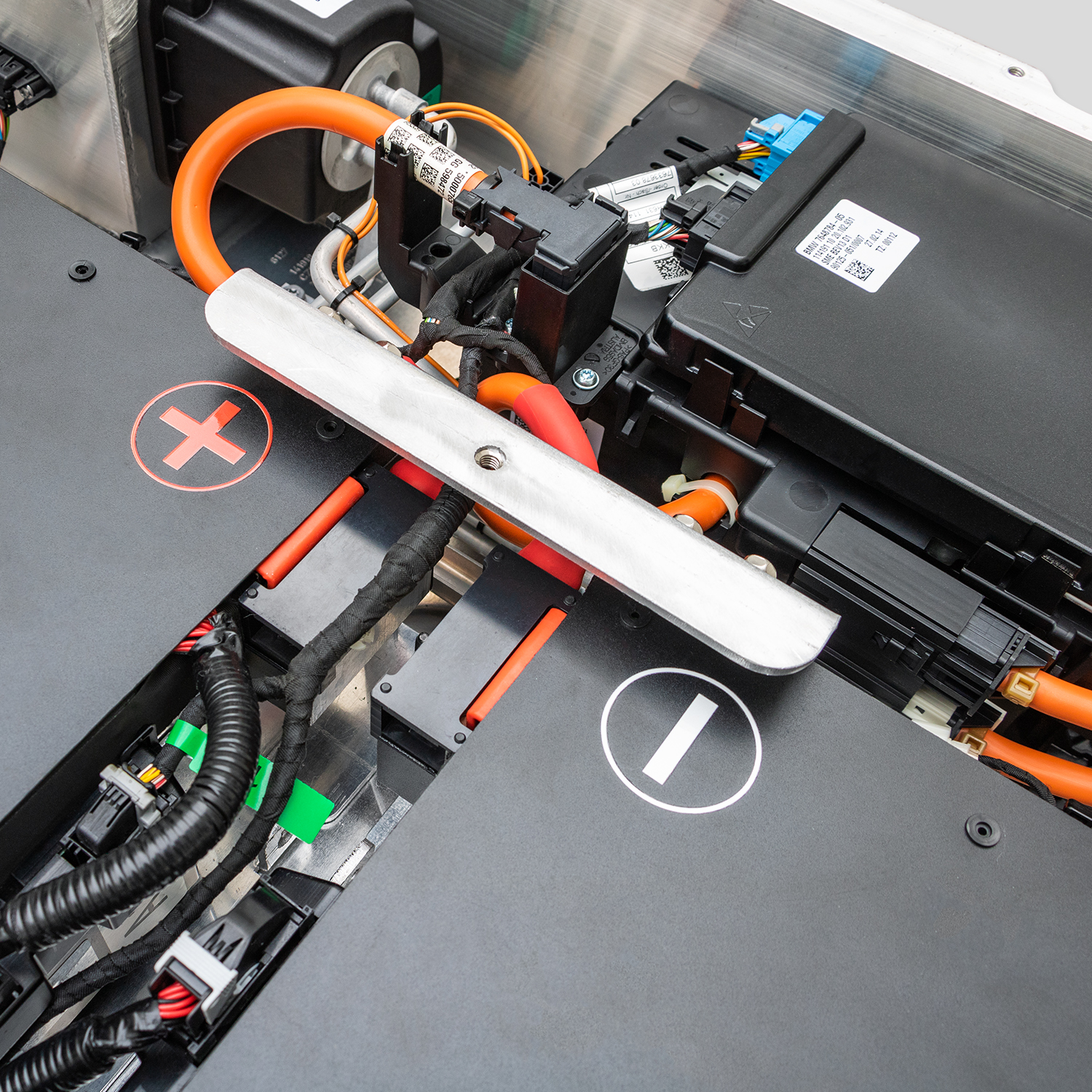
Here is the SEO-optimized article tailored for beginners, focusing on the environmental aspects of the BMW i3 battery.
🌱 BMW i3 Battery for Beginners: The Environmental Basics & Your Upgrade Options
Owning a BMW i3 is a statement. It signifies a move towards sustainable mobility and a cleaner future. However, as a beginner, you might wonder: What happens when the battery needs replacement? Is recycling efficient? And are there “greener” options than the original?
These are excellent questions. Understanding the environmental lifecycle of your electric vehicle (EV) battery is crucial. At CNS BATTERY, we believe that true sustainability isn’t just about driving electric; it’s about responsible manufacturing and end-of-life management.
This guide breaks down the environmental basics for BMW i3 owners and explains how choosing the right replacement solution can be both eco-friendly and economical.
♻️ The Lifecycle of a Lithium-Ion Battery: From Cradle to Grave
To understand the environmental impact, we need to look at the “Cradle-to-Grave” journey of a lithium-ion battery.
- Raw Material Extraction: This is often the most energy-intensive and environmentally sensitive phase. Mining lithium, cobalt, and nickel requires significant resources.
- Manufacturing: Building battery cells in factories consumes a lot of electricity.
- Usage: During this phase (driving your i3), the environmental impact is minimal compared to gasoline cars—zero tailpipe emissions!
- End-of-Life: This is where the “green” rubber meets the road. Batteries can either be landfilled (bad) or recycled (good).
The Environmental Challenge
The biggest environmental risk occurs when batteries are discarded improperly. Toxic chemicals can leach into the soil, and valuable finite resources are wasted.
The Solution: Closed-Loop Recycling
Modern EV battery recycling aims for a “closed loop.” This means old batteries are broken down, and the raw materials (like lithium and cobalt) are extracted to make new batteries. This drastically reduces the need for new mining.
🌍 Why Environmental Standards Matter for Your i3
As a BMW i3 owner, you likely care about the planet. However, the environmental standards of your battery depend heavily on who manufactured it and where.
The Problem with “Refurbished” or Low-Quality Packs
Many “budget” replacement batteries on the market are actually refurbished or repaired units made from scrap cells.
- The Risk: These batteries often use discarded cells from other manufacturers. If these cells are damaged or degraded, they can fail quickly, leading to more waste.
- The Reality: Repeatedly repairing failing batteries creates a cycle of waste. It is not a sustainable long-term solution.
The CNS BATTERY Standard
At CNS, we adhere to strict Original Factory Standards. We do not use scrap or recycled cells to build our packs from scratch.
Why is this better for the environment?
- Longevity: Our batteries are built to last (2-year warranty, 80,000 km). A longer lifespan means fewer replacements and less waste over the life of your car.
- Zero Defects: By using brand-new, top-tier cells (like those from CATL), we ensure a near-zero failure rate. This prevents premature disposal.
- Safety: Damaged or poorly repaired batteries can catch fire or leak, causing immediate environmental hazards.
Expert Insight: While recycling is good, preventing the need for early replacement through high-quality manufacturing is the ultimate green strategy.
💚 Comparing Your Options: Which is Truly “Green”?
Let’s compare the environmental footprints of your choices when your BMW i3 battery degrades.
| Feature | Original BMW / OEM | Refurbished / Scrap Packs | CNS BATTERY (New OEM-Compatible) |
|---|---|---|---|
| Cell Source | Brand New (High Quality) | Salvaged / Scrap (Unreliable) | Brand New CATL / Top Tier |
| Lifespan | Long (7-10 years) | Short (1-2 years often) | Long (2+ Years Warranty) |
| Recyclability | High (BMW has strict programs) | Low (Often unregulated) | High (Compliant with Standards) |
| Environmental Risk | Low | High (Leakage, Fire, Waste) | Low |
| Cost | Very High | Low (but deceptive) | 50% Less than OEM |
Analysis for Beginners:
While the Original BMW battery is environmentally sound, it comes with a massive price tag. The “Refurbished” option seems cheap but is actually bad for the planet because those batteries often fail quickly, creating more toxic waste. CNS BATTERY offers the middle ground: the environmental reliability of new cells at a fraction of the cost.
🛠️ Sustainable Innovation: How We Build Green
We understand that as a beginner, you want to make the right choice. Here is how our R&D and manufacturing process prioritizes the environment:
1. Sustainable Materials
We utilize advanced engineering to maximize energy density. This means we can store more power in fewer cells, reducing the overall material footprint compared to older battery technologies.
2. Intelligent Management (BMS)
Our Battery Management Systems (BMS) are designed for efficiency. An efficient BMS ensures that every watt of energy is used optimally, reducing energy waste during charging and discharging. This translates to fewer charging cycles and less strain on the grid.
3. Global Compliance
We adhere to international shipping regulations (IATA, IMDG) for lithium batteries. This isn’t just red tape; it ensures that your battery reaches you safely without environmental incidents during transport.
🚀 Making the Switch: A Guide for New Owners
If you are a beginner looking to upgrade or replace your BMW i3 battery, here is our step-by-step advice for an eco-conscious decision:
- Check Compatibility: Do not buy a generic battery. Ensure it matches your specific i3 model (e.g., 2014-2021 models have different requirements).
- Ask About the Cells: Avoid sellers who cannot tell you the brand of the cell (e.g., CATL, LG, Samsung). Unknown cells are usually scrap.
- Verify the Warranty: A long warranty (like our 2 years) proves the manufacturer believes in the product’s longevity.
- Consider the Source: Buying from a company with transparent manufacturing processes ensures ethical labor and environmental standards.
Why Choose CNS?
If you are looking for a replacement that matches the quality of the original BMW battery without the environmental guilt of “refurbished” junk, CNS is your solution.
- OEM-Compatible: We meet the same technical standards as the factory.
- Cost-Effective: Save over 50% compared to the dealership.
- Peace of Mind: We handle international shipping (DDP service) so you don’t have to worry about customs or duties.
❓ Frequently Asked Questions (FAQ)
1. Can BMW i3 batteries be recycled?
Yes, absolutely. Modern lithium-ion batteries are highly recyclable. Most components, including lithium, cobalt, nickel, and copper, can be recovered and reused. We strongly recommend returning old batteries to certified recycling centers or us (CNS) to ensure they are processed correctly and do not end up in landfills.
2. Is it better to repair or replace a BMW i3 battery?
For environmental reasons, it depends on the repair.
- Module Replacement: If only a few modules are bad, replacing just those is the greenest option.
- “Refurbished” Packs: If a repair involves gluing together random used cells, it is often worse than replacing it with a new, high-quality pack like CNS. Cheap repairs often fail within a year, creating double the waste.
3. How long do BMW i3 batteries last?
A well-maintained BMW i3 battery typically lasts 8 to 10 years or 100,000 to 150,000 miles before dropping below 70-80% capacity. Our CNS batteries are engineered to meet this same standard, offering a 2-year warranty to guarantee performance.
4. Are CNS batteries safe for the environment?
Yes. We build our batteries using brand-new, high-quality cells from reputable manufacturers like CATL. This ensures a long lifespan and reduces the risk of thermal runaway (fire) or chemical leakage, which are the primary environmental hazards associated with EV batteries.
Ready to make an environmentally responsible choice for your BMW i3? Get a free quote today and see how you can upgrade your range and safety while keeping costs low.