
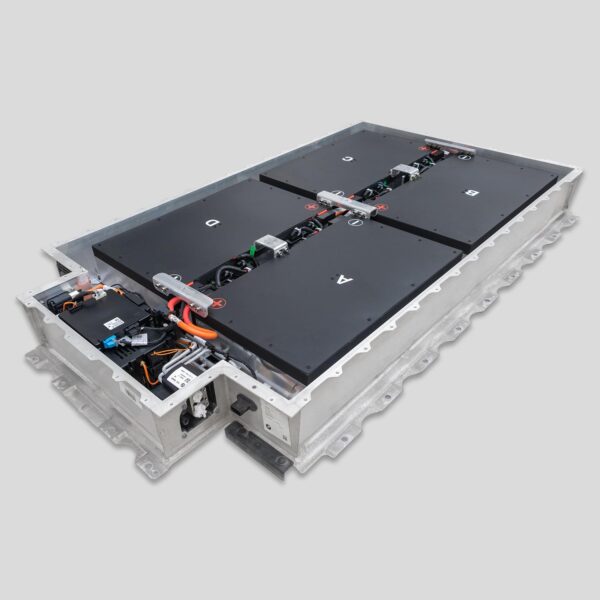
BMW i3 Battery Degradation: Mileage Impact – The Shocking Truth About Your Odometer
You bought your BMW i3 with the promise of efficient, long-term mobility. You watched the odometer climb: 20,000 miles, 50,000, now perhaps 80,000 or more. You took pride in those numbers. “High mileage” in a gas car means a worn engine; in an EV, you were told the battery should last forever.
But lately, the reality has hit hard. That “100-mile” range you used to get on a full charge is now barely 60. The dashboard warns of “Maximum Charge Level Reduced.” You find yourself calculating every trip, avoiding highways, and fearing the winter cold.
You start wondering: Did I drive my battery to death? Is there a direct link between my high mileage and this rapid degradation? Or is the odometer lying about the real culprit?
The relationship between mileage and battery degradation in the BMW i3 is complex and often misunderstood. While driving cycles do wear down cells, the story isn’t as simple as “more miles = dead battery.” In fact, for many i3 owners, low-mileage cars are failing just as fast as high-mileage taxis.
At CNS BATTERY, we have analyzed thousands of i3 battery packs across every mileage bracket. We know that while mileage plays a role, it is rarely the sole executioner. This guide exposes the real impact of mileage on your i3’s health, debunks the myth that “low miles saves the battery,” and reveals why upgrading to a modern high-capacity system is the only way to reset your range clock—regardless of what your odometer says.
The Mileage Myth: Is Driving the Enemy?
There is a common belief that if you baby your EV, keep the mileage low, and only drive it on Sundays, your battery will stay perfect forever. Data from the i3 community proves this false.
How Mileage Actually Affects Degradation
Every time you charge and discharge your battery, you consume a tiny fraction of its lifecycle. This is known as a cycle.
- High Mileage Impact: An i3 with 100,000 miles has undergone significantly more charge cycles than one with 20,000 miles. Logically, the high-mileage pack has experienced more chemical stress, leading to gradual capacity loss.
- The Silver Lining: Surprisingly, regular use can be beneficial. Batteries that are cycled regularly tend to maintain better cell balance. The active movement of ions keeps the chemistry stable, and the thermal management system gets regular workouts, preventing moisture buildup.
The Low-Mileage Trap
Conversely, many low-mileage i3s (often garage-kept “second cars”) suffer from calendar aging.
- Sitting at 100%: If a low-mileage car sits plugged in at 100% State of Charge (SOC) for months, the high voltage stresses the cells, accelerating degradation faster than driving would.
- Deep Discharge: If a low-mileage car sits unplugged and drains to 0%, the cells can become chemically unstable or “brick.”
- Result: We frequently see 2014 i3s with only 30,000 miles that have worse health (60% SOH) than 2014 i3s with 90,000 miles (75% SOH).
The Verdict: Mileage matters, but how the battery was treated over time matters far more.
The Real Killers: It’s Not Just the Miles
If mileage isn’t the only factor, what is destroying your range? For the BMW i3, three factors often outweigh the odometer reading:
1. Calendar Aging (Time)
Lithium-ion batteries degrade simply by existing. The electrolyte breaks down, and the SEI layer thickens over years, regardless of whether the car is driven 1 mile or 10,000 miles a year. A 10-year-old i3 battery has lost significant capacity due to age alone.
2. Thermal Stress (Heat)
This is the silent killer. Whether you drove 10,000 miles in Arizona heat or sat parked in a hot garage, excessive heat accelerates chemical decay exponentially. High mileage in a cool climate often results in a healthier battery than low mileage in a desert.
3. DC Fast Charging Frequency
An i3 used as a ride-share vehicle (high mileage) that relies heavily on DC fast charging will degrade faster than a commuter (moderate mileage) who charges slowly at home. The heat generated during rapid charging stresses the cells more than gentle driving does.
The Hard Truth: You Can’t Reverse the Odometer
Here is the difficult pill to swallow: Whether your degradation is caused by high mileage or calendar aging, the result is the same—permanent capacity loss.
- No Reset Button: You cannot “drive less” to regain lost miles. The chemical changes inside the cells are irreversible.
- The Downward Spiral: As capacity drops, the remaining cells are stressed more during each cycle, accelerating future degradation. A battery at 60% health will degrade faster than one at 90% health.
- The Usability Cliff: Once your real-world range drops below 50-60 miles, the car becomes impractical for most daily tasks, regardless of how many miles are left on the chassis.
If your mileage (or age) has pushed your battery into the “danger zone,” no amount of eco-driving will fix it. The hardware is exhausted.
The CNS BATTERY Solution: Reset Your Range, Ignore the Miles
Why let your odometer dictate your mobility? At CNS BATTERY, we decouple your car’s potential from its past. Our BMW i3 Series Battery upgrades replace your tired, mileage-worn (or age-worn) pack with a brand-new, high-capacity system.
Why Upgrading Beats Worrying About Mileage
- Zero Cycle Count: Our Grade-A cells are brand new. They have zero miles, zero cycles, and zero degradation. You effectively reset your battery’s life clock to Day 1.
- Massive Capacity Increase: We don’t just restore your original range; we double or triple it. Upgrade from a failing 60 Ah or 94 Ah pack to a 120 Ah to 180 Ah system, giving you 130–200+ miles of range.
- Modern Chemistry: Our 2026-era cells are more resilient to heat and cycling than the original factory cells. They will handle your future mileage far better than the old pack ever could.
- Value Retention: A high-mileage i3 with a brand-new 150 Ah battery is worth significantly more than a low-mileage i3 with a dying original pack.
- Cost Efficiency:
- Living with Low Range: $0 upfront, but limited life and high stress.
- Dealership OEM Replacement: $18,000–$22,000 USD (restores original, limited range).
- CNS BATTERY Upgrade: $8,000 – $14,000 USD. You get double the range of the OEM option for half the price, making your high-mileage car feel brand new.
Real Story: From “100k Mile Anxiety” to “Unlimited Freedom”
Meet James, a 2015 i3 owner with 110,000 miles on the clock. He used his car for delivery work. His range had dropped to 35 miles. He assumed the high mileage meant the car was dead and planned to scrap it. A friend told him about CNS BATTERY.
“We installed a 160 Ah upgrade,” says the CNS technician. “James was skeptical that a high-mileage car could take such a big battery. But the i3 chassis was still solid.”
The result? “I now have 190 miles of range,” James reports. “The high mileage on the body doesn’t matter anymore. The battery is fresh, the car drives like new, and I’m planning a cross-state road trip. I didn’t need a new car; I just needed a new heart. The upgrade saved me from buying a $40,000 replacement vehicle.”
Don’t Let the Odometer Decide Your Fate
BMW i3 battery degradation is inevitable, whether caused by high mileage or the passage of time. But degradation is not a life sentence.
Stop watching your range shrink mile by mile. Take control. Replace the exhausted chemistry with a modern powerhouse that ignores your past mileage and guarantees your future freedom.
Is your i3’s range suffering despite low or high miles?
Stop guessing and start driving. Contact CNS BATTERY today for a professional State of Health diagnostic. Discover how our BMW i3 Series Battery upgrades can give you 130–200+ miles of range, effectively resetting your car’s life regardless of the odometer.
👉 Get Your Mileage-Proof Upgrade Quote
Frequently Asked Questions (FAQ)
1. Does high mileage always mean a degraded BMW i3 battery?
Not necessarily. While high mileage implies more charge cycles, many high-mileage i3s remain healthy if they were charged gently and kept cool. Conversely, low-mileage cars can suffer severe degradation due to calendar aging and sitting at high states of charge.
2. Which degrades the battery faster: driving or sitting?
Sitting (Calendar Aging) is often more damaging if the car is stored improperly (e.g., at 100% or 0% charge). Regular driving (Cycle Aging) with moderate charging habits can actually help maintain cell balance and health.
3. Can I restore my battery’s range by driving less?
No. Once capacity is lost due to mileage or age, it is gone permanently. Driving less will only slow down future degradation; it will not restore the miles you have already lost.
4. Is it worth upgrading a high-mileage i3?
Absolutely. The electric drivetrain of the i3 is incredibly durable and can easily last 200,000+ miles. The battery is usually the first component to fail. Replacing it with a CNS BATTERY upgrade gives you a brand-new power source, making the high mileage on the rest of the car irrelevant.
5. How much range will I get after an upgrade?
Our upgrades typically provide 130–200+ miles of real-world range, depending on the capacity chosen (120 Ah to 180 Ah). This is often double or triple what your degraded original pack currently offers, regardless of your car’s total mileage.
6. Will a new battery affect my car’s value given the high mileage?
Yes, positively. A high-mileage i3 with a documented brand-new battery and 150+ miles of range is highly desirable in the used market. It solves the biggest buyer fear (battery failure) and offers better range than many newer, low-mileage EVs.
7. How much does it cost to upgrade vs. buying a new car?
A CNS BATTERY upgrade costs $8,000–$14,000 USD. Buying a new EV with similar range often costs $35,000–$45,000+. Upgrading your existing high-mileage i3 is the most cost-effective way to gain modern EV range.

