BMW i3 Battery Cooling System Repair: Complete Guide – Stop the Overheat Before It Destroys Your Pack
Your BMW i3 dashboard flashes a warning that sends a chill down your spine: “High Voltage Battery Overheated.” The air conditioning cuts out, the power drops to a crawl, and the cooling fans scream like a jet engine. You pull over, terrified. Is this a simple sensor glitch, or is your $20,000 battery pack cooking itself from the inside?
For owners of aging BMW i3s (2014-2021), the battery cooling system is the single most critical line of defense between a functional vehicle and a catastrophic thermal event. Unlike gas cars where an overheated engine might just stall, an overheated EV battery can suffer permanent capacity loss, internal shorts, or in extreme cases, thermal runaway.
What are the hidden failure points in the i3 cooling loop?
Can you really repair a leaking cooling plate, or is the pack doomed?
And if your cooling system is failing due to age, is there a smarter solution that eliminates the risk forever while doubling your range?
At CNS BATTERY, we have diagnosed thousands of i3 thermal failures. We know that while some cooling issues are fixable, others are symptoms of a dying battery ecosystem. This complete guide walks you through the professional repair process, exposes the lethal risks of DIY attempts, and reveals why upgrading to a modern high-capacity system is often the only way to guarantee long-term safety and reliability.
The Anatomy of Failure: Why i3 Cooling Systems Fail
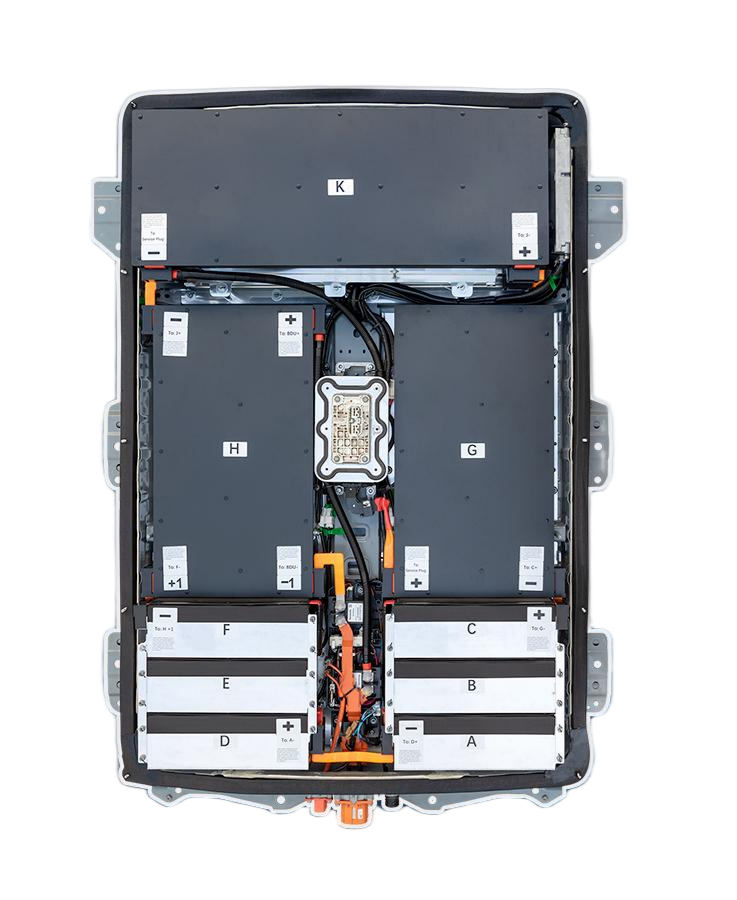
The BMW i3 uses a complex liquid cooling system to regulate the temperature of its lithium-ion cells. It relies on a specialized electric pump, a radiator, hoses, and internal cooling plates integrated directly into the battery modules.
Common Failure Points
- Electric Water Pump Failure: The heart of the system. These pumps are prone to bearing wear and electrical failure after 60,000–80,000 miles. When they stop, coolant stops flowing, and heat builds up instantly.
- Coolant Leaks (External): Hoses degrade and crack over time. Plastic connectors become brittle and snap. A leak under the car is messy, but a leak into the battery pack is deadly.
- Internal Cooling Plate Corrosion: This is the silent killer. The aluminum cooling plates inside the sealed battery pack can corrode or develop micro-cracks due to vibration and thermal cycling. When this happens, conductive coolant seeps onto the 400V busbars, causing short circuits and insulation faults.
- Air Pockets: If the system wasn’t bled correctly during a previous service, air bubbles can block coolant flow to specific modules, creating dangerous “hot spots” that degrade cells unevenly.
The Professional Repair Protocol: Step-by-Step
If you suspect a cooling issue, do not ignore it. Here is how a professional shop approaches a BMW i3 battery cooling system repair.
Step 1: Diagnosis & Safety
- Scan for Codes: Look for codes related to pump speed, coolant temperature sensors, or insulation resistance (which indicates a leak).
- Visual Inspection: Check under the car for blue/green fluid. Inspect hoses and the pump housing for crusty residue.
- Pressure Test: Use a specialized EV cooling system pressure tester to find leaks that aren’t visible when cold.
- HV Safety: CRITICAL. Before touching any cooling components near the battery, the high-voltage system must be disabled, the service plug removed, and voltage verified at 0V. Coolant is conductive; spilling it on live terminals is fatal.
Step 2: Component Replacement (External)
If the issue is external (pump, hose, radiator):
- Drain Coolant: Safely extract the old low-conductivity coolant into hazardous waste containers.
- Swap Parts: Replace the failed pump, cracked hoses, or leaking radiator.
- Vacuum Fill: This is non-negotiable. You cannot just pour coolant in. You must use a vacuum filling tool to suck all air out of the system before introducing new fluid. Air pockets will kill your battery.
- Bleed Cycle: Use BMW ISTA software to run the pump at specific speeds to purge micro-bubbles.
Step 3: The Internal Leak Verdict
If diagnostics reveal coolant inside the battery pack (low insulation resistance, sweet smell from vents, or pressure loss with no external leak):
- STOP. The pack is compromised.
- The Reality: You cannot repair an internal cooling plate leak in a standard shop. The pack is laser-welded and sealed. Opening it voids all safety ratings, exposes technicians to lethal voltage, and guarantees future corrosion issues.
- The Solution: The battery pack must be replaced.
The Hard Truth: Why “Fixing” Isn’t Always Enough
Even if you successfully replace the pump and refill the coolant, you haven’t solved the root cause if the battery is old.
- Heat Damage May Already Exist: If the battery overheated repeatedly before you caught it, the cells may have already suffered permanent degradation. A new pump won’t restore lost capacity.
- Aging Infrastructure: If your pump failed due to age, your hoses, seals, and internal cooling plates are likely near failure too. Fixing one part often just shifts the failure point to the next weak link.
- The Recurrence Risk: Older i3 packs are prone to developing internal leaks as they age. Putting a new pump on a pack with corroding internal plates is a temporary band-aid.
The CNS BATTERY Solution: Upgrade to a Cool, Reliable Future
Why gamble on patching a 10-year-old cooling system when you can replace the entire thermal ecosystem with something better?
At CNS BATTERY, our BMW i3 Series Battery upgrades don’t just give you more range; they give you a brand-new, leak-proof cooling system designed for modern reliability.
Why Upgrading Beats Repair
- Zero Leak Risk: Our upgrades feature brand-new casings and internal cooling plates. No corrosion, no micro-cracks, no risk of conductive fluid touching live cells.
- Superior Thermal Management: Our modern Grade-A cells generate less heat than original cells, reducing the load on the cooling system and extending its life.
- Complete System Refresh: When we install an upgrade, we flush the entire external cooling loop, replace the coolant with fresh premium fluid, and vacuum-fill it to perfection. You get a 100% healthy thermal system.
- Double the Range: While solving your cooling fears, you upgrade from a failing 60 Ah or 94 Ah pack to a 120 Ah to 180 Ah system, giving you 130–200+ miles of range.
- Cost Efficiency:
- Pump + Hose + Radiator + Labor: $800–$1,200 (and the pack might still be damaged).
- Internal Leak Replacement (Dealer): $20,000+.
- CNS BATTERY Upgrade: $8,000 – $14,000 USD. You get a brand-new battery, a refreshed cooling system, and double the range for half the dealer price.
Real Story: From “Overheat Panic” to “Cool Confidence”
Meet Alex, a 2015 i3 owner. His car went into limp mode on a hot day. The dealer diagnosed a failed pump and a slight insulation fault (indicating a small internal leak). They quoted $1,100 for the pump but warned him the pack might fail soon anyway due to the leak. “I felt like I was throwing money into a black hole,” Alex says.
Alex contacted CNS BATTERY. We installed a 150 Ah upgrade. “They didn’t just swap the battery; they completely serviced the cooling system,” Alex reports. “New fluid, perfect vacuum fill, zero air pockets. I’ve driven through two summers now, fast-charging in 90-degree heat, and the battery stays perfectly cool. I have 180 miles of range, and I never worry about overheating again. The upgrade was the only way to truly fix the problem.”
Don’t Let Heat Destroy Your Investment
BMW i3 battery cooling system repair is critical, but it’s often just a stopgap for an aging vehicle. If your system is failing, it’s a sign that your entire thermal ecosystem is reaching the end of its life.
Don’t wait for a catastrophic internal leak to force your hand. Take control. Upgrade to a system that guarantees safety, efficiency, and performance.
Seeing overheating warnings or coolant leaks?
Stop risking your battery’s life. Contact CNS BATTERY today for a professional cooling system diagnostic. We’ll tell you if a repair is viable or if it’s time for a 120 Ah+ upgrade that provides a leak-proof, cool-running, high-range solution.
👉 Get Your Cooling System & Battery Assessment
Frequently Asked Questions (FAQ)
1. What are the signs of a failing BMW i3 battery cooling system?
Common signs include “High Voltage Battery Overheated” warnings, reduced charge/power speeds, screaming cooling fans, visible blue/green coolant leaks under the car, or a sweet chemical smell.
2. Can I repair a leaking battery cooling plate myself?
No. Internal cooling plate leaks occur inside the sealed high-voltage battery pack. Repairing them requires breaking the factory seal, which is unsafe, voids all certifications, and risks electrocution. The pack must be replaced.
3. Why is vacuum filling the coolant so important?
Air pockets act as insulators, preventing heat transfer. Even a small bubble can cause a module to overheat and fail. Vacuum filling ensures 100% fluid contact with no air, which is critical for battery longevity.
4. How much does a cooling system repair cost?
Replacing an external pump, hoses, or radiator typically costs $800–$1,500 USD. However, if the leak is internal, the cost jumps to $18,000+ for a dealer replacement. A CNS BATTERY upgrade costs $8,000–$14,000 and includes a full cooling system refresh plus double the range.
5. Will a new pump fix my insulation fault code?
Only if the fault was caused by external moisture. If the insulation fault is due to internal coolant leakage onto the cells, a new pump will not fix it. The battery pack is compromised and must be replaced.
6. Does CNS BATTERY service the cooling system with upgrades?
Absolutely. Every upgrade includes a complete cooling system service: inspection, flushing, vacuum filling with premium low-conductivity coolant, and verification of zero air pockets.
7. Can I drive my i3 if the cooling system is failing?
No. Driving with a failing cooling system risks permanent battery damage, thermal runaway, and fire. The vehicle should be towed to a specialist immediately.