BMW i3 Battery Cooling Fan Repair: Complete Shop Guide – The $400 Fix That Often Hides a $12,000 Crisis
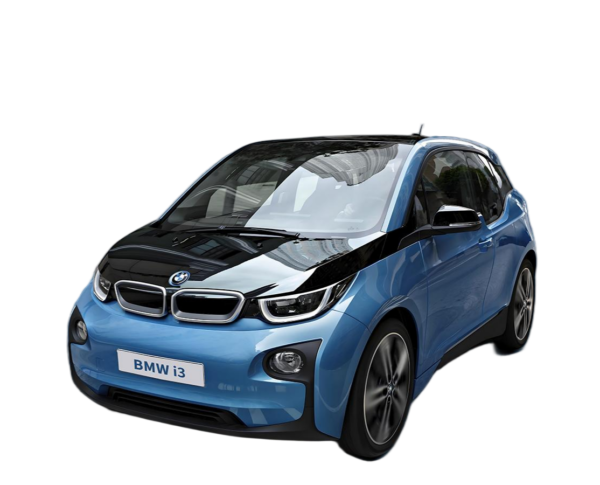
A 2015 BMW i3 is towed into your bay on a hot summer afternoon. The dashboard flashes a critical warning: “High Voltage Battery Overheated.” The customer, relieved to have found a potential simple fix, asks: “I heard the cooling fan stops working on these cars. Can you just replace the fan? Maybe it’s a $400 job? I don’t want to hear that I need a new battery.”
As a professional EV technician in 2026, you know this scenario is a high-stakes diagnostic trap. While cooling fan failure is a known issue on the BMW i3, it is rarely an isolated event in a 10-year-old vehicle. More often, a failed fan is the final straw that pushes an already degraded, high-resistance battery pack into thermal runaway protection mode.
If you simply swap the fan, clear the codes, and send the car home, you risk a catastrophic comeback: the new fan will run perfectly, but the chemically exhausted battery will still overheat because its internal resistance is too high to be cooled effectively. The customer will return angry, the new fan might even fail prematurely due to the excessive heat load, and your shop’s reputation will take a hit.
Why do cooling fans fail on aging i3s, and is it ever just “the fan”?
How do you diagnose if the overheating is caused by airflow or internal cell degradation?
And when diagnostics reveal the battery is the real culprit, how do you pivot from a minor repair to a high-margin, life-saving battery upgrade?
At CNS BATTERY, we believe in solving root causes, not just symptoms. We know that thermal management is critical for EV longevity. This guide provides the complete professional protocol for diagnosing and repairing BMW i3 cooling fan issues, explains the dangerous link between fan failure and battery health, and reveals why replacing the entire system is often the only ethical solution.
The Anatomy of Overheating: It’s Rarely Just the Fan
The BMW i3 uses an active liquid cooling system with electric fans to dissipate heat from the battery coolant loop. When this system fails, temperatures spike rapidly. However, in 2026, the context has changed.
1. The Primary Suspect: Fan Motor Failure
The electric fan motors are prone to bearing wear and electrical failure after a decade of service.
- Symptom: No airflow from the rear vents, loud grinding noises, or fault codes for “Fan Circuit Low/High.”
- The Easy Fix: If the battery is healthy, replacing the fan assembly resolves the issue completely.
2. The Hidden Killer: Internal Resistance (IR) Spikes
This is where shops get trapped. As i3 batteries age, their internal resistance increases.
- The Physics: Higher resistance = more heat generation during every charge and discharge cycle.
- The Scenario: A healthy battery generates 500W of heat; an old, degraded one generates 2,000W. The cooling system (even with a working fan) was designed for the 500W load.
- The Result: Even with a brand-new fan, the old battery overheats because it is generating heat faster than the system can remove it. The fan isn’t broken; the battery is cooking itself.
3. Coolant Flow Issues
Sometimes the fan works, but the coolant pump is failing, or the cooling channels inside the battery are clogged with corrosion/debris.
- The Risk: If the coolant isn’t moving, the fan blows air on a static radiator to no effect.
Professional Diagnostic Protocol: Before You Swap the Fan
Do not order a fan until you have completed this rigorous workflow.
Step 1: Live Data & Fault Code Analysis
Connect a bidirectional scan tool (BMW ISTA, Autel, Launch).
- Check Fan Status: Command the fan to run at 100%. Is it spinning? Is the RPM reading matching the command?
- Monitor Temperatures: Look at individual module temperature sensors.
- Uniform High Temp: Suggests a systemic cooling failure (fan, pump, or low coolant).
- Localized Hot Spots: If one area is 10°C hotter than the rest while the fan is running, the issue is likely internal cell degradation or a blocked internal channel, not the external fan.
Step 2: Physical Inspection & Airflow Test
- Visual Check: Inspect the fan blades for damage and the wiring harness for rodent chewing (common in i3s).
- Airflow Verification: With the fan commanded on, feel the airflow at the rear vents. Is it strong?
- Coolant Level: Check the expansion tank. Low coolant indicates a leak, which renders the fan useless.
Step 3: The Critical Internal Resistance (IR) Test
This is the step that saves your business. Before installing a new fan, measure the IR of the battery modules.
- The Threshold: Healthy modules: 1-3 mΩ. Degraded modules: >8-10 mΩ.
- The Verdict:
- Low IR + Broken Fan: The battery is healthy. Replace the fan. Success is guaranteed.
- High IR + Broken Fan: The battery is degraded. Replacing the fan is a temporary band-aid. The battery will continue to overheat under load because it generates too much heat.
- High IR + Working Fan: The fan is fine; the battery is dying. Do not sell a fan replacement.
The Hard Truth: Why a New Fan Won’t Save a Dead Battery
If your diagnostics show high internal resistance (>8 mΩ) or significant capacity loss, you must deliver the hard news: The cooling system cannot compensate for a chemically failing battery.
- Heat Generation vs. Dissipation: A degraded battery generates heat exponentially faster than a new one. The OEM cooling system (even with a new fan) is physically incapable of removing that much heat.
- The Comeback Guarantee: If you install a $400 fan on a dying battery, the customer will return in two weeks with the same “Overheated” warning. They will blame your repair, and you will have to refund the labor.
- Safety Risk: Continuing to cycle a battery that overheats despite active cooling accelerates thermal runaway risks. It is unsafe to send the car back on the road.
The Only Solution: If the battery is the source of the excess heat, the entire battery pack must be replaced.
The CNS BATTERY Solution: Eliminate the Heat Source
When you explain that the overheating is due to internal battery degradation, the customer will fear the dealer’s $20,000+ quote. This is your opportunity to offer the CNS BATTERY High-Capacity Upgrade—the only solution that fixes the thermal problem at its source.
Why Upgrading Is the Ultimate Thermal Fix
- Low-Resistance Chemistry: Our 120 Ah to 180 Ah upgrades use fresh Grade-A cells with minimal internal resistance. They generate significantly less heat than the original 10-year-old cells, even under heavy load.
- Easy Cooling: Because our packs run cooler, the existing (or new) cooling fan can easily maintain optimal temperatures. The thermal crisis is permanently resolved.
- Perfect Integration: Our units are designed to work seamlessly with the i3’s existing thermal management system.
- Double the Range: While solving the overheating, you upgrade the customer from a failing pack to a system offering 130–200+ miles of range.
- Cost Efficiency:
- Fan Replacement (Temporary Fix): $400–$600 (high risk of comeback if battery is bad).
- Dealership Replacement: $20,000+.
- CNS BATTERY Upgrade: $8,000 – $14,000 USD. You get a brand-new, cool-running battery with double the range for half the dealer price.
- Warranty Confidence: Backed by our 3–5 Year Warranty, eliminating the fear of future overheating.
Real Story: From “Fan Swap Fail” to “Cool Confidence”
“Sunshine EV Repair” in Arizona recently had a 2015 i3 come in with overheating warnings. The previous shop had replaced the fan for $500. Three days later, the car returned, still overheating during highway driving. The customer was furious.
“Our IR test showed the modules were reading 12 mΩ,” says the lead tech. “We explained that the battery was generating so much heat that no fan could keep up. The first shop treated the symptom; we needed to treat the disease.” They installed a CNS BATTERY 150 Ah upgrade. “The transformation was instant. The new cells run incredibly cool. Even in 110-degree heat, the temps stayed stable. The customer paid $11,500, got 170 miles of range, and finally trusts the car again. We refunded the partial cost of the unnecessary fan to build trust, but the upgrade saved our reputation.”
Stop Treating Symptoms, Start Solving Problems
BMW i3 battery cooling fan repair is a valid service only if the battery is healthy. In 2026, most overheating i3s suffer from internal degradation that a new fan cannot fix.
Don’t risk your shop’s reputation on a temporary fix that hides deeper issues. Be the expert who diagnoses the root cause and offers the permanent solution.
Facing an overheating i3?
Don’t just swap the fan. Contact CNS BATTERY today for a professional assessment. Discover how our BMW i3 Series Battery upgrades can eliminate overheating risks permanently, providing your customers with a cool, safe, and high-range driving experience.
👉 Get Your Thermal Diagnostic & Upgrade Quote
Frequently Asked Questions (FAQ) for Shops
1. Can I just replace the cooling fan to fix overheating?
Only if the battery is healthy. If the battery cells have high internal resistance (common in older i3s), they generate more heat than the cooling system can handle. In this case, a new fan will not prevent overheating, and the problem will return immediately. Always test Internal Resistance (IR) first.
2. How do I tell if the overheating is the fan or the battery?
Perform a live data test with the fan commanded to 100%. If the fan spins but temperatures remain high or show localized hot spots, the issue is likely internal battery degradation. If the fan doesn’t spin, check the motor and wiring. Confirm with an IR test: high resistance confirms the battery is the heat source.
3. Is it safe to drive an i3 with a broken cooling fan?
Absolutely NOT. Without active cooling, the battery can overheat rapidly, leading to power reduction, sudden shutdown, or in extreme cases, thermal runaway (fire). The vehicle must be towed.
4. Why did my customer’s car overheat right after a fan replacement?
This indicates the battery pack was already degraded. The new fan is working correctly, but the old battery is generating excessive heat due to high internal resistance. The cooling system is simply overwhelmed by the chemical state of the pack.
5. Does CNS BATTERY offer batteries that run cooler?
Yes. Our upgrades use modern, low-resistance Grade-A cells that generate significantly less heat than aging OEM packs. They are much easier for the i3’s cooling system to manage, effectively solving chronic overheating issues.
6. How much does it cost to fix overheating vs. upgrading?
A fan replacement costs $400–$600 but carries a high risk of failure if the battery is bad. A dealership battery replacement costs $20,000+. A CNS BATTERY upgrade costs $8,000–$14,000, providing a brand-new, cool-running battery with double the range.
7. Should I replace the coolant pump too?
If you are performing a battery upgrade, it is highly recommended to replace the coolant pump and flush the system as preventative maintenance. Since the system is already open/accessed, this ensures the new battery gets optimal flow from day one.