BMW i3 Battery Charging Port Issues: The Hidden Threat to Your Pack’s Longevity
“My i3 wouldn’t charge after a rainstorm. The dealer replaced the charging port for $1,200. Two months later, the battery started losing range—fast. A diagnostics scan revealed cell imbalance caused by repeated partial charging due to the faulty port. The real cost? Over $8,000 in premature battery degradation.”
You assume your i3’s charging port is just a plug-in point.
But when it malfunctions—even subtly—it doesn’t just stop charging. It stresses your entire high-voltage battery system, accelerating wear, triggering errors, and shortening pack life.
And the worst part? Many owners don’t realize the connection until it’s too late.
In this guide, you’ll uncover:
- How minor port faults cause major battery damage over time
- The 3 most common i3 charging port failures (and their hidden consequences)
- Why ignoring a ‘Check Charging System’ warning risks your cells
- And how CNS BATTERY packs include robust protection against charging-induced stress
Because your battery’s health starts long before the electrons reach the cells.
How a Faulty Charging Port Harms Your i3 Battery
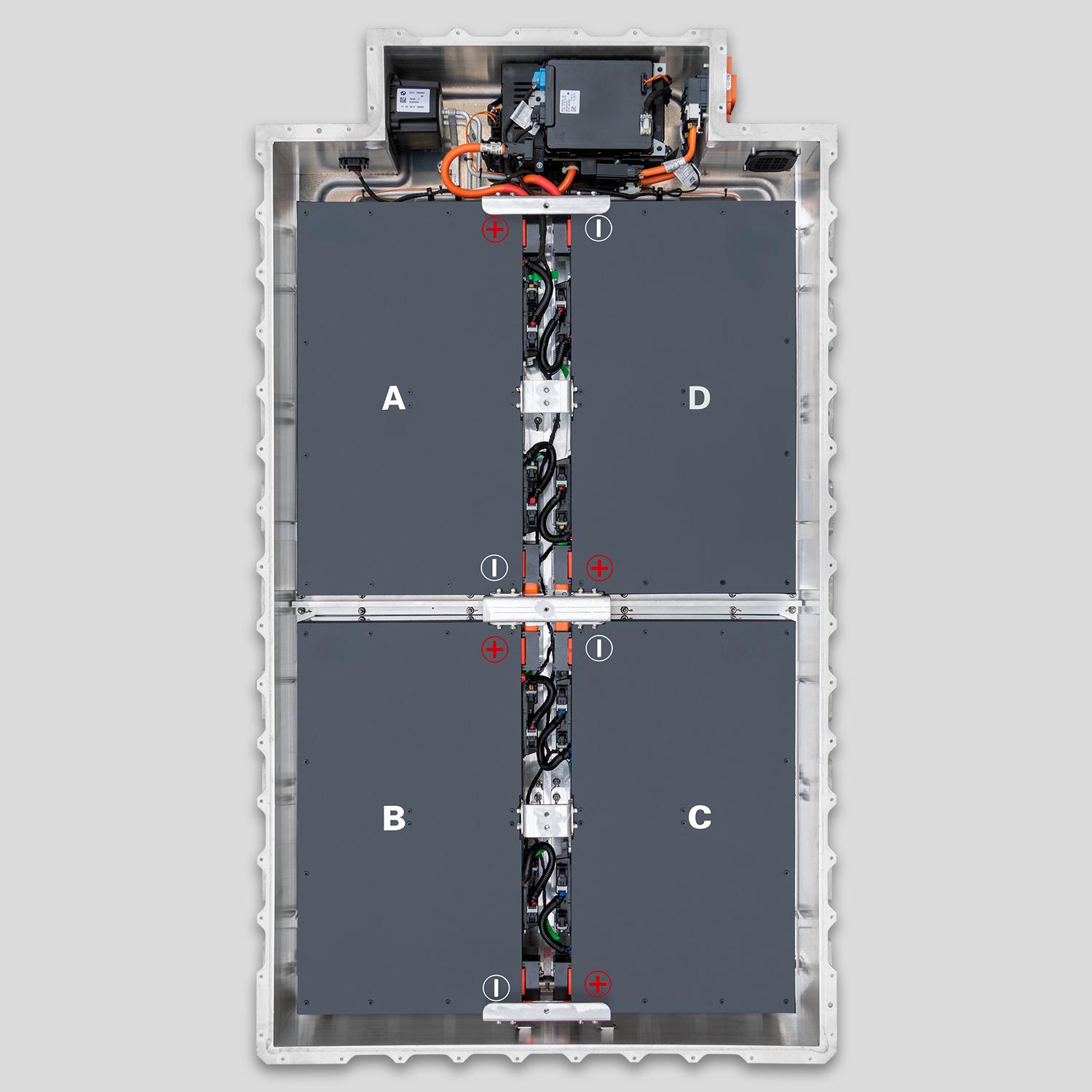
The i3’s charging system isn’t just a cable socket—it’s a critical communication gateway between the grid, the onboard charger, and the Battery Management System (BMS). When compromised, it disrupts the delicate balance required for safe, efficient charging.
🔌 Common Charging Port Failures & Their Battery Impact
| Issue | Symptom | Hidden Battery Consequence |
|---|---|---|
| Corroded or loose pins | Intermittent charging, slow AC fill | Causes repeated charge aborts → BMS never completes balancing cycles → cell drift accelerates |
| Faulty CP/PP signal lines | “Plug not recognized” errors | Forces BMS into low-power trickle mode → chronic undercharging → anode lithium plating in cold weather |
| Water ingress / seal failure | Burning smell, melted housing | Creates ground faults → insulation resistance drops → BMS logs HV leakage errors → permanent SoH miscalibration |
⚠️ Critical insight: Even if your car eventually charges, inconsistent voltage or communication glitches during the session can leave cells unbalanced—degrading usable capacity over weeks.
📉 Real-World Example: The Slow Kill of Partial Charging
One CNS customer reported:
“My 2018 i3 took 14 hours to charge instead of 6. I thought it was the wallbox. After replacing the port, I discovered the BMS had been logging ‘incomplete charge cycles’ for 9 months. My SoH dropped from 85% to 71%—not from age, but from never reaching full balance.”
This is not rare. Partial or interrupted charging prevents the BMS from performing its top-balancing routine, which normally occurs above 95% state of charge. Without it, weaker cells fall further behind—permanently reducing pack capacity.
Diagnosing Charging Port Problems Before They Damage Your Battery
Don’t wait for total failure. Watch for these early signs:
✅ Dashboard warnings:
- “Check Charging System”
- “High-Voltage System Malfunction” after plugging in
✅ Charging behavior changes:
- AC charging takes >50% longer than usual
- Charge stops at 80–90% consistently
- Audible clicking or buzzing from the port area
✅ Physical inspection clues:
- Discoloration or white powder on pins
- Loose connector (wiggles when plugged in)
- Burn marks inside the inlet door
🛑 If you see any of these: Stop using the port immediately. Continued use risks thermal runaway or BMS corruption.
Why OEM Repairs Aren’t Always Enough
Dealers often replace just the inlet assembly—but neglect two critical factors:
- Underlying wiring harness damage from arcing or moisture
- BMS calibration drift caused by months of erratic signals
Result? The new port works… until the next rainstorm or cold snap.
At CNS, we take a holistic view:
A healthy battery requires a healthy charging interface.
That’s why every CNS replacement pack undergoes full charge-cycle validation—including simulated port signal noise—to ensure resilience against real-world charging inconsistencies.
Protect Your Investment: Prevention & Smart Upgrades
✅ Best Practices to Preserve Port & Battery Health
- Clean port pins quarterly with electrical contact cleaner (never water!)
- Avoid public DC fast chargers with worn connectors—they accelerate pin wear
- Use a weatherproof cover if parking outdoors regularly
- Monitor charge logs via apps like BimmerLink for incomplete cycles
✅ When to Consider a Full Battery Upgrade
If your i3 has suffered repeated charging faults, your original pack may already be compromised. Installing a new CNS battery does more than restore capacity—it resets your BMS baseline and eliminates latent cell imbalances.
“After my third port repair, I switched to a CNS 62kWh pack. Not only did charging become rock-solid, but my winter range increased by 40%. The new BMS handled grid fluctuations my old one couldn’t.”
— Thomas B., Amsterdam
Frequently Asked Questions: Charging Port & Battery Health
Q: Can a bad charging port cause permanent battery damage?
A: Yes—through chronic cell imbalance, lithium plating, or insulation faults triggered by erratic voltage.
Q: Does CNS warranty cover damage from prior charging issues?
A: Yes—if the new pack itself is undamaged. We assess each case individually and provide BMS reset support.
Q: Are i3 REx models more vulnerable to port issues?
A: No—the charging system is identical across BEV and REx variants.
Q: Can I test my port’s signal integrity at home?
A: Not safely. CP/PP signals require oscilloscope-level diagnostics. But you can monitor for incomplete charge logs via OBD2 tools.
Q: How long do i3 charging ports typically last?
A: 8–10 years in dry climates. In coastal or snowy regions, corrosion can cause failure in as little as 4–5 years.
Don’t Let a $200 Part Ruin an $8,000 Battery
Your charging port is the frontline of your i3’s energy ecosystem.
Treat it—and its impact—seriously.
Choose a Battery Built to Withstand Real-World Charging Challenges
With CNS BATTERY, you get advanced BMS logic, new CATL cells, and rigorous charge-cycle testing—so your pack thrives even if your charging environment isn’t perfect.
Click below to explore replacement options designed for reliability, from plug to cell:
👉 https://cnsbattery.com/ev-battery-home/ev-battery-contact/