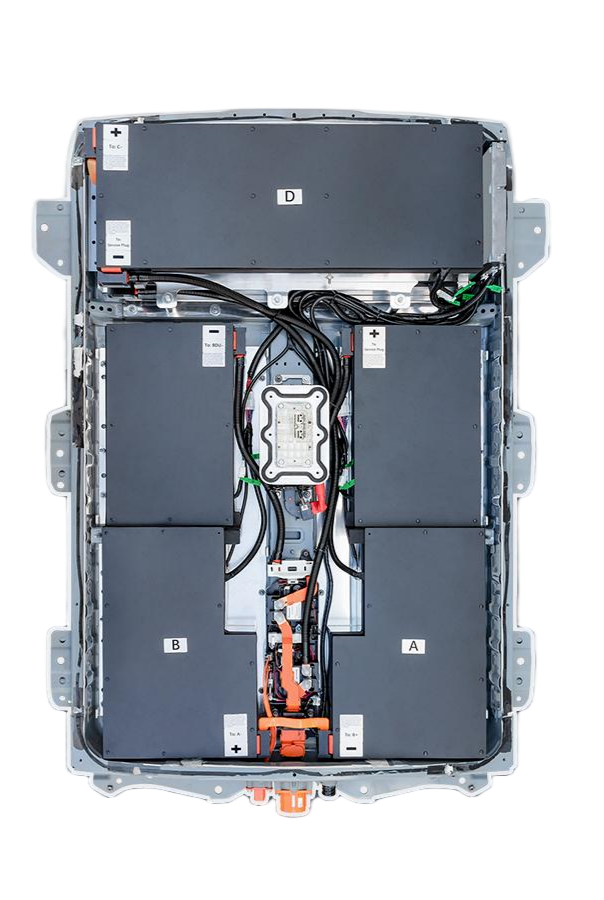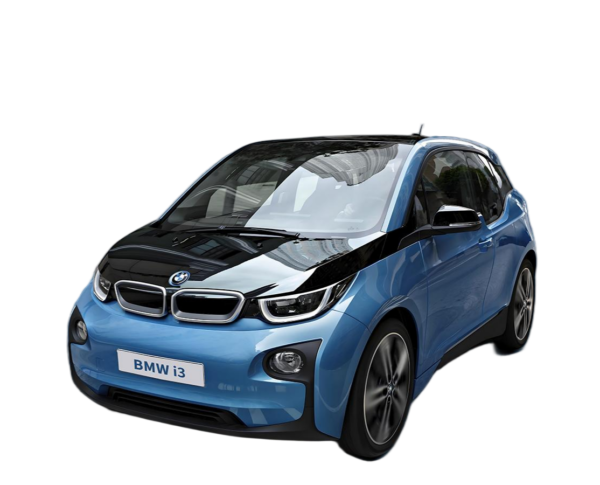
BMW i3 Battery Cell Testing: Professional Equipment 2026 – The Tools That Separate Guesswork from Genius
You have a 2016 BMW i3 on the lift. The customer is frustrated: “The range drops from 60 to 20 miles in minutes,” they say. “The dealer wants $20,000 for a new battery, but I think it’s just one bad cell.”
As a professional technician in 2026, you know that “just one bad cell” is rarely the whole story. It’s usually a symptom of widespread degradation, internal resistance spikes, or capacity mismatch that a basic OBDII scanner simply cannot see. Your generic scan tool gives you a trouble code—Cell Imbalance—but it doesn’t tell you which cell is failing, how much capacity it has lost, or if the entire pack is past the point of no return.
Without the right data, you are flying blind. You might spend hours balancing cells that are chemically dead, or worse, recommend a costly repair that fails within weeks. In an era where EV safety and reliability are paramount, guessing is not a business strategy; it’s a liability.
What specific equipment do top EV shops use to diagnose i3 battery health with surgical precision?
How do you measure internal resistance and true capacity without dismantling the pack?
And when the tests confirm total failure, how do you pivot from a dead-end diagnosis to a high-margin, customer-saving upgrade?
At CNS BATTERY, we equip independent shops with the knowledge to diagnose accurately and profitably. We know that the difference between a comeback nightmare and a loyal customer lies in using professional-grade cell testing equipment. This guide details the essential tools every shop needs in 2026, explains how to interpret the data, and reveals why replacing a failed pack with a certified upgrade is often the only logical solution.
Why Generic Scanners Fail the Modern EV Technician
Your standard $300 OBDII scanner is great for checking engine lights on gas cars. For a high-voltage lithium-ion battery, it’s like trying to perform heart surgery with a butter knife.
The Limitations of Basic Tools
- Surface-Level Data: They show average pack voltage, not individual cell voltages. A pack can look healthy on average while one cell is critically failing.
- No Load Testing: They read static voltage. They cannot tell you how a cell behaves under acceleration (load) or regenerative braking.
- Missing Metrics: They rarely provide Internal Resistance (IR) or True Capacity (Ah) readings, which are the definitive indicators of cell health.
- False Hope: They often suggest “balancing” is the fix, leading technicians to waste hours on packs that are chemically exhausted.
To diagnose like a pro, you need tools that dive deep into the electrochemistry of the pack.
The 2026 Professional Toolkit: Essential Equipment
To accurately test BMW i3 battery cells, your shop must invest in these four categories of professional equipment.
1. Advanced Bidirectional Diagnostic Interface
Forget basic scanners. You need a tool that can communicate directly with the BMW BMS (Battery Management System) to read live data streams of every single module.
- Top Choices: BMW ISTA+ (the factory standard), Autel MaxiIM Elite (with advanced EV capabilities), or Launch X431 Pro (EV specialized).
- Key Function: Allows you to view individual module voltages in real-time, monitor temperature sensors per module, and initiate active balancing cycles for diagnostic purposes.
- Why It Matters: You can instantly spot the “weak link”—the module that drops voltage fastest under load.
2. High-Precision AC Internal Resistance (IR) Tester
Voltage tells you the state of charge; Internal Resistance tells you the state of health. As cells age, their IR increases, causing heat buildup and voltage sag.
- Top Choices: Hioki BT3562 or Yokogawa 3561. These are bench-top quality meters adapted for field use.
- Key Function: Measures the AC impedance of each cell/module in milliohms (mΩ) without discharging the battery.
- Why It Matters: A cell with normal voltage but high IR is a ticking time bomb. It will fail under load even if it looks fine at rest. This is the #1 metric for predicting imminent failure.
3. Professional Capacity Analyzer (Load Bank)
To know the true range of an i3, you must know the actual Amp-hour (Ah) capacity of the pack, not the estimated percentage.
- Top Choices: Portable EV load testers like the Pce Instruments EV Test Kit or custom-built DC load banks capable of handling 400V systems.
- Key Function: Discharges the battery at a controlled rate while measuring exact energy output (kWh) until cutoff.
- Why It Matters: This confirms if the pack has physically lost capacity due to degradation. If a 94 Ah pack only delivers 50 Ah, no amount of software magic can restore it.
4. Thermal Imaging Camera
Heat is the enemy of lithium-ion batteries. Uneven heating indicates internal issues.
- Top Choices: Fluke Ti400 or Seek Thermal Reveal (HV rated).
- Key Function: Visualizes temperature gradients across the battery pack during charging and discharging.
- Why It Matters: A “hot spot” on one module often indicates high internal resistance or an internal short circuit before the BMS even triggers a fault code.
The Testing Protocol: From Data to Decision
Having the tools is step one. Using them correctly is step two. Here is the professional workflow for 2026.
Step 1: Static Voltage & IR Scan
- Connect your bidirectional scanner. Record the voltage of all 96 modules (or however many your specific i3 model has).
- Use the IR tester to measure the resistance of each module.
- Red Flag: Any module with IR significantly higher (>20-30%) than the pack average is suspect.
Step 2: Dynamic Load Test
- Take the car for a controlled drive or put it on a dyno.
- Monitor live cell voltages during hard acceleration.
- The “Cliff” Effect: Watch for the weak module identified in Step 1. Does its voltage plummet rapidly while others stay stable? If a cell hits the minimum threshold (e.g., 2.8V) while the pack average is still high, the pack is imbalanced beyond repair.
Step 3: Capacity Verification
- Perform a full charge to 100%.
- Run a controlled discharge test (or analyze a full depletion drive cycle) to calculate actual kWh delivered.
- Calculation:
(Actual kWh Delivered / Original Usable kWh) x 100 = True SOH. - Verdict: If True SOH is <65%, the pack is at End-of-Service (EOS).
The Hard Truth: When Testing Confirms Replacement
If your professional equipment reveals:
- High Internal Resistance across multiple modules.
- Severe Voltage Deviation (>0.2V) under load.
- True Capacity Loss >35%.
Then the diagnosis is final: The battery pack is chemically degraded. Balancing will not work. Swapping a single module will fail because the remaining old cells will drag down the new one. The entire ecosystem is exhausted.
Trying to repair this with patchwork solutions is a disservice to the customer and a risk to your shop’s reputation. The only ethical and reliable solution is complete pack replacement.
The CNS BATTERY Solution: Turn Diagnosis into Profit
When your high-tech testing confirms a dead battery, don’t let the customer walk away with a $20,000 dealer quote and a scrapped car. Offer them the CNS BATTERY High-Capacity Upgrade.
Why Upgrading Is the Smart Move
- Validated by Data: Your professional tests prove the old pack is dead. Our brand-new 120 Ah to 180 Ah upgrades are the proven cure.
- Zero Guesswork: Our packs come with certified capacity and internal resistance values. You know exactly what you are installing.
- Plug-and-Play: No need for complex cell matching or risky internal repairs. Swap the whole unit in 4-6 hours.
- Double the Range: You aren’t just fixing the car; you are giving the customer 130–200+ miles of range, turning a complaint into a celebration.
- High Margin: Secure an $8,000–$14,000 sale with healthy margins, backed by our 3–5 Year Warranty. No comebacks, no liability.
Real Story: From “Data Overload” to “Clear Solution”
“Precision EV Labs” in Texas invested in a Hioki IR tester and a Fluke thermal camera last year. They diagnosed a 2015 i3 that three other shops had tried to “balance.” Their data showed massive IR spikes in 12 modules and a true capacity of only 45 Ah.
“The data made the conversation easy,” says the lead tech. “We showed the customer the graphs. Her eyes widened. She understood immediately why balancing failed.” They installed a CNS BATTERY 150 Ah upgrade. “She paid $11,500, got 170 miles of range, and thanked us for saving her car. The professional tools didn’t just diagnose the problem; they sold the solution.”
Stop Guessing, Start Measuring
BMW i3 battery cell testing in 2026 requires more than a code reader. It demands professional equipment that reveals the true chemical state of the pack. When the data speaks, listen. And when it says “replacement,” offer the best solution available.
Equip your shop with the right tools, trust the data, and partner with CNS BATTERY to turn difficult diagnoses into your most profitable jobs.
Ready to upgrade your diagnostic capabilities?
Don’t let outdated tools limit your potential. Contact CNS BATTERY today to become a certified partner. Get access to our technical resources, wholesale pricing, and training, and start offering the most accurate, profitable EV services in your region.
👉 Become a Certified Diagnostic Partner Today
Frequently Asked Questions (FAQ) for Technicians
1. What is the most critical metric for testing i3 battery health?
Internal Resistance (IR) is often more critical than voltage. High IR indicates chemical aging and predicts voltage sag under load, which is the primary cause of reduced range and power limitations.
2. Can I test individual cells without opening the pack?
Yes, to an extent. Using a bidirectional scanner like BMW ISTA, you can read the voltage of each module (group of cells) via the BMS. However, measuring precise Internal Resistance of individual modules often requires specialized equipment that can interface with the module sense leads, sometimes requiring partial disassembly. Full capacity testing is done at the pack level via load testing.
3. How much does professional EV testing equipment cost?
A professional bidirectional scanner costs $2,000–$5,000. A high-quality IR tester like a Hioki ranges from $3,000–$6,000. Thermal cameras vary from $500–$4,000. While an investment, these tools pay for themselves by preventing misdiagnosis and securing high-value upgrade jobs.
4. Why shouldn’t I just balance the cells if the scanner says “Imbalance”?
Balancing only works if the cells have equal capacity. If the imbalance is caused by permanent capacity loss (degradation), balancing is temporary. The weak cells will immediately fall out of sync again under load. Professional testing (IR and Capacity) reveals if the imbalance is fixable or fatal.
5. What SOH percentage indicates a battery needs replacement?
Generally, if True SOH is below 65-70%, the battery is considered at End-of-Service for practical driving. At this point, range is severely compromised, and the risk of sudden failure increases. Replacement is the recommended solution.
6. Does CNS BATTERY provide data sheets for their upgrades?
Yes. Every CNS BATTERY upgrade comes with detailed specifications, including verified capacity, internal resistance values, and safety certifications, giving you and your customer complete confidence in the product.
7. Is it worth buying this equipment if I only see a few EVs a week?
Absolutely. One correctly diagnosed battery upgrade job ($8k-$14k revenue) can pay for the entire toolkit. Plus, as EV adoption grows, having this capability positions your shop as a leader, attracting more business than competitors who are still guessing.