BMW i3 Battery Cell Replacement: How Many? The Math That Could Cost You $10,000
Your BMW i3 is displaying the dreaded “Maximum Charge Level Reduced” warning. Your range has plummeted from a decent 70 miles to a stressful 35. A local shop runs a diagnostic and delivers a grim verdict: “You have bad cells. We can replace them.”
Then comes the question that stops you cold: “How many cells need replacing?”
The technician shrugs. “Maybe 4 modules? Maybe 8? We won’t know until we open the pack. It’ll be $400 per module plus labor.”
Suddenly, you are facing a financial black hole. If they find 10 bad modules, you’re out $5,000 before you even drive a mile. And here is the terrifying truth most shops won’t tell you: Replacing just a few cells in an aging battery pack is often a guaranteed path to failure.
Is it ever worth replacing individual cells?
What happens when you mix new cells with old ones?
And why is the “how many” question actually the wrong question to ask?
At CNS BATTERY, we have seen thousands of i3 packs. We know that while cell replacement sounds like a logical repair, the chemistry of Lithium-Ion batteries makes it a flawed strategy for aging vehicles. This guide breaks down the math of cell replacement, exposes the hidden dangers of mixing old and new components, and reveals why a full capacity upgrade is the only solution that guarantees reliability, safety, and double the range.
The Anatomy of Failure: How Many Cells Are Really Bad?
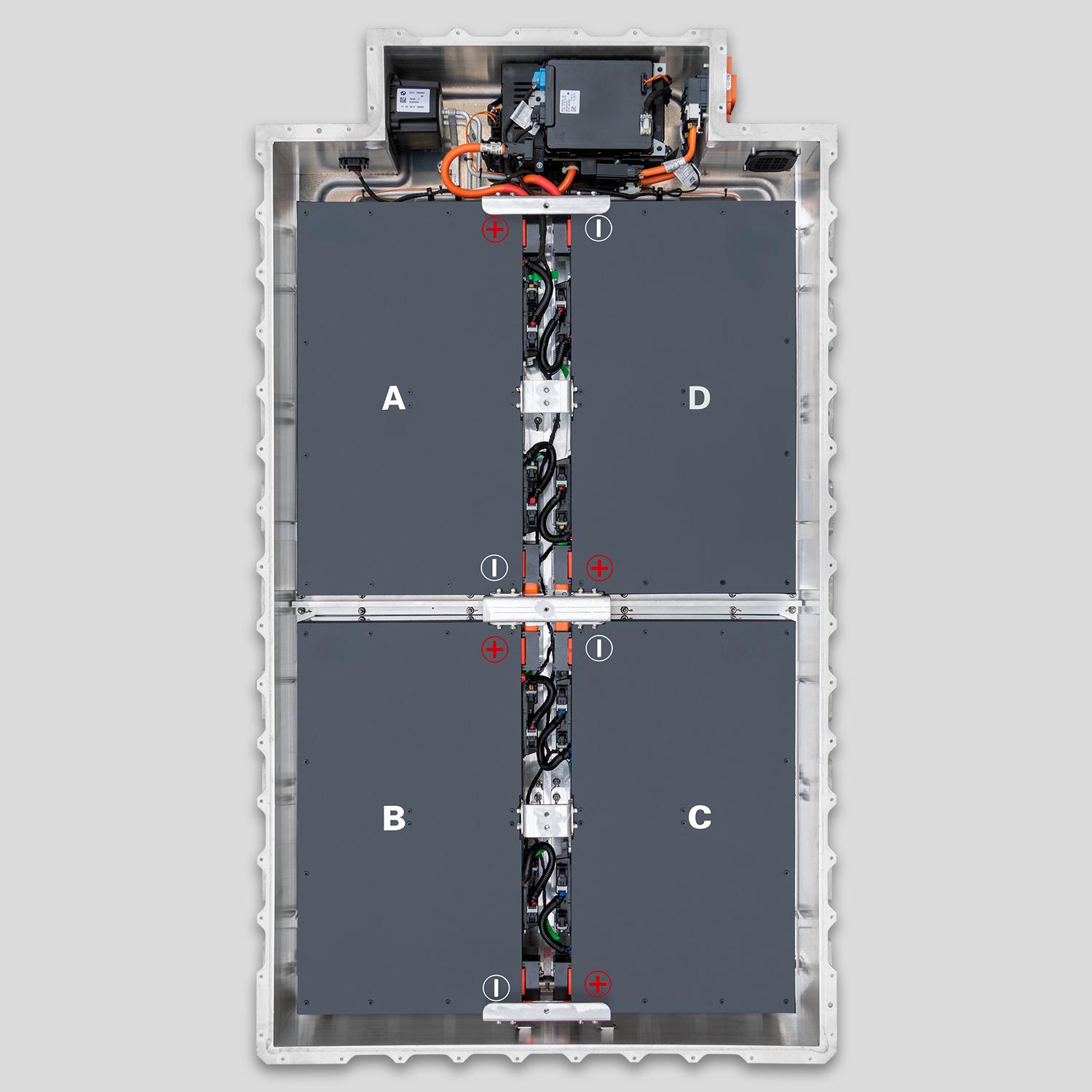
A BMW i3 battery pack (60 Ah or 94 Ah) consists of 8 large modules, each containing multiple individual cell groups. When degradation hits, it rarely affects just one cell.
The Domino Effect
Battery degradation is usually systemic. If one module has failed due to age, heat, or manufacturing variance, the neighboring modules are likely not far behind.
- Scenario A: The diagnostic shows 2 bad modules. You pay to replace them.
- Scenario B: Six months later, the stress of the new cells causes the next 2 weakest modules to fail.
- Scenario C: You end up paying for repairs three times over two years, spending more than the cost of a new battery, while your car sits in the shop repeatedly.
The Hard Reality: In a pack that is 7-10 years old, if you have enough failure to trigger a warning light, it is highly probable that 30-50% of the pack is compromised, even if only a few modules show critical errors today. Replacing “how many” is a guessing game where the house always wins.
The Fatal Flaw: Mixing New and Old Cells
Even if you could perfectly identify and replace exactly the right number of bad cells (e.g., 4 out of 8 modules), you would still face a fundamental chemical problem: Impedance Mismatch.
The Chain Reaction
Your battery works as a series circuit. The performance of the entire pack is limited by its weakest link.
- New Cells: Have low internal resistance and high capacity.
- Old Cells: Have high internal resistance and reduced capacity.
- The Conflict: When you charge the pack, the new cells fill up quickly. The BMS sees them as “full” and stops charging the entire pack, leaving the old cells only partially charged. When you discharge, the old cells hit “empty” first, forcing the car to shut down while the new cells still have energy left.
The Result: You spend thousands on new cells, but your usable range barely increases because the old cells drag the new ones down. You haven’t fixed the capacity; you’ve just created an expensive, unbalanced mess.
The Cost Trap: Why “Per Module” Pricing Is Dangerous
Let’s look at the real costs of a partial cell replacement versus a full upgrade.
The Partial Repair Gamble
- Diagnostic Fee: $150
- Labor to Open Pack & Swap Modules: $1,500 – $2,500 (High voltage work is slow and dangerous).
- Parts (Used/Refurbished Modules): $400 x 6 modules = $2,400.
- Balancing & Coding: $500.
- Total Estimated Cost: ~$5,000 – $6,000 USD.
- Outcome: You get a patched pack with mixed cells, likely to fail again in 12-18 months, with no significant range gain.
The Full Upgrade Certainty
- Complete CNS BATTERY 120 Ah Upgrade: $8,000 – $12,000 USD.
- Includes: Brand new cells (no mixing), professional installation, cooling system service, software calibration, and a comprehensive warranty.
- Outcome: Double the range (130+ miles), zero imbalance issues, and a battery that will last another decade.
The Verdict: For only ~$4,000 more than a risky patch job, you get 2x the performance, 10x the reliability, and a warranty that actually covers you. The “savings” of replacing a few cells are an illusion.
When Is Cell Replacement Actually Viable?
To be completely transparent: There is one scenario where replacing a specific number of cells makes sense.
- The Exception: If your battery is very young (e.g., 2-3 years old) and still under warranty, but suffered a isolated manufacturing defect in a single module due to a specific batch error.
- The Reality for Most Owners: If your i3 is a 2014-2018 model, your battery is not young. It has undergone thousands of charge cycles. The “bad” cells are simply the first to surrender in a pack that is globally aging. In this context, partial replacement is throwing good money after bad.
The CNS BATTERY Solution: Stop Counting Cells, Start Upgrading
At CNS BATTERY, we don’t ask “How many cells need replacing?” because the answer doesn’t matter. What matters is how much range do you want tomorrow?
Instead of gambling on a patchwork repair, we offer a complete transformation.
Why Our Full Replacement Beats Partial Fixes
- Perfect Uniformity: Every single cell in our 120 Ah packs is matched to within millivolts. No weak links, no impedance mismatch, no balancing headaches.
- Modern Chemistry: We use Grade-A cells from the latest generation, which degrade slower and handle heat better than the original 2014 technology.
- Massive Range Gain: You aren’t just restoring lost miles; you are adding 60+ extra miles of capacity.
- Warranty Security: Our upgrades come with a robust 3+ year warranty. If any cell fails, we fix it. With partial repairs, you often get zero warranty on the labor or the mixed assembly.
- Cost Efficiency: When you factor in the likelihood of repeat failures with partial repairs, our full upgrade is the most cost-effective path over a 5-year horizon.
Real Story: From “Module Roulette” to “Range Freedom”
Meet David, a 2015 i3 owner. A shop told him he had 5 bad modules. They quoted him $5,200 to replace them with used modules from a salvage yard. David hesitated, fearing the old remaining modules would fail soon. He called CNS BATTERY instead.
“We explained that replacing 5 modules in a 9-year-old pack was a band-aid,” David says. “We installed a full 120 Ah upgrade for $10,500. Yes, it was more upfront, but I got 135 miles of range instead of maybe 50. Two years later, my friend who did the partial repair is back in the shop with more bad modules. I’m still driving strong with zero issues. I didn’t just fix my car; I upgraded my life.”
Don’t Play the Numbers Game
Asking “How many cells need replacement?” is a trap. It leads you down a path of uncertain costs, mixed chemistry, and recurring failures.
Stop gambling on the lifespan of a decade-old battery. Choose the solution that eliminates the guesswork, guarantees perfect cell matching, and doubles your driving freedom.
Is your BMW i3 showing cell failure warnings?
Stop counting modules and start upgrading. Contact CNS BATTERY today for a honest assessment. We’ll show you why a full 120 Ah upgrade is smarter, safer, and more valuable than any partial cell replacement.
👉 Get Your Full Upgrade Quote & Skip the Repair Gamble
Frequently Asked Questions (FAQ)
1. How many cells typically fail in a BMW i3 battery?
It varies, but in aging packs (7+ years), failure is often widespread. If one module triggers a fault, it is common for 30-50% of the pack to be significantly degraded, even if not yet flagged. Replacing only the “dead” ones leaves the “dying” ones in place.
2. Can I just replace the bad modules and keep the rest?
Technically yes, but it is not recommended. Mixing new/low-resistance cells with old/high-resistance cells creates an imbalance that limits total capacity and accelerates failure in the remaining old cells. You rarely regain significant range with this method.
3. How much does it cost to replace individual cells/modules?
Partial replacement typically costs $4,000 – $6,000 USD depending on the number of modules. However, this often yields poor results and no long-term warranty. A full CNS BATTERY upgrade costs $8,000 – $12,000 USD but provides double the range and a fresh, warrantied system.
4. Will replacing a few cells restore my original range?
No. Due to impedance mismatch, the old cells will limit the pack’s performance. You might see a small temporary improvement, but the overall capacity will remain constrained by the aged modules.
5. Is it better to replace the whole battery?
Absolutely. For any i3 older than 5 years, a full replacement (or upgrade) is the only financially and mechanically sound option. It ensures cell uniformity, maximizes range, and provides a warranty that partial repairs cannot match.
6. Does CNS BATTERY use new or used cells?
We use 100% Brand New Grade-A cells. We never mix new and old cells or use salvaged modules. This ensures maximum longevity, safety, and performance for your upgraded pack.
7. What happens if I replace cells and they fail again?
With partial repairs, you are often responsible for another round of costly diagnostics and labor. With a CNS BATTERY upgrade, your entire system is covered by our comprehensive 3+ year warranty. If anything goes wrong, we fix it at no additional cost.