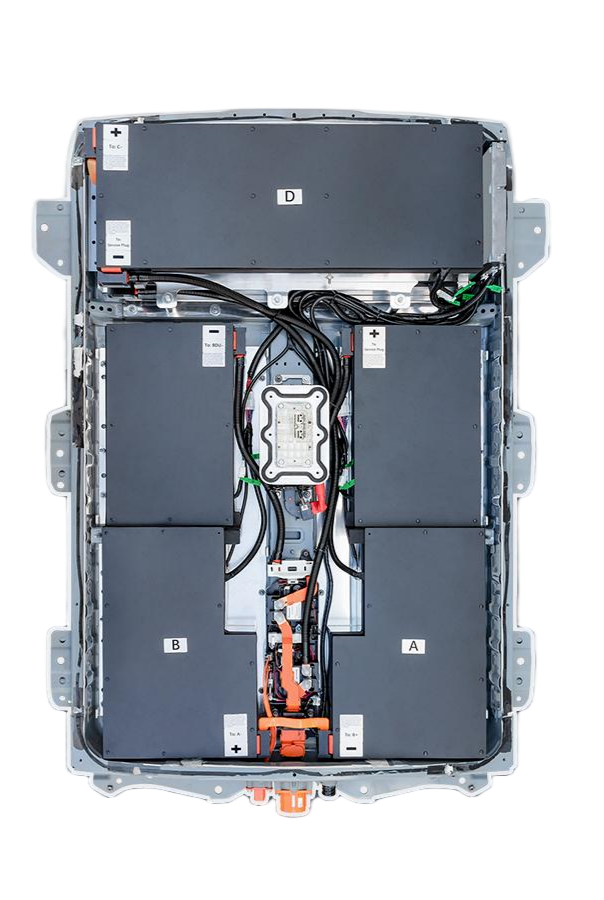
BMW i3 Battery Cell Replacement: Full Shop Process – Why the “Module Swap” Is a Dangerous Myth
A 2015 BMW i3 is towed into your shop, dead in the water. The customer, having read optimistic forums, leans over the counter with a hopeful request: “The dealer says I need a whole new battery for $22,000. But I found a used module online for $400 that matches my part number. Can’t you just open the pack, swap that one bad cell module, and save me some money? How hard can it be?”
As a professional EV technician in 2026, you know the uncomfortable truth hidden behind that optimistic question. Opening a sealed BMW i3 battery pack to replace individual cells or modules is not a standard repair; it is a high-risk procedure that often leads to catastrophic failure.
While the concept sounds logical—replace the bad part to fix the whole—the reality of lithium-ion chemistry, factory sealing standards, and high-voltage safety makes “cell replacement” in a shop environment nearly impossible to execute safely and reliably. The “used module” might match physically, but it will never match chemically, leading to immediate imbalance, thermal runaway, or fire.
Why does swapping a single module almost always result in total pack failure?
What are the insurmountable technical barriers to resealing an i3 battery pack?
And when you explain these risks to the customer, how do you pivot from a dangerous $500 experiment to a profitable, warranty-backed full system upgrade?
At CNS BATTERY, we prioritize safety and integrity above all else. We have seen the aftermath of attempted cell swaps: corroded busbars, insulation faults, and packs that caught fire weeks after “repair.” This guide exposes the harsh realities of BMW i3 battery cell replacement, explains why it is technically unfeasible for independent shops, and reveals why replacing the entire system is the only ethical and profitable path forward.
The Engineering Reality: Why You Can’t Just “Swap a Cell”
To understand why cell replacement is a myth, you must understand what you are trying to replicate. The BMW i3 battery is not a box of loose parts; it is a chemically bonded, laser-welded, IP67-sealed unit.
1. The Chemistry Mismatch (The Invisible Killer)
Even if you find a used module with the same part number, it has a different history.
- Internal Resistance (IR): A 10-year-old pack has high IR. A “used” replacement module might have lower or higher IR. When current flows, the mismatched module heats up at a different rate, triggering balance faults immediately.
- Capacity Fade: The old modules have lost capacity (e.g., they hold 50 Ah). The replacement might hold 55 Ah or 45 Ah. The BMS will constantly try to balance them, failing every time. The “weak link” theory applies: the pack is only as good as its worst cell, and mixing ages guarantees a new worst cell.
- The Result: The car may run for a day, then throw critical errors, or worse, the mismatched module goes into thermal runaway while charging.
2. The Sealing Impossible
The i3 pack is sealed with industrial robotic adhesive and laser welding to meet IP67 (waterproof/dustproof) standards.
- Shop Limitations: No independent shop has the clean-room environment, robotic dispensers, or laser welders to reopen and reseal this casing.
- The Risk: Using silicone or manual gaskets guarantees moisture intrusion within months. Once water enters a 400V system, the result is corrosion, short circuits, and potential electrocution hazards.
- Liability: If a “resealed” pack leaks and causes a fire, your shop is legally liable for negligence.
3. The BMS Rejection
The BMW BMS tracks the history of every module. Swapping a module often requires complex coding to reset the learning values, which many aftermarket tools cannot do correctly. Even with coding, the physical mismatch in voltage curves will cause the BMS to reject the pack repeatedly.
The “Full Shop Process” of a Failed Repair
If a shop attempts this “cell replacement,” here is the typical (and disastrous) workflow:
- Depower & Open: The tech removes the service plug and cuts/grinds open the sealed aluminum casing. Safety Rating Voided Immediately.
- Coolant Drain: The liquid cooling loop is breached, requiring a full drain and risky flush. Contamination of the internal cells with coolant is a high risk.
- Module Swap: The old module is unbolted. The “used” module is installed. Torque specs are hard to verify on corroded threads.
- The “Reseal”: The tech applies RTV silicone or a cut gasket to the lid. Bolts are tightened manually. IP67 Rating Lost Forever.
- Coding & Testing: The tech attempts to reset adaptation values. The car clears codes temporarily.
- The Aftermath:
- Week 1: Car drives fine.
- Week 2: “Cell Imbalance” warning returns due to IR mismatch.
- Month 2: Moisture enters through the manual seal. Insulation fault triggers.
- Month 3: Thermal event or total pack death. Customer sues the shop.
The Verdict: This process is a financial and safety trap. It consumes 10+ hours of labor for a temporary, unreliable fix that exposes the shop to massive liability.
The Hard Truth: There Is No Safe “Cell Replacement” Service
In 2026, the industry standard among top-tier EV specialists is clear: Never attempt to open and repair individual cells/modules in a field environment.
- Reliability: Zero. The mismatch ensures failure.
- Safety: Critical risk of fire and electrocution.
- Warranty: None. You cannot warranty a hacked pack.
- Profitability: Low. High labor cost + high risk of comeback = negative margin.
The Only Solution: The entire battery pack must be replaced with a certified, factory-sealed unit.
The CNS BATTERY Solution: The Real “Full Process” Upgrade
Why risk your reputation trying to glue a 10-year-old box back together when you can install a brand-new, factory-sealed system?
At CNS BATTERY, our BMW i3 Series Battery upgrades arrive fully assembled, sealed, and tested. We eliminate the need for your shop to ever touch a tube of sealant or attempt a risky cell swap.
Why Upgrading Is the Only Professional Choice
- Factory-Perfect Integrity: Our packs are sealed in controlled manufacturing environments using robotic processes. Every unit is leak-tested before shipping.
- Zero Liability Risk: You are installing a certified, sealed component. You are not modifying a high-voltage vessel. Your liability ends at the installation bolts.
- Perfect Chemistry: All cells are brand-new Grade-A, matched to within millivolts and milliohms. No imbalance, no mismatch, no thermal risks.
- Plug-and-Play Installation: No disassembly of the old pack, no cutting casings, no waiting for cure times. Swap the old pack for the new one in 4-6 hours.
- Superior Performance: While ensuring safety, you also upgrade the customer from a failing 60 Ah or 94 Ah pack to a 120 Ah to 180 Ah system, giving them 130–200+ miles of range.
- Cost Efficiency:
- Attempted Cell Swap: $1,500 (labor + parts) + High Risk of Failure/Lawsuit.
- Dealership Replacement: $20,000+.
- CNS BATTERY Upgrade: $8,000 – $14,000 USD. You get a brand-new, perfectly sealed battery with double the range for half the dealer price.
Real Story: From “Silicone Disaster” to “Secure Upgrade”
“Metro Auto Tech” in Chicago once agreed to a customer’s request to swap two “compatible” used modules to save money. They spent 12 hours cutting the pack, swapping cells, and resealing with silicone. Two weeks later, after a heavy rainstorm, the car died with a critical insulation fault. Water had seeped through the manual bead.
“The customer was furious, and we were on the hook for a $18,000 replacement,” admits the owner. “We learned our lesson the hard way.”
Now, they exclusively use CNS BATTERY. “Last month, we installed a 150 Ah upgrade,” the owner says. “The pack arrived perfectly sealed. We bolted it in, filled the coolant, and sent the customer home with 170 miles of range and a 4-year warranty. No sealant guns, no curing wait, no sleepless nights worrying about leaks. It’s the only way to do business.”
Stop Gambling with Cells, Start Installing Solutions
BMW i3 battery cell replacement is a factory-level process that cannot be safely replicated in a repair shop. Attempting to swap cells is a direct path to liability, comebacks, and safety hazards.
Be the shop that prioritizes safety and certainty. Be the shop that offers complete, certified solutions rather than risky patches.
Asked to swap a cell or module?
Don’t take the risk. Contact CNS BATTERY today to become a certified partner. Discover how our BMW i3 Series Battery upgrades can provide your customers with a perfectly sealed, high-range solution while protecting your shop from liability.
👉 Get Your Sealing-Safe Upgrade Quote
Frequently Asked Questions (FAQ) for Shops
1. Can I replace a single bad module in a BMW i3 battery pack?
Technically yes, but professionally NO. You cannot replicate the factory’s robotic adhesive application, curing process, or helium leak testing. Any manual reassembly carries a high risk of failure, moisture intrusion, and significant liability for your shop. Furthermore, mixing old and used modules guarantees chemical mismatch and rapid recurrence of faults.
2. What happens if a swapped cell module fails?
Mismatched modules cause insulation faults, short circuits, and potentially thermal runaway (fire). If this occurs after a shop reassembly, the shop is legally and financially liable for damages and injuries.
3. Is there a gasket kit available for i3 packs?
While third-party gasket kits exist, they are not approved by BMW and do not guarantee IP67 ratings. Using them voids any remaining safety certifications and puts the vehicle occupants at risk.
4. Why is CNS BATTERY a safer alternative?
Our upgrades arrive fully sealed and leak-tested from the factory. Your shop never breaks the seal or attempts to reassemble anything. You simply install a certified, intact unit, eliminating all sealing-related risks.
5. How much does it cost to attempt a cell swap vs. upgrading?
A cell swap attempt (labor + materials) might cost the customer $1,500–$2,500, but it offers no warranty and high risk. A CNS BATTERY upgrade costs $8,000–$14,000 but provides a brand-new, perfectly sealed battery with double the range and a 3–5 Year Warranty.
6. Does opening the pack void safety certifications?
Yes. Once the factory seal is broken, the pack is no longer certified to IP67 standards. It is considered modified and unsafe for road use unless re-certified by an authorized facility (which generally does not exist for independent shops).
7. What should I tell a customer who wants to save money by swapping cells?
Explain the safety risks: water in a 400V system can be lethal. Explain the liability: if it fails, they could be stranded or face a fire. Present the CNS BATTERY upgrade as the only safe, reliable, and cost-effective long-term solution that actually improves their car’s range.