BMW i3 Battery Cell Imbalance: How to Fix It Before It Kills Your Range
Your BMW i3 dashboard is lying to you. One moment it promises 70 miles of range; the next, after a short drive, it plummets to 35. You plug in for a full charge, but the session aborts at 85% with a “Maximum Charge Level Reduced” warning. Or perhaps your car refuses to fast charge, throttling speeds to a crawl despite a healthy-looking state of charge.
You are experiencing the silent killer of EV longevity: BMW i3 battery cell imbalance.
It’s not just a glitch; it’s a chemical civil war inside your battery pack. When one group of cells (a module) becomes weaker than the others, it drags down the entire system, locking away usable energy and triggering safety shutdowns.
Can I fix this myself?
Is a simple software reset enough?
Or is my battery pack permanently damaged?
At CNS BATTERY, we have diagnosed and resolved thousands of imbalance cases. We know that while minor imbalances can be corrected, severe deviation is often the death rattle of an aging pack. This guide reveals the science behind cell imbalance, provides step-by-step fixes for manageable cases, and explains why upgrading to a perfectly matched modern battery is the only permanent solution for severe degradation.
The Chain Reaction: Why One Weak Cell Ruins Everything
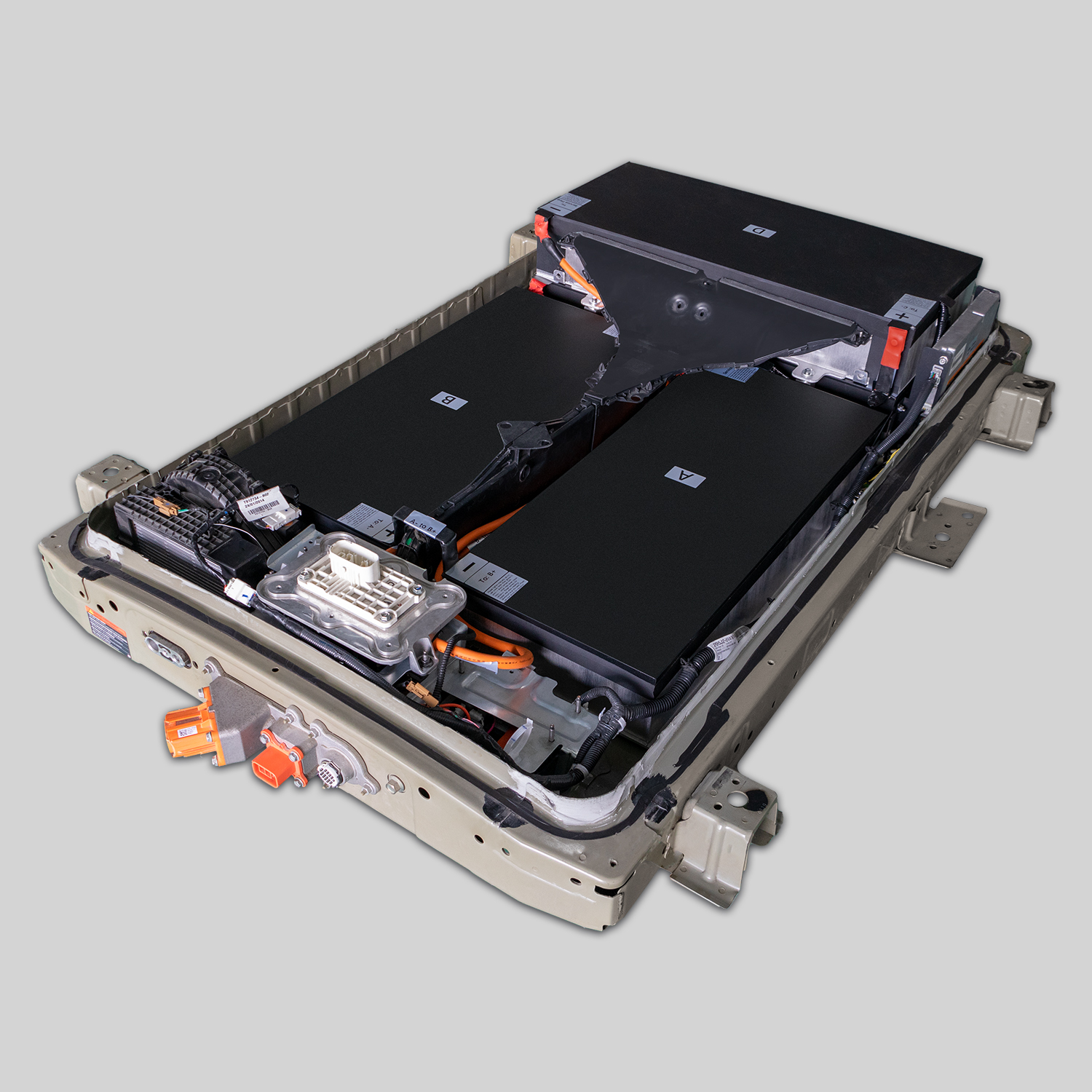
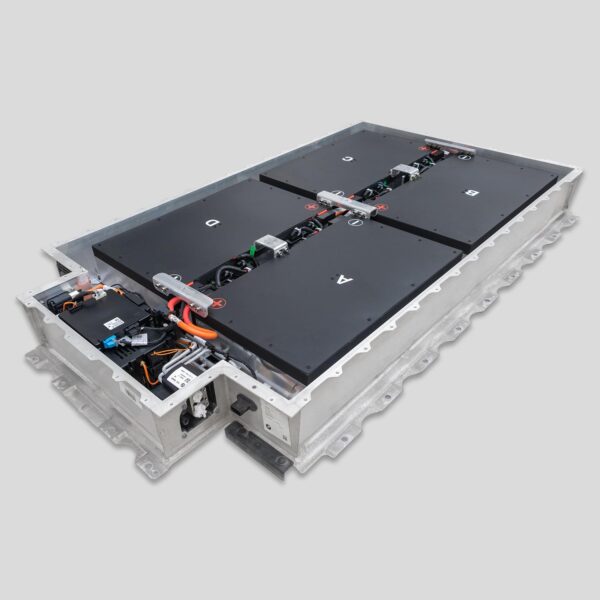
To understand the fix, you must understand the problem. Your i3 battery isn’t one giant block; it’s a series of 96 individual cell modules connected like a chain.
The Golden Rule of Series Circuits: The strength of the chain is determined by its weakest link.
- Charging: The Battery Management System (BMS) must stop charging the entire pack as soon as the weakest cell hits 100%. If one cell is weak, the other 95 healthy cells might only be at 85% capacity when charging stops. You lose access to that 15% of energy.
- Discharging: The car must stop driving as soon as the weakest cell hits 0%. Even if the other cells have plenty of energy left, they are locked out to prevent the weak cell from reversing polarity and catching fire.
The Result: Your usable range shrinks dramatically, not because the total energy is gone, but because the BMS is hiding it to protect the weak link. This is cell imbalance.
Step-by-Step: How to Fix Cell Imbalance
Not all imbalance is fatal. If the deviation is minor, you can often restore balance using these methods.
Method 1: The Passive Balance (The “Overnight Soak”)
This is the safest and most effective DIY method for minor drift.
- Charge to 100%: Plug your i3 into a Level 2 charger and let it reach full capacity.
- Do NOT Unplug: Once the light turns solid green (indicating 100%), leave the car plugged in for another 12 to 24 hours.
- The Science: During this “soak” period, the BMS performs passive balancing. It slowly bleeds off excess charge from the stronger cells (dissipating it as heat) to allow the weaker cells to catch up.
- Frequency: Do this once every 2–4 weeks if you notice minor range fluctuations.
Method 2: The BMS Reset (Soft Reboot)
Sometimes the computer gets confused by temporary voltage spikes.
- Safety First: Turn off the car and remove the key fob.
- Disconnect 12V: Open the frunk and disconnect the negative terminal of the 12V auxiliary battery for 15 minutes.
- Reconnect: Reattach the terminal tightly.
- Initialize: Turn the car on (without driving) and let it sit for 10 minutes. This forces the BMS to re-scan all cell voltages and recalibrate its baseline.
Method 3: Professional Active Balancing
If DIY methods fail, a specialist can use high-level diagnostic tools (like BMW ISTA) to force an active balancing cycle. This uses specialized equipment to push current into weak cells or drain strong ones more aggressively than the car can do on its own.
- Cost: Typically $300–$600 USD.
- Limitation: This only works if the cells are physically healthy but temporarily out of sync.
The Hard Truth: When Imbalance Cannot Be Fixed
Here is the critical distinction many owners miss: Balancing fixes synchronization, not physical damage.
If your cell deviation is high (typically >0.05V or 50mV between the highest and lowest cells), it usually means one or more modules have physically degraded. Their internal chemistry has collapsed, and they can no longer hold a charge comparable to the others.
- The Futility: You can balance the pack today, but because the weak cells are chemically broken, they will drift apart again within days or even hours.
- The Danger: Continuing to drive with severe imbalance stresses the good cells and risks thermal events. The weak cell acts as a bottleneck, generating excessive heat during every charge and discharge cycle.
- The Diagnosis: If you perform an overnight soak and the deviation remains high, or if it returns immediately after driving, your battery pack has permanent cell failure. No amount of software or balancing will fix it.
The CNS BATTERY Solution: Eliminate Imbalance Forever
If your i3 suffers from chronic, severe cell imbalance, you are fighting a losing battle. Patching a degraded pack is expensive and temporary. At CNS BATTERY, we offer the definitive solution: replacing your mismatched, aging cells with a brand-new, perfectly matched 120 Ah upgrade.
Why Upgrading Is the Only Permanent Fix
- Perfect Cell Matching: Our packs are built using Grade-A cells that are matched to within millivolts of each other before assembly. There is no “weak link” to drag the pack down. Imbalance is effectively zero from day one.
- Modern Chemistry: Our cells have lower internal resistance and higher stability than your original 2014-2017 cells. They degrade uniformly, preventing the random drift that causes imbalance in old packs.
- Unlock Full Capacity: With no weak cells to limit the system, the BMS allows you to use 100% of the pack’s energy. You instantly regain the range you thought was lost.
- Double the Range: While solving the imbalance, you upgrade from a failing 60 Ah or 94 Ah pack to a 120 Ah equivalent, giving you 130+ miles of reliable range.
- Cost Efficiency: Repeated professional balancing costs $500+ per session with diminishing returns. A dealership OEM replacement costs $20,000+. Our complete upgrade solutions typically range from $8,000 to $12,000 USD, providing a permanent fix and double the performance for half the dealer price.
Real Story: From “Balancing Addiction” to “Perfect Sync”
Meet Elena, a 2015 i3 owner. Her range dropped to 40 miles. She paid for three professional balancing sessions over six months ($1,500 total). Each time, her range bounced back to 55 miles for a week, then crashed again. The shop finally told her: “Your cells are physically dying. Balancing is just a band-aid.”
Elena contacted CNS BATTERY. We diagnosed severe cell deviation (>0.08V) indicating permanent degradation. We installed a 120 Ah upgrade. “The difference is night and day,” Elena says. “My cells are perfectly matched. I charge to 100%, drive 100 miles, and the voltage across all modules stays identical. No drops, no warnings, just 135 miles of consistent power. I wasted money trying to fix a dead battery; CNS BATTERY gave me a new life.”
Stop Chasing the Perfect Balance
BMW i3 battery cell imbalance is a manageable nuisance in a healthy pack but a fatal flaw in a degraded one.
- Minor Drift? Try the overnight soak.
- Severe Deviation? Stop wasting money on temporary fixes.
If your balance won’t hold, your battery is telling you it’s time for retirement. Upgrade to a system where every cell is a champion, working in perfect harmony to deliver maximum range and reliability.
Is your BMW i3 suffering from chronic cell imbalance?
Stop guessing and start driving with confidence. Contact CNS BATTERY today for a professional cell deviation diagnostic. We’ll tell you if a simple balance will work or if it’s time for a 120 Ah upgrade that eliminates imbalance forever.
👉 Get Your Cell Health Diagnostic & Quote
Frequently Asked Questions (FAQ)
1. What causes cell imbalance in a BMW i3?
Imbalance is caused by natural variations in cell manufacturing, uneven temperature exposure, or physical degradation where some cells age faster than others. In older i3s, degradation is the primary cause, leading to permanent capacity loss in specific modules.
2. Can I fix cell imbalance myself?
For minor issues, yes. Charging to 100% and leaving the car plugged in for 12–24 hours allows the BMS to perform passive balancing. However, if the imbalance is due to physical cell damage, DIY methods will not work.
3. How do I know if my imbalance is permanent?
If you perform an overnight balance and the cell deviation remains above 0.05V (50mV), or if the range drops again within a few days of driving, the cells are likely physically degraded. A professional diagnostic measuring individual module voltages is the only way to be certain.
4. How much does professional balancing cost?
Professional active balancing typically costs between $300 and $600 USD. However, if your cells are degraded, this is a recurring expense that does not solve the root problem.
5. Will upgrading my battery fix cell imbalance?
Absolutely. Our 120 Ah upgrades use perfectly matched Grade-A cells with near-zero deviation. This eliminates the “weak link” phenomenon entirely, ensuring stable performance and maximum range utilization.
6. Is it safe to drive with unbalanced cells?
Mild imbalance is generally safe but reduces range. Severe imbalance is risky; it can lead to overheating of the weak cell, potential thermal runaway, and sudden vehicle shutdowns. It should be addressed immediately.
7. Why does my car stop charging at 80% due to imbalance?
The BMS detects that the weakest cell has reached its maximum voltage limit while the rest of the pack is still charging. To prevent overcharging and damaging that weak cell, it halts the entire process. This locks away the remaining capacity of the healthy cells.