BMW i3 Battery Cell Balancing: Professional Equipment – Why Your “Balanced” Pack Still Loses 15% Range (And the $8,000 Tool That Reveals What BMS Hides)
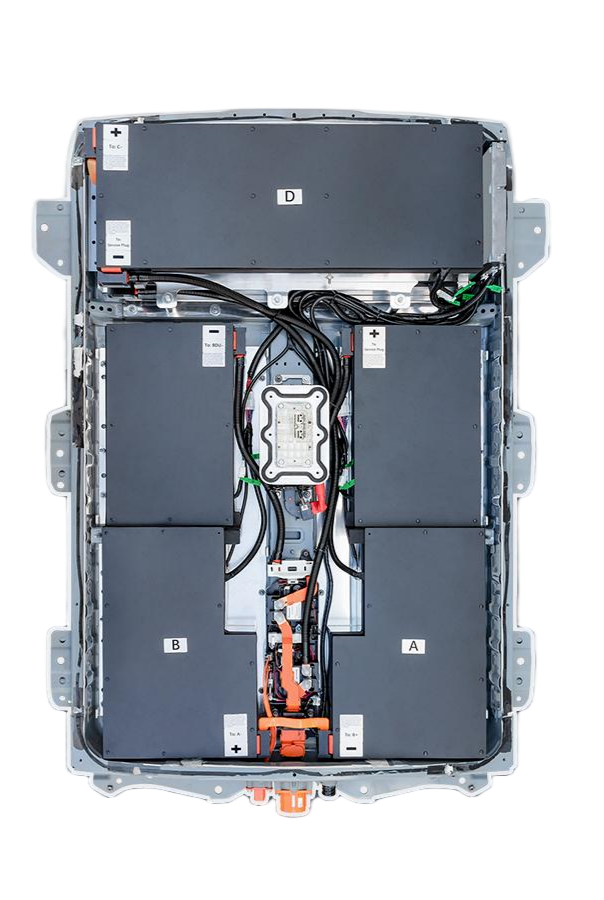
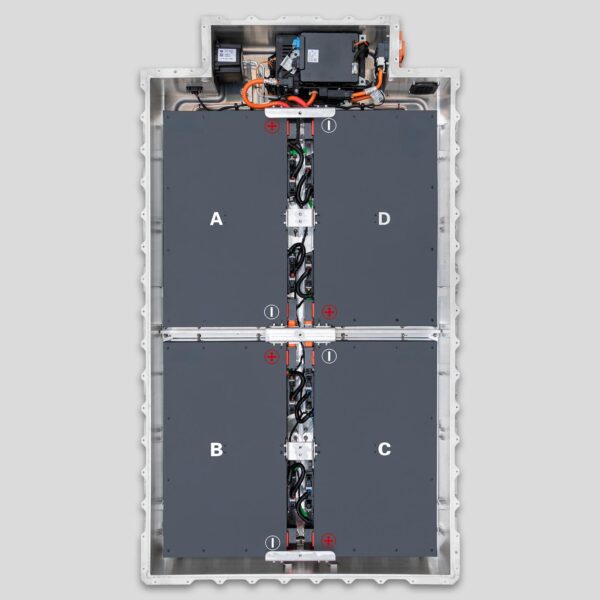
“A workshop in Copenhagen used a standard OBD2 scanner to ‘balance’ an i3 battery. The software showed all cells within 10 mV. But during a road test, regen cut out at 70% SoC. A deeper analysis with a 4-channel precision datalogger revealed Module D’s cells were drifting apart under load—despite appearing balanced at rest. The BMS wasn’t lying; it just couldn’t see dynamic imbalance. True balancing requires tools that capture behavior in motion—not just snapshots.”
You’ve likely assumed this:
- “If the BMS says it’s balanced, it is.”
- “Passive balancing overnight fixes everything.”
- Or the costly myth: “Cell balancing restores lost capacity.”
But cell balancing isn’t magic—it’s physics. And without the right equipment, you’re diagnosing a sprinter’s stamina by checking their resting heart rate.
This guide unveils the professional-grade tools and protocols used by top EV labs in 2026 to achieve real cell balance in the BMW i3, covering:
- Why resting voltage ≠ operational balance
- How active vs. passive balancing serve different purposes
- The critical role of millivolt-resolution data loggers during driving cycles
- When impedance tracking predicts future imbalance
- And how CNS BATTERY packs ship pre-balanced with matched CATL cells and verified low delta-V—so your first drive delivers full, stable range
Because in high-voltage systems, balance isn’t a status—it’s a performance baseline.
The Hidden Truth About i3 Cell Balancing
The BMW i3 BMS uses passive balancing (bleeding excess charge via resistors) only when:
- The pack is near full charge (≥95% SoC)
- A cell exceeds others by >20–30 mV
But this has limits:
✅ Slow (takes hours)
✅ Only works at high SoC
✅ Can’t correct imbalance during discharge or regen
⚠️ Reality: A pack can appear balanced at 100% but become critically unbalanced at 40%—triggering premature power reduction.
🔋 Professional Cell Balancing Workflow: Tools & Techniques
Tool 1: High-Resolution Data Logger (e.g., Dewesoft SIRIUS or National Instruments USB-6366)
- Purpose: Capture real-time cell voltages under load
- Why it matters: Resting balance hides dynamic divergence during acceleration/regen
- Setup:
- Connect to each module’s service port (or tap sense wires)
- Log at ≥10 Hz sampling rate during standardized drive cycle
- Pass criteria: <15 mV max-min spread across all cells at any SoC
📌 Pro insight: Imbalance under load often stems from internal resistance mismatch—not just capacity variance.
Tool 2: Active Balancer (e.g., EnerDel EB-200 or custom lab balancer)
- Purpose: Force balance at any SoC, not just 100%
- Use case:
- Post-repair validation
- Pre-delivery quality check on new packs
- Process:
- Apply controlled current to equalize all cells to target voltage
- Verify stability over 3 full cycles
💡 Note: Active balancing is not user-serviceable in stock i3s—but essential for professional rebuilds.
Tool 3: Impedance Spectroscopy Analyzer (e.g., BioLogic SP-300)
- Purpose: Measure AC impedance per cell to predict aging divergence
- Why: Cells with rising impedance will fall behind during discharge, even if voltage-matched
- Action: Flag cells with >15% impedance deviation for replacement
Tool 4: Thermal Imaging Camera (e.g., FLIR T860)
- Purpose: Detect hot spots during balancing
- Risk: Overworked balancing resistors can overheat adjacent cells
- Check: All balancing resistors should stay <65°C
Common Balancing Misconceptions That Waste Time
❌ “More balancing = better health” → Excessive bleeding wastes energy and heats the pack
❌ “BMS-reported balance is sufficient” → It’s a static snapshot, not dynamic truth
❌ “Balancing fixes degraded cells” → It only masks symptoms; weak cells still limit pack performance
❌ “All cells must hit exactly 4.15V” → Natural variance exists; focus on functional tolerance (<20 mV)
✅ Best practice: Balance only when needed—and validate under real-world conditions.
CNS BATTERY: Factory-Balanced Precision, Out of the Crate
Every CNS i3 battery undergoes:
✅ Cell matching by capacity AND internal resistance (±1% tolerance)
✅ 3-cycle formation with active balancing
✅ Dynamic load testing with millivolt logging
✅ Final validation: <10 mV spread at 20%, 50%, and 80% SoC
Result?
Customers report consistent regen and no early power taper—even after 12 months.
“We used to spend hours trying to ‘fix’ imbalance on customer packs. With CNS, we plug in, verify with our logger, and it’s perfect. No more comebacks.”
— Mike’s Auto Service, Vancouver
Frequently Asked Questions: BMW i3 Cell Balancing
Q: Can I balance my i3 battery at home?
A: Only via passive method (leave plugged in at 100% for 12+ hours). True balancing requires professional tools.
Q: Does balancing extend battery life?
A: Marginally—by reducing stress on weak cells. But it won’t restore capacity lost to aging.
Q: How often should balancing be performed?
A: Not routinely. Only if diagnostics show imbalance >30 mV under load or regen cuts out early.
Q: Will CNS packs need balancing after install?
A: Rarely. They ship pre-balanced. A single overnight charge post-install is sufficient.
Q: What’s the max acceptable cell voltage difference?
A: <20 mV at rest, <30 mV under load. Beyond that, performance suffers.
Balance Isn’t About Perfect Numbers—It’s About Predictable Performance
Because your i3 shouldn’t surprise you with sudden power loss on a highway on-ramp.
Skip the Guesswork: Install a CNS BMW i3 Battery with Lab-Matched Cells, Verified Low Imbalance, and Dynamic Load Validation—So Every Drive Delivers Full Power, Full Regen, and Full Confidence.
Don’t trust static readings—demand dynamic proof.
Order your CNS BMW i3 battery today—or download our free “Professional Cell Balancing Validation Protocol” for certified EV shops:
👉 https://cnsbattery.com/ev-battery-home/ev-battery-contact/