BMW i3 Battery Cell Balancing: Professional Cost – The $500 Gamble That Could Waste Your Money
Your BMW i3 is acting up. One moment the range estimator says you have 60 miles; the next, after a short drive, it plummets to 25. You plug in for a charge, but the car stops at 88% and refuses to go further. The dashboard flashes “Maximum Charge Level Reduced.”
A quick search tells you the culprit: Cell Imbalance. You find a local EV specialist or an independent mechanic who offers a “Professional Cell Balancing Service.” They quote you $400 to $600 to hook up a high-end balancer, sit on your battery for 24 hours, and equalize the voltages. It sounds like a miracle fix. “Maybe I don’t need a $20,000 replacement,” you think. “Maybe $500 will restore my range?”
Stop. Put down your credit card.
While professional cell balancing is a legitimate procedure for minor deviations in healthy packs, for the vast majority of aging BMW i3s, it is a financial trap. It treats the symptom (voltage difference) while ignoring the disease (permanent capacity loss). You could pay $500 today, see a temporary bump in range, and find yourself back at square one in two weeks with an empty wallet and a dying battery.
Why does professional balancing often fail on older i3s?
Is there a point where balancing becomes physically impossible?
And if your cells are too degraded to balance, what is the only solution that guarantees range and reliability?
At CNS BATTERY, we have performed thousands of diagnostics on imbalanced i3 packs. We know exactly when balancing works and when it’s just a expensive delay tactic. This guide breaks down the real cost of professional balancing, exposes the limitations of the procedure, and reveals why upgrading to a modern high-capacity system is the only permanent cure for severe imbalance.
The Science of Imbalance: Why It Happens
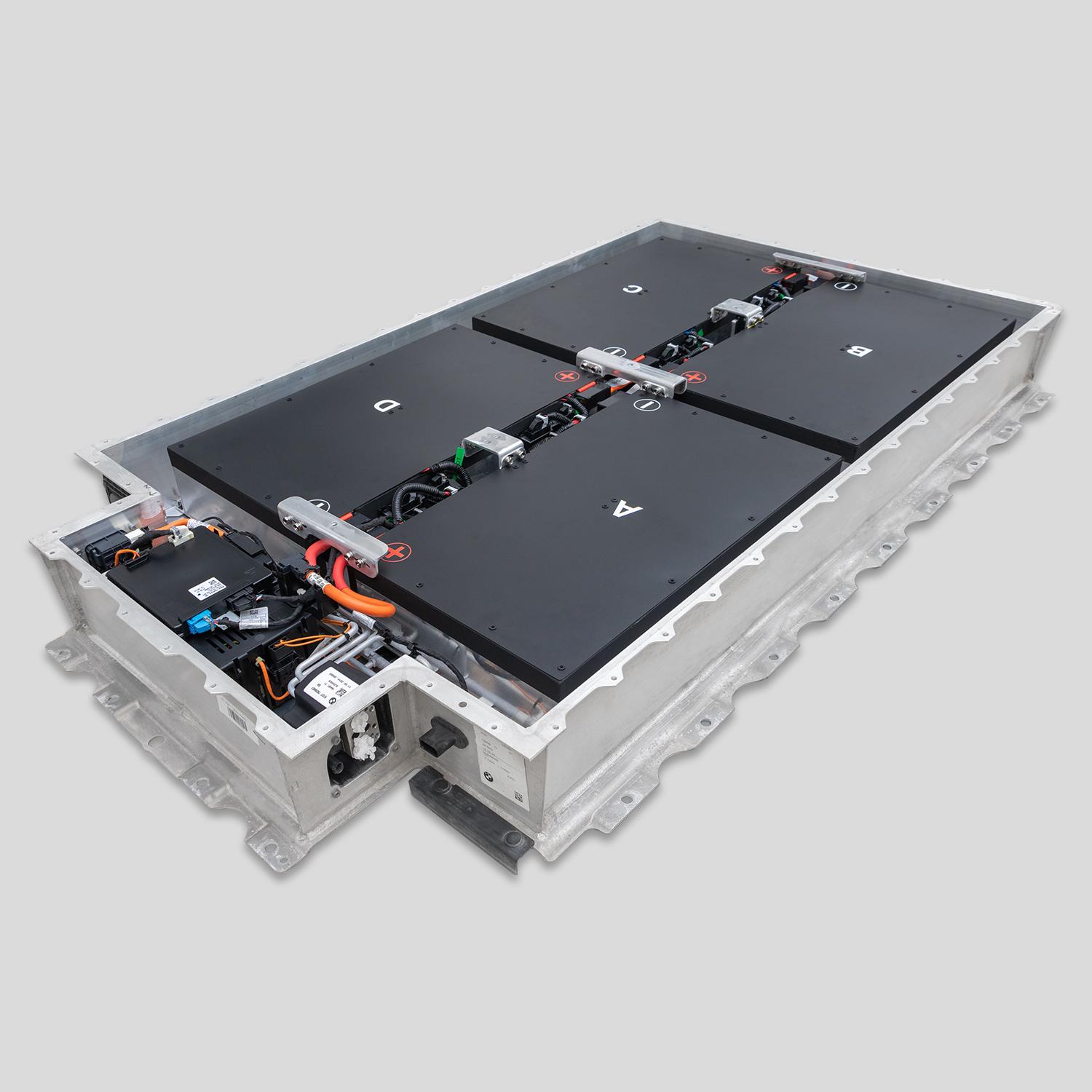
Your BMW i3 battery pack consists of roughly 96 individual cell modules connected in series. For the pack to work efficiently, every module must have the exact same voltage and capacity.
The Weak Link Theory
Imagine a chain of buckets carrying water. The chain can only hold as much water as the smallest bucket.
- Degradation: Over time, some cells degrade faster than others due to manufacturing variances, heat exposure, or usage patterns.
- The Bottleneck: When you charge, the weak (small) cells hit 100% first. The Battery Management System (BMS) sees this and stops charging the entire pack to prevent overcharging the weak cells.
- The Result: The strong cells might only be at 85%, but the car thinks it’s full because the weak ones are maxed out. Your usable capacity is limited by the worst cell in the pack.
What Professional Balancing Actually Does
A professional cell balancing service uses external equipment to bypass the car’s slow, passive balancing system.
- The Process: Technicians connect a high-current active balancer directly to the battery modules. They drain energy from the high-voltage cells and either dissipate it as heat (passive) or move it to the low-voltage cells (active) until everyone matches.
- The Timeframe: Unlike the car’s native system which takes days, a pro service can do it in 12-24 hours.
- The Cost: Typically $400 – $600 USD, depending on the shop and equipment used.
When It Works
Balancing is effective ONLY if:
- All cells have roughly the same physical capacity.
- The imbalance is caused by temporary drift or lack of maintenance (e.g., the car sat unplugged for months).
- The State of Health (SOH) is still high (>85%).
When It Fails (The 90% Reality)
For most 2014-2018 i3s, the imbalance is not a “drift”; it is a capacity mismatch.
- The Hard Limit: If Cell A has 90 Ah of capacity and Cell B has only 60 Ah due to degradation, you cannot balance them. No amount of voltage tweaking can make Cell B hold more energy.
- The Temporary Illusion: A balancer might force the voltages to match at the top of the charge. But as soon as you drive, Cell B will drop voltage rapidly because it physically holds less energy. The imbalance returns immediately.
- The Waste: You paid $500 to align the starting line, but the runners (cells) still have different speeds. The race (drive) ends exactly where it would have before.
The Hidden Costs of Chasing Balance
Paying for professional balancing on a degraded pack carries hidden risks:
- The Recurrence Fee: Since the root cause (degradation) isn’t fixed, the imbalance returns in weeks. You end up paying $500 again. And again.
- False Hope: You might gain 5-10 miles of range temporarily, leading you to believe the battery is healthy. Then, on a critical trip, the weak cell collapses, leaving you stranded.
- Delayed Replacement: Every month you spend trying to balance a dying pack is a month you are driving a unreliable vehicle. If the battery fails catastrophically later, you’ve wasted money on futile repairs.
The Verdict: If your imbalance is due to capacity loss (which is common in high-mileage or old i3s), balancing is throwing good money after bad.
The CNS BATTERY Solution: Eliminate Imbalance Forever
Why pay to temporarily align mismatched, degraded cells when you can replace them with a perfectly matched, brand-new system?
At CNS BATTERY, our BMW i3 Series Battery upgrades are engineered to make cell balancing obsolete.
Why Upgrading Beats Balancing
- Factory-Matched Perfection: Our Grade-A cells are matched to within millivolts and milliohms before assembly. There is zero initial imbalance.
- Uniform Degradation: Because all cells are new and identical, they age at the exact same rate. The pack stays balanced for years, not weeks.
- No “Weak Links”: We eliminate the bottleneck. Every module has full capacity, so you get 100% of the pack’s energy, not just what the weakest cell allows.
- Double the Range: While fixing the imbalance, you upgrade from a failing 60 Ah or 94 Ah pack to a 120 Ah to 180 Ah system, giving you 130–200+ miles of range.
- Cost Efficiency:
- Professional Balancing: $500 (Temporary fix, high chance of recurrence).
- Repeated Balancing: $1,500+ over a year (Still driving a dying car).
- CNS BATTERY Upgrade: $8,000 – $14,000 USD. You get a brand-new, perfectly balanced battery with double the range and a comprehensive warranty.
Real Story: From “Balancing Loop” to “Perfect Harmony”
Meet David, a 2015 i3 owner. His range dropped to 40 miles due to severe imbalance. He paid a shop $450 for a professional balance. His range jumped to 55 miles. He was thrilled. Three weeks later, it dropped back to 40. He paid another $450. Same result. “I spent $900 just to buy myself a few weeks of mediocre range,” David says. “I felt like I was pouring water into a leaky bucket.”
David contacted CNS BATTERY. We installed a 160 Ah upgrade. “The difference is incredible,” David reports. “I ran a diagnostic yesterday. The cell deviation is 0.01V. Perfectly balanced. I have 190 miles of range, and it’s been six months with zero drift. I wish I had skipped the balancing scams and gone straight to the upgrade. It would have saved me money and endless frustration.”
Stop Paying for Temporary Fixes
Professional BMW i3 cell balancing has its place, but for most owners facing significant range loss, it is a costly distraction. You cannot balance away physical degradation.
Don’t waste hundreds on a procedure that fights physics. Invest in a solution that guarantees perfect harmony, maximum capacity, and long-term reliability.
Is your i3 suffering from constant cell imbalance?
Stop wasting money on temporary balances. Contact CNS BATTERY today for a professional State of Health and imbalance diagnostic. We’ll tell you if balancing is viable (it rarely is) or if it’s time for a 120 Ah+ upgrade that provides a perfectly matched, high-range solution forever.
👉 Get Your Imbalance Diagnostic & Upgrade Quote
Frequently Asked Questions (FAQ)
1. How much does professional BMW i3 cell balancing cost?
A professional balancing service typically costs between $400 and $600 USD. This includes labor and the use of specialized active balancing equipment for 12-24 hours.
2. Will professional balancing restore my lost range permanently?
Only if the cells are healthy. If your range loss is due to temporary voltage drift, yes. However, if it’s due to permanent capacity degradation (common in older i3s), balancing will only provide a temporary improvement. The range will drop again as soon as the weak cells discharge faster than the strong ones.
3. How do I know if my battery needs balancing or replacement?
If your cell voltage deviation (delta) is high (>0.10V) but your total capacity is still good, balancing might help. However, if your State of Health (SOH) is low (<75%) and the deviation is high, balancing will not work. A professional diagnostic is required to distinguish between the two.
4. Why does the imbalance come back after professional balancing?
Because the underlying issue is mismatched capacity. You can force the voltages to match at 100% charge, but if one cell holds less energy than the others, it will drop voltage faster during driving, recreating the imbalance immediately.
5. Does CNS BATTERY offer balancing services?
We focus on permanent solutions. Since our upgrades use brand-new, perfectly matched cells, balancing is never needed. We recommend upgrading rather than balancing for any pack showing significant degradation, as it is the only way to guarantee long-term stability.
6. Is it cheaper to balance or upgrade?
Balancing is cheaper upfront ($500 vs $8,000+), but if it fails (which is likely for old packs), you waste that money. An upgrade is a one-time investment that solves the problem forever, provides double the range, and adds years of life to your car, offering far better long-term value.
7. Can I balance the cells myself?
No. High-voltage battery balancing requires specialized equipment, deep knowledge of BMS architecture, and strict safety protocols. Attempting DIY balancing on a 400V system is extremely dangerous and can lead to fire, electrocution, or permanent battery damage.