BMW i3 Battery Capacity Loss After 100,000 Miles: The Reality Check & The Fix
You hit the milestone. Your odometer just rolled over to 100,000 miles. For a gasoline car, this is just routine maintenance territory. But for your BMW i3, it often marks a terrifying cliff edge.
You plug in for your nightly charge, hoping to see the familiar 80+ miles of range you once enjoyed. Instead, the dashboard mocks you with a pathetic 45 miles. The “Guess-O-Meter” plummets faster than a stone in water. You realize the harsh truth: your battery capacity has collapsed.
Is this normal?
Did I drive it wrong?
Is my car now nothing more than an expensive paperweight?
Many owners panic at the 100k mark, assuming their EV journey is over. But here is the secret the dealerships won’t tell you: Capacity loss at 100,000 miles is predictable, but it is not permanent. You don’t need to buy a new car, and you certainly don’t need to pay $20,000 for an obsolete factory replacement.
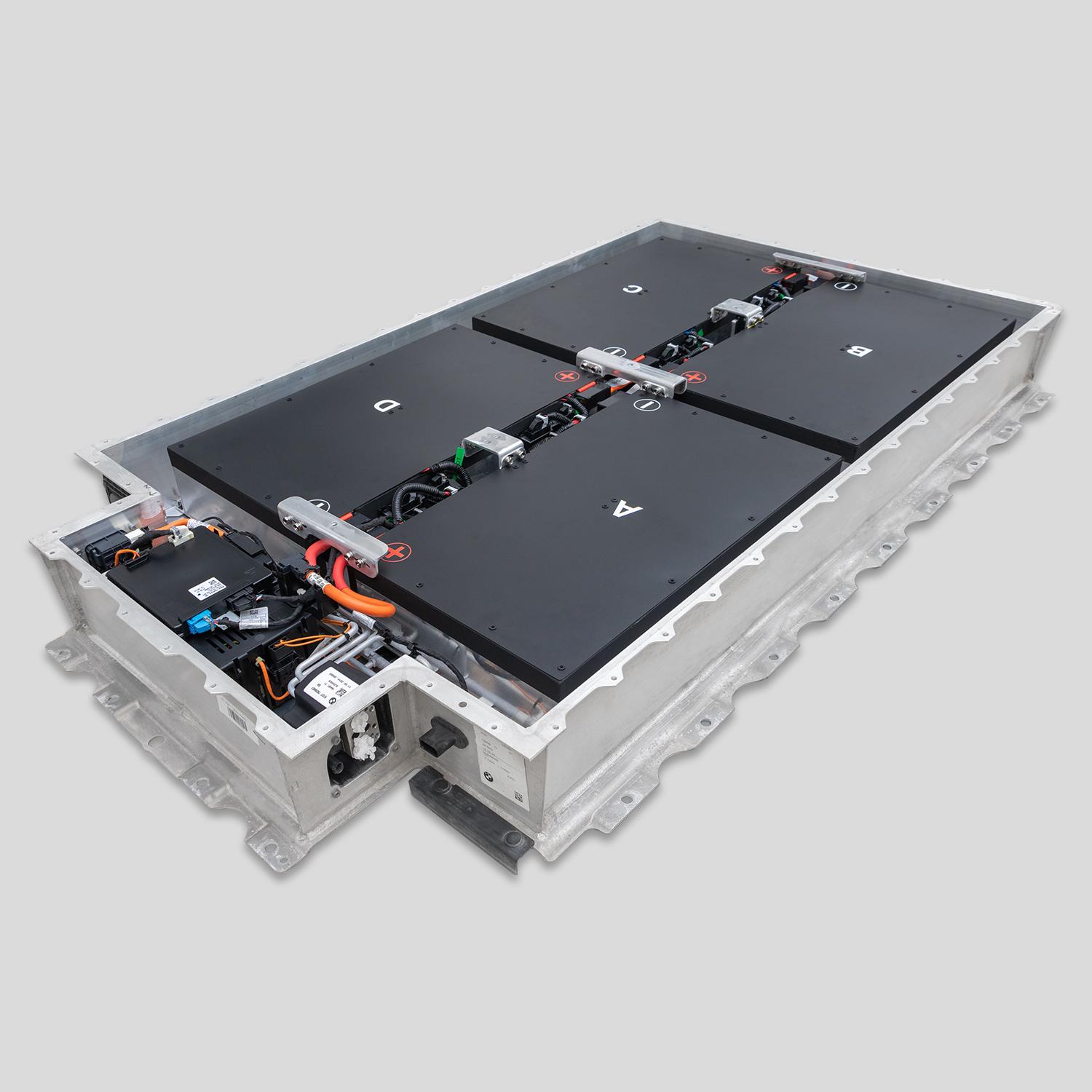
At CNS BATTERY, we specialize in rescuing high-mileage i3s. We’ve seen thousands of packs cross this threshold. This guide explains exactly why capacity drops after 100,000 miles, separates myth from reality, and reveals the cost-effective upgrade path that can not only restore your range but double it beyond what your car had when it was brand new.
The 100,000 Mile Cliff: Why It Happens
Reaching 100,000 miles in an electric vehicle is a testament to the durability of the motor and chassis. However, the Lithium-Ion battery is a chemical device, and chemistry obeys different rules than mechanics.
1. Cycle Aging vs. Calendar Aging
By 100,000 miles, your battery has undergone thousands of charge/discharge cycles.
- Cycle Aging: Every time you drive and recharge, the internal structure of the cells degrades slightly. At 100k miles, this cumulative wear often results in a State of Health (SOH) dropping to 60-70%.
- The Result: A 60 Ah pack that originally held ~19 kWh might now only hold ~12 kWh. That is nearly 40% physical capacity loss. No amount of software resetting can bring those lost kilowatt-hours back.
2. The “Weakest Link” Effect
A battery pack is only as strong as its weakest cell module. After 100,000 miles, cell deviation becomes significant. One or two modules degrade faster than the rest.
- The BMS Shutdown: The Battery Management System (BMS) sees these weak cells and restricts the entire pack to protect them. Even if 90% of your battery is healthy, the BMS locks out the usable energy to prevent the weak 10% from failing. This makes your usable range feel even worse than your physical capacity suggests.
3. Internal Resistance Spike
High mileage increases the internal resistance of the cells. This means the battery generates more heat during operation and accepts charges slower. The car throttles performance to manage this heat, further reducing your effective driving experience.
The Dealership Trap: Don’t Reset to Factory Limits
When you take your 100,000-mile i3 to a BMW dealership, they will run a diagnostic, confirm the low SOH, and offer you a solution: A Genuine OEM Replacement.
Here is the catch:
- The Cost: They will charge you $18,000 – $22,000 USD.
- The Product: They will install a brand-new 60 Ah battery.
- The Outcome: You pay a fortune to get back the exact same limited range (approx. 80 miles) that disappointed you in the first place. You are essentially paying a luxury price to reset the clock on obsolete technology.
For a car with 100,000 miles, this financial math rarely makes sense. It often exceeds the value of the vehicle itself.
The CNS BATTERY Solution: Turn 100k Miles into a New Beginning
At CNS BATTERY, we view the 100,000-mile mark not as an end, but as an opportunity for a major evolution. Why settle for restoring original specs when you can upgrade to modern standards?
Why High-Mileage Owners Choose Our Upgrades
- Double the Capacity: Instead of a like-for-like 60 Ah replacement, we upgrade you to a 120 Ah equivalent. This instantly doubles your energy storage, pushing your real-world range to 130+ miles. Your 100,000-mile i3 suddenly has more range than a brand-new one did in 2014.
- Modern Cell Chemistry: Our packs use the latest generation Lithium-Ion cells. They have lower internal resistance, meaning they handle high mileage usage better, charge faster, and degrade slower than the original factory units.
- Perfect Cell Matching: We eliminate the “weakest link” issue by building packs with perfectly matched cells. The BMS can utilize 100% of the available energy, maximizing every watt-hour.
- Cost Efficiency: Our complete upgrade solutions typically range from $8,000 to $12,000 USD. This is 50% less than the dealership price, yet you get double the performance.
- Extended Vehicle Life: With a new high-capacity battery, your i3 is good for another 100,000 miles. You transform a potential scrap car into a reliable, long-range daily driver.
Real Story: From “Scrap Heap” to “Road Trip Ready”
Meet Marcus, a delivery driver whose 2015 i3 hit 105,000 miles last month. His range had dropped to 38 miles, making his job impossible. The dealer quoted him $19,500 for a new 60 Ah battery. “I was ready to sell it for parts,” Marcus says.
Then he found CNS BATTERY. We installed a 120 Ah upgrade. “The transformation is unbelievable,” Marcus reports. “I now get 135 miles of range. I can do my entire delivery route twice on a single charge. The car feels peppier, charges faster, and I spent $10,000 less than the dealer wanted. Hitting 100,000 miles turned out to be the best thing that happened to my car because it forced me to upgrade.”
Don’t Let Mileage Define Your Future
BMW i3 battery capacity loss after 100,000 miles is a natural chemical process, but it doesn’t have to be a death sentence.
You have a choice:
- Pay a fortune to return to the past (OEM replacement).
- Invest wisely to leap into the future (CNS BATTERY Upgrade).
Don’t let your odometer dictate your mobility. Reclaim your range, restore your confidence, and keep your favorite car on the road for years to come.
Has your BMW i3 hit the 100,000-mile capacity cliff?
Stop accepting limited range. Contact CNS BATTERY today for a free consultation. Discover how our BMW i3 Series Battery upgrades can double your range, extend your vehicle’s life, and save you thousands compared to a dealership replacement.
👉 Get Your 100k Mile Rescue Quote
Frequently Asked Questions (FAQ)
1. Is it normal for a BMW i3 to lose half its range at 100,000 miles?
While losing half is on the severe end, losing 30-40% of original capacity is common for early models (60 Ah) at this mileage due to cycle aging and cell imbalance. If your loss is greater, you likely have specific weak modules dragging down the whole pack.
2. Can software updates restore my lost capacity?
No. Software can recalibrate the range display, but it cannot reverse physical chemical degradation. If your cells have lost capacity due to 100,000 miles of use, only a hardware replacement or upgrade can restore your range.
3. Is it worth replacing the battery in a car with 100,000 miles?
Absolutely, provided you choose the right solution. A dealership OEM replacement is often too expensive to justify. However, a CNS BATTERY upgrade costs significantly less ($8k–$12k) and provides double the range, making the car highly valuable and usable for another decade.
4. Will a larger battery hurt my high-mileage motor?
No. The BMW i3 electric motor is incredibly durable and easily handles 200,000+ miles. Adding a larger battery does not strain the motor; in fact, it reduces stress by allowing smoother power delivery and fewer deep discharge cycles.
5. How much range can I expect after an upgrade?
While your original 60 Ah pack may now only give you 40 miles, upgrading to a 120 Ah equivalent will typically provide 130–150 miles of real-world range, effectively tripling your current driving distance.
6. Does the warranty cover battery degradation at 100,000 miles?
The original BMW warranty covers 8 years or 100,000 miles. If you have exceeded either limit (e.g., 100,001 miles or 8 years + 1 day), you are no longer covered. This is where independent upgrades become the most viable financial option.
7. How long does the upgrade process take?
Most installations are completed in 4 to 6 hours. You can often drop off your car in the morning and pick it up the same afternoon with a completely transformed driving experience.