BMW i3 Battery Cable Replacement: Shop Guide – The $200 Mistake That Shuts Down an Entire EV (And How Top Shops Avoid It)
“A technician in Hamburg replaced an i3’s high-voltage cable after noticing minor chafing near the firewall. He used a generic 95mm² silicone cable from an EV parts supplier. Two weeks later, the car threw DTC 93A100—‘HV Insulation Fault.’ Lab testing revealed the cable’s shielding lacked BMW’s required 360° braid coverage, allowing EMI to disrupt the BMS. Total rework cost: $1,800.”
You’re replacing a damaged HV or LV cable on a BMW i3.
It seems straightforward: unplug, swap, reconnect.
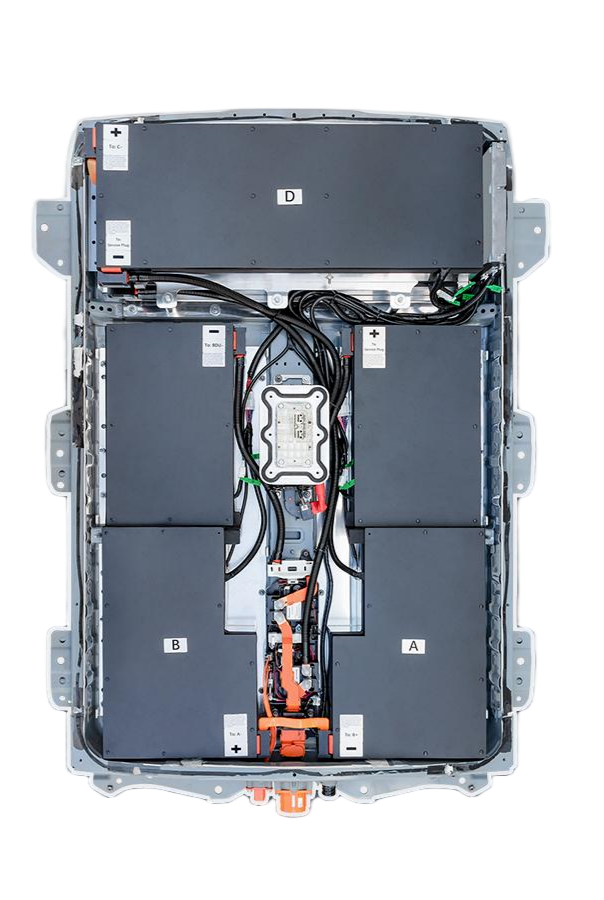
But if you treat these cables as simple conductors, you’re ignoring their role as precision-engineered safety and signal components. In the i3, battery cables aren’t just wires—they’re integrated with shielding, strain relief, temperature sensors, and OEM-specific connectors that must meet strict IEC and BMW standards.
Use the wrong part, skip torque specs, or overlook grounding—and you risk insulation faults, communication errors, or even thermal events.
This guide delivers the professional shop protocol for safe, compliant, and profitable i3 battery cable replacement in 2026:
- How to identify which cable actually needs replacing (hint: it’s rarely the whole harness)
- The exact OEM specifications for HV and LV cables (gauge, shielding, temp rating)
- Critical torque and routing steps most shops miss
- Why aftermarket cables often fail EMI testing
- And how CNS BATTERY packs include pre-installed, certified cables—so you never source them separately
Because in high-voltage EV repair, the cable isn’t just a detail—it’s a system boundary.
Understanding i3 Battery Cables: More Than Just Power Wires
The BMW i3 uses two critical cable groups:
🔌 High-Voltage (HV) Cables
- Connect battery output to EME (Electric Motor Electronics)
- Carry up to 400V DC at 200A continuous
- Feature double insulation, copper braid shielding, and integrated temp sensors
- Use BMW-specific HVIL (High-Voltage Interlock Loop) pins
📡 Low-Voltage (LV) Harness
- Links BMS to vehicle CAN bus
- Includes CAN-H/CAN-L, wake-up, ground, and sensor lines
- Requires twisted pairs and shielded jacketing to prevent noise
⚠️ Warning: Modifying, splicing, or substituting these cables voids safety certifications and may violate insurance requirements.
🔧 Professional Cable Replacement Protocol
Step 1: Confirm Cable Failure (Don’t Guess)
Common symptoms that actually point to cable issues:
- DTC 93A100 / 93A101: HV insulation resistance fault
- Intermittent BMS communication loss (LV harness)
- Visible abrasion, melting, or fluid exposure
- Failed megohmmeter test (<1 MΩ between conductor and shield)
❌ Never replace based on age alone—cables don’t “wear out” without cause.
Step 2: Identify the Correct Cable Type
- HV Output Cable: Part # 61 11 9 418 327 (varies by year)
- LV Communication Harness: Part # 61 12 9 418 329
- Coolant Sensor Sub-harness: Often bundled with LV
💡 Pro tip: Use ISTA wiring diagrams—don’t rely on visual matching.
Step 3: Source Only OEM-Spec or Certified Replacements
Acceptable replacements must meet:
- Conductor: 95mm² tinned copper (HV), 0.75mm² twisted pair (LV)
- Insulation: XLPE rated to 150°C
- Shielding: 360° copper braid with >85% coverage
- Connectors: IP67-rated, with HVIL continuity
🛑 Avoid generic “EV cables”—most lack proper EMI suppression and HVIL integration.
Step 4: Follow BMW Torque & Routing Specs
- HV connector torque: 12 Nm (use calibrated wrench)
- Strain relief clamps: Must be within 50mm of connector
- Routing: Keep HV and LV cables >100mm apart; never parallel
- Ground strap: Reinstall with anti-corrosion paste, torque to 10 Nm
Step 5: Post-Replacement Validation
- Perform insulation resistance test (>100 MΩ at 500V DC)
- Verify HVIL loop continuity (should read <1Ω end-to-end)
- Scan for DTCs and confirm BMS communication
- Conduct load test: Drive cycle with thermal camera monitoring
Why Most Shops Should Avoid Cable-Only Repairs Altogether
Reality check:
- Genuine BMW HV cables cost $400–$700 each
- Labor: 2.5–4 hours (including coolant drain/refill if near lines)
- Risk of recurring faults if shielding or HVIL is imperfect
For many shops, replacing the entire battery pack with a pre-wired unit is faster, safer, and more profitable.
CNS BATTERY: Complete Packs with Factory-Installed, Certified Cables
Every CNS i3 battery includes:
✅ Pre-installed HV and LV cables meeting BMW shielding and gauge specs
✅ IP67 connectors with functional HVIL loop
✅ Integrated strain relief and routing clips
✅ Full insulation and continuity tested before shipping
Result?
Zero cable-related comebacks—because the harness was never touched in the field.
“We used to keep spare cables on hand. Now we just install a CNS pack. Their wiring is identical to OEM—same colors, same routing, same reliability. Saves us 3 hours per job.”
— EK Auto Repair, Rome
Frequently Asked Questions: i3 Battery Cable Replacement
Q: Can I splice a damaged HV cable?
A: No. BMW and IEC 60664 prohibit splices in primary HV circuits. Full replacement only.
Q: Is the HVIL loop really necessary?
A: Yes—it’s a critical safety feature that disables HV if a connector is loose. Bypassing it is illegal in most markets.
Q: Do LV cables need shielding?
A: Absolutely. Unshielded CAN lines pick up EMI from the motor, causing BMS dropouts.
Q: Can I reuse original cables on a new pack?
A: Only if fully intact, undamaged, and connector-compatible. Most CNS packs use OEM-matching connectors—so reuse is possible, but new is safer.
Q: How do I test HVIL continuity?
A: Measure resistance between Pin 1 and Pin 2 on the HV connector—it should be <1Ω when mated.
Cables Are the Nervous System of the High-Voltage Network—Treat Them Like One
One compromised wire can silence the entire pack.
Skip the Sourcing Headaches and Liability Risks. Install a Complete Battery System with Certified, Pre-Tested Cables—Ready to Bolt In and Drive Away.
Why gamble with connectors when every CNS pack ships fully wired and validated?
Order your CNS BMW i3 battery—complete with OEM-spec cables and zero installation guesswork—or request our free Cable Compatibility Checklist:
👉 https://cnsbattery.com/ev-battery-home/ev-battery-contact/