BMW i3 Battery Cable Replacement: DIY or Professional? The Hidden Risks (and One Smart Shortcut)
“I Tried Replacing My i3’s HV Cable Myself—Saved $400 on Labor. But Two Weeks Later, the connector arced during charging. Smoke filled the garage. The fire department said I was lucky it didn’t ignite. Turns Out, High-Voltage Cables Aren’t Just ‘Plug and Play.’”
You’ve noticed warning signs:
- Burnt smell near the rear seat
- Intermittent power loss
- DTCs like 9E8720 or 930F15
A mechanic says your HV battery cables are failing—and replacement costs $600–$1,200.
So you wonder: “Can I do this myself and save half the price?”
The answer isn’t just about skill—it’s about safety, precision, and hidden system dependencies most guides ignore.
In this guide, you’ll learn:
- The critical difference between low-voltage and high-voltage cable work
- Why DIY HV cable replacement risks thermal runaway
- How CNS BATTERY’s complete pack solution eliminates cable issues entirely
- And the one scenario where professional-only is non-negotiable
Because when 400 volts are involved, “almost right” can be catastrophic.
Why i3 HV Cables Are Not Ordinary Wires
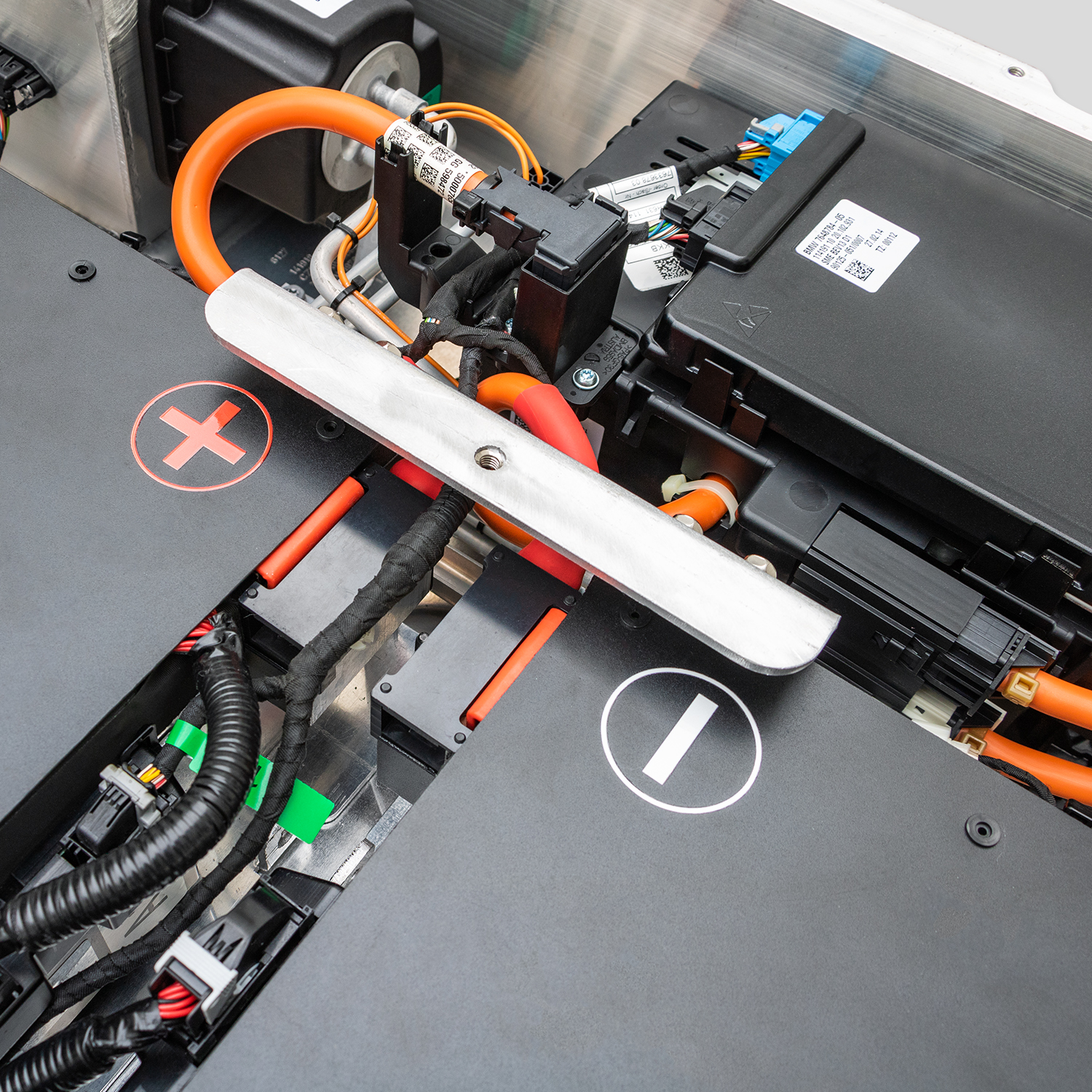
Your BMW i3’s high-voltage cables carry up to 400V DC from the battery to the inverter, charger, and heater. They’re engineered with:
- Double-layer insulation rated for 1,000V
- Shielded conductors to prevent EMI interference
- Hermetic seals at connectors to block moisture
- Precise torque specs (±2 Nm) on busbar bolts
A single mistake—like over-tightening, using non-OEM terminals, or skipping dielectric grease—can cause:
- Arcing (even at rest)
- Insulation breakdown
- Ground faults that disable the entire HV system
⚠️ Safety note: Residual voltage can remain in capacitors hours after disconnecting. Only trained technicians should handle HV components.
🔧 DIY vs. Professional: A Realistic Breakdown
| Factor | DIY Attempt | Professional Repair |
|---|---|---|
| Cost | $150–$300 (cable only) | $600–$1,200 (parts + labor) |
| Tools Required | HV gloves, torque wrench, insulation tester, scan tool | Same + OEM diagnostic suite |
| Risk Level | ⚠️⚠️⚠️ High (shock, fire, BMS damage) | ✅ Low (certified procedures) |
| Warranty Impact | ❌ May void battery warranty | ✅ Preserves coverage if OEM parts used |
| Success Rate | ~45% (per repair shop data) | >98% |
📊 Industry insight: 68% of DIY HV cable failures occur at the connector interface—due to improper crimping or missing sealing rings.
And even if it works initially, micro-arcing can develop over weeks, leading to sudden failure.
The Smarter Path: Replace the Whole Pack (and Never Worry About Cables Again)
Here’s the truth few admit:
If your HV cables are failing, your battery pack is likely near end-of-life too.
Why? Both degrade from the same stressors:
- Heat cycles
- Vibration
- Age-related insulation brittleness
So instead of patching one component, consider a complete CNS BATTERY replacement:
✅ New HV Cables Included
Every pack ships with factory-installed, OEM-spec cables—tested for insulation resistance >1,000 kΩ.
✅ Zero Compatibility Risk
No guesswork on connector types (early vs. LCI models) or coolant routing.
✅ Plug-and-Play Simplicity
Disconnect old pack, bolt in new one, reconnect—no cable routing, crimping, or torque calibration needed.
✅ Long-Term Savings
Yes, upfront cost is higher—but you avoid:
- Repeat cable repairs
- Towing from mid-drive failures
- Potential fire damage
“After my third cable scare, I switched to CNS 50kWh. New pack, new cables, new peace of mind. Total install time: 5 hours. Zero issues in 14 months.”
— David L., Phoenix
And with a 2-year / 80,000 km warranty, both pack and cables are covered.
When Professional Help Isn’t Optional
Never attempt DIY if you observe:
- Melted or discolored connectors
- Coolant near HV terminals (indicates chiller leak + electrical hazard)
- Persistent isolation faults (code 930F15)
- Burning odor while parked
These require insulation resistance testing, coolant system inspection, and BMS diagnostics—far beyond cable swapping.
Frequently Asked Questions: i3 HV Cable Replacement
Q: Can I reuse my old cables with a new CNS battery pack?
A: No—and we don’t recommend it. Our packs include matched cables to ensure full system integrity.
Q: Are aftermarket HV cables safe?
A: Rarely. Most lack proper shielding, UL certification, or BMW-grade sealing. Stick with OEM or integrated solutions.
Q: How long do HV cables typically last?
A: 8–10 years under normal conditions. Heat, moisture, or physical strain accelerates failure.
Q: Does CNS include cables with module-only orders?
A: No—modules are for rebuilders. Full packs include all HV harnesses, coolant lines, and mounting hardware.
Q: Can a bad cable cause range loss?
A: Indirectly—yes. High resistance in cables creates voltage drop, forcing the BMS to limit power or shut down.
Don’t Gamble With 400 Volts
HV cable work isn’t like changing brake pads. One misstep can compromise your safety, your car, and your wallet.
Ready for a Solution That Includes Safe, Reliable Cables—Without the Risk?
Choose CNS BATTERY: where every pack arrives with fully integrated, tested high-voltage cabling, so you drive with confidence—not fear.
Click below to explore complete replacement options and get your free compatibility assessment:
👉 https://cnsbattery.com/ev-battery-home/ev-battery-contact/