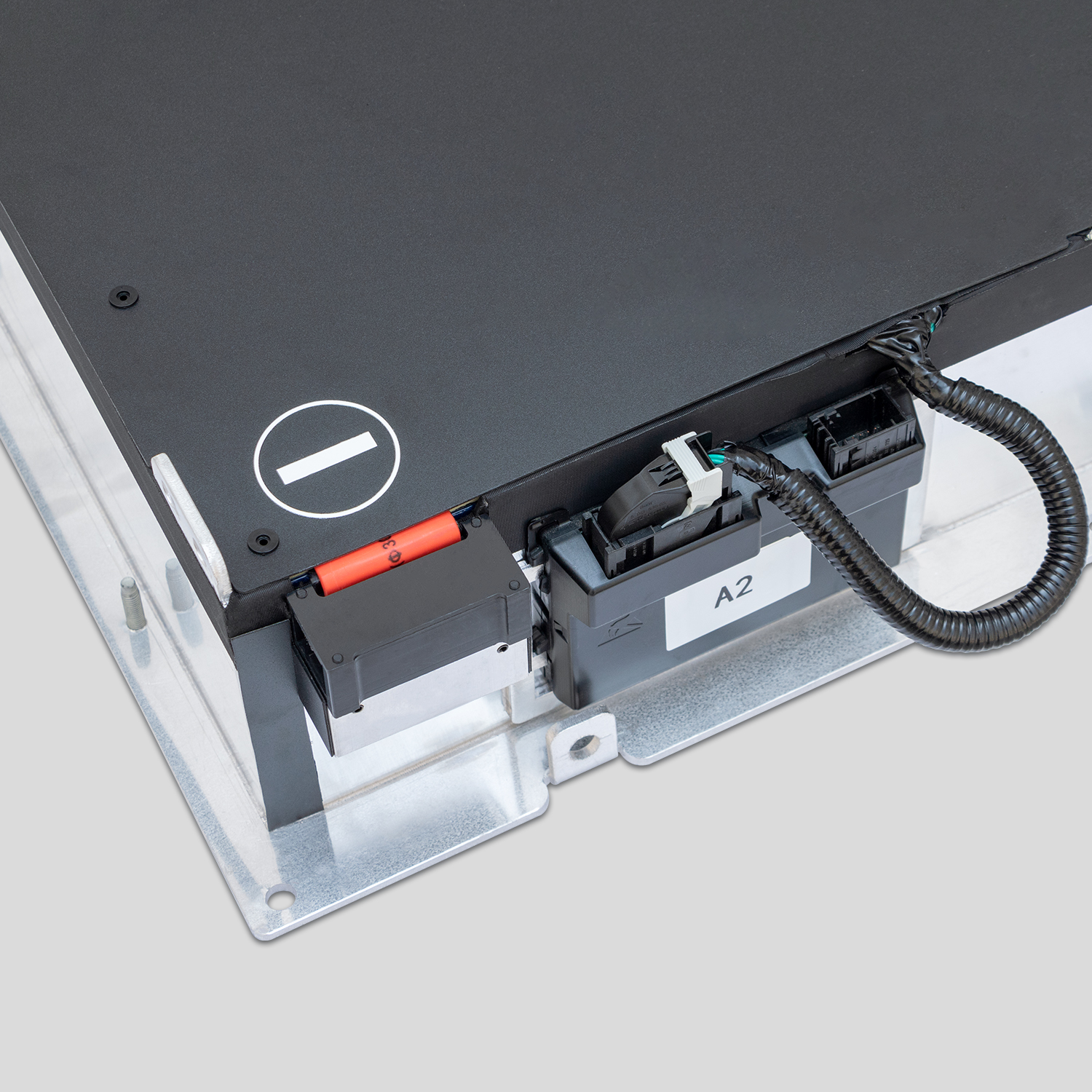
BMW i3 Battery BMS: What It Does & Why It Matters for Your Range
You plug in your BMW i3, expecting a full charge by morning. Instead, the charging session aborts at 82%. Or perhaps you are driving on the highway when the dashboard suddenly flashes “Drivetrain Malfunction,” and your car loses half its power.
Your first thought is likely: “My battery cells are dead.”
But what if the problem isn’t the energy storage itself, but the brain controlling it?
Enter the Battery Management System (BMS). This unsung hero is the most critical component in your electric vehicle, yet it remains a mystery to most owners. When the BMS fails, misinterprets data, or loses communication with aging cells, your perfectly good battery can feel useless. Conversely, a sophisticated BMS paired with modern cells can unlock performance you never knew your i3 had.
At CNS BATTERY, we don’t just swap hardware; we engineer intelligent power solutions. We understand that a battery is only as good as the system managing it. This guide demystifies the BMW i3 Battery BMS, explains its vital role in your daily driving, reveals why original units struggle with aged cells, and shows how our upgraded solutions leverage advanced BMS technology to double your range and restore reliability.
The Brain of the Beast: What Exactly Is the BMS?
Think of your high-voltage battery pack as a team of 96 individual athletes (the cell modules). Without a coach, some athletes might sprint too fast while others lag behind, causing the whole team to fail.
The BMS is that coach. It is a complex computer system embedded within the battery pack that monitors, manages, and protects every single cell group in real-time.
Core Functions of the BMW i3 BMS:
- Cell Balancing: This is the most crucial job. The BMS ensures all 96 modules have the exact same voltage. If one module is weaker, the BMS limits the entire pack’s capacity to match that weakest link. It actively bleeds off excess charge from strong cells or directs current to weaker ones to keep them in sync.
- Thermal Management: The BMS constantly reads temperature sensors. If the battery gets too hot during fast charging, it throttles the power to prevent meltdown. If it’s too cold, it activates heaters to allow charging.
- State of Charge (SOC) Calculation: The “Guess-O-Meter” on your dash relies entirely on BMS data. It calculates exactly how much energy is left based on voltage curves and historical usage.
- Safety Isolation: The BMS continuously checks for electrical leaks (isolation faults). If it detects electricity touching the chassis, it instantly disconnects the high-voltage system to save your life.
- Communication Gateway: It translates the battery’s internal language into signals the car’s main computer (DME) understands, telling the motor how much power it can use.
Why the Original BMS Struggles with Age
Here is the painful reality for many 2014-2017 i3 owners: The original BMS was designed for new, perfect cells.
As your battery ages, the cells degrade at different rates. Some become weak; others stay relatively strong. The original BMS tries desperately to balance these increasingly mismatched cells.
- The “Weakest Link” Syndrome: As cell deviation grows, the BMS sees a huge gap between the highest and lowest voltage modules. To protect the weak ones from over-discharging, it locks out the energy in the strong ones. Result: You might have 80% energy available physically, but the BMS only lets you use 40%.
- False Alarms: An overwhelmed BMS may trigger “Isolation Faults” or “Charge Power Reduced” warnings even when the battery is fine, simply because it can no longer trust the sensor data from degraded cells.
- Inaccurate Range Estimates: Old cells have different voltage curves. The original BMS algorithms get confused, leading to the dreaded range plummet where the GOM drops 20 miles in a few minutes.
Essentially, your original BMS is trying to manage a chaotic classroom with rules designed for kindergarteners. It’s not broken; it’s just outmatched by the aging hardware.
The CNS BATTERY Advantage: A Smarter Brain for a Better Body
When you choose CNS BATTERY for your replacement or upgrade, you aren’t just getting new cells. You are getting a harmonized system where the BMS and the cells are perfectly matched.
How Our Upgrades Optimize BMS Performance:
- Perfect Cell Matching: We don’t just grab random cells. We test thousands of modules and group them with near-identical voltage and internal resistance. This means our packs arrive with near-zero cell deviation. The BMS doesn’t have to work hard to balance them; it can focus on delivering maximum power.
- Modern Communication Protocols: Our upgraded packs utilize updated BMS firmware and hardware that communicate more accurately with your i3’s chassis computer. This eliminates the “confusion” that causes false error codes in old packs.
- Enhanced Thermal Algorithms: Our systems are calibrated for the thermal characteristics of modern Grade-A cells, which run cooler and more efficiently. The BMS allows for higher sustained charge and discharge rates without unnecessary throttling.
- Accurate SOC Calibration: Because our cells follow predictable, modern voltage curves, the BMS can calculate your remaining range with pinpoint accuracy. No more surprise shutdowns; the “Guess-O-Meter” becomes a reliable predictor again.
- Unlocking Hidden Capacity: By eliminating the “weakest link” issue through perfect matching, our BMS integration allows you to access 100% of the pack’s usable energy. This is how we turn a 60 Ah physical upgrade into a real-world 130+ mile range experience.
Real Story: From “BMS Confusion” to “Crystal Clear Data”
Meet Elena, a 2015 i3 owner. Her car would charge to 85% and stop, displaying a “Maximum Charge Level Reduced” error. Three different shops told her her battery was dead and needed a $19,000 OEM replacement.
Elena contacted CNS BATTERY. Our diagnostic revealed her cells weren’t dead; they were just severely imbalanced, and the original BMS had given up trying to manage them. We installed a 120 Ah upgrade with perfectly matched cells.
“The difference was instant,” Elena says. “The car charged to 100% immediately. The dashboard range was stable. The BMS wasn’t fighting the battery anymore; it was working with it. I went from 40 miles of anxiety to 135 miles of freedom. It wasn’t just a new battery; it was a new brain-body connection.”
Why the BMS Matters for Your Wallet
Ignoring the BMS factor can cost you thousands.
- Misdiagnosis: Many owners replace functional cells or pay for expensive “balancing services” that fail because the underlying issue is the BMS struggling with incompatible aged cells.
- OEM Limitations: Buying a dealership OEM replacement gives you the same old BMS logic paired with obsolete cells. You reset the clock, but you don’t upgrade the intelligence.
- The Upgrade Value: At CNS BATTERY, our solution typically ranges from $8,000 to $12,000 USD. This includes a battery pack where the BMS and cells are optimized for each other, providing double the range and superior reliability compared to a $20,000 dealer fix.
Stop Fighting Your Battery’s Brain
The BMW i3 Battery BMS is the gatekeeper of your range, safety, and performance. When it struggles against aging cells, your car suffers. But when paired with modern, perfectly matched cells, it unlocks the true potential of your electric vehicle.
Don’t let an overwhelmed BMS limit your driving. Upgrade to a system designed for harmony, precision, and longevity.
Is your BMW i3 showing BMS errors or limited charging?
Stop guessing and start optimizing. Contact CNS BATTERY today for a professional diagnostic. Discover how our BMW i3 Series Battery upgrades pair advanced BMS technology with premium cells to eliminate errors, maximize range, and restore your confidence.
👉 Get Your BMS & Battery Assessment
Frequently Asked Questions (FAQ)
1. What happens if the BMW i3 BMS fails?
If the BMS fails completely, the car will disable the high-voltage system immediately for safety. You will be unable to drive or charge. Common symptoms include “Drivetrain Malfunction,” inability to detect the battery, or erratic range estimates.
2. Can I reset the BMS myself to fix range issues?
You can perform a soft reset by disconnecting the 12V auxiliary battery, which may clear temporary glitches. However, if the issue is caused by cell imbalance or degradation, a reset will not fix it. The BMS will simply re-detect the problems upon restart. Professional recalibration or cell replacement is often required.
3. Why does my BMS stop charging at 80%?
This is usually a protective measure. The BMS has detected a cell module that is reaching its maximum voltage faster than the others (imbalance). To prevent overcharging that specific weak cell, it halts the entire process. This indicates significant cell degradation or imbalance.
4. Do CNS BATTERY upgrades include a new BMS?
Our upgrades utilize optimized BMS integration. Depending on the specific upgrade path, we either reprogram the existing BMS to recognize the new capacity and cell characteristics or integrate a compatible management interface that ensures seamless communication. The result is a system where the “brain” and “body” work perfectly together.
5. Will an aftermarket battery confuse my car’s BMS?
Not if it’s from CNS BATTERY. Our packs are engineered to mimic the factory communication protocols perfectly. Upon installation and coding, your car’s computer recognizes the new battery immediately, displaying accurate range and status with no error codes. Cheap, non-engineered salvage packs are what cause confusion.
6. How does the BMS affect my range?
Significantly. A struggling BMS limits your usable capacity to protect weak cells. By using a pack with perfectly matched cells, our solution allows the BMS to unlock 100% of the available energy, effectively doubling your range compared to a degraded, imbalanced original pack.
7. Is it worth repairing the BMS or replacing the battery?
Rarely is the BMS computer itself the culprit; usually, it’s reacting to bad cells. Repairing the BMS won’t fix degraded chemistry. Replacing the entire pack with a CNS BATTERY upgrade solves both the cell health and the management issues simultaneously, offering better long-term value than a partial repair.