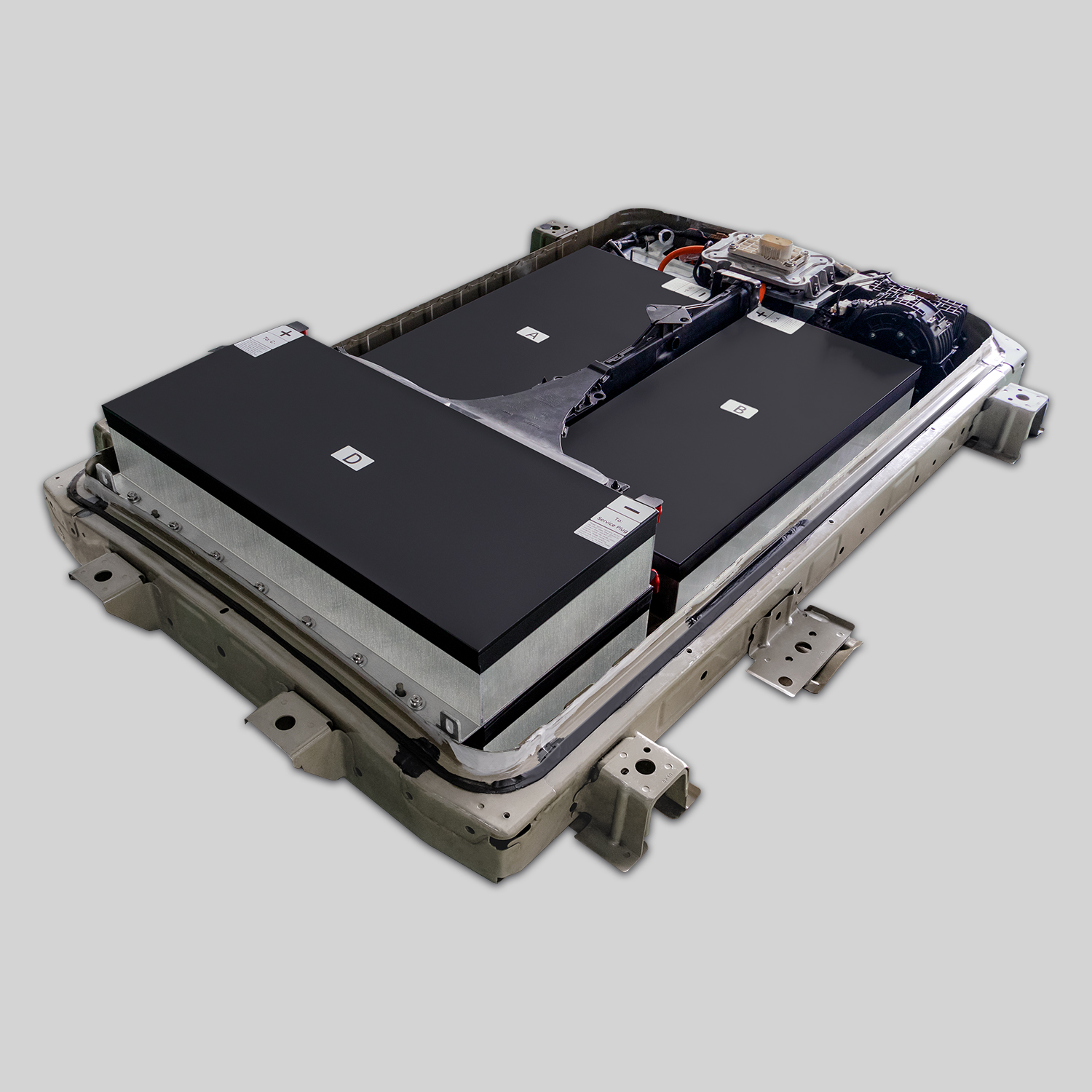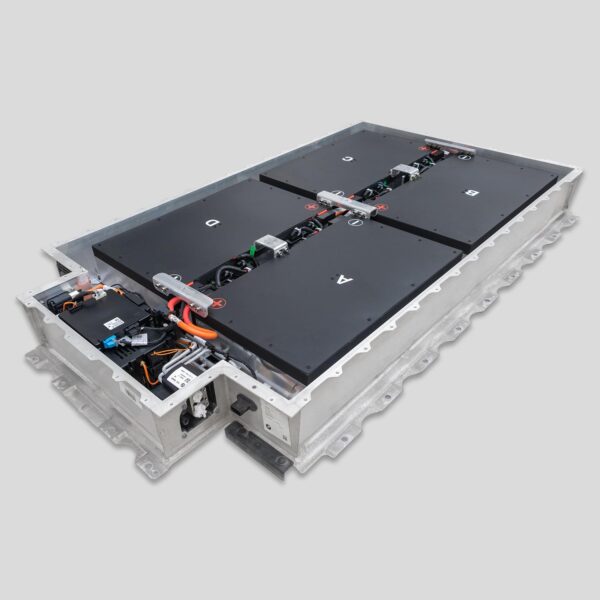
BMW i3 Battery BMS Upgrade: Shop Installation Process – The Seamless Path to 200+ Miles
A customer rolls into your bay with a 2015 BMW i3. The range is a pathetic 35 miles. The dealer has quoted $22,000 for a “remanufactured” battery that offers no improvement over the failing original. The customer asks you: “Can’t we just upgrade the software? Or maybe swap the BMS (Battery Management System) to unlock more power?”
As a professional EV shop in 2026, you know the technical truth: You cannot simply “upgrade” the BMS on a dying battery pack. The BMS is the brain, but the cells are the muscle. If the muscle is atrophied (degraded), a smarter brain won’t make it run faster. In fact, trying to flash new software onto old, imbalanced cells can trigger critical safety faults.
The real solution isn’t a software patch; it’s a complete system replacement where a modern, advanced BMS comes pre-integrated with brand-new high-capacity cells.
Why is a standalone BMS upgrade impossible and dangerous?
How do you install a complete battery upgrade that includes a next-gen BMS without complex coding nightmares?
And how can this specific installation process become your shop’s most profitable, same-day service?
At CNS BATTERY, we have streamlined the evolution of the BMW i3. We don’t sell “BMS upgrades”; we sell complete battery systems featuring state-of-the-art BMS technology that unlocks double the range. This guide details the professional installation process for our integrated upgrades, debunks the myth of software-only fixes, and shows you how to transform a stranded i3 into a 200-mile powerhouse in under 6 hours.
The Myth of the “Standalone BMS Upgrade”
Before diving into the installation, it is crucial to understand why swapping only the BMS board is not a viable service option for aging i3s.
- Hardware Mismatch: The OEM BMS is calibrated specifically for the voltage curves and internal resistance of the original 60 Ah or 94 Ah cells. It cannot accurately manage higher capacity cells (e.g., 150 Ah) without fundamental hardware changes.
- Safety Protocols: An advanced BMS on old cells will detect degradation immediately and limit power or refuse to charge to prevent thermal runaway. You cannot “trick” the safety logic.
- Sealed Integration: In the BMW i3, the BMS is deeply integrated into the battery pack assembly, connected to every cell module via fragile sense wires. Removing it requires opening the sealed high-voltage case, voiding all safety ratings and risking moisture intrusion.
The Reality: The only way to get a “BMS upgrade” benefit is to install a complete new battery pack that comes with a modern, sophisticated BMS designed for today’s energy density.
The CNS BATTERY Solution: Integrated Next-Gen BMS
Our BMW i3 Series Battery upgrades are not just bigger batteries; they are smarter systems. Each unit arrives with a proprietary, advanced BMS that:
- Communicates Seamlessly: Speaks the native BMW CAN bus language, requiring no complex VIN coding or hacking.
- Manages High Capacity: Precisely balances up to 180 Ah of energy, something the 2014-era OEM BMS could never handle.
- Enhances Safety: Features faster thermal monitoring and insulation checks than the original factory unit.
Step-by-Step Shop Installation Process
Installing a CNS BATTERY upgrade is a straightforward, plug-and-play procedure designed for efficiency and safety.
Phase 1: Preparation & Safety (30 Minutes)
- Vehicle Intake: Park the i3 on a level lift. Engage parking brake.
- HV Depower:
- Disconnect the 12V auxiliary battery negative terminal.
- Remove the High Voltage Service Plug (MSD) from the rear seat area.
- Wait 10 minutes for capacitor discharge.
- Verify 0V: Use a CAT III multimeter to confirm zero voltage at the main HV disconnect points.
- PPE Up: Technicians must wear Class 00 insulated gloves and arc-flash face shields.
Phase 2: Removal of Old Pack (1.5 Hours)
- Undercarriage Access: Remove the plastic underbody panels shielding the battery.
- Disconnect Lines:
- Unplug the main orange HV connectors.
- Disconnect the low-voltage communication harness.
- Drain the coolant from the battery cooling loop into approved waste containers. Disconnect cooling lines.
- Support & Unbolt: Place a hydraulic transmission jack under the battery pack. Remove the mounting bolts (typically 4-6 main structural bolts).
- Lower & Remove: Carefully lower the old pack and move it to a quarantine area for recycling.
Phase 3: Installation of CNS BATTERY Upgrade (1.5 Hours)
- Prep New Unit: Inspect the new CNS BATTERY pack. Verify shipping locks are removed and terminals are clean.
- Lift & Position: Raise the new pack into position using the transmission jack. Align mounting points precisely.
- Secure Mounts: Install and torque mounting bolts to OEM specifications (use a calibrated torque wrench).
- Reconnect:
- Connect the main HV orange plugs (listen for the solid “click”).
- Plug in the low-voltage BMS communication harness.
- Connect cooling lines.
Phase 4: Fluid Fill & Bleeding (45 Minutes)
- Vacuum Fill: This is critical. Use a professional vacuum filler to pull a vacuum on the cooling loop, then fill with fresh, low-conductivity EV coolant.
- Bleed Air: Run the electric coolant pump (using a scan tool or ignition cycle) to purge air bubbles. Top off as needed. Air pockets can cause local overheating and BMS faults.
Phase 5: Initialization & Verification (45 Minutes)
- Repower: Reinstall the HV Service Plug. Reconnect the 12V battery.
- System Wake-Up: Turn the vehicle to “Ready.” The new BMS will handshake with the vehicle’s central computer.
- Diagnostic Scan: Connect your professional scan tool (ISTA, Autel, etc.).
- No Coding Required: Our BMS is pre-configured. You typically do not need to code the VIN or perform complex adaptations.
- Clear History: Clear any old fault codes stored in the chassis modules from the previous dead battery.
- Verify Data: Check live data. You should see:
- State of Charge (SOC): ~50-70% (shipping state).
- Cell Deviation: <0.01V (perfect balance).
- Total Capacity: Recognized as the upgraded amount (e.g., 150 Ah).
- Test Drive: Perform a short road test to verify regenerative braking, acceleration, and no warning lights.
Why Shops Love This Process
- Speed: Total job time is 4–6 hours. Most shops can complete this in a single day.
- Simplicity: No internal pack disassembly, no cell matching, no risky BMS soldering.
- Zero Comebacks: The new BMS and cells are perfectly matched. No imbalance codes, no insulation faults.
- High Margin: Charge $8,000–$14,000 for parts and labor. Compare this to the low margins of hourly diagnostic work.
- Customer Delight: You aren’t just fixing a car; you are giving them 130–200+ miles of range.
Real Story: From “Software Confusion” to “Hardware Hero”
“Elite EV Techs” in Denver had a customer insisting on a “BMS flash” to get more range. The owner explained that the old cells were the bottleneck. They proposed the CNS BATTERY upgrade instead.
“We followed the install guide step-by-step,” says the lead tech. “The physical swap took 3 hours. The coolant fill took 30 mins. We plugged in our scanner, and the car instantly recognized the new 150 Ah pack. No coding headaches. The customer drove out with 170 miles of range, paying $11,500 total. He said it felt like buying a brand-new car. That’s the power of a proper integrated upgrade.”
Stop Selling Myths, Start Installing Solutions
The term “BMW i3 Battery BMS Upgrade” is often misunderstood. Don’t waste time trying to hack old software. The real upgrade is a complete hardware transformation that brings a modern BMS and high-capacity cells to your customer’s driveway.
Master this installation process, and you will become the go-to EV specialist in your region.
Ready to offer the ultimate i3 upgrade?
Contact CNS BATTERY today to become a certified installation partner. Get access to our detailed workshop manuals, video training, and wholesale pricing. Start turning dead i3s into high-range profits today.
👉 Become a Certified Installation Partner
Frequently Asked Questions (FAQ) for Shops
1. Do I need to code the BMS after installing a CNS BATTERY upgrade?
Generally, no. Our upgrades are designed with plug-and-play compatibility. The BMS communicates native BMW protocols, and the vehicle typically recognizes the new capacity automatically. In rare cases, a simple “battery replacement” service function reset via ISTA may be required, but no complex VIN coding is needed.
2. Can I just swap the BMS board on the old battery to get more range?
No. The BMS is calibrated for the specific chemistry and capacity of the original cells. Swapping the board alone will not increase range and will likely cause fault codes. Range increases only come from replacing the cells along with the BMS.
3. How long does the full installation take?
For a trained technician with the right tools (lift, transmission jack, vacuum filler), the entire process takes 4 to 6 hours. This allows for same-day delivery to the customer.
4. What special tools are required?
You need standard automotive lifts, a transmission jack (critical for safe battery handling), a vacuum coolant filler, basic hand tools, and a professional OBDII scan tool for initialization and bleeding the cooling system.
5. Is the new BMS compatible with all i3 models (60Ah, 94Ah, 120Ah)?
Yes. Our upgrades are engineered to fit all BMW i3 model years from 2014 to 2021. The mounting points and connectors are identical to OEM, ensuring a perfect fit regardless of the original battery size.
6. What warranty do I offer the customer?
As a partner, you pass through our comprehensive 3–5 Year Warranty covering the battery cells, the BMS electronics, and overall performance. This gives your customers confidence far superior to used OEM replacements.
7. What happens to the old battery and BMS?
The old pack must be treated as hazardous waste. You should arrange for certified recycling through your local hazardous waste disposal provider. CNS BATTERY can often assist with logistics or provide guidance on compliant disposal partners.