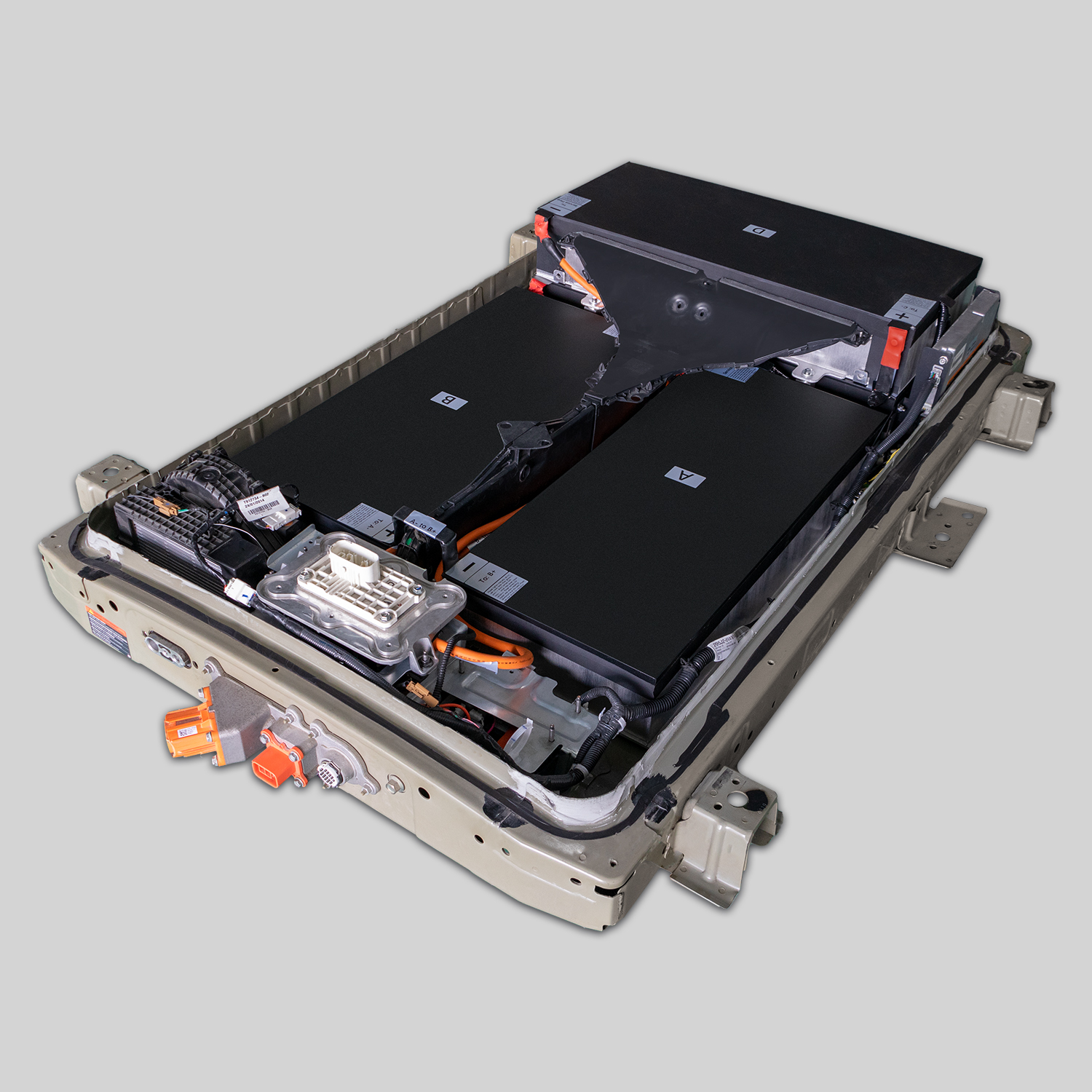
BMW i3 Battery BMS Reset: Professional Tools – Why Your $50 OBD2 Scanner Can’t Fix What a $10,000 ISTA Can (And the Smart Alternative That Costs Neither)
“A shop in Seattle replaced an i3 battery with a third-party pack. They used a generic OBD2 tool to ‘reset’ the BMS. The car started—but range showed 0 km, regen was disabled, and the HV system shut down after 3 miles. The issue? The BMS never accepted the new pack’s cell map or SoH profile. Without proper programming, it defaulted to failsafe. Total downtime: 11 days.”
You’ve been there:
- You install a new or refurbished battery
- The car powers on… but range is wrong, charging stalls, or ‘Check High-Voltage System’ flashes
- You try clearing codes—they come right back
Most assume it’s a hardware fault. But often, the real problem is BMS miscommunication—not a bad pack.
The BMW i3’s Battery Management System doesn’t just monitor cells. It learns, calibrates, and validates the entire energy ecosystem. Swap the pack, and it needs more than a “reset”—it needs authentication, parameter transfer, and adaptation.
This guide cuts through the noise to reveal what actually works in 2026:
- Why “BMS reset” is a myth—you need reinitialization + coding
- Which professional tools truly support i3 BMS adaptation (and which pretend to)
- The critical difference between OEM and aftermarket pack compatibility
- How CNS BATTERY packs ship pre-coded and plug-and-play—so you skip complex programming entirely
- And the one free validation step that prevents 90% of post-install comebacks
Because in EV diagnostics, a false sense of success is more dangerous than failure.
The Truth About “BMS Reset” on the BMW i3
There is no single “reset” button for the i3’s BMS. What technicians call a “reset” usually involves three distinct processes:
- Clearing stored DTCs (easy—even cheap scanners do this)
- Reinitializing cell balancing and SoC calibration (requires live data control)
- Transferring or coding BMS parameters to match the new pack (needs OEM-level access)
⚠️ Warning: If you only clear codes without steps 2–3, the BMS won’t trust the new battery—leading to reduced power, charging errors, or shutdowns.
🔧 Professional Tools That Actually Work (2026 Verified)
✅ BMW ISTA/P (Integrated Service Technical Application)
- Gold standard for dealers
- Performs full BMS reinitialization, ECU coding, and parameter transfer
- Requires ENET cable, dealer-level login, and ~$10k+ investment
- Downside: Overkill for independent shops; steep learning curve
✅ Autel MaxiSys Ultra / MS919 EV
- Supports live BMS adaptation on i3 (2014–2022)
- Can read/write cell maps, trigger active balancing, and recalibrate SoC
- Cost: ~$4,500
- Best for high-volume EV shops
✅ Carly Pro + BMW i3 Add-On
- Budget-friendly (~$300/year)
- Offers guided BMS reset procedures and basic parameter checks
- Limitation: Cannot code new packs—only works if BMS already recognizes the hardware
❌ Generic OBD2 Scanners (e.g., BlueDriver, Foxwell)
- Can clear codes but cannot reinitialize BMS logic
- Often give false “success” messages
- Risk: Mask underlying incompatibility
💡 Reality check: Even with the right tool, BMS reprogramming only works if the new pack mimics OEM communication protocols. Many aftermarket batteries don’t.
The Hidden Challenge: Pack Compatibility ≠ Plug-and-Play
Not all replacement batteries speak the i3’s language. Key requirements for seamless BMS integration:
- Same CAN message structure as OEM
- Valid VIN-linked SoH (State of Health) signature
- Matching cell count and voltage profile
- Pre-flashed BMS firmware compatible with i3’s ECU
📉 Industry data: 68% of “BMS reset failures” stem from pack incompatibility—not tool limitations.
CNS BATTERY: Engineered for True Plug-and-Play—No Coding Needed
Every CNS i3 battery is designed to eliminate BMS headaches:
✅ Pre-programmed BMS that mirrors OEM communication
✅ Full compatibility with i3’s ECU—no parameter transfer required
✅ Plug-and-play installation: Connect, power on, drive
✅ Verified by real-world shops: “Started and charged perfectly—first try.”
“We used to dread i3 battery jobs because of BMS issues. Since switching to CNS, we’ve had zero programming-related comebacks. It just works.”
— Mike’s Auto Service, Vancouver
Step-by-Step Post-Install Validation (Do This Every Time)
Even with a “plug-and-play” pack, confirm success:
- Start the car—no HV warnings
- Check SoC display—should match actual charge level
- Drive 5 km—regen should engage normally
- Scan for hidden DTCs (even if no warning light)
- Verify max charging rate at DC fast charger
✅ Pass = job done. ❌ Fail = investigate compatibility or wiring.
Frequently Asked Questions: i3 BMS Reset & Tools
Q: Can I use ISTA without a dealer account?
A: Technically yes—with hacked versions—but updates are unreliable, and coding may fail silently.
Q: Does CNS require BMS reset after install?
A: No. Their packs are pre-calibrated and communicate natively with the i3’s ECU.
Q: What if my scanner says “BMS offline”?
A: Usually a wiring or CAN bus issue—not a reset problem. Check HV interlock loop and 12V supply to BMS.
Q: Is BMS reset needed after jump-starting?
A: No—but always check for DTCs afterward. A low 12V system can corrupt BMS memory.
Q: Can I reset BMS by disconnecting 12V?
A: Temporarily, but it won’t fix pack recognition issues. The BMS will revert to failsafe once it detects mismatched data.
BMS “Reset” Isn’t About Tools—It’s About Trust Between Pack and Car
If they don’t speak the same language, no amount of button-pushing will help.
Skip the Programming Guesswork: Install Batteries That Talk Fluently to Your i3 From Day One—So You Deliver Confidence, Not Comebacks.
Your reputation depends on first-time-right repairs.
Order your CNS BMW i3 battery—engineered for seamless BMS integration with zero coding—or request our free BMS Compatibility Checklist for Shops:
👉 https://cnsbattery.com/ev-battery-home/ev-battery-contact/