BMW i3 Battery BMS Reset: Cost 2026 – The $300 Band-Aid on a $20,000 Wound
Your BMW i3 dashboard is a chaotic sea of red warnings. “Drivetrain Malfunction,” “Charge Power Reduced,” and the dreaded “High Voltage Battery System Fault” flash in unison. Your range estimator, once a reliable guide, now jumps erratically from 40 miles to 5 miles in seconds.
A quick search suggests a simple fix: Reset the Battery Management System (BMS). You find a local shop or an independent technician who offers a “BMS Reset” or “Cell Balancing Service” for $250 to $400. It sounds like a miracle. “Maybe it’s just a software glitch?” you hope. “Maybe I can avoid that massive replacement bill?”
Stop. Take a deep breath.
In 2026, with most BMW i3s nearing or passing the decade mark, a BMS fault is rarely a simple software bug. It is almost always a symptom of physical hardware failure. Resetting the BMS on a degraded battery is like resetting the check engine light on a car with a blown head gasket. The light might go off for an hour, but the engine will still destroy itself.
Why do BMS resets fail so quickly on older i3s?
Is paying for a reset just throwing good money after bad?
And if your BMS is screaming for help, is there a solution that fixes the root cause while doubling your range?
At CNS BATTERY, we have performed thousands of diagnostics on failing i3 packs. We know that while a BMS reset has a specific time and place, selling it as a cure for a dying battery is a disservice to the owner. This guide breaks down the real cost of BMS resets in 2026, explains why they are often temporary illusions, and reveals why upgrading to a modern high-capacity system is the only permanent path to reliability.
The Illusion of the Reset: What Actually Happens?
When a technician performs a BMS Reset, they are using specialized software (like BMW ISTA) to clear fault codes and force the system to re-learn cell voltages.
The Process
- Clear Codes: The error messages vanish from the dashboard.
- Force Balance: The system attempts to equalize cell voltages by draining higher cells to match the lowest ones.
- Re-Calibration: The range estimator is reset to calculate based on current conditions.
The Temporary Relief
For about 10% of cases—usually where the issue was a minor sensor glitch or a single deep-discharge event—the car might run normally for a few weeks.
But for 90% of aging i3s, the result is predictable:
- The codes return within days or even hours.
- The range estimate corrects itself to the true (low) capacity, often shocking the owner with how little range is actually left.
- The underlying cell imbalance remains because software cannot fix chemical degradation.
The Real Cost: Why That $300 Is a Waste
Let’s look at the financial reality of chasing a BMS reset in 2026.
Scenario A: The Reset Loop
- Cost: $300 for the reset.
- Outcome: Car runs for 2 weeks. Codes return. Range is still 35 miles.
- Next Step: You pay another $300 for a second reset? Or maybe $1,500 for a module swap?
- Total Spent: $600–$2,000+ with zero improvement in range or long-term reliability. You are just delaying the inevitable.
Scenario B: The Hidden Damage
Sometimes, a reset forces the BMS to ignore a critical safety limit. You drive the car, thinking it’s fixed. But the weak cells continue to degrade rapidly under load. Weeks later, the battery suffers a catastrophic internal short or thermal event.
- Result: A battery that might have been salvageable for an upgrade is now destroyed, requiring a full scrap and replacement.
- Cost: $20,000+ for a dealer replacement vs. $8,000–$14,000 for an upgrade if caught earlier.
The Verdict: A BMS reset is a diagnostic tool, not a repair. Paying for it as a “fix” is a gamble with terrible odds.
The Hard Truth: Software Can’t Fix Chemistry
Your BMW i3 battery is a chemical device. Over 8-10 years, the lithium-ion cells physically degrade.
- Capacity Loss: The active material inside the cells breaks down. No software reset can rebuild this material.
- Internal Resistance: As cells age, resistance increases, generating more heat and reducing efficiency. A reset cannot lower physical resistance.
- Cell Imbalance: When one cell group degrades faster than others, it creates a bottleneck. The BMS can try to balance them, but if the capacity gap is too wide (common in old packs), balancing is impossible. The weak cell hits 0% instantly, shutting down the whole pack.
The Reality: If your BMS is faulting, it is doing its job: telling you the hardware is failing. Silencing the alarm doesn’t fix the fire.
The CNS BATTERY Solution: Replace the Brain AND the Body
If your BMS is faulty, the most logical step is to replace the entire system with one that is smart, robust, and paired with healthy cells.
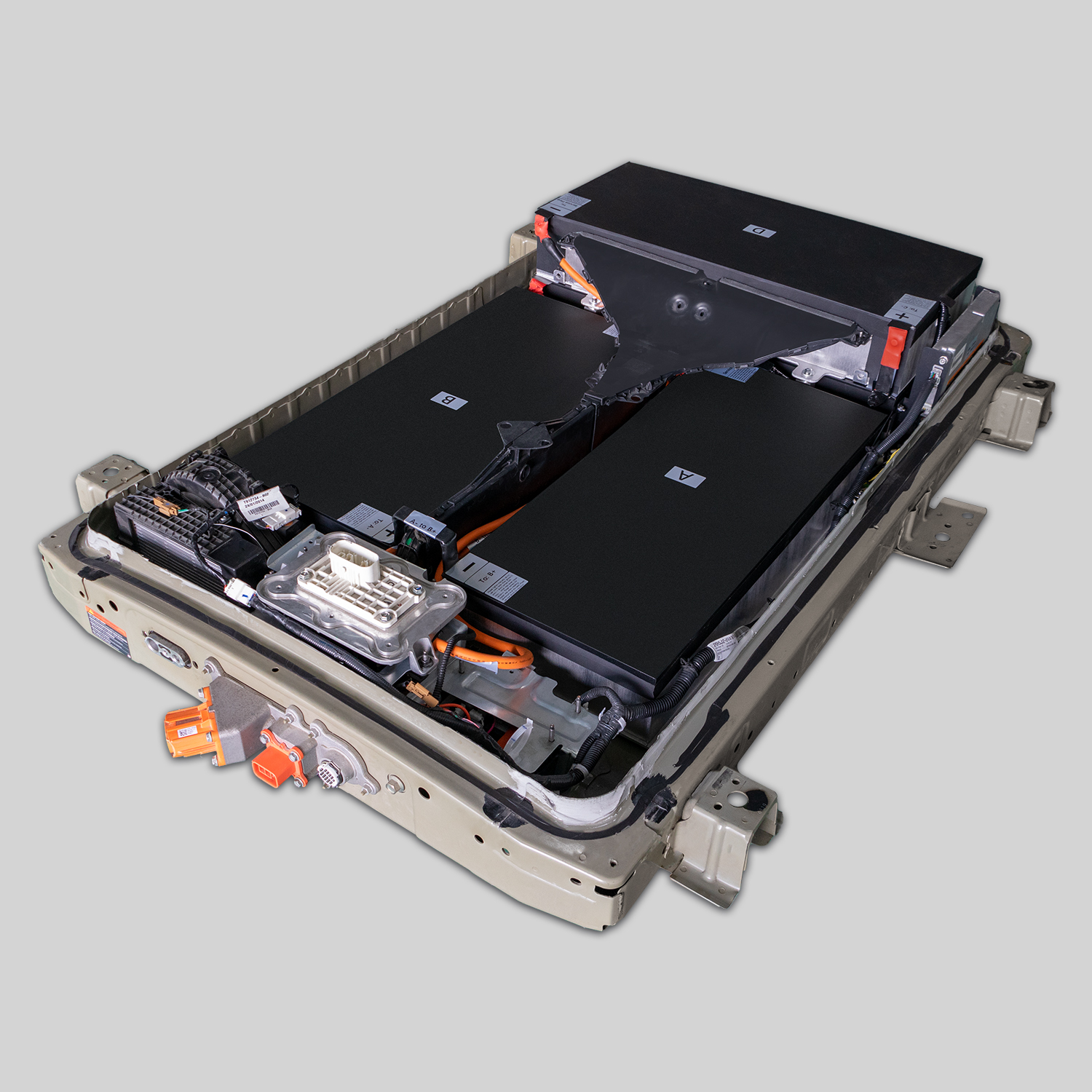
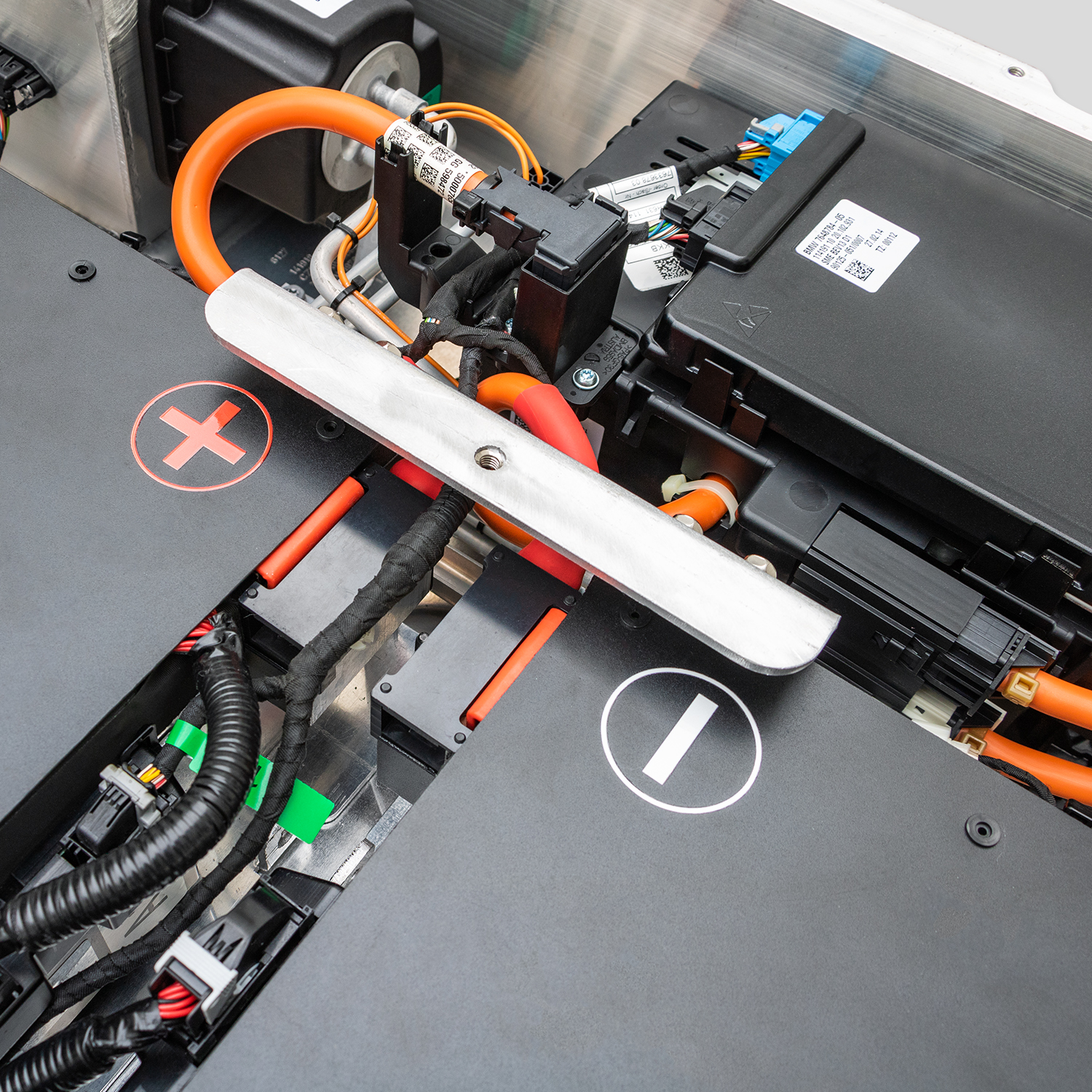
At CNS BATTERY, our BMW i3 Series Battery upgrades include a brand-new, state-of-the-art Battery Management System perfectly calibrated to our high-capacity cells.
Why Upgrading Beats Resetting
- Zero Fault Codes: Our new BMS units are free of the glitches, sensor drift, and corruption that plague 10-year-old factory units.
- Perfect Cell Matching: Our Grade-A cells are matched to within millivolts before assembly. The new BMS doesn’t need to “balance” constantly because the pack is already perfect.
- Advanced Diagnostics: Our modern BMS communicates faster and more accurately, providing precise range estimates and smoother power delivery.
- Double the Range: While solving your BMS nightmare, you upgrade from a failing 60 Ah or 94 Ah pack to a 120 Ah to 180 Ah equivalent, giving you 130–200+ miles of range.
- Cost Efficiency:
- Repeated BMS Resets/Repairs: $500–$3,000 (Temporary fixes, old cells remain).
- Dealership OEM Replacement: $20,000+.
- CNS BATTERY Full Upgrade: $8,000 – $14,000 USD. You get a brand-new battery, a new BMS, new sensors, and double the range for half the dealer price.
Real Story: From “Reset Addiction” to “Flawless Logic”
Meet Elena, a 2016 i3 owner. Her car was stuck in a loop of BMS faults. She paid a specialist $350 to reset the system three times in six months. Each time, the car ran for a few weeks before the faults returned, and her range dropped from 50 miles to 30. “I was throwing money away,” Elena admits. “I thought I was saving up for a new battery, but I was just burning cash on resets.”
Elena contacted CNS BATTERY. We installed a 160 Ah upgrade. “It’s been eight months, and not a single warning light,” Elena says. “The new BMS communicates perfectly with the new cells. I have 190 miles of range, and the car feels sharper than ever. I wish I had skipped the resets and gone straight to the upgrade. It would have saved me $1,000 and months of stress.”
Stop Patching, Start Upgrading
A BMW i3 BMS reset in 2026 is rarely a solution; it’s a delay tactic. If your battery management system is faulting, it is a clear signal that your current battery ecosystem is compromised.
Don’t waste money on software tricks for hardware failures. Take the smart path. Replace the entire system with a modern, integrated solution that guarantees performance, accuracy, and longevity.
Is your BMW i3 plagued by BMS errors?
Stop throwing money at temporary fixes. Contact CNS BATTERY today for a professional diagnostic. We’ll tell you if your BMS is the victim of a dying pack and show you how our BMW i3 Series Battery upgrades can eliminate BMS faults forever while doubling your range.
👉 Get Your BMS Diagnostic & Upgrade Quote
Frequently Asked Questions (FAQ)
1. How much does a BMW i3 BMS reset cost in 2026?
A professional BMS reset or balancing service typically costs between $250 and $400 USD. However, this is often a temporary measure that does not address underlying cell degradation, leading to recurring faults.
2. Will a BMS reset fix my low range issues?
No. A reset may recalibrate the display to show your true (lower) range, but it cannot restore lost capacity. If your cells are chemically degraded, no software update can rebuild them.
3. Why do my fault codes come back after a reset?
Because the root cause is physical hardware failure (degraded cells, high resistance, or sensor drift), not a software bug. The BMS detects the hardware issue immediately upon driving and triggers the fault again to protect the vehicle.
4. Is it worth repairing the BMS unit itself?
Rarely. If the BMS computer is truly dead, replacing it costs $1,500–$2,500. But if the cells are degraded (which they usually are), a new BMS will just detect the bad cells and shut down again. A full pack upgrade is the only reliable fix.
5. Does a CNS BATTERY upgrade include a new BMS?
Yes. Every BMW i3 Series Battery upgrade comes with a completely new, modern Battery Management System calibrated specifically for our high-capacity cells. This eliminates all old BMS-related faults and sensor errors.
6. Can I reset the BMS myself?
You can clear codes with an OBDII scanner, but you cannot perform a proper cell balancing or system calibration without dealer-level software (ISTA) and expertise. Improper resets can lead to unsafe operating conditions.
7. How long does a full battery upgrade take compared to a BMS reset?
A BMS reset takes 1-2 hours but offers no long-term solution. A CNS BATTERY full upgrade takes 1-2 days but provides a brand-new system with a comprehensive warranty, ensuring you never face the same BMS issue again.