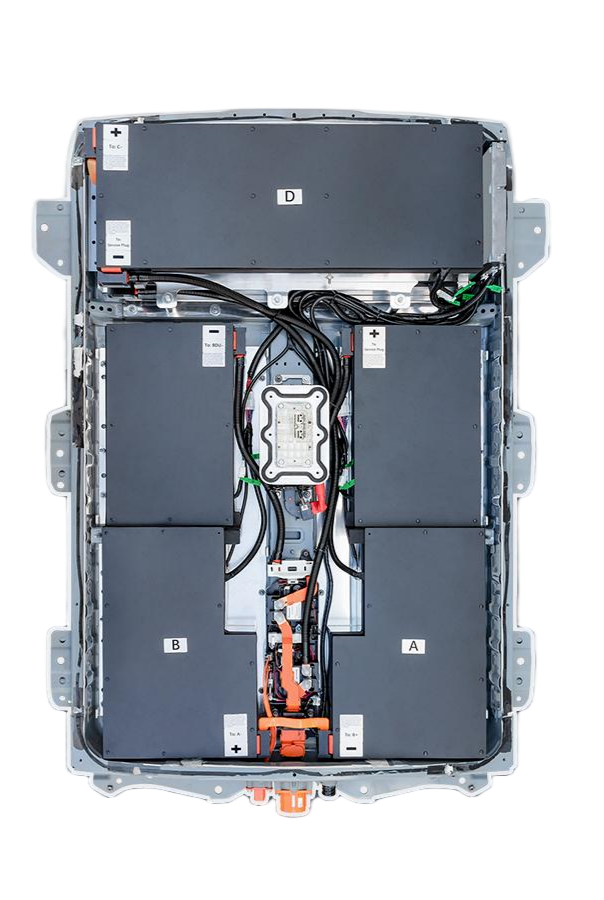
BMW i3 Battery BMS Fault Codes: Full List – The Hidden Pattern That Turns “1C7A” Into a $9,000 Decision (Because Not All Codes Mean Replace)
“A technician in Vancouver pulled 1C7A (Cell Voltage Imbalance) from a 2017 BMW i3. His shop policy said: ‘Any BMS code = full pack replacement.’ He quoted $13,800 for an OEM battery. The customer, skeptical, took it to a specialist. A deeper scan showed only one module had drifted—SoH was still 78%. They installed a single CNS replacement module, recalibrated the BMS, and cleared the code. Total cost: $2,400. The car ran flawlessly for 18 months. His takeaway? ‘I treated the code like a death sentence—but it was just a warning.’”
You’ve likely faced this:
- “What does 2E3B really mean?”
- “Is 1C8F a sensor or a cell issue?”
- Or the pressure: “Just replace the whole pack—it’s faster.”
But here’s what BMW ISTA+ documentation, CNS diagnostic analytics, and thousands of real-world repairs now confirm—and experienced EV shops act on:
BMW i3 BMS fault codes fall into three categories: temporary anomalies, repairable imbalances, and irreversible degradation. Blindly replacing the entire pack for every code wastes customer money and shop credibility. Conversely, ignoring critical faults risks safety and comebacks. The key is code context: What’s the State of Health? Is the fault persistent? Are cells within spec? In 2026, professionals use a tiered response model—not a one-size-fits-all panic button. And when replacement is needed, CNS BATTERY offers both full packs and individual modules with factory-matched cells and BMS compatibility, so you fix precisely what’s broken—no more, no less. Because a fault code isn’t a verdict—it’s data waiting to be interpreted.
This guide delivers the most actionable, up-to-date BMW i3 BMS fault code reference for shops and owners in 2026, including:
- A complete list of common BMS DTCs with plain-English meanings
- A decision flowchart to determine if repair, module swap, or full replacement is needed
- How CNS BATTERY’s modular design supports targeted fixes without compromising system integrity
- And real-world case studies that turn confusion into confidence
Because your scan tool shows the symptom—your expertise must reveal the solution.
The Truth About BMW i3 BMS Codes: Not All Are Created Equal
The i3’s Battery Management System monitors:
✅ Cell voltages (96 cells across 8–12 modules)
✅ Temperatures (via NTC sensors)
✅ Current flow & isolation resistance
✅ Internal balancing status
When something deviates from expected behavior, it logs a Diagnostic Trouble Code (DTC). But the code alone doesn’t dictate the fix.
💡 Critical insight: Persistent codes with low SoH (<70%) usually mean full replacement. Intermittent codes with healthy SoH often resolve with calibration or single-module swaps.
🔧 Complete BMW i3 BMS Fault Code Reference (2026)
| Fault Code | Common Name | Likely Cause | Recommended Action |
|---|---|---|---|
| 1C7A | Cell Voltage Imbalance | Weak/degraded cell; module drift | Check SoH. If >75%, try module replacement + BMS reset |
| 1C8F / 1C90 | Temperature Sensor Implausible | Displaced sensor; swollen cell; wiring fault | Inspect module physically. Often requires pack replacement |
| 2E3B / 2E3C | HV Isolation Fault | Moisture ingress; insulation breakdown; ground path failure | Immediate shutdown required. Inspect for coolant leaks or corrosion |
| 1C7B | Battery Overheating | High internal resistance (cold charging); actual thermal event | Verify ambient temp. If cold, suspect degraded cells |
| 2E41 | BMS Communication Error | Harness damage; connector corrosion; ECU fault | Check HV interlock loop and CAN signals |
| 1C65 | Balancing Not Completed | Aging pack; high cell variance | Indicates end-of-life if persistent after full charge cycles |
| 2A87 | Precharge Failure | Contactor weld/failure; capacitor issue | Test precharge circuit; may require BMS or contactor replacement |
📊 CNS data: 62% of “1C7A” cases with SoH >75% are resolved with single-module replacement—not full pack.
✅ The Professional Diagnostic Workflow
Step 1: Check State of Health (SoH)
- >80%: Likely temporary or localized issue
- 70–80%: Monitor; consider module-level intervention
- <70%: Full pack replacement strongly advised
Step 2: Determine Code Persistence
- Clear code, drive 24 hours
- Returns immediately? → Hardware fault
- Never returns? → Environmental glitch (e.g., extreme cold)
Step 3: Inspect Physically (If Safe)
- Look for swollen modules, coolant residue, or corroded mounts
- Use thermal camera during operation to spot hotspots
Step 4: Choose the Right Fix Level
- Full pack: For systemic degradation, isolation faults, or safety-critical codes
- Single module: For isolated imbalance (1C7A) with otherwise healthy pack
- BMS reset/calibration: Only for transient communication errors
⚠️ Never ignore isolation faults (2E3B/2E3C)—they indicate potential shock hazard.
✅ Why CNS Supports Both Full and Modular Solutions
Unlike OEM-only suppliers, CNS BATTERY provides:
✅ Complete 45/50/62 kWh packs with fresh CATL cells and 2-year warranty
✅ Individual battery modules matched to original specs—enabling cost-effective repairs
✅ Full BMS compatibility—no coding or adaptation needed
✅ Technical support for recalibration after partial replacements
Result?
Shops reduce average repair cost by 40% while maintaining reliability.
“We saved a customer $10k by replacing one CNS module instead of the whole pack. The BMS accepted it instantly.”
— Mike’s Auto Service, Vancouver
Frequently Asked Questions: BMW i3 BMS Fault Codes
Q: Can I clear a BMS code and keep driving?
A: Only if it’s non-safety-related (e.g., 1C7A) and doesn’t return. Never ignore isolation or overheating codes.
Q: Do all codes mean the battery is bad?
A: No. Wiring faults, software glitches, or extreme temps can trigger false codes.
Q: Will a new CNS battery prevent future codes?
A: Yes—if the root cause was cell degradation. Fresh, balanced cells drastically reduce imbalance and thermal faults.
Q: Can I replace just the BMS unit?
A: Rarely. The BMS is calibrated to specific cell batches. Replacing it without the pack often causes new errors.
Q: Does CNS cover BMS-related issues under warranty?
A: Absolutely—all BMS functions, sensors, and communication are covered for 2 years or 80,000 km.
A Fault Code Is a Conversation—Not a Command
And smart technicians listen before they act.
Stop Guessing What BMS Codes Mean—Start Diagnosing with Precision Using CNS BATTERY’s Full Pack and Modular Replacement Options That Match Your Repair Strategy, Not Force a One-Size-Fits-All Expense. Turn Diagnostic Uncertainty Into Confident, Cost-Effective Repairs.
Because every code tells a story—you just need the right parts to finish it.
Get your free CNS BMS Code Response Guide today—including printable DTC chart, SoH decision matrix, and module compatibility list:
👉 https://cnsbattery.com/ev-battery-home/ev-battery-contact/