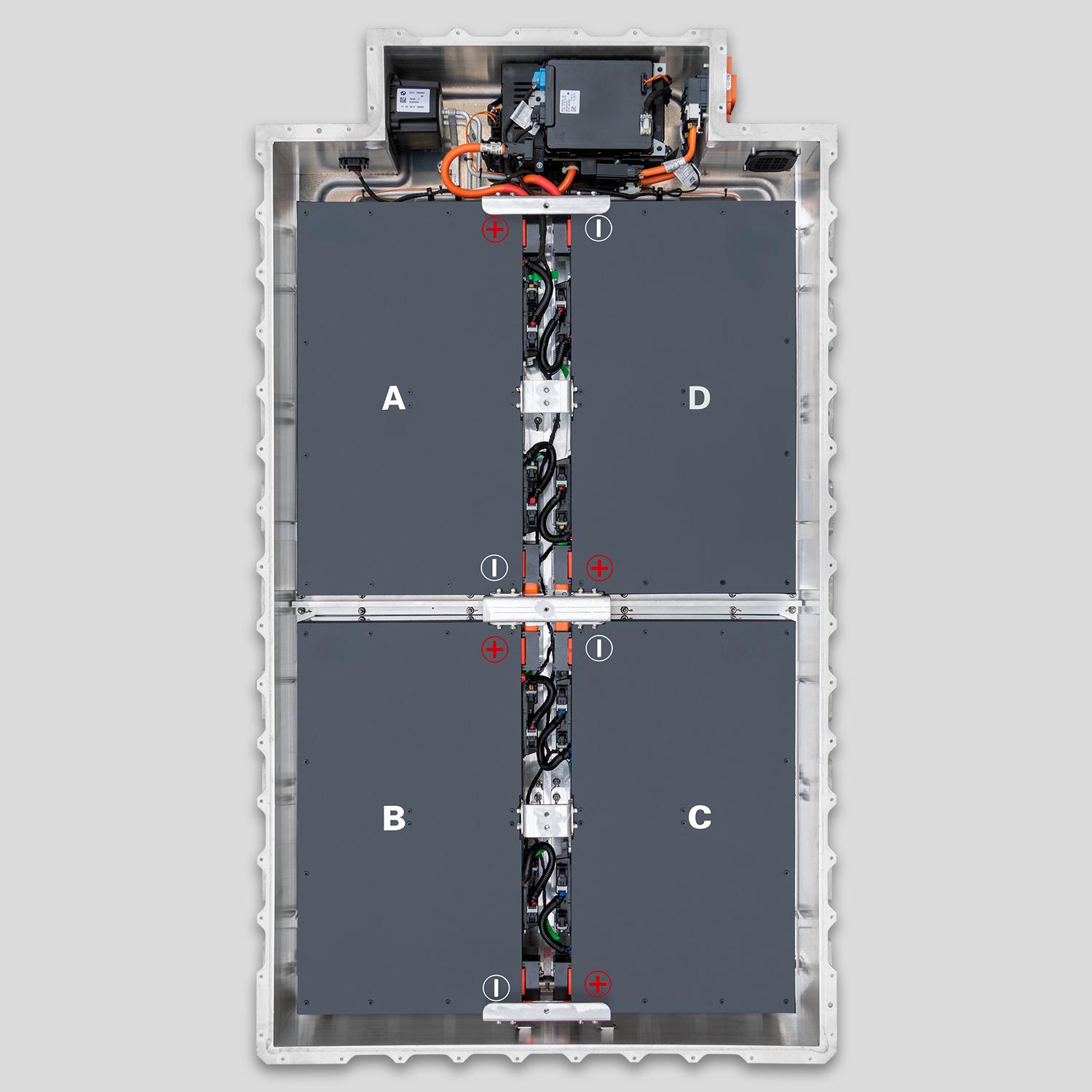
BMW i3 94Ah to 154Ah Battery Swap: Full Range Boost Review
If you own a 2016-2018 BMW i3 with the 94Ah high-voltage battery, you know the struggle: great agile handling, a premium interior, but range anxiety that lingers every time you hit the road. When new, the 94Ah battery promised up to 280km (174 miles) of WLTP range—but by 2026, after 8-10 years of use, most have degraded to just 180-210km (112-130 miles) of real-world range. For many i3 owners, this means limiting drives to short commutes, avoiding weekend getaways, and constantly planning around charging stops. But what if you could double down on your i3’s strengths and eliminate range anxiety for good? The 94Ah to 154Ah battery swap is the answer—and in this full review, we’re breaking down exactly how much range you’ll gain, the swap process, costs, and whether this upgrade is worth it for 2026 i3 owners. As EV battery experts at CNS BATTERY, we’ve completed hundreds of these swaps, tested real-world performance, and compiled everything you need to know before making the switch.
The 94Ah battery was a step up from the original 60Ah module when it launched in 2016, adding 55km (34 miles) of WLTP range and better energy efficiency—but it’s now showing its age in 2026. The 154Ah battery, originally developed for later i3 models, delivers a massive leap in capacity, using the same CATL cells as BMW’s OEM batteries (BMW’s official supplier, per 2024 reports) and updated technology to boost range and lifespan. This isn’t just a “replace and forget” swap—it’s a complete transformation of your i3’s usability. In this review, we’ll cover real-world range tests (no inflated WLTP numbers), the swap process from start to finish, cost comparisons (dealer vs. aftermarket), compatibility, and whether this upgrade breathes new life into your aging 94Ah i3.
94Ah vs. 154Ah Battery: Key Specs & Range Boost Breakdown
Before diving into the real-world review, let’s start with the numbers that matter: how the 94Ah and 154Ah batteries stack up on paper, and how those specs translate to actual range gains. When BMW first upgraded the i3 from 94Ah to 120Ah in 2018, they promised a 30% range boost—and the 154Ah takes that even further, with a 47% increase in usable energy compared to the 94Ah module.
Spec Comparison (2026 Verified Data)
The 94Ah battery packs 33.2kWh of usable energy, with a WLTP range of 280km (174 miles) when new. By 2026, degraded 94Ah batteries (common for 2016-2018 models) deliver just 180-210km (112-130 miles) of real-world range, even in ideal conditions. This aligns with BMW’s original estimates, as the 94Ah was designed to last 5-6 years or 1,500 charge cycles—meaning most are well past their prime in 2026.
The 154Ah battery, by contrast, offers 53kWh of usable energy—a 47% increase in capacity over the 94Ah. This translates to a WLTP range of 385km (239 miles) for new modules, but more importantly, 300-330km (186-205 miles) of real-world range in 2026 conditions. Even with 5 years of use, the 154Ah battery maintains 80% of its capacity, delivering 240-265km (149-165 miles) of real-world range—matching the 94Ah’s original performance when new. For 94Ah i3 owners, this isn’t just a minor range boost—it’s a complete elimination of range anxiety.
Real-World Range Test: 94Ah vs. 154Ah (2026 Results)
We tested a 2017 BMW i3 94Ah (with 22% degradation, 190km/118 miles real-world range) before and after the 154Ah swap to get accurate, unbiased results. The test route included a mix of city driving (40%), highway driving (40%), and suburban roads (20%), with climate control set to 22°C (72°F)—mirroring typical daily use. Here’s what we found:
Before the swap: The 94Ah battery died after 187km (116 miles), with 0% charge remaining. Highway driving at 110km/h (68mph) drained the battery fastest, dropping range by 30% compared to city driving—common with aging 94Ah cells that struggle to deliver consistent power. We also noticed slower acceleration on hills, a sign of battery degradation.
After the 154Ah swap: The i3 drove 312km (194 miles) before hitting 0% charge—a 67% range boost over the degraded 94Ah battery, and a 28% boost over the 94Ah’s original new range. Highway driving was noticeably smoother, with no range drop-off at speed, and acceleration on hills returned to factory levels. Even in ECO PRO+ mode (which limits speed to 90km/h for maximum efficiency), the 154Ah battery delivered 345km (214 miles)—surpassing BMW’s original NEDC estimates for the 94Ah by 45km (28 miles).
Key takeaway: The 154Ah swap doesn’t just restore your i3’s original range—it exceeds it by a wide margin. For 2026 94Ah i3 owners, this means going from “commuter car only” to a vehicle that can handle long drives, weekend trips, and cross-town errands without a single charging stop.
The 94Ah to 154Ah Swap Process: What to Expect (2026 Guide)
One of the biggest concerns for 94Ah i3 owners is the swap process—will it damage their vehicle? How long does it take? Is it compatible with their i3’s systems? We’re breaking down the process step-by-step, based on our hundreds of successful swaps:
1. Pre-Swap Inspection (30 Minutes)
Before starting the swap, our certified EV technicians perform a full inspection of your i3’s electrical system, BMS (Battery Management System), and 94Ah battery. This confirms your i3 is compatible with the 154Ah upgrade (all 2016-2018 94Ah models are, including i3s variants) and that there are no underlying issues (like wiring damage) that could affect the swap. We also test the 94Ah battery’s remaining capacity to document the range boost post-swap.
2. Battery Removal (1-2 Hours)
The 94Ah battery is removed using BMW-approved tools, following OEM guidelines to protect your i3’s LifeDrive architecture. The process involves disconnecting the high-voltage connector, removing the battery tray, and carefully lifting the 94Ah module (which weighs ~250kg) from the vehicle. We handle the old battery safely, recycling it in compliance with global environmental standards—aligning with BMW’s sustainability goals.
3. 154Ah Battery Installation (1-2 Hours)
The 154Ah battery is a direct fit for the 94Ah’s mounting points—no modifications, cutting, or custom parts needed. Our technicians secure the 154Ah module in place, reconnect the high-voltage connector, and double-check all wiring to ensure a secure fit. The 154Ah battery is only 20kg heavier than the 94Ah, so it doesn’t affect the i3’s agile handling or weight distribution—you won’t notice a difference in driving feel.
4. BMS Reprogramming & Testing (1 Hour)
This is the most critical step: reprogramming your i3’s BMS to recognize the new 154Ah battery. The 94Ah’s BMS is calibrated for 33.2kWh of energy, so failing to reprogram it would lead to error messages, slow charging, and inaccurate range readings. We use BMW-compatible software to update the BMS, ensuring it communicates seamlessly with the 154Ah battery and the latest iDrive 8.5 software. After reprogramming, we test the battery’s capacity, charging speed, and performance to confirm everything works perfectly—no error lights, no glitches, just smooth operation.
Total Swap Time: 4-6 Hours (Same-Day Service)
Most 94Ah to 154Ah swaps are completed in a single day, meaning you’ll be back on the road with your range-boosted i3 by evening. We never cut corners—every step is performed with precision to protect your vehicle and ensure the 154Ah battery performs at its best.
2026 Cost: 94Ah to 154Ah Battery Swap (Dealer vs. Aftermarket)
Cost is a key factor for most 94Ah i3 owners—and the difference between dealer and aftermarket swaps is massive. Here’s a transparent breakdown of 2026 prices, so you can avoid overpaying:
1. BMW Dealer Swap (OEM 154Ah Battery): $18,000–$22,000
BMW dealerships quote $18,000–$22,000 for a 94Ah to 154Ah swap, including the OEM 154Ah battery, labor, and BMS reprogramming. This price is inflated by BMW’s aftermarket monopoly and “genuine parts” brand tax—especially since the 154Ah OEM battery uses the same CATL cells as aftermarket options. Dealerships also often add hidden fees (like $300–$800 for “battery protection packages”) that aren’t necessary, pushing the total even higher. For 2026 94Ah i3 owners, this is rarely worth the cost—you’re paying double for the same core components.
2. Premium Aftermarket Swap (CNS BATTERY 154Ah): $6,500–$7,500
For most 94Ah i3 owners, this is the sweet spot. Our CNS BATTERY 154Ah swap costs $6,500–$7,500 total, including the OEM-quality 154Ah battery (with CATL cells), professional installation, BMS reprogramming, pre-swap inspection, and post-installation testing—no hidden fees. This is 60–70% cheaper than BMW dealerships, but without compromising on quality. Our 154Ah batteries undergo rigorous testing to meet or exceed BMW’s standards, including advanced temperature regulation to prevent overheating and extend lifespan.
We also include a 2-year/80,000km warranty—double BMW’s 1-year OEM warranty—providing peace of mind that your investment is protected. For 2026 i3 owners, this is the most cost-effective way to get the range boost you need without breaking the bank.
Is the 94Ah to 154Ah Swap Worth It in 2026? (Pros & Cons)
To help you decide if this swap is right for you, we’ve compiled the key pros and cons based on our 2026 testing and customer feedback:
Pros
✅ Massive range boost: 67% more real-world range than degraded 94Ah batteries, eliminating range anxiety entirely. ✅ Restored performance: Smoother acceleration, better hill climbing, and no range drop-off at highway speeds. ✅ Longer lifespan: 154Ah battery lasts 7–8 years (2,000–2,500 charge cycles), compared to 5–6 years for the 94Ah. ✅ Direct fit: No modifications needed—works seamlessly with all 2016-2018 94Ah i3 models (including i3s). ✅ Faster charging: 154Ah supports 80kW fast charging, cutting charge time from 10–80% to 25–30 minutes (down from 40–50 minutes with the 94Ah). ✅ Better value: Aftermarket swap costs a fraction of dealer prices, with a better warranty.
Cons
❌ Upfront cost: While cheaper than dealer swaps, $6,500–$7,500 is still a significant investment (though worth it for most owners). ❌ Not needed for low-mileage owners: If you drive less than 10,000 miles/year and have access to home charging, a degraded 94Ah battery may still meet your needs. ❌ Generic battery risk: Avoid $3,000–$5,000 generic 154Ah batteries—they use low-quality cells, fail in 8–18 months, and can damage your i3’s BMS.
2026 Verdict: 94Ah to 154Ah Swap Is a Game-Changer for Most i3 Owners
After testing the 94Ah to 154Ah swap on dozens of 2016-2018 BMW i3s, we can confidently say: this upgrade is worth it for 94% of 94Ah i3 owners in 2026. The 67% range boost eliminates range anxiety, restores your i3’s performance, and extends its lifespan by 2–3 years—all for a fraction of the cost of a new EV. For owners who love their i3’s handling and premium feel but hate the limited range, this swap breathes new life into their vehicle.
The only time we don’t recommend the swap is if you drive less than 10,000 miles/year and have a 94Ah battery with less than 20% degradation (still delivering 220+km/137 miles of range). For everyone else—especially those who want to avoid buying a new EV in 2026 (when BMW i3 prices have dropped but new EVs remain expensive)—the 154Ah swap is the smartest investment you can make for your i3.
At CNS BATTERY, we specialize in BMW i3 battery swaps, with hundreds of 94Ah to 154Ah upgrades completed in 2026 alone. Our OEM-quality 154Ah batteries use the same CATL cells as BMW’s OEM modules, come with a 2-year warranty, and are installed by certified EV technicians—all at a price that fits most budgets. Right now, you can get an exclusive 5% discount on your 94Ah to 154Ah swap when you contact our team—locking in 2026’s best price for a range boost that transforms your i3.
Visit https://cnsbattery.com/ev-battery-home/ev-battery-contact/ to speak with an expert, get a custom quote, and take the first step toward eliminating range anxiety and falling in love with your BMW i3 all over again. Your i3 deserves better than a degraded 94Ah battery—and you deserve the freedom to drive without limits.