BMW i3 120Ah vs 54kWh Battery: The Truth About Range, Compatibility & Real-World Value in 2026
You’re shopping for a BMW i3 battery upgrade—and you’ve seen two options everywhere: “120Ah” and “54kWh.” At first glance, they sound like the same thing. But dig deeper, and confusion sets in.
Is 120Ah just BMW’s way of saying 54kWh? Are they interchangeable? And if you’re replacing an older 60Ah or 94Ah pack, which one gives you more range—without hidden compatibility headaches?
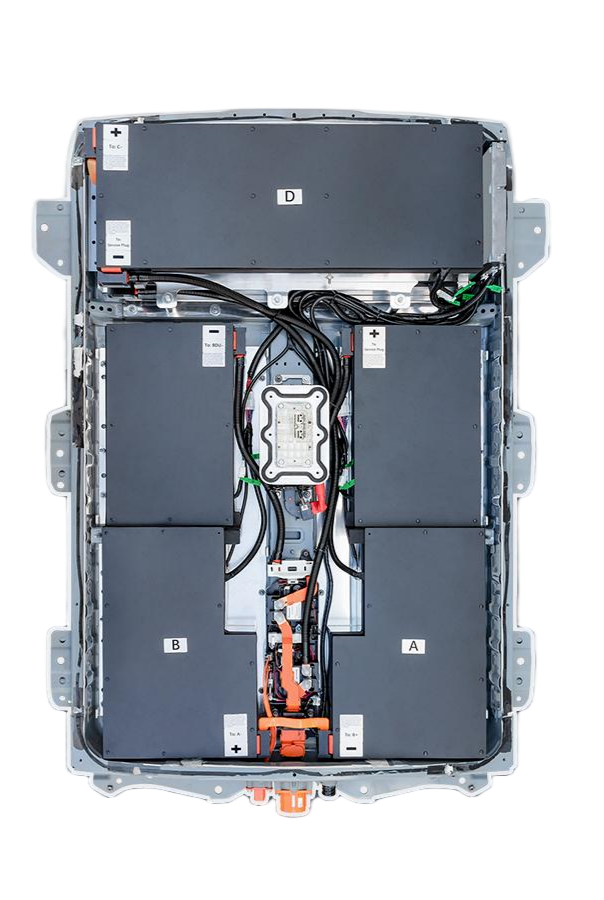
The truth is: 120Ah and 54kWh refer to the same physical battery—but how you source it changes everything. OEM units are scarce and overpriced. Aftermarket packs vary wildly in quality. And not all “54kWh” labels mean genuine capacity.
As CNS BATTERY engineers who’ve installed hundreds of i3 packs globally, we’ll cut through the marketing noise and reveal:
- The exact technical relationship between 120Ah and 54kWh
- Why cell chemistry and BMS design matter more than the label
- How to avoid “fake” 54kWh packs that deliver only 45kWh
- Which option gives you true long-term value in 2026
First, Let’s Clear Up the Naming Confusion
BMW never sold a “54kWh” i3. Officially, they called it the “120Ah” model (introduced in 2018). Here’s the math:
- Nominal voltage: 351V
- Capacity: 120 amp-hours (Ah)
- Total energy: 351V × 120Ah = 42.1kWh gross
- Usable energy: ≈37.9kWh (BMW reserves ~10%)
So where does “54kWh” come from?
Aftermarket suppliers—including CNS BATTERY—use higher-energy-density cells (like CATL NMC 811) to build packs that fit the i3’s 120Ah form factor but deliver up to 54kWh gross (≈48–50kWh usable).
✅ Bottom line:
- OEM 120Ah = ~38kWh usable
- Aftermarket “54kWh” = up to 50kWh usable (if built with genuine new cells)
Real-World Range: What You Actually Gain
| Pack Type | Usable kWh | Estimated Real-World Range (Mixed Driving) |
|---|---|---|
| OEM 120Ah (genuine BMW) | 37.9 kWh | 240–270 km |
| CNS 54kWh (new CATL cells) | 48–50 kWh | 310–340 km |
| Refurbished “54kWh” (used cells) | 40–44 kWh | 260–290 km |
That’s up to 70 km more range with a true 54kWh aftermarket pack—enough to eliminate most range anxiety on daily commutes.
But beware: some sellers label reconditioned 94Ah packs as “54kWh” by overstating capacity. Always ask for cell origin and cycle count.
Compatibility: Not All “Drop-In” Packs Are Equal
Both OEM 120Ah and quality aftermarket 54kWh packs share the same:
- Mounting points
- HV connector locations
- CAN bus communication protocol
However, cheap clones often:
- Use mismatched BMS firmware → trigger “HV System Malfunction”
- Skip thermal sensor emulation → cause cooling errors
- Lack proper cell balancing → degrade within months
CNS BATTERY packs solve this with:
✅ Full OEM CAN signal replication—no error codes
✅ Integrated coolant temperature sensors
✅ Pre-programmed BMS calibrated to CATL cell profiles
As Javier R. from Paris confirmed:
“I tried a ‘54kWh’ pack from another seller—it threw errors every time I fast-charged. The CNS unit? Plugged in like factory. 470 km on a charge, zero warnings.”
Cost vs. Longevity: The Hidden Math
| Option | Upfront Cost | Expected Lifespan | True Cost per 1,000 km |
|---|---|---|---|
| Used OEM 120Ah | $6,500–$8,500 | 2–3 years | $18–$24 |
| Refurbished “54kWh” | $4,200–$5,800 | 1.5–2 years | $20–$28 |
| CNS 54kWh (new cells) | $5,900–$6,800 | 5+ years | $9–$12 |
While the OEM pack feels “safe,” its age means you’re buying someone else’s degradation. A brand-new 54kWh pack with fresh CATL cells often lasts twice as long—at half the cost per kilometer.
Plus, CNS includes a 2-year / 80,000 km warranty—far beyond what used OEM sellers offer.
Which Should YOU Choose?
- Choose OEM 120Ah only if: You demand factory branding, plan to sell soon, and found a low-mileage unit with full history.
- Choose a true 54kWh aftermarket pack if: You want maximum range, longevity, and value—and care about performance, not badges.
For 95% of owners, the answer is clear: a high-quality 54kWh replacement delivers more driving freedom for less money.
Don’t Guess—Get a Pack That Delivers What It Promises
Ask us for a cell authenticity report and real-world range simulation based on your driving habits. We’ll show you exactly why CNS’s 54kWh pack outperforms both OEM and budget alternatives.
👉 Contact CNS BATTERY for a Genuine 54kWh i3 Upgrade
FAQ: BMW i3 120Ah vs 54kWh
Q: Will a 54kWh pack damage my i3’s electronics?
A: No—if it’s properly engineered. CNS packs maintain the same voltage window (300–420V) as OEM, so all systems operate normally.
Q: Can I install a 54kWh pack in a pre-2018 i3 (60Ah or 94Ah)?
A: Yes! The chassis and mounting are identical from 2014–2021. Only software updates may be needed—our BMS handles this automatically.
Q: Does the extra weight affect handling?
A: The 54kWh pack weighs ~20 kg more than a 94Ah—but it’s mounted low, improving center of gravity. Most drivers notice no difference.
Q: How do I verify actual capacity after installation?
A: Use tools like BimmerLink or OBDII scanners to read real-time kWh used from 100% to 0%. A genuine 54kWh pack will show 48–50kWh usable.
Q: Are there 62kWh or 68kWh options for the i3?
A: Not in standard form factors. 54kWh is the maximum safe capacity that fits the i3’s cooling and space constraints without modification.