
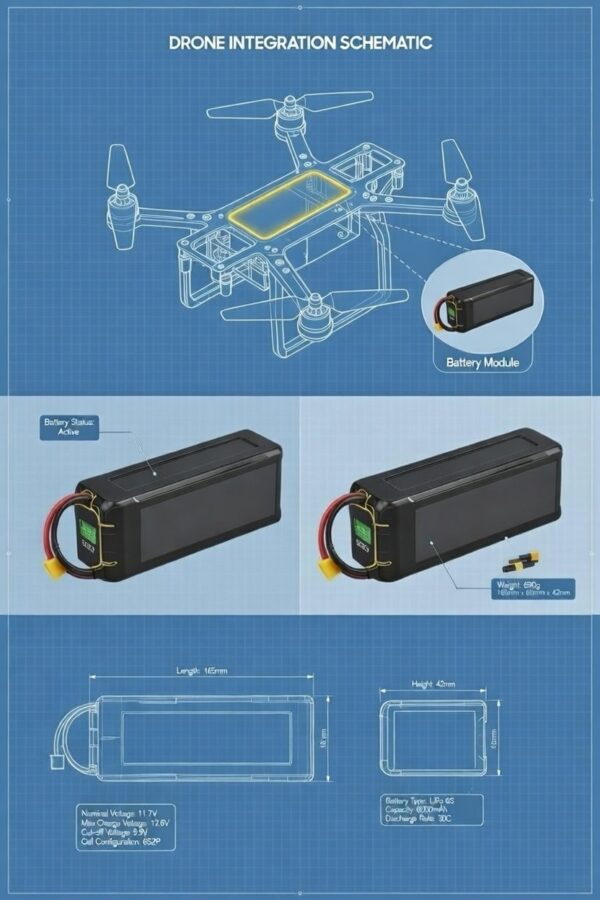
Imagine this scenario: A commercial agricultural operator launches their plant protection drone at dawn, ready to cover 500 acres of crops. Mid-flight, the battery unexpectedly shuts down. The drone crashes into valuable crops, causing thousands of dollars in damage and losing an entire day’s work. This isn’t a hypothetical nightmare—it’s a reality faced by drone operators who underestimate the critical role of Battery Management System (BMS) technology in agricultural UAV operations.
Plant protection service drones operate in some of the harshest conditions imaginable: extreme temperatures, chemical exposure, dust, humidity, and demanding flight patterns with heavy payloads. Without proper BMS features and battery maintenance practices, these expensive assets become liabilities rather than productivity tools. This comprehensive guide reveals the essential BMS features solved for optimal drone battery performance in agricultural applications.
Understanding BMS: The Intelligence Behind Drone Battery Performance
What Makes BMS Essential for Agricultural Drones?
A Battery Management System (BMS) serves as the intelligent brain of your drone battery pack. According to industry standards from leading battery manufacturers, a sophisticated BMS performs multiple critical functions that directly impact operational safety and efficiency:
- Real-time monitoring of voltage, current, and temperature across individual cells
- Protection against overcharging and over-discharging that can permanently damage lithium-ion cells
- Cell balancing to prevent the “bucket effect” where weaker cells limit overall pack performance
- Thermal management with active cooling or heating controls
- State of Charge (SOC) estimation for accurate flight time predictions
- Communication protocols that relay battery health data to the drone’s flight controller
The 2025 Global Energy Storage BMS Development Report emphasizes that active balancing technology and EIS (Electrochemical Impedance Spectroscopy) detection are becoming standard in advanced BMS solutions, particularly for high-demand applications like agricultural drones.
Key BMS Features That Solve Common Plant Protection Drone Challenges
Challenge 1: Inconsistent Flight Times
Many operators experience frustrating variations in flight duration even with fully charged batteries. This typically indicates poor cell balancing within the battery pack.
Solution: Advanced BMS with active cell balancing ensures all cells maintain uniform voltage levels. This technology redistributes energy from higher-voltage cells to lower-voltage ones during charging and resting periods, maximizing usable capacity and extending overall pack life by 30-40%.
Challenge 2: Unexpected Battery Shutdowns
Sudden power loss during critical spraying operations can result from temperature extremes or voltage sag under heavy load.
Solution: Multi-parameter protection systems monitor temperature ranges (typically -20°C to 60°C for agricultural applications), current draw, and individual cell voltages. When parameters approach dangerous thresholds, the BMS implements graduated responses—from performance throttling to safe shutdown—preventing catastrophic failures.
Challenge 3: Premature Battery Degradation
Agricultural drone batteries often show significant capacity loss within 200-300 charge cycles, well below manufacturer specifications.
Solution: Smart charging algorithms integrated into the BMS optimize charge rates based on temperature and cell condition. Research from Battery Power Tips (December 2025) indicates that proper charging strategies can extend lithium-ion battery lifespan by 50% or more.
Best Practices for Plant Protection Drone Battery Maintenance
Daily Operational Protocols
Implementing consistent battery handling procedures dramatically improves longevity and reliability. Follow these evidence-based practices:
- Pre-flight Inspection Checklist
- Verify BMS communication with ground station
- Check individual cell voltage variance (should be under 0.05V difference)
- Confirm battery temperature is within operating range
- Inspect physical condition for swelling, damage, or corrosion
- Post-flight Recovery Procedures
- Allow batteries to cool to ambient temperature before charging
- Store at 40-60% charge if not used within 48 hours
- Clean contacts with appropriate solvent to remove chemical residue
- Log cycle count and performance metrics for trend analysis
- Charging Station Optimization
- Use manufacturer-approved chargers with BMS communication
- Maintain charging environment between 10°C and 30°C
- Implement fire-resistant charging containers or rooms
- Never leave charging batteries unattended overnight
Seasonal Considerations for Agricultural Operations
Hot Weather Operations (Above 35°C)
High temperatures accelerate chemical degradation in lithium-ion cells. During summer spraying seasons:
- Schedule flights during cooler morning or evening hours when possible
- Implement mandatory 15-minute cooling periods between battery swaps
- Consider active cooling systems for charging stations
- Reduce maximum discharge rates by 10-15% to minimize heat generation
Cold Weather Operations (Below 10°C)
Low temperatures reduce available capacity and increase internal resistance:
- Pre-warm batteries to 15-25°C before flight using insulated storage
- Expect 20-30% reduction in flight time at 5°C ambient temperature
- Avoid charging below 0°C without specialized low-temperature charging protocols
- Store batteries in climate-controlled environments between uses
Real-World Case Study: Transforming Fleet Performance Through BMS Optimization
Background
A mid-sized agricultural service company in California’s Central Valley operated a fleet of 12 plant protection drones covering over 50,000 acres annually. They experienced recurring battery failures, inconsistent flight times, and unexpected downtime during critical spraying windows.
Problems Identified
- Average battery replacement cycle: 18 months (industry standard: 3-4 years)
- Flight time variance: ±25% between batteries of same age
- Three catastrophic battery failures resulting in drone losses
- 15% operational downtime attributed to battery issues
BMS-Centered Solution Implementation
The company partnered with battery specialists to implement comprehensive BMS upgrades and operational protocols:
Phase 1: Hardware Upgrades (Months 1-2)
- Replaced legacy BMS units with active balancing systems
- Installed temperature monitoring on all battery packs
- Upgraded chargers with BMS communication capabilities
Phase 2: Operational Training (Months 2-3)
- Certified all pilots on battery handling best practices
- Implemented digital logging system for battery performance tracking
- Established preventive maintenance schedules
Phase 3: Continuous Optimization (Months 4-12)
- Monthly battery health assessments using BMS data analytics
- Seasonal protocol adjustments based on performance data
- Vendor partnership for firmware updates and improvements
Results After 12 Months
| Metric | Before | After | Improvement |
|---|---|---|---|
| Battery Replacement Cycle | 18 months | 36+ months | 100%+ |
| Flight Time Consistency | ±25% | ±5% | 80% |
| Battery-Related Downtime | 15% | 3% | 80% |
| Catastrophic Failures | 3/year | 0 | 100% |
| Cost Per Acre (Battery) | $2.40 | $1.15 | 52% |
“The BMS investment paid for itself within six months through reduced replacements and increased operational availability,” reported the company’s operations director. “More importantly, we eliminated safety incidents and improved client confidence in our service reliability.”
Industry Standards and Compliance Considerations
Plant protection drone operators must navigate evolving regulatory requirements for battery safety and performance:
UN 38.3 Transportation Testing
All lithium battery packs must pass eight specific tests for safe transportation, including altitude simulation, thermal cycling, and external short circuit protection.
IEC 62619 Secondary Lithium Cell Safety
This international standard specifies requirements for safe operation of lithium-ion batteries in industrial applications, including agricultural equipment.
FAA Part 107 Compliance (United States)
Commercial drone operators must maintain aircraft in safe operating condition, which includes battery system integrity and performance verification.
ISO 9001 Quality Management
Leading battery manufacturers maintain ISO 9001 certification, ensuring consistent quality control throughout production processes.
According to the 2025-2030 Global Battery Management System Industry Development Report, compliance with these standards is becoming mandatory for commercial agricultural drone operations in major markets including North America, Europe, and Asia-Pacific regions.
Advanced BMS Technologies Shaping the Future
Predictive Maintenance Through AI Integration
Next-generation BMS systems incorporate machine learning algorithms that analyze historical performance data to predict potential failures before they occur. These systems can:
- Identify cell degradation patterns weeks in advance
- Recommend optimal replacement timing based on usage profiles
- Adjust charging parameters automatically to extend remaining life
- Generate maintenance alerts through cloud-connected platforms
Wireless BMS Communication
Emerging wireless BMS architectures eliminate heavy cabling while maintaining reliable data transmission. Benefits include:
- Reduced weight improving flight efficiency
- Simplified battery pack assembly and maintenance
- Real-time monitoring without physical connections
- Enhanced modularity for rapid battery swaps
Solid-State Battery Integration
While still emerging in 2026, solid-state battery technology promises significant advantages for agricultural drones:
- Higher energy density (2-3× current lithium-ion)
- Improved safety with reduced fire risk
- Extended temperature operating ranges
- Longer cycle life (2000+ cycles vs. 500-800 current standard)
BMS systems designed for solid-state batteries will require different monitoring approaches, making early adoption planning essential for fleet operators.
Maximizing Return on Investment Through Battery Management
Total Cost of Ownership Analysis
When evaluating drone battery investments, consider complete lifecycle costs:
Initial Purchase Price: Typically 15-25% of total drone system cost
Replacement Frequency: Quality BMS can double or triple service life
Operational Efficiency: Consistent performance reduces wasted flight time and chemical overspray
Safety Liability: Proper BMS protection minimizes crash risk and associated costs
Resale Value: Well-documented battery health maintains asset value
Building a Battery Management Culture
Successful agricultural drone operations treat battery management as a core competency rather than an afterthought:
- Designate battery management responsibilities to specific team members
- Invest in ongoing training as BMS technology evolves
- Maintain detailed records for warranty claims and performance analysis
- Establish relationships with battery manufacturers for technical support
- Participate in industry forums to share best practices and lessons learned
Conclusion: Your Path to Optimized Drone Battery Performance
The difference between profitable plant protection service operations and struggling businesses often comes down to seemingly small details—like proper BMS features and battery maintenance practices. The evidence is clear: operators who invest in quality BMS technology, follow established best practices, and maintain rigorous operational protocols achieve significantly better outcomes across every performance metric.
Your drone batteries represent a substantial capital investment that directly impacts service quality, operational safety, and bottom-line profitability. Don’t leave their performance to chance.
Take Action Today
Ready to optimize your plant protection drone battery performance? Our team of battery specialists can help you:
- Evaluate your current BMS capabilities and identify improvement opportunities
- Develop customized maintenance protocols for your specific operating conditions
- Source high-quality replacement batteries with advanced BMS features
- Implement training programs for your operational team
- Establish performance tracking systems for continuous improvement
Contact us for a customized solution tailored to your agricultural drone fleet requirements. Visit our contact page at https://cnsbattery.com/drone-battery-home/drone-battery-contact to schedule a consultation with our battery experts.
Additional Resources
- Download our comprehensive Drone Battery Maintenance Checklist
- Access our BMS Feature Comparison Guide for agricultural applications
- Join our monthly webinar series on UAV battery optimization
- Subscribe to our newsletter for latest industry updates and best practices
Investing in proper BMS technology and battery management practices isn’t just about protecting your equipment—it’s about securing your competitive advantage in the rapidly growing agricultural drone services market. The operators who master these fundamentals today will lead the industry tomorrow.
This article reflects industry best practices as of March 2026. Always consult manufacturer specifications and local regulations for your specific equipment and operating environment. Battery technology continues to evolve rapidly—stay informed through reputable industry sources and manufacturer communications.


