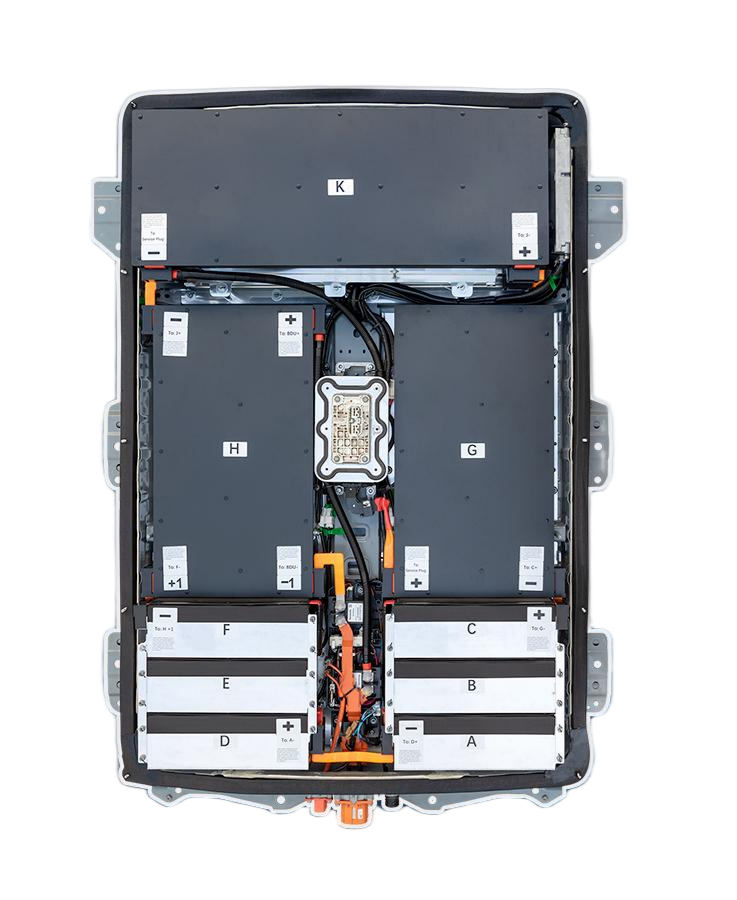
Best Practices for BMW i3 Battery Lifespan: Extend Your Range and Save Thousands
Is Your BMW i3 Losing Its Electric Punch?
You bought your BMW i3 for its innovative design, zero emissions, and impressive urban range. But now, three or four years later, you’re noticing something troubling. That 150-mile range has shrunk to barely 100 miles. Charging takes longer. The battery warning lights appear more frequently. And the dealership just quoted you $16,000 for a replacement battery pack.
Sound familiar? You’re not alone. Thousands of BMW i3 owners face this exact dilemma every year.
The good news? Battery degradation doesn’t mean your i3 is doomed. With the right knowledge and maintenance practices, you can significantly extend your battery’s lifespan. And if replacement becomes necessary, there are affordable alternatives that deliver original-quality performance at half the cost.
In this comprehensive guide, we’ll reveal the best practices for maximizing your BMW i3 battery lifespan, share real-world insights from owners who’ve successfully extended their range, and show you how to make smart decisions when replacement time comes.
Understanding BMW i3 Battery Degradation
What Causes Battery Capacity Loss?
Your BMW i3 uses a lithium-ion battery pack that naturally degrades over time. Several factors accelerate this process:
Temperature Extremes
Extreme heat and cold stress battery cells. Parking in direct summer sun or leaving your i3 in freezing conditions without preconditioning can reduce battery health by up to 20% faster than normal.
Charging Habits
Frequent DC fast charging generates more heat than Level 2 charging. While convenient, using fast chargers for more than 30% of your charging sessions can accelerate degradation.
Depth of Discharge
Regularly draining your battery below 20% or keeping it above 90% for extended periods creates unnecessary stress on the cells.
Storage Conditions
Leaving your i3 parked for weeks without charging, especially at extreme states of charge, can cause permanent capacity loss.
What’s Normal Degradation vs. a Problem?
According to BMW i3 owner data, normal degradation averages 2-3% capacity loss per year. After five years, you should still have 85-90% of your original range.
If you’re experiencing more than 5% annual degradation, something may be wrong. Common issues include:
- Faulty battery management system (BMS)
- Cooling system problems
- Individual cell failures within the module
- Software calibration errors
7 Proven Best Practices to Extend Your BMW i3 Battery Life
1. Master Your Charging Routine
The 20-80% Rule
Keep your battery between 20% and 80% for daily driving. This sweet spot minimizes cell stress while providing ample range for most commutes.
Prefer Level 2 Charging
Use a 240V Level 2 charger for 80% of your charging needs. It’s gentler on the battery and costs less than DC fast charging.
Reserve Fast Charging for Road Trips
DC fast charging is perfect for long journeys but limit it to once or twice per week for optimal battery health.
2. Temperature Management Matters
Precondition While Plugged In
Use BMW’s preconditioning feature while your i3 is still connected to the charger. This warms or cools the battery using grid power, not battery power.
Park Smart
Choose shaded parking in summer and garage parking in winter. Even a 10-degree difference in parking temperature can impact long-term battery health.
Avoid Extreme Temperature Charging
Don’t charge immediately after driving in extreme heat. Let the battery cool for 30 minutes first.
3. Optimize Your Driving Style
Smooth Acceleration
Aggressive acceleration draws high current from the battery, generating heat and stress. Gentle acceleration preserves battery health.
Regenerative Braking
Maximize regen braking settings. This reduces wear on both the battery and brake system while recapturing energy.
Maintain Moderate Speeds
Highway driving above 70 mph significantly increases energy consumption and battery stress.
4. Software Updates Are Critical
BMW regularly releases battery management system updates that improve charging algorithms and cell balancing. Keep your i3’s software current by:
- Checking for updates monthly
- Visiting your dealer for major updates
- Ensuring updates complete without interruption
5. Monitor Battery Health Regularly
Use diagnostic tools to track your battery’s state of health (SOH):
- BMW i3 Service Menu: Access hidden diagnostics through the iDrive system
- Third-Party Apps: Tools like Leaf Spy (adapted for i3) provide detailed battery metrics
- Professional Diagnostics: Annual checkups at qualified EV service centers
Red Flags to Watch For:
- Rapid capacity drops between charges
- Individual cell voltage imbalances
- Unusual heating during charging
- Error codes related to battery insulation or cooling
6. Proper Long-Term Storage
Planning to store your i3 for more than two weeks? Follow these guidelines:
- Charge to 50-60% before storage
- Store in a temperature-controlled environment (ideally 50-70°F)
- Check monthly and top up if charge drops below 40%
- Disconnect the 12V battery if storing beyond three months
7. Professional Maintenance Checks
Schedule annual battery health inspections that include:
- Cell voltage balance verification
- Cooling system inspection
- BMS software diagnostics
- High-voltage cable and connector inspection
When Replacement Becomes Necessary: Your Smart Options
Despite best practices, all batteries eventually need replacement. Here’s what BMW i3 owners need to know.
OEM vs. Aftermarket: The Real Cost Comparison
| Factor | OEM Battery | CNS BATTERY Aftermarket |
|---|---|---|
| Price | $14,000-$16,000 | $7,000-$8,500 |
| Warranty | 2 years/limited miles | 2 years/80,000 km |
| Cell Quality | Original manufacturer | Brand-new CATL cells |
| Installation | Dealer only | DIY or any qualified shop |
| Availability | 4-8 weeks | 1-3 weeks (in stock) |
Why CNS BATTERY Is the Smart Choice
Lisa K. from Berlin, Germany shares her experience:
“After the original battery degraded, the 4S dealership quoted €12,000 for a replacement. My friend recommended CNS, so I decided to give them a try. Unexpectedly, the brand-new CATL battery cells were of the same quality as the original. Now, the full charge range has increased from the original 180km to 290km.”
Key Advantages:
✓ Brand-New CATL Battery Cells – Same quality tier as OEM, without the premium price
✓ 45kWh, 50kWh, and 62kWh Options – Upgrade your range beyond original specifications
✓ 2-Year/80,000 km Warranty – Comprehensive coverage that exceeds many OEM warranties
✓ Plug-and-Play Installation – Complete battery packs require no modifications
✓ Lifetime Technical Support – Remote video guidance and installation documentation included
✓ 50% Cost Savings – Keep more money in your pocket without sacrificing quality
Installation: Easier Than You Think
CNS BATTERY offers two installation options:
Complete Battery Pack
- True plug-and-play installation
- No module balancing required
- 2-3 hour installation time
- Recommended for DIY installers
Individual Battery Modules
- Connect 6 power lines and 1 signal line
- Requires technical skills and tools
- Installation videos and wiring harnesses provided
- Best for experienced technicians
EK Auto Repair from Rome, Italy reports:
“We’ve purchased over 30 battery packs from CNS. The biggest advantage is their strong compatibility with BMW i3 models. After-sales service is very responsive. Last time a customer encountered a BMS programming issue, an engineer provided remote video guidance, resolving the problem in just one hour.”
Real-World Benefits: What BMW i3 Owners Gain
Extended Range Without New Car Costs
Upgrading to a 62kWh CNS battery can restore or even exceed your i3’s original range. Instead of spending $40,000+ on a new electric vehicle, invest $7,000-$8,500 in a quality battery replacement.
Environmental Impact
Replacing your battery extends your i3’s life by 5-8 years, preventing:
- Manufacturing emissions from a new vehicle
- Battery disposal waste
- Resource extraction for new materials
Resale Value Protection
A BMW i3 with a new battery commands significantly higher resale value. The investment pays for itself when it’s time to sell.
Peace of Mind
With a 2-year/80,000 km warranty and lifetime technical support, you’re protected against unexpected issues. CNS BATTERY stands behind every product with responsive customer service.
Take Action Today: Restore Your BMW i3’s Performance
Your BMW i3 doesn’t deserve the scrap heap. With proper maintenance and smart replacement options, it can serve you reliably for many more years.
Ready to explore your battery replacement options?
Get Your Free Custom Quote Now
Our technical experts will:
- Verify compatibility with your specific i3 model year
- Provide transparent pricing including shipping
- Answer all your technical questions
- Guide you through installation options
Don’t let battery degradation limit your electric freedom. Join thousands of satisfied BMW i3 owners who’ve extended their vehicle’s life with CNS BATTERY.
Frequently Asked Questions
Q1: How long should a BMW i3 battery last?
A properly maintained BMW i3 battery should last 8-12 years or 100,000-150,000 miles before needing replacement. Following best practices can extend this to 15+ years.
Q2: What’s the cost of a BMW i3 battery replacement?
OEM replacements cost $14,000-$16,000 at dealerships. Aftermarket options like CNS BATTERY offer equivalent quality at $7,000-$8,500, saving you over 50%.
Q3: Can I install a BMW i3 battery myself?
Yes, if you have basic mechanical skills and proper safety equipment. CNS BATTERY provides detailed installation videos, wiring harnesses, and remote technical support. For complete battery packs, installation is plug-and-play.
Q4: Will an aftermarket battery void my vehicle warranty?
No. The Magnuson-Moss Warranty Act protects consumers from warranty voiding when using quality aftermarket parts. CNS BATTERY batteries are OEM-compatible and don’t require vehicle modifications.
Q5: What battery capacity options are available?
CNS BATTERY offers 45kWh, 50kWh, and 62kWh options for BMW i3 models. Higher capacity options can increase your range beyond original specifications.
Q6: How long does shipping take?
Ocean shipping takes 4-8 weeks to most destinations. Express shipping via DHL/FedEx takes 3-8 business days. Contact sales for specific timelines to your location.
Q7: What does the warranty cover?
The 2-year/80,000 km warranty covers manufacturing defects and capacity retention. Within this period, the capacity indicator should not drop below 9 of 12 bars after full charge.
Q8: Are CNS BATTERY cells new or refurbished?
CNS BATTERY uses brand-new ternary lithium cells from CATL, one of the world’s largest and most reputable battery manufacturers. No refurbished or recycled cells are used.
Q9: Can I upgrade from my original 60Ah or 94Ah battery?
Yes. CNS BATTERY modules are compatible with all BMW i3 model years. You can upgrade from 60Ah to 94Ah equivalent or higher capacity options.
Q10: What technical support is available after purchase?
CNS BATTERY provides lifetime technical support including installation documents, video tutorials, and remote video calls with engineers for troubleshooting.
Your BMW i3 deserves a second life. Contact CNS BATTERY today and discover how affordable battery replacement can restore your electric driving experience.