
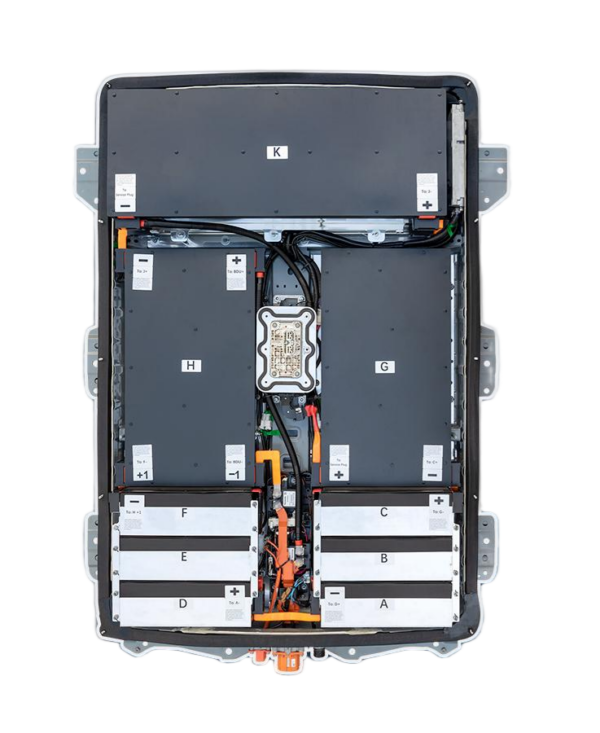
🏔️ The Ultimate Guide to Nissan Leaf Batteries for High Altitude Driving
Driving a Nissan Leaf in the mountains presents a unique set of challenges that standard batteries aren’t always equipped to handle. If you live in or frequently travel through high-altitude regions—such as the Rockies, the Alps, or the Tibetan Plateau—you know that thin air and steep grades can drain your battery faster than expected.
As a specialist in EV powertrains, CNS BATTERY understands that high-altitude driving requires a battery that can handle low air pressure, extreme cold, and continuous high-power output. We engineer our replacement batteries to meet or exceed OEM standards, specifically addressing the thermal and power demands of mountainous terrain.
This guide will walk you through why standard batteries struggle at altitude and how to choose a high-performance replacement that ensures your Leaf performs reliably, even at the summit.
❄️ Why High Altitude Drains Your Leaf’s Battery
Before we discuss the solution, it’s crucial to understand the problem. High-altitude driving impacts your Leaf’s range in three primary ways:
- Increased Aerodynamic Drag: While air is thinner, maintaining speed on long, steep ascents requires significantly more energy output from the motor than flat highway driving.
- Cabin Heating: High-altitude regions are often cold. Heating the cabin with a resistive heater draws a massive amount of power directly from the traction battery, often reducing range by 30-40%.
- Battery Chemistry Efficiency: Lithium-ion batteries are less efficient in cold temperatures. At high altitudes, where temperatures can plummet, the battery’s internal resistance increases, reducing its ability to deliver power and accept regenerative braking energy.
A standard, degraded, or low-quality replacement battery simply won’t cut it. You need a pack with robust thermal management and high energy density.
⚙️ What to Look for in a High-Altitude EV Battery
When upgrading or replacing your battery for mountain use, don’t just look at the kWh rating. You need to examine the internal components and thermal design.
🔋 High-Density, New-Era Cells
Using recycled or repurposed cells (common in cheap aftermarket packs) is a gamble you can’t afford in the mountains. Recycled cells often have reduced capacity and higher internal resistance. At altitude, this means your car might not make it over the pass.
CNS BATTERY exclusively uses brand-new, premium-grade cells from CATL (Contemporary Amperex Technology Co. Limited), the world’s largest lithium-ion battery manufacturer. These cells offer:
- Higher Energy Density: More range per kilogram, crucial for climbing.
- Lower Internal Resistance: This means the battery performs better in cold, high-altitude conditions and generates less heat during high-power climbs.
🌡️ Advanced Thermal Management Systems (TMS)
The key to high-altitude performance is temperature control. Our batteries are engineered with precision thermal management systems designed to keep the cells within their optimal operating window (typically 25°C – 40°C), even when the outside temperature drops below freezing.
Unlike some aftermarket packs that lack proper heating elements, CNS batteries ensure the cells are warm enough to accept charge during regen braking on the descent and powerful enough to deliver torque on the ascent.
🔌 Regenerative Braking Optimization
One of the Leaf’s best features for mountain driving is e-Pedal and regenerative braking. However, if your battery’s BMS (Battery Management System) isn’t calibrated correctly, it may refuse to accept regen charge when the battery is cold or full, forcing you to use mechanical brakes on long descents—which is dangerous.
Our packs are programmed to maximize regen efficiency, turning your descent into a charging opportunity to power your next climb.
🆚 CNS Battery vs. Standard Options for Mountain Use
To help you visualize the difference, here is how a CNS high-performance replacement compares to other options when facing high-altitude conditions.
| Feature | Standard OEM Battery (Aged) | Cheap Aftermarket/Recycled | CNS BATTERY (Premium New) |
|---|---|---|---|
| Cell Quality | Degraded, original chemistry | Mixed, used, unstable batches | Brand New CATL Cells |
| Cold Weather Perf. | Reduced range, slow charging | Very poor; may refuse to charge | Optimized BMS & Heating |
| High-Power Output | May throttle power on steep climbs | Overheats or fails under load | Sustained High Amps (No Throttling) |
| Warranty | Expired or limited | Often none or very short | 2 Years / 80,000 km |
🚗 Recommended Solutions for Nissan Leaf Owners
Depending on your specific Leaf model and your desired range, we offer several solutions tailored for the rigors of elevation.
1. The Range Extender: 62kWh Lithium Battery Pack
If you are driving a Leaf ZE0, AZE0, or ZE1, upgrading from a 24kWh or 40kWh pack to a 62kWh unit is the ultimate solution for high-altitude anxiety.
- Why it works: The extra capacity provides a buffer. If your range drops by 40% in the mountains, starting with a 40kWh battery leaves you with very little margin. Starting with 62kWh gives you the equivalent of a standard lowland range, even at altitude.
- Real-World Benefit: Users like Mark T. from California report that after upgrading to a CNS 62kWh pack, his range jumped from a degraded 120km to a robust 430km. For high-altitude trips, this means fewer charging stops and more confidence on remote routes.
2. The Plug-and-Play Upgrade: 40kWh & 50kWh Modules
If you don’t need the maximum range but want reliability, our 40kWh and 50kWh packs are perfect.
- Precision Engineering: We don’t just stuff cells into a box. Our packs are designed to match the OEM dimensions and communication protocols perfectly.
- Seamless Integration: There is no “check engine” light. The BMS communicates flawlessly with your Leaf’s motor controller, ensuring that features like the dashboard battery gauge and the EVAE (Electric Vehicle Animation Experience) work exactly as they did with the factory battery.
💡 Pro Tips: Maintaining Your Leaf at Altitude
Even with the best battery, high-altitude driving requires specific habits. Here are three tips from our technical team:
- Pre-Conditioning is Key: Whenever possible, precondition your battery while still plugged in. If you are stopping for a meal or a rest at a charging station at the base of the mountain, leave the car plugged in and turn the cabin heat on. This warms the battery using grid power, preserving your driving range for the climb.
- Manage Regen on Descents: While regen is great, don’t rely on it exclusively on long downhill grades. Use the brake pedal gently to engage the mechanical brakes and prevent the battery from overheating or reaching 100% charge, which can disable the regen function.
- Avoid “Limp Mode”: If your battery temperature warning light comes on, stop immediately. Continuing to drive can permanently damage the cells. Our batteries have robust thermal protection, but it is always best to let the system cool down in a safe location.
📞 Ready to Conquer the Mountains?
Don’t let high-altitude limitations hold your Nissan Leaf back. Whether you drive a Leaf ZE0, AZE0, ZE1, or an e-NV200, CNS BATTERY has the high-performance, OEM-compatible solution you need to restore or exceed your vehicle’s original range and power.
We are committed to helping you extend your range and improve safety with reliable battery innovation.
Get a Free Custom Quote for your high-altitude Nissan Leaf today!
Contact Our Technical Experts Now
❓ Frequently Asked Questions (FAQ)
Q1: Will a larger battery (like the 62kWh) affect my Leaf’s warranty or software?
A: No. Our batteries are engineered to communicate with your Leaf’s OEM software using the original factory protocols. There is no software modification required. The car recognizes the battery as a genuine unit, maintaining all factory functionalities and diagnostics.
Q2: How does the battery perform in sub-zero temperatures common at high altitudes?
A: Our batteries utilize advanced thermal management systems. While all lithium-ion batteries lose some efficiency in the cold, our packs are designed to maintain cell temperature. We recommend preconditioning the battery while plugged in before driving in freezing conditions to maximize efficiency.
Q3: Is the installation difficult for a high-altitude upgrade?
A: Not at all. Our battery packs are designed for a direct OEM fit. The installation is a straightforward mechanical process that involves removing the old pack and bolting in the new one. We provide detailed video tutorials and technical support to ensure a smooth swap, even for DIY enthusiasts.
Q4: What is the lifespan of a CNS Battery in mountainous conditions?
A: Thanks to the use of brand-new CATL cells and our robust BMS, our batteries are built for durability. We offer a 2-year / 80,000 km warranty, which is significantly longer than most competitors. Proper care, including avoiding deep discharges and utilizing preconditioning, will ensure a long service life even under the stress of mountain driving.

