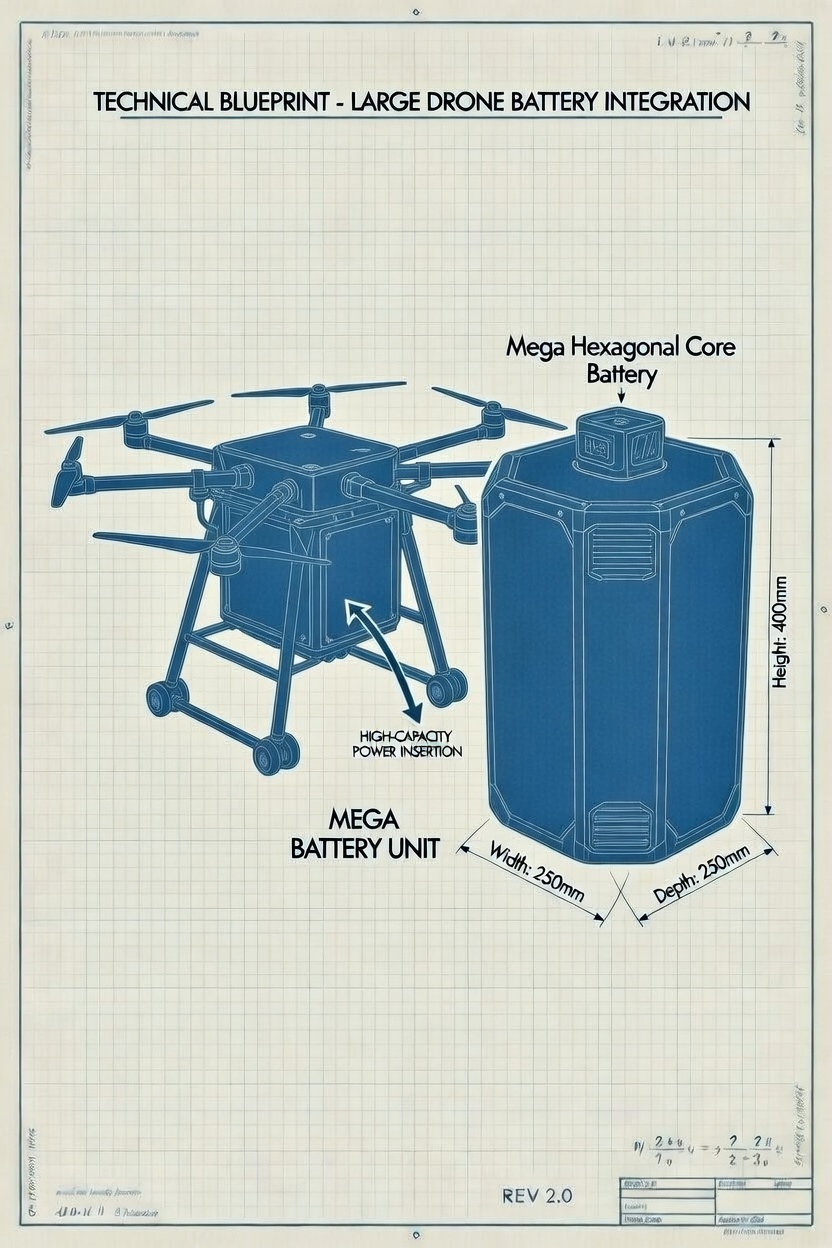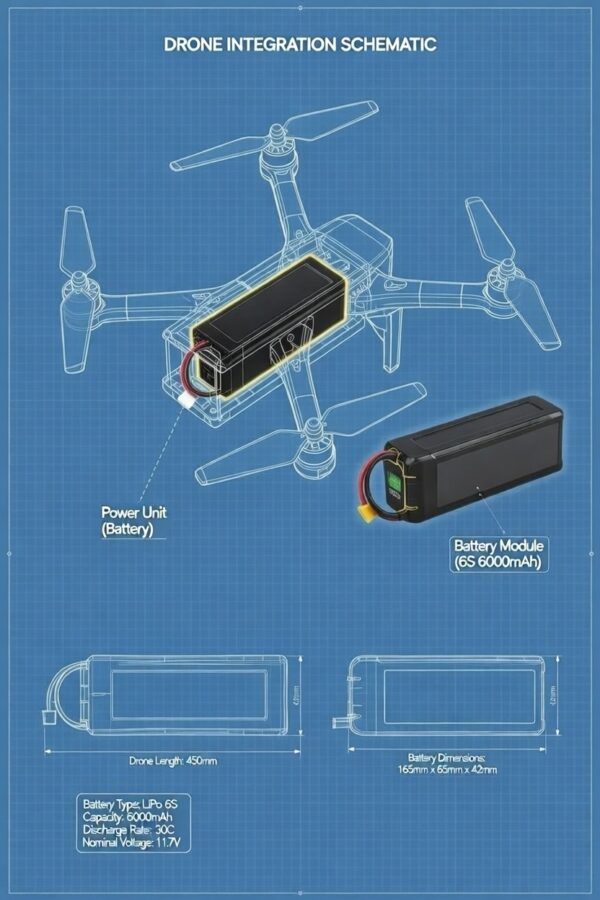
The electric vertical takeoff and landing (eVTOL) industry stands at a transformative crossroads. As urban air mobility transitions from concept to commercial reality, manufacturers face a critical challenge that can make or break their market entry: battery regulatory compliance. With global eVTOL market projections reaching $1.5 trillion by 2035, choosing the right drone battery partner isn’t just about performance—it’s about navigating a complex web of international aviation standards while securing scalable supply chains for bulk procurement.
The Compliance Conundrum: Why Battery Selection Matters More Than Ever
eVTOL manufacturers encounter three interconnected pain points that traditional drone battery suppliers often fail to address comprehensively. First, regulatory fragmentation across FAA, EASA, and CAAC jurisdictions creates certification bottlenecks. Second, safety thresholds for manned aviation exceed conventional drone standards by orders of magnitude. Third, supply chain reliability for bulk orders remains uncertain as the industry scales toward commercial deployment.
The stakes couldn’t be higher. A single battery-related incident during certification testing can delay type approval by 18-24 months, costing manufacturers millions in development expenses and market positioning. Understanding regulatory compliance requirements isn’t optional—it’s the foundation of viable eVTOL production.
Global Regulatory Framework: FAA vs. EASA vs. CAAC Comparison
Federal Aviation Administration (FAA) Standards
The FAA employs a risk-based certification approach under Part 23 amendments, requiring accident probability below one in ten million flight hours. For eVTOL battery systems, this translates to:
- Thermal runaway containment with zero propagation between cells
- Lightning strike protection meeting DO-160 Section 22 requirements
- Cycle life validation exceeding 4,000 charge-discharge operations
- Redundancy architecture with independent battery management systems
FAA’s special conditions for powered-lift aircraft emphasize catastrophic failure prevention, demanding battery manufacturers provide comprehensive failure mode analysis and mitigation documentation.
European Aviation Safety Agency (EASA) Requirements
EASA maintains arguably the world’s most stringent aviation safety standards, targeting accident rates below one in one billion flight hours. Key battery compliance elements include:
- SC-VTOL-01 certification specific to vertical takeoff and landing aircraft
- Environmental qualification across -40°C to +70°C operational ranges
- Electromagnetic compatibility per ED-14G standards
- End-of-life safety protocols for battery disposal and recycling
European manufacturers benefit from EASA’s early engagement program, allowing pre-certification consultations that streamline approval timelines.
Civil Aviation Administration of China (CAAC) Framework
CAAC’s 2025 Powered-Lift Airworthiness Standards establish China as the third pillar of global eVTOL certification. The framework offers:
- Harmonized requirements aligned with FAA and EASA基本原则
- Accelerated certification pathways for domestic manufacturers
- Battery-specific technical specifications under T/TMAC standards
- Regional market access across Asia-Pacific aviation authorities
CAAC’s recent solid-state battery technical requirements provide clear performance benchmarks for energy density, safety testing, and manufacturing quality control.
Critical Battery Specifications for eVTOL Applications
Beyond regulatory compliance, eVTOL battery systems must deliver exceptional performance characteristics that exceed conventional drone applications:
Energy Density Requirements
| Application Tier | Minimum Energy Density | Target Range |
|---|---|---|
| Entry-level eVTOL | 250 Wh/kg | 100-150 km |
| Commercial Urban Air Mobility | 300+ Wh/kg | 200-250 km |
| Long-Range Regional | 350+ Wh/kg | 300+ km |
Current semi-solid state battery technology achieves 330 Wh/kg, enabling 200-kilometer range capabilities that meet most urban air mobility requirements. Full solid-state solutions targeting 500 Wh/kg represent the next generation benchmark.
Safety Performance Metrics
- Thermal stability: No thermal propagation under nail penetration testing
- Fire resistance: 30-minute containment at 1,100°C external fire exposure
- Crashworthiness: Structural integrity maintained under 50G impact forces
- Overcharge protection: Automatic cutoff at 120% rated capacity
Operational Durability Standards
- Cycle life: Minimum 4,000 full cycles with 80% capacity retention
- Calendar life: 10+ years under normal operating conditions
- Fast charging: 80% capacity restoration within 15 minutes
- Temperature tolerance: Full performance across -20°C to +55°C ambient conditions
Bulk Procurement Value: What Large-Scale Manufacturers Need
eVTOL manufacturers planning commercial production require battery suppliers capable of delivering consistent quality at scale. Key procurement considerations include:
Supply Chain Reliability
- Dedicated production lines reserved for aviation-grade battery cells
- Raw material traceability from mining through final assembly
- Capacity commitments guaranteeing minimum annual volumes
- Geographic diversification reducing single-source dependency risks
Quality Assurance Protocols
- 100% cell-level testing before pack assembly
- Statistical process control with CpK values exceeding 1.67
- First-article inspection for each production batch
- Certificate of Conformance documentation for regulatory submissions
Commercial Terms for Scale
- Volume-based pricing with transparent cost breakdowns
- Long-term supply agreements locking in capacity and pricing
- Technical support embedded throughout certification process
- Warranty coverage aligned with aircraft service life expectations
Industry Case Studies: Lessons from Early Movers
Case Study 1: Middle East eVTOL Deployment
A UAE-based autonomous aircraft manufacturer secured a $1 billion order for 350 eVTOL units by partnering with a battery supplier delivering 330 Wh/kg semi-solid state cells. The partnership succeeded because the supplier provided:
- Complete FAA compliance documentation package
- Dedicated 5 GWh production capacity commitment
- Joint engineering team for integration optimization
- 10-year warranty aligned with aircraft service intervals
Case Study 2: European Urban Air Mobility Pilot
A German eVTOL startup achieved EASA SC-VTOL-01 certification in record time by selecting a battery partner with pre-qualified cell chemistry. Key success factors included:
- Previous aviation certification history reducing review cycles
- In-house thermal management expertise accelerating integration
- European manufacturing footprint satisfying localization requirements
- Flexible minimum order quantities supporting prototype development
Frequently Asked Questions
Q1: How long does battery certification typically take for eVTOL applications?
A: Complete battery system certification ranges from 18-36 months depending on regulatory jurisdiction and technology maturity. Pre-qualified cell chemistries with existing aviation heritage can reduce timelines by 40-50%.
Q2: What’s the minimum order quantity for aviation-grade eVTOL batteries?
A: Production-scale commitments typically start at 10,000 battery packs annually. However, development-phase suppliers offer prototype quantities from 100-500 units for certification testing and flight trials.
Q3: Can the same battery system achieve FAA, EASA, and CAAC certification simultaneously?
A: Yes, but it requires parallel submission strategies and potentially different documentation formats. Working with suppliers experienced in multi-jurisdiction certification significantly reduces complexity and cost.
Q4: How do solid-state batteries impact eVTOL certification timelines?
A: While solid-state technology offers superior safety characteristics, newer chemistries may require additional validation testing. Semi-solid state solutions currently offer the best balance of performance and certification readiness.
Q5: What warranty terms should eVTOL manufacturers expect from battery suppliers?
A: Aviation-grade batteries typically carry 8-10 year warranties covering capacity degradation below 80% and manufacturing defects. Performance guarantees should align with aircraft maintenance intervals and residual value expectations.
Moving Forward: Your Path to Compliant eVTOL Production
The eVTOL revolution demands battery partners who understand that regulatory compliance isn’t a checkbox—it’s a competitive advantage. Manufacturers who select suppliers with proven certification track records, scalable production capacity, and deep technical expertise will accelerate their path to commercial deployment while minimizing program risks.
As the industry matures through 2026-2027, battery technology will increasingly differentiate successful eVTOL programs from those that stall in certification. The window for establishing strategic supplier relationships is now, before production bottlenecks constrain the entire ecosystem.
Ready to discuss your eVTOL battery requirements with compliance experts who understand both aviation regulations and large-scale manufacturing? Our team specializes in connecting eVTOL manufacturers with qualified battery suppliers capable of meeting FAA, EASA, and CAAC standards while delivering the volume and reliability your production plans demand.
Contact our battery specialists today to schedule a technical consultation and receive customized compliance documentation for your specific eVTOL application. Let’s build the future of urban air mobility together—with batteries that meet the highest safety standards and scale with your ambitions.