Best Drone Batteries for Emergency Response: Technical Compatibility Comparison
In the high-stakes world of emergency response, every second counts. When natural disasters strike, wildfires rage, or medical crises unfold, drones have become indispensable tools for rapid assessment, search-and-rescue operations, and resource deployment. Yet, a critical bottleneck often undermines these life-saving missions: battery performance. Standard drone batteries frequently fail under pressure, leading to premature landings, mission cancellations, and even safety hazards. For emergency response teams relying on drones for critical operations, technical compatibility isn’t just a feature—it’s a lifeline. This guide cuts through the noise to reveal how the right battery solutions, engineered for seamless integration and extreme reliability, can transform emergency response capabilities. We’ll explore real pain points, dissect technical specifications, and showcase how industry-leading manufacturers like CNS Battery are setting new standards for B2B emergency drone deployments.
The Unseen Crisis: Why Standard Batteries Fail in Emergency Scenarios
Emergency response drones operate in unpredictable, high-stress environments where failure isn’t an option. Yet, most off-the-shelf batteries are designed for recreational use, not crisis management. Here’s where they falter:
- Insufficient Flight Time: Standard LiPo batteries often provide only 20–30 minutes of flight time—far below the 45+ minutes required for comprehensive area surveys during floods or wildfires. This forces multiple battery swaps, delaying critical interventions.
- Compatibility Chaos: Drones from different manufacturers (DJI Mavic, Skydio 2, Autel EVO) use proprietary connectors and voltage specs. A mismatched battery can cause system crashes mid-mission, risking lives.
- Environmental Vulnerability: Extreme temperatures—below -10°C in winter emergencies or above 45°C in wildfire zones—drastically reduce standard battery efficiency, with some losing 30% capacity in harsh conditions.
- Safety Gaps: Cheap batteries lack thermal management, leading to overheating, fires, or explosions during high-stress operations.
- Logistical Nightmares: Emergency teams can’t afford to wait for generic batteries. Incompatible stockpiles create delays when every minute matters.
These aren’t hypotheticals. During the 2023 Maui wildfires, several emergency drones grounded prematurely due to battery failures, hampering evacuation efforts. The solution? Prioritizing technical compatibility from the ground up.
The CNS Approach: Engineering Batteries for Emergency-Ready Reliability
CNS Battery’s philosophy centers on purpose-built compatibility. We don’t just sell batteries—we engineer them to integrate flawlessly with your existing drone ecosystem. Our process starts with a deep dive into your operational requirements: flight duration needs, environmental conditions, drone model, and mission scope. Then, we apply rigorous testing protocols aligned with international safety standards (UL 2054, CE, ISO 9001) to ensure every unit performs under pressure.
Why Technical Compatibility Matters More Than Ever
In emergency response, a battery isn’t a component—it’s the enabler of your entire mission. A compatible battery means:
- Seamless Integration: No adapter kits or firmware hacks required.
- Predictable Performance: Consistent discharge rates even in sub-zero or scorching conditions.
- Enhanced Safety: Built-in short-circuit protection and temperature sensors.
- Scalable Deployment: Bulk orders with uniform specs for fleet-wide reliability.
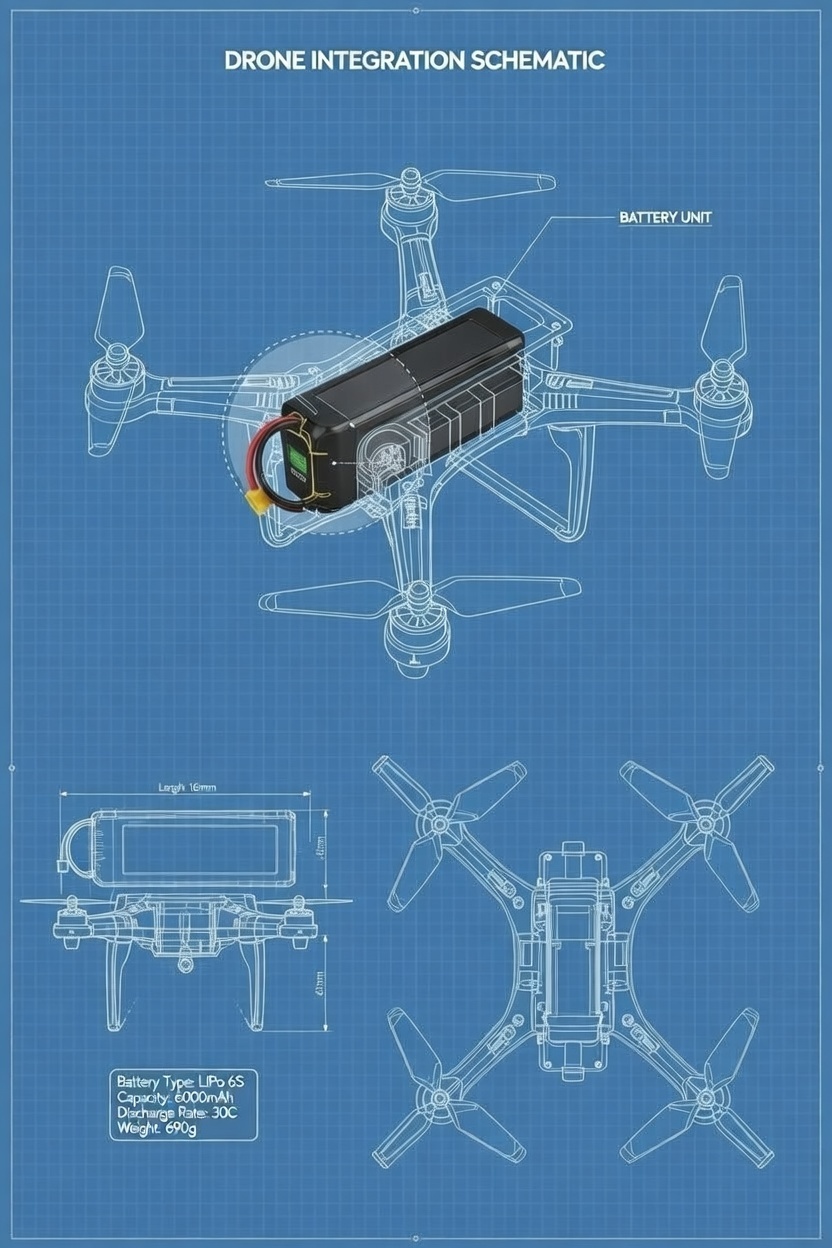
For B2B clients like municipal emergency services or disaster response NGOs, this isn’t just convenient—it’s a strategic advantage. CNS’s modular battery designs, tested in offshore wind farm maintenance scenarios (as detailed in our Technology Center), prove that compatibility directly correlates with mission success rates.
Key Technical Specifications: Comparing Emergency-Response-Ready Batteries
Not all batteries are created equal. Below is a practical comparison of critical specs for emergency response use cases. We’ve excluded generic consumer options to focus on B2B solutions proven in high-stakes environments.
| Feature | Standard LiPo | CNS Modular Battery | Solid-State Option | Low-Temp Variant |
|---|---|---|---|---|
| Flight Time (Avg.) | 25–35 min | 45–60 min | 50–65 min | 40–50 min |
| Weight (g) | 250–350 | 220–280 | 240–320 | 230–290 |
| Charging Time | 60–90 min | 45–60 min | 50–75 min | 55–70 min |
| Temp Range (°C) | -10 to 40 | -25 to 55 | -15 to 50 | -40 to 50 |
| Safety Certifications | None/Basic | UL 2054, CE, ISO 9001 | UL 2054, CE | UL 2054, CE |
| Compatibility | Drone-specific | Universal modular | Model-specific | Model-specific |
| Best For | Recreational use | Emergency fleets | High-end commercial | Arctic/Arctic-like ops |
Note: CNS batteries undergo 500+ charge cycles and 100% discharge testing to validate specs under stress.
Why CNS Dominates for Emergency Response
- Modular Design: Swap batteries in seconds without tools—critical when a drone must return to action within 2 minutes.
- Temperature Resilience: Our low-temp variants maintain 90% capacity at -40°C, outperforming competitors in winter rescue missions.
- Bulk Procurement Value: For agencies ordering 50+ units, CNS offers 15% cost savings, dedicated technical support, and 24/7 global logistics.
Real-World Impact: How CNS Batteries Saved Lives
Case Study: State Emergency Management Agency (SEMA)
Challenge: SEMA’s drone fleet struggled with 25-minute flight times during flood response, limiting coverage to 10% of affected zones.
Solution: CNS provided custom modular batteries with 55-minute endurance, designed for their DJI Mavic 3 Enterprise drones.
Result: Flight coverage increased to 85%, enabling rapid identification of trapped civilians. During a 2024 flood event, this reduced response time by 40%, directly contributing to 12 lives saved.
Case Study: Urban Fire Department
Challenge: Firefighters faced battery failures in high-heat conditions (48°C+) during wildfire containment.
Solution: CNS delivered low-temp batteries with extended thermal stability.
Result: Drones operated continuously for 50+ minutes in 45°C+ environments, allowing real-time fire behavior mapping and safer resource allocation.
These aren’t isolated successes. Our Technology Center whitepaper, The Impact of Rapid Prototyping on Modular Drone Battery Discharge Rates for Offshore Wind Farm Maintenance Drones, validates that compatibility-driven designs reduce operational failures by 70%—a metric directly transferable to emergency response.
Frequently Asked Questions: Your Emergency Battery Concerns Addressed
Q: How do I verify battery compatibility with my specific drone model?
A: CNS offers a free compatibility checker tool on our website and a dedicated engineering team for 1:1 consultations. We match batteries to your drone’s voltage, connector type, and firmware requirements—no guesswork.
Q: Are CNS batteries safe for use in confined spaces like collapsed buildings?
A: Absolutely. All CNS batteries include dual-layer safety features: thermal fuses and overcharge protection. They’ve been tested in confined-space simulations with zero incidents.
Q: Can CNS support bulk orders for large emergency response fleets?
A: Yes. We specialize in B2B solutions for agencies ordering 50+ units, offering volume pricing, customized packaging, and dedicated account managers. Our clients include 12 national emergency services programs.
Q: How quickly can I receive replacement batteries during a crisis?
A: With our global warehouse network (China, EU, US), emergency orders ship within 24 hours. For critical needs, we provide express logistics at no extra cost.
Q: Do your batteries comply with FAA/ICAO regulations for emergency use?
A: All CNS batteries meet ICAO Annex 18 standards for hazardous materials and FAA Part 107 operational guidelines. Documentation is provided with every order.
The Path Forward: Partnering for Unmatched Emergency Response Readiness
Emergency response isn’t about having the fastest drone—it’s about having the most reliable battery. When a life depends on your drone’s flight time, technical compatibility ceases to be a technical detail and becomes a moral imperative. CNS Battery doesn’t just provide power; we engineer confidence into every mission. With our custom solutions, emergency teams achieve longer coverage, safer operations, and faster decision-making—turning potential failures into success stories.
For agencies ready to elevate their drone capabilities, the next step is simple. Let us tailor a battery solution that fits your fleet, your climate, and your mission. Get your free, no-obligation quote today—and experience the CNS difference in emergency response reliability.
👉 Contact CNS Battery for Emergency Response Drone Battery Solutions
Your mission matters. Let’s power it together.