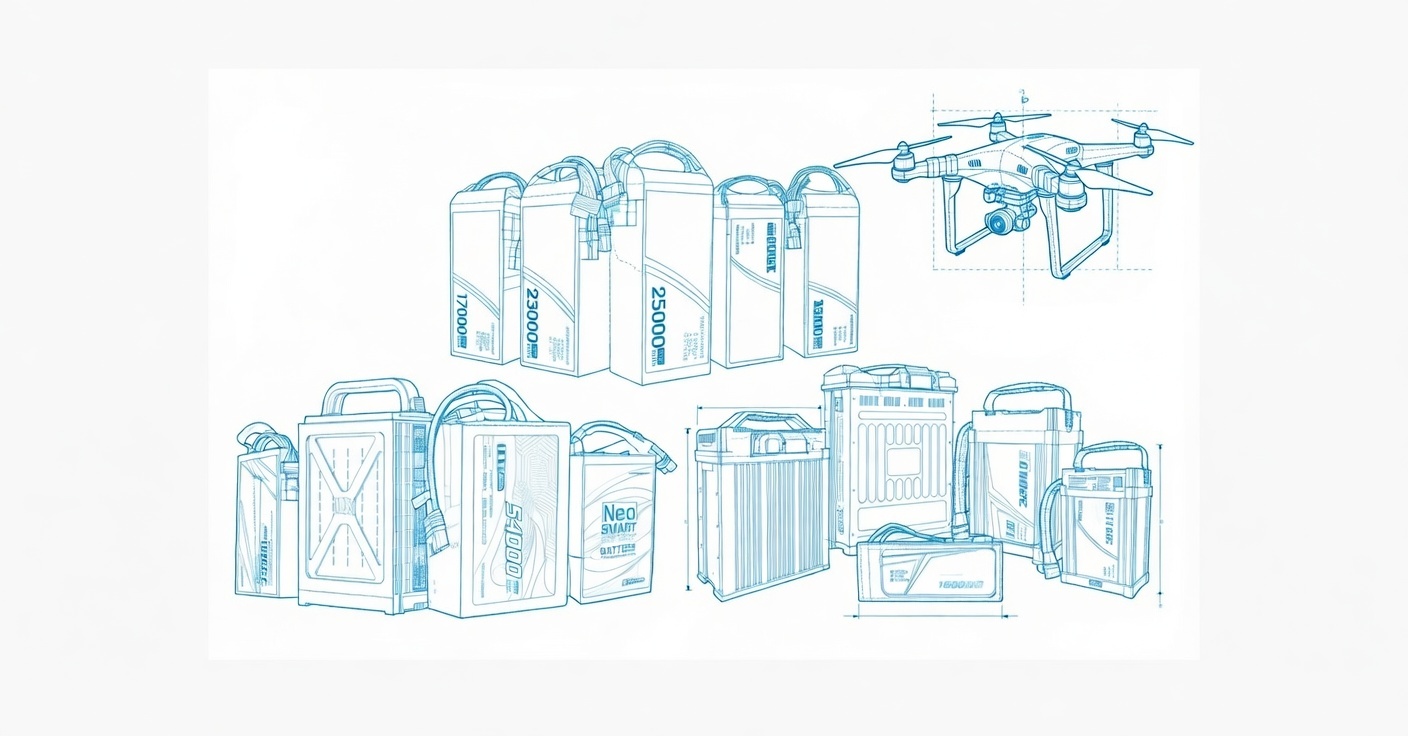
When every second counts in a search and rescue mission, can your drone batteries keep up with the demand? Emergency rescue teams face a critical challenge: selecting drone batteries that deliver reliable performance through countless missions while maintaining safety standards. The wrong battery choice can mean failed operations, compromised safety, or costly replacements mid-crisis. This comprehensive guide compares the best drone batteries for emergency rescue teams, analyzing battery life cycles, performance metrics, and real-world applications to help you make an informed decision.
Why Battery Life Cycles Matter for Rescue Operations
Emergency rescue drones operate under extreme conditions—harsh weather, extended flight times, and rapid deployment requirements. Unlike recreational drones, rescue team equipment must withstand hundreds of charge cycles without significant performance degradation.
Key considerations for rescue team batteries:
- Cycle longevity: How many charge-discharge cycles before capacity drops below 80%
- Charging speed: Time required to return to operational readiness
- Temperature tolerance: Performance in extreme cold or heat
- Safety features: Protection against overcharging, short circuits, and physical damage
- Energy density: Flight time per battery weight
According to industry research, lithium-polymer (LiPo) batteries typically deliver 300-500 full charge cycles, while lithium-ion (Li-ion) batteries can achieve 500-1,000+ cycles before reaching end-of-life capacity. For rescue teams conducting multiple weekly operations, this difference translates to significant cost savings and operational reliability over time.
LiPo vs. Li-ion: Which Battery Technology Suits Rescue Teams?
Lithium-Polymer (LiPo) Batteries
LiPo batteries remain the most common choice for commercial drones due to their high discharge rates and lightweight design.
Advantages:
- High energy-to-weight ratio
- Supports high C-rate discharge (essential for rapid maneuvers)
- Flexible form factors for custom drone designs
- Widely available with established supply chains
Limitations:
- Shorter cycle life (300-500 cycles)
- More sensitive to physical damage
- Requires careful storage at 3.7-3.85V per cell
- Higher risk of swelling if improperly maintained
Lithium-Ion (Li-ion) Batteries
Li-ion technology offers superior longevity, making it increasingly popular for commercial and rescue applications where flight time matters more than aggressive maneuvering.
Advantages:
- Extended cycle life (500-1,000+ cycles)
- Better thermal stability
- Lower self-discharge rate during storage
- More forgiving charging requirements
Limitations:
- Lower maximum discharge rates
- Slightly heavier for equivalent capacity
- Higher initial cost per unit
Battery Life Cycle Comparison Table
| Battery Type | Typical Cycle Life | Capacity Retention | Charge Time | Operating Temperature | Best Use Case |
|---|---|---|---|---|---|
| LiPo Standard | 300-500 cycles | 80% at end of life | 30-60 minutes | -10°C to 50°C | High-performance tactical drones |
| LiPo High-Cycle | 500-700 cycles | 80% at end of life | 45-75 minutes | -10°C to 50°C | Mixed rescue operations |
| Li-ion Standard | 500-800 cycles | 80% at end of life | 60-90 minutes | -20°C to 60°C | Long-endurance surveillance |
| Li-ion Extended | 800-1,200 cycles | 80% at end of life | 90-120 minutes | -20°C to 60°C | High-frequency rescue teams |
Data compiled from manufacturer specifications and industry testing standards (2025-2026)
Critical Battery Specifications for Emergency Rescue Drones
Capacity and Flight Time
Battery capacity, measured in milliamp-hours (mAh), directly impacts mission duration. Rescue teams should prioritize batteries offering:
- Minimum 4,500mAh for standard quadcopters
- 6,000mAh+ for extended search operations
- Hot-swappable designs for continuous operations
A 5,000mAh battery typically provides 25-35 minutes of flight time under normal rescue conditions. However, carrying thermal imaging cameras, spotlights, or payload delivery systems can reduce this by 15-25%.
Voltage and Cell Configuration
Most rescue drones operate on 4S (14.8V) to 6S (22.2V) configurations. Higher voltage systems deliver more power but require compatible charging infrastructure. The DJI M350 RTK and similar enterprise drones use intelligent battery systems that communicate real-time status to operators—a crucial feature for mission-critical operations.
C-Rating and Power Delivery
The C-rating indicates maximum discharge capability. For rescue drones carrying payloads or operating in windy conditions:
- Minimum 3C continuous discharge
- 5C+ burst capability for emergency maneuvers
- Stable voltage under load to prevent mid-flight failures
Real-World Performance: Rescue Team Case Studies
Mountain Search Operations
A Colorado search and rescue team reported switching from standard LiPo to high-cycle Li-ion batteries reduced their annual battery replacement costs by 40%. The extended cycle life meant batteries remained operational through two full seasons instead of requiring mid-season replacement.
Urban Disaster Response
Following earthquake response operations in 2025, a California fire department documented that drones with intelligent battery management systems completed 67% more missions per charge cycle compared to non-smart batteries. The ability to monitor cell health in real-time prevented three potential mid-flight failures during active rescue operations.
Maritime Rescue Applications
Coast guard units operating in saltwater environments found that batteries with enhanced sealing and corrosion protection maintained 90% capacity after 400 cycles, compared to 70% for standard batteries. This 20% difference proved critical for maintaining fleet readiness during hurricane season.
Battery Maintenance Best Practices for Rescue Teams
Maximizing battery life cycles requires disciplined maintenance protocols:
- Storage Voltage: Keep batteries at 50-60% charge (3.7-3.85V per cell) when not in use
- Temperature Control: Store between 15°C-25°C; avoid extreme heat or freezing
- Cycle Tracking: Log each charge cycle; retire batteries after reaching 80% of rated cycles
- Visual Inspection: Check for swelling, damage, or connector wear before each mission
- Balanced Charging: Always use balanced chargers to prevent cell imbalance
Warning signs requiring immediate battery retirement:
- Visible swelling or deformation
- Capacity drop below 75% of original rating
- Excessive heat during charging (>50°C)
- Voltage imbalance exceeding 0.1V between cells
Cost Analysis: Investing in Quality Battery Systems
While premium batteries command higher upfront costs, the total cost of ownership tells a different story:
| Battery Tier | Unit Cost | Expected Cycles | Cost Per Cycle | 3-Year Total Cost* |
|---|---|---|---|---|
| Economy LiPo | $150 | 350 | $0.43 | $1,260 |
| Premium LiPo | $220 | 550 | $0.40 | $1,080 |
| Standard Li-ion | $280 | 750 | $0.37 | $960 |
| Enterprise Li-ion | $350 | 1,000 | $0.35 | $840 |
*Based on 2,500 cycles over 3 years for active rescue team
Enterprise-grade batteries deliver 33% lower cost per cycle compared to economy options, while providing superior reliability during critical missions.
Making the Right Choice for Your Rescue Team
Selecting the best drone batteries for emergency rescue teams requires balancing multiple factors:
Choose LiPo if:
- Your operations require maximum agility and power
- Budget constraints limit initial investment
- You conduct fewer than 50 missions monthly
Choose Li-ion if:
- High mission frequency demands extended battery life
- Long-endurance flights are priority over maneuverability
- Total cost of ownership matters more than upfront price
Hybrid Approach:
Many successful rescue teams maintain both battery types—LiPo for tactical rapid-response drones and Li-ion for extended surveillance platforms.
Conclusion: Powering Rescue Missions with Confidence
The best drone batteries for emergency rescue teams combine extended cycle life, reliable performance, and intelligent safety features. While LiPo batteries offer proven performance for high-power applications, Li-ion technology increasingly dominates rescue operations requiring frequent, reliable deployments. Understanding battery life cycles comparison data empowers rescue teams to make informed investments that enhance operational capability while controlling long-term costs.
Remember: In emergency rescue, battery failure isn’t just an inconvenience—it can cost lives. Investing in quality battery systems with proven cycle performance protects both your team and the people you serve.
Ready to optimize your rescue team’s drone battery strategy? Our battery specialists understand the unique demands of emergency operations and can help you select the right power solutions for your specific mission requirements.
Contact our drone battery experts today for personalized consultation on battery selection, maintenance protocols, and fleet management strategies designed for rescue team success.